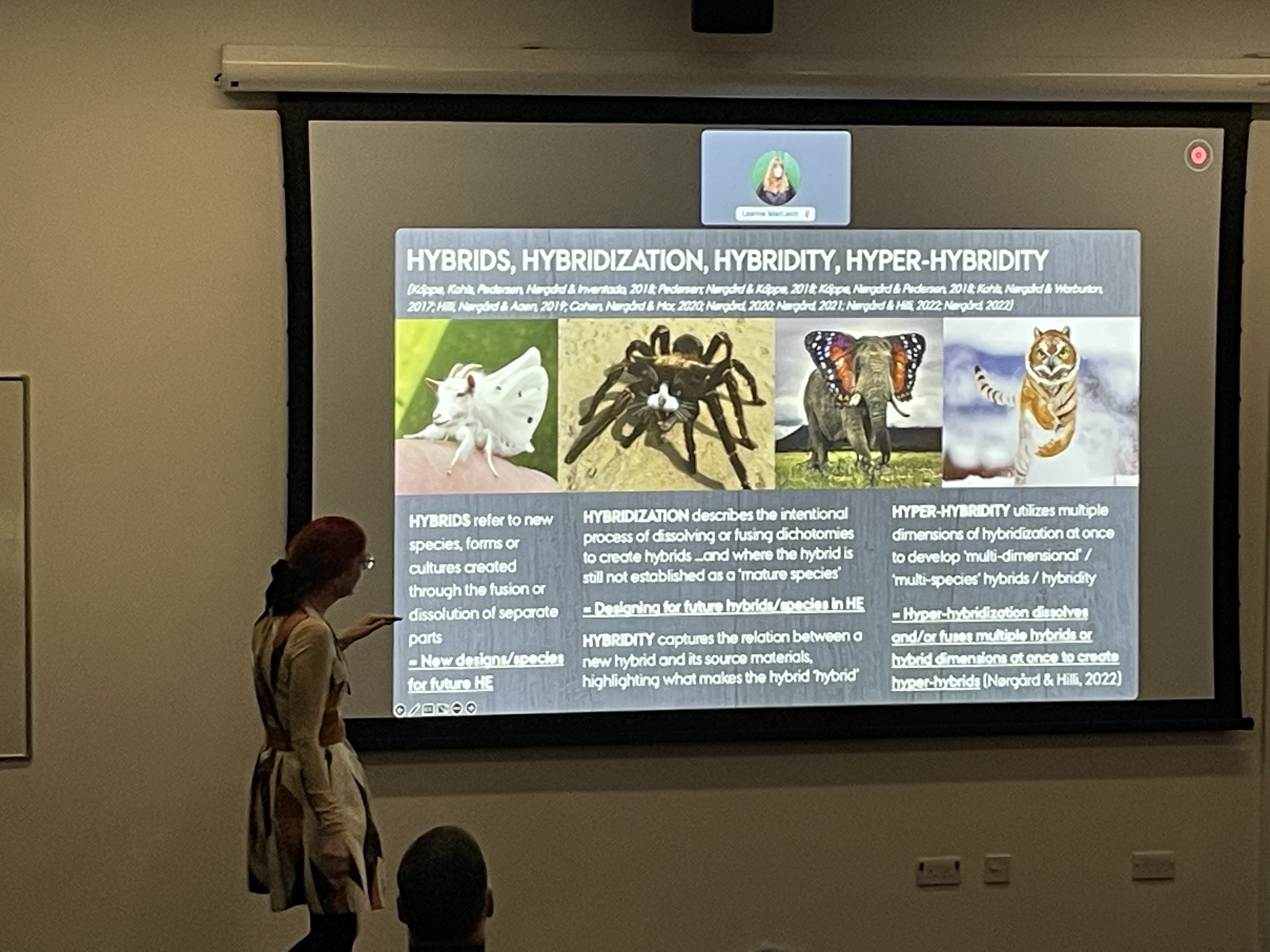
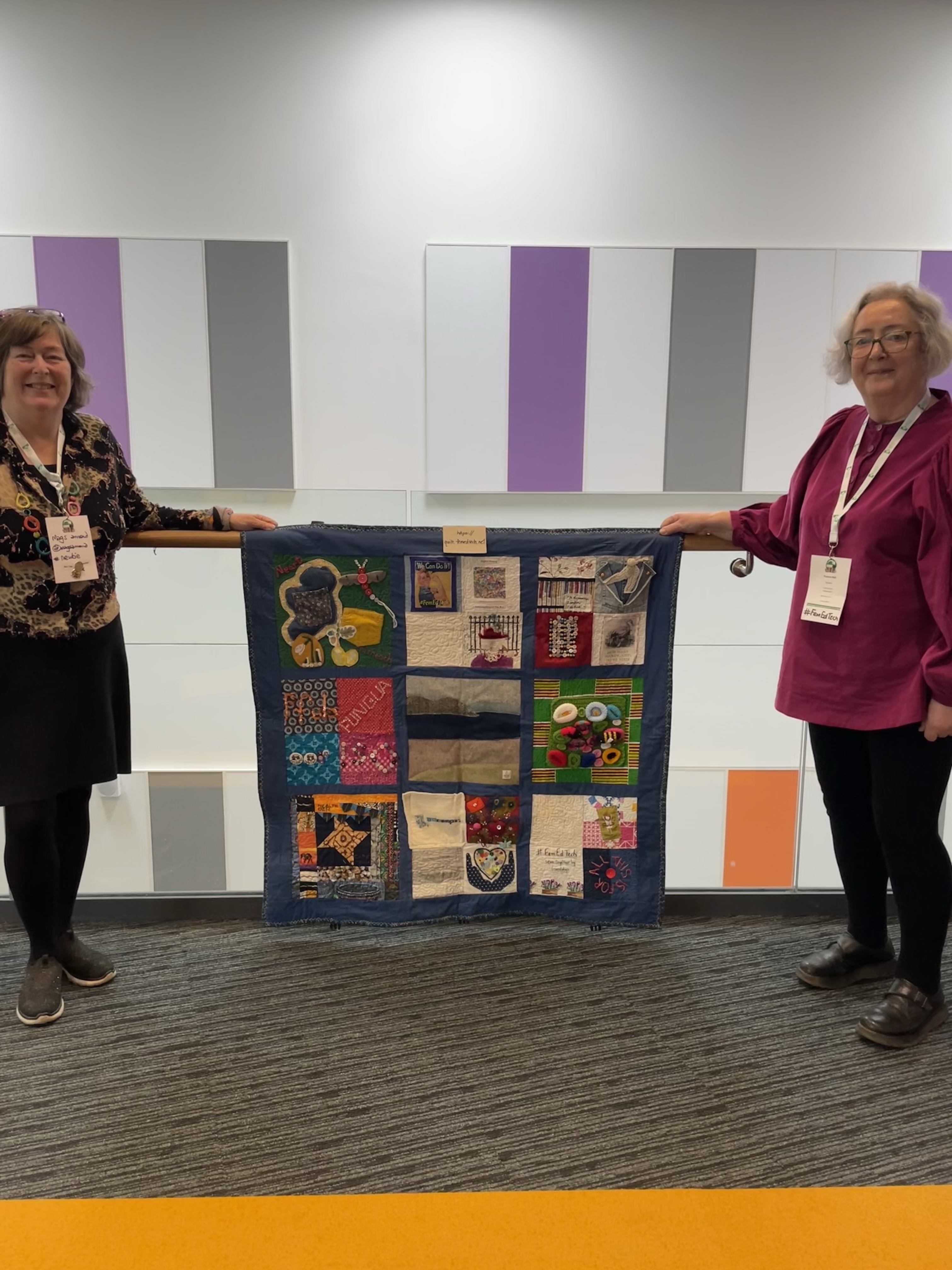
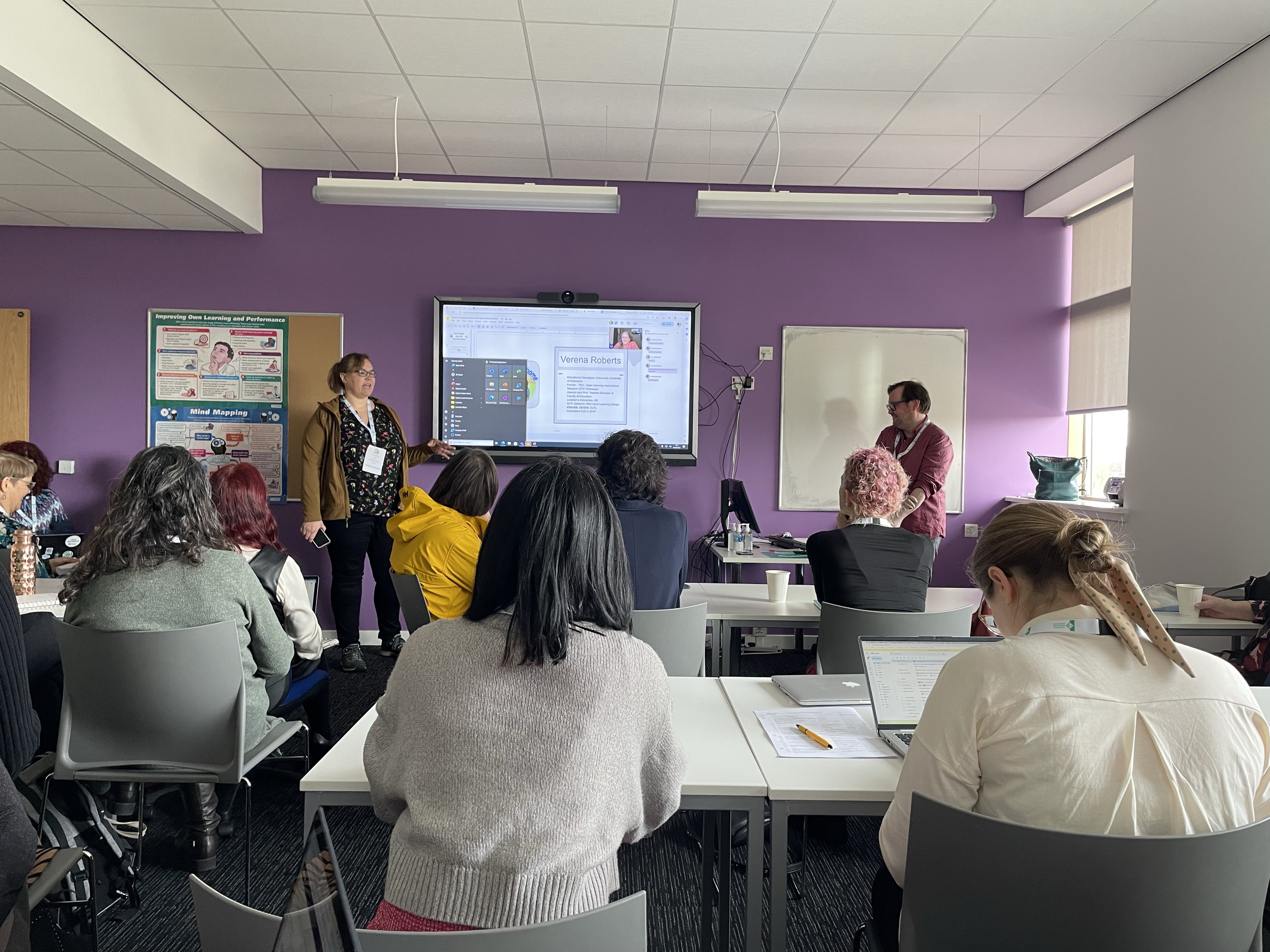
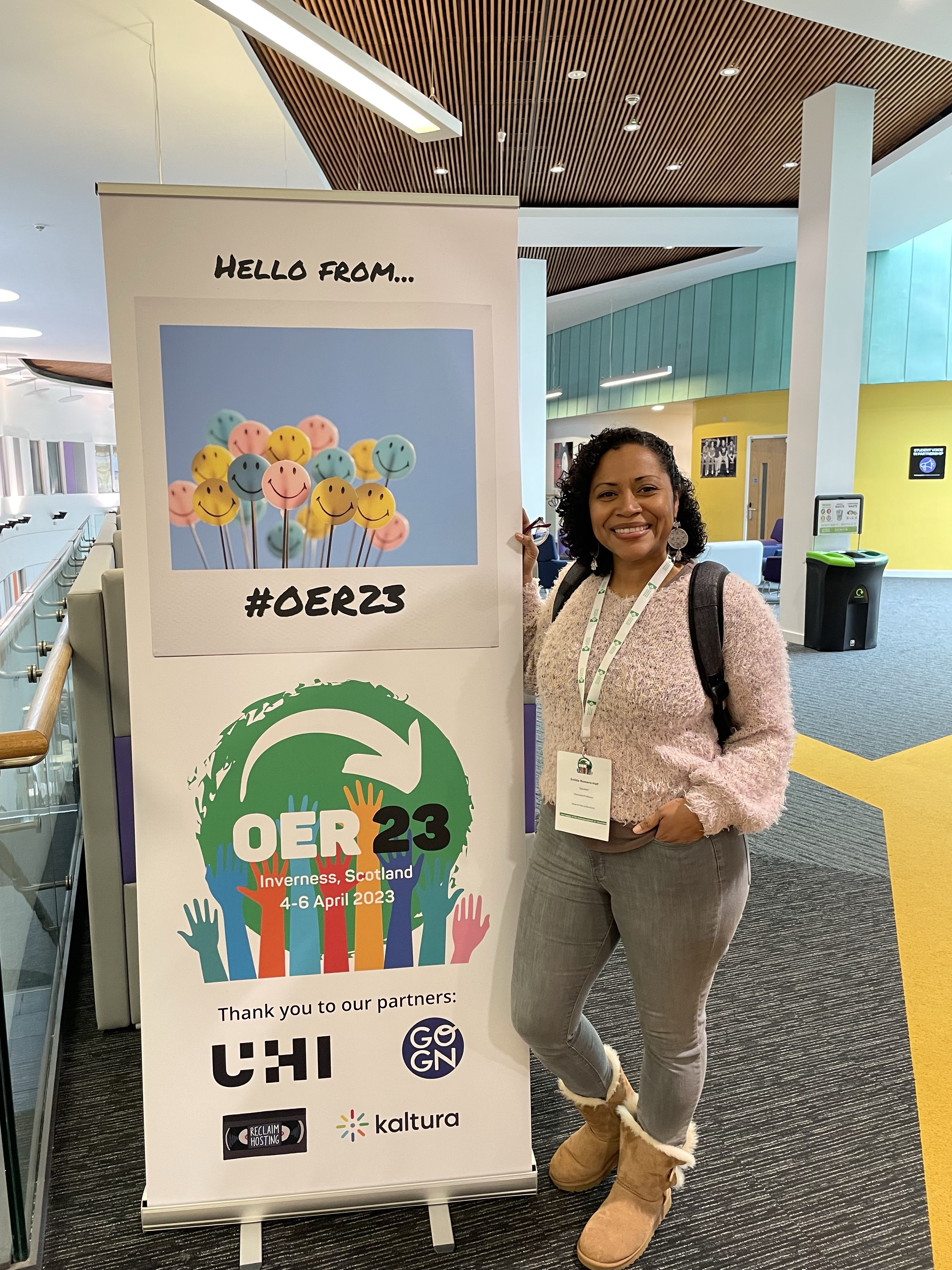
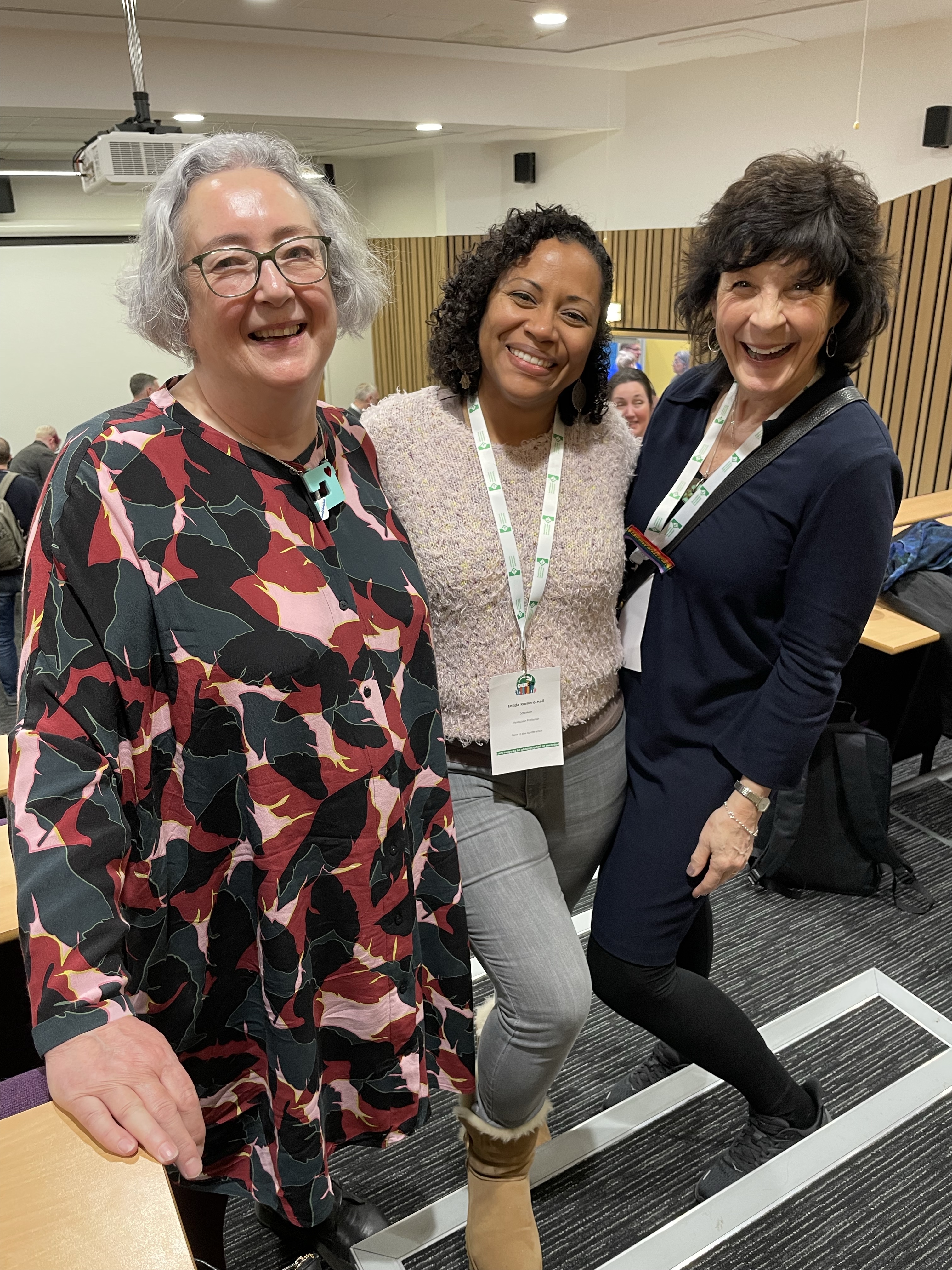
This past week, I was invited to speak as part of the STEM education seminar sponsored by the Theory and Practice in Teacher Preparation (TPTE) Department STEM team. I am part of the STEM Education team in the department and this semester a group of colleagues are organizing this seminar with presentations for faculty and graduate students every two weeks. I have really enjoyed all of the presentations this semester. Our STEM Education team is doing really amazing work and I love learning about it.
For my presentation, I was a bit nervous because I was not sure how my work would relate to STEM education. I know educational technology is consider part of STEM education. However, I think of my work as more than just educational technology. I actually see Learning, Design, and Technology as the umbrella term under which educational technology, instructional design, instructional technology, learning engineering, and others similar terms come together. Perhaps one of my main concerns is that under the term STEM, learning design is primarily associated with the “technology” term which I really see as just one aspects of the far more complex ecosystems of the learning, design, and technology field.
The presentation focused on how it is okay to have many areas of research interest. We are often encouraged to stay very narrowly focused on a topic. But, what if you are curious about other topics and want to explore them? So, basically, I used myself as an example of an eclectic research agenda. My research has evolved so much and in part it due to my curiosity to explore other topics. This has also been true in my life, curiosity to try new things or study programs outside my focus has helped me evolve and grow. Here is the link to the slides, in case you are curious.
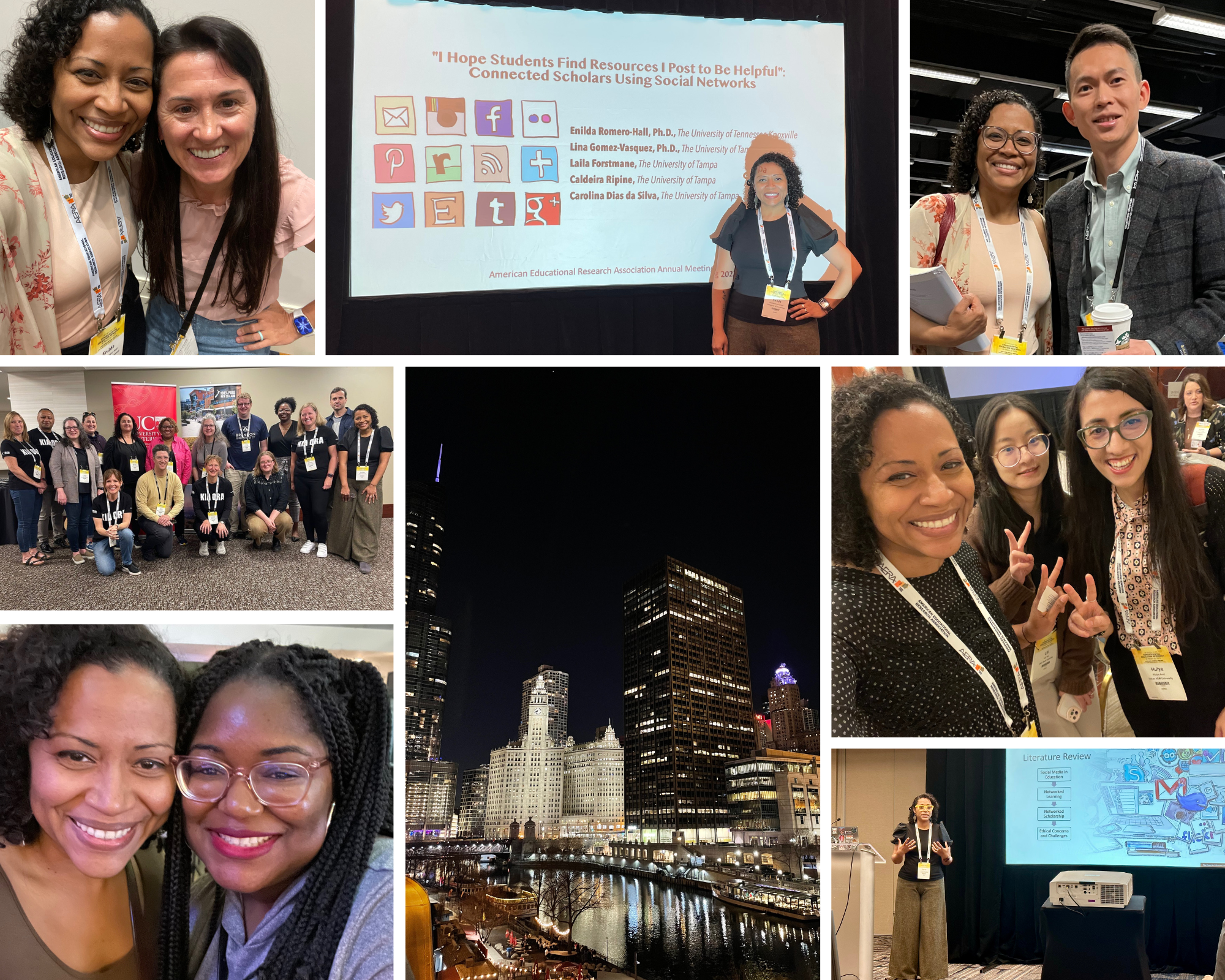
Last week, I attended the AECT International Convention. It was my first time since 2019 that I attended in person. It was great to see so many colleagues who I have communicated with via email or Zoom for the last three years. Also, I got to meet new colleagues who I had never connected with before.
It was a fairly busy but rewarding schedule for me. I started early every day with a conference presentation or panel session. I am writing this blog post primarily to share some resources and presentation slides from AECT.
CLT- Prioritizing Care, Respect, Empowerment, and Intersectional Identity while in Emergency Remote Teaching: Analysis through a Feminist Pedagogy Lens
This was a presentation with co-author, Dr. Nadia Jaramillo Cherrez. It is work that we have written up and plan to published as part of a forthcoming book on Feminist Pedagogy in Online Learning. Here are our presentation slides.
CLT- Marginalizing What ALSO Matters: It’s time to consider equity factors in design that impact student learning
This panel was great. I do not have slides to share, but here is the link to the recording. Unfortunately, it will only be available until Nov. 15 so please view it before then if you want to learn more about our discussion.
LED- Authentic Practices and Considerations for Mentoring ID Professionals
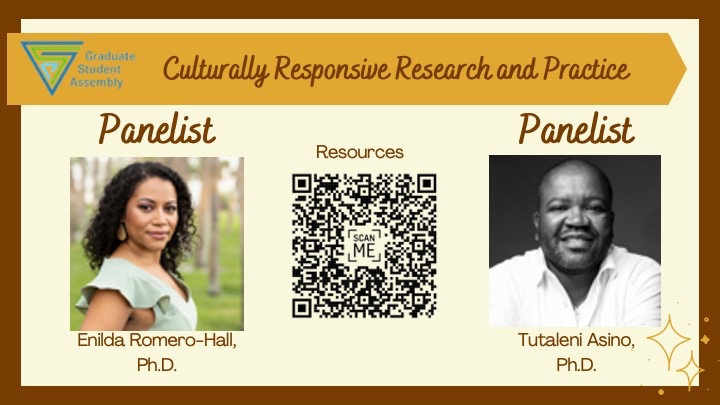
This panel was organized by members of the AECT Graduate Student Assembly (Mia Knowles, Lili Yan, and Bree Kirsch). Thank you so much for your work organizing this panel. Some of the central questions that Dr. Tutaleni Asino and I discussed during this session were:
How would you describe culturally responsive research, pedagogy, and practice? What are other relevant concepts that show up in your work?
What are your experiences in doing work with culture? Any important stories or challenges to share?
What is your favorite methodology for culturally responsive research?
How would you negotiate the cultural self and the academic self in your work?
Advice/resources for grad students doing work with culture, particularly in our field?
Mia, Lili, and Bree created this slide with a QR code that links to additional resources and readings.
2022 Early Career Symposium
This year during AECT, I was also invited to serve as a mentor as part of the Early Career Symposium. I hope the insights I shared with my mentees are beneficial to them. I also learned a great deal from their experience and knowledge. I am thankful to those who presented during the symposium because I found their presentations useful even in my current career stage as an academic. I hope AECT continues to support the Early Career Symposium. I have served as a mentor twice and was a mentee many years ago. It is truly a great way to give back to our learning design and technology community.
University Receptionand Distance Learning Award
Huge thanks to my colleague, Dr. Rachel Wong, for traveling to the AECT 2022 conference with our University of Tennessee Knoxville poster and goodies to give away during the university reception. We met many colleagues and graduate students during the university reception. Thank you to everyone that stopped by and grab some goodies. Also, thanks to the AECT Distance Learning Division for recognizing one of my recent publications with 1st Place Mixed Methods Journal Award (“Hybrid flexible instruction: Exploring faculty preparedness” published with co-author Caldeira Ripine in the Online Learning journal). Last, but not least, during the welcome reception I put my name in a raffle and won some DDL gear. I never win raffles, I was so excited.
Me dio mucho gusto participar en el conversatorio con las organizadores del Cafe Virtual de Learn for Improvement que ocurrió ayer. El Learn for Improvement es un grupo de diseñadores instruccionales a nivel corporativo en Latino America. Estos fueron alguno de los temas de los que hablamos durante el conversatorio:
¿Qué especializaciones de postgrado has seguido? ¿Cómo han contribuido en tu desarrollo profesional?
Master en Diseño Instruccional de la Universidad Estatal de Emporia (Emporia State University). Como a contribuido a mi desarrollo profesional:
Técnicas de Diseño Instruccional (modelos y teorías)
Conocimiento de teorías del aprendizaje y motivación
Emphasis en el desarrollo de capacitaciones para adultos
El uso de programas que se usan para el desarrollo de capacitaciones en línea y programas educativos en general
Doctorado en Educación con énfasis en Diseño Instruccional y concentración en Simulaciones para Capacitación y Aprendizaje de Old Dominion University. Como a contribuido a mi desarrollo profesional:
El enfoque fue más en mi crecimiento como investigadora.
¿Cómo se formula un proyecto de investigación?
Proponer el proyecto
Recolectar la data
Escribir el reporte o la publicación
Presentación del proyecto
Aprender a colaborar con colegas en otras áreas de estudios en proyectos que necesita la perspectiva de un diseñador instruccional
Leer para entender cómo los proyectos de investigación se pueden usar en la práctica
En tu experiencia, ¿qué ventajas te brinda contar con un postgrado especializado en aprendizaje para construir una carrera internacional en L&D?
Conocimiento de la teoría que es muy importantes (diseño instruccional, psicologia, comunicacion, etc.)
Aprender a conectar los resultados de las investigaciones con la práctica (que funciona? Que no funciona? Y porque?)
Distinguir entre el uso de “programas” y importante conocimientos de pedagogía (para adultos o sistemas digitales)
Estar más al tanto de las últimas tendencias en diseño instruccional y tecnología y sus aplicaciones en diferentes niveles.
La realidad es que muchas posiciones requieren un postgrado
¿Qué alternativas de especialización-postgrado a nivel internacional recomiendan para los que trabajamos en L&D?
Ahora mismo hay un gran emphasis en conocimiento de:
Diseño instruccional para desarrollo de capacitaciones en línea
¿Qué recomendaciones deberíamos tener presente antes de elegir un postgrado?
Fijense en la página de Internet del programa
¿Quiénes son los profesores y cuales son sus áreas de interés?
¿Qué cursos se ofrecen? ¿Te interesan a ti estos cursos?
El program esta enfocado en preparar profesionales para el área que te interesa: educación secundario, área corporativa, universidades o instituciones del gobierno
Si el programa es en línea o presencial
Qué apoyo brinda al estudiante para hacer la transición a la fuerza de trabajo
This event is for Spanish speakers, who more than likely live in Latin America but anyone is welcome. If you are interested in an instructional design program or a program focused on learning and development for a corporate environment, join us! We will be talking about this topic on September 28! The organizers of this event are the Learning for Improvement group the is organized by instructional designers in Peru. I am thankful that I was invited to be part of this Cafe Virtual. Here is the link to register for the event: https://forms.gle/5sexFAfqaBM6J6jE7
Flyer for the “Cafe Virtual” organized by the Learn for Improvement group
October
On October 19, I will be doing a presentation for my alma mater, the Graduate Student Organization of the Instructional Design and Technology program at Old Dominion University. More details coming soon.
November
On Nov. 3, I will be presenting as part of the University of Tennessee Knoxville (UTK) Theory and Practice in Teacher Preparation (TPTE) STEM seminar and discussing “inclusive and equitable learning design practices”
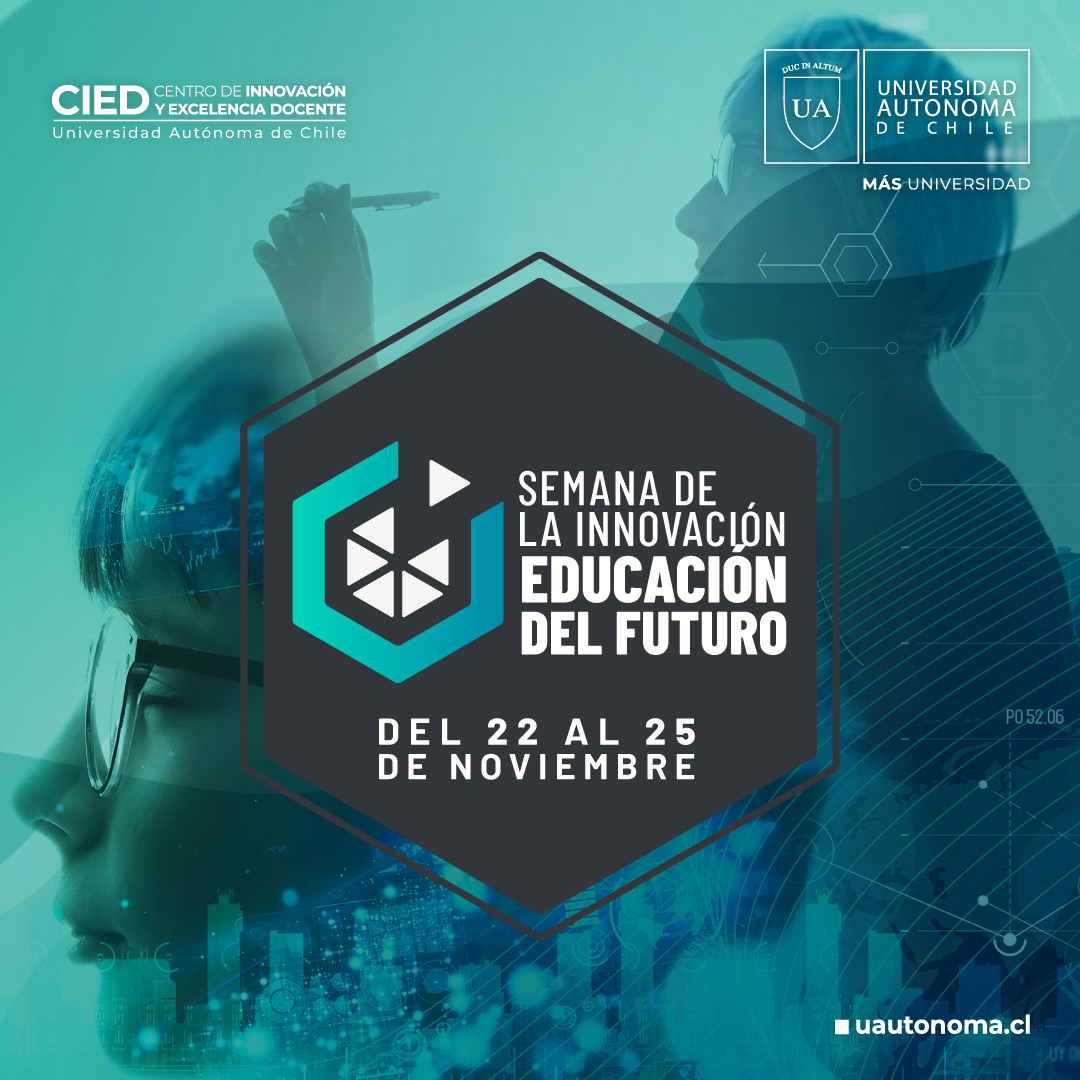
For my Spanish speaking connections! On Wednesday, November 23 I am honored to be joining an amazing group of speakers as part of the Semana de la Innovación (Innovation Week) of the Centro de Innovación y Excelencia Docente de la Universidad Autónoma de Chile. Tema: “Inclusión e igualdad en la enseñanza en línea”. Mas detalles pronto.
December
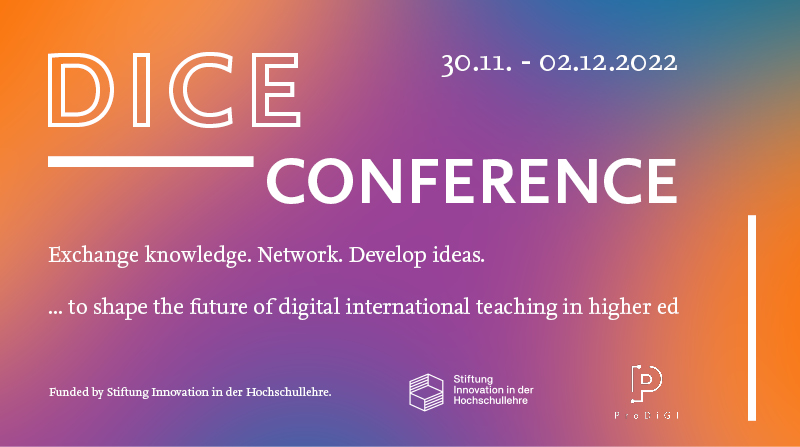
Last but not least, for the European crowd, the ProDiGI project at the Technische Universität Braunschweig @tuBraunschweig is hosting a free & open conference in early December. I’ll be sharing more details about my presentation later on. But, in case you want to learn more about the conference or would like to join the conference here is the link: https://bit.ly/3BKcHIs
Grateful for the opportunity to participate in this events in an online format. Also, grateful that colleagues thought about me and asked me to join them in these events.
Earlier this year, I made a radical decision to cut off all social media from my life. I am grateful for the detox. I eventually returned to Twitter and LinkedIn, quietly, over the summer but now I am bit more active (let’s see how long that last). But I am not going to lie, one of the most difficult parts of that decision was leaving the groups and social communities to which I belonged that kept me informed or in which I could ask questions. These groups and social communities have also served as inspiration for my research on networked learning and informal learning in online social communities. So having said all of that, I want to share some of my most recent publications on online social communities in this post.
This chapter is really a self reflection on the work that independent study students, interns, and I did while working at The University of Tampa connecting the current students, alumni, and public to IDT program using institutional social media accounts. But in all honestly, those practices were highly influences by the practices of other IDT programs who run their own institutional social media and research on networked learning. Here is a short blurb from the abstract: “In this paper, it is argued that social media represents a convivial technology in which individuals are engaging in networked learning. A review of the literature yielded examples of how institutional social media is been used in teaching and learning specifically in instructional design and technology programs. Insights from a case study about an instructional design and technology program that has been actively using different institutional social media to enhance the networked learning experience of the graduate students (and other stakeholders) in the program is shared as a way to connect research with practice.”
Gomez-Vasquez, L., Romero-Hall, E., Jaramillo Cherrez, N., Ghani, S., Rodriguez, A. & Ripine, C. (2022). Keeping Citizens Informed and Engaged During the COVID-19 Pandemic Using #YoMeInformoPMA: A Case from Latin America. Health Communication. https://doi.org/10.1080/10410236.2022.2035509
This paper is dedicated to my motherland, Panama! When the World Health Organization declared COVID-19 a pandemic, I was on sabbatical in Panama. The days after a pandemic was declared were crazy. I have written a bit about it in this blog post. To keep myself informed of what was happening in Panama in response to the pandemic the Panamanian Health Ministry recommended that everyone use the hashtag #YoMeInformoPMA (which literally translated to: “I stay informed Panama”) in social media. As a researcher, it immediately triggered my desire to know: “What are people learning, discussing, and sharing using this hashtag?”. So I quickly emailed my collaborator Dr. Lina Gomez-Vasquez so that we could start tracking tweets with this hashtag. Huge thanks to Lina for leading the write up of this paper and co-authors for assisting with the analysis. Here is a short blurb from our abstract: “Using quantitative content, social network, and thematic analysis, this study examined 2,500 tweets from April to August 2020 that included the hashtag #YoMeInformoPMA. Panama’s Public Health Ministry created the #YoMeInformoPMA hashtag to keep citizens informed and engaged during the COVID-19 pandemic. Research on social media use and implementation in Latin America during the COVID-19 pandemic, to inform and engage the public, is limited. Therefore, the aim of this investigation was to analyze strategies, themes, multimedia formats, key actors, and overall communications patterns of a Latin American health community hashtag. Our results determined that actors using the hashtag #YoMeInformoPMA mainly used an interactive strategy, a message that aims to promote casual conversations, advice, and problem-solving.“
Romero-Hall, E.J. (2021). Undergraduate students in online social communities: An exploratory investigation of deliberate informal learning practices. Journal of Applied Instructional Design, 10(3). https://dx.doi.org/10.51869/103/erh
We often do not realize that there are many instances of informal learning practices: implicit learning, reactive learning, and deliberate learning. In this paper, I focus on “deliberate learning refers to informal learning that occurs when an individual takes time to think about how and where to gather information.” This paper further analyses data that was collected as part of an internal grant sponsored by the University of Tampa on the use and participation of undergraduate students in social media (with a specific focus on teaching and learning). Here is a blurb from the abstract: “A total of 573 undergraduate students consented to participate in this investigation about deliberate informal learning practices using social media. Data analysis consisted of parametric and non-parametric statistical procedures. An analysis of the rankings provided by undergraduate students for the different deliberate informal learning activities performed in their most used social media (MUSM) showed that listening to podcasts related to their area of study, following/connecting with professional organizations, and connecting with leaders in their field of study were ranked higher than the other activities. The results also showed evidence of statistically significant differences in the ranking provided to the informal learning activities performed by undergraduate students in their least used social media (LUSM). Listening to podcasts related to their area of study, viewing videos that can assist with coursework, and following/connecting with professional organizations were ranked higher than the other deliberate informal learning activities.” This journal article is open access.
Guest Edited Special Issue
Romero-Hall, E.J. (2021). Informal Learning in Online Social Communities. Journal of Applied Instructional Design, 10(3), https://edtechbooks.org/jaid_10_3
I wrote my last post back in May after participating in OTESSA conference: The #OTESSA22 Recap and Resources and honestly I had no idea the craziness of a summer that I had ahead of me! It has been 1.5 months since we moved to Knoxville. The boxes are unpacked and we have settled. I think that has been the number one questioned I have received for the last month from friends and colleagues.
There is so much that has happened this summer, I really do not know if I can sum it up into a blog post but here are the highlights:
I completely deleted my Facebook and Instagram accounts. Initially those were going to be temporary deactivations but every time I thought about reactivating my account, I hated the fact that I was going to fall into old habits or deal with the social media non-sense (one day I will write about this term “social media non-sense”). It has been challenging at times because there are connections that I really miss and some that I honestly cannot connect in any other ways (i.e., friends who live abroad). But, I am still undecided on whether I will rejoin again.
We no longer live in our Seminole Heights bungalow in Tampa. I can’t believe we sold our first house. The process of selling was difficult in so many ways. It was exhausting mentally. It took over our lives. I will miss our neighborhood. Seminole Heights will always have a special place in my heart (i.e., it is the house were I saw my son take his first steps and the neighborhood he learn to ride his bike) but I am happy that the house sold allowing us to move and fully focus on our new chapter in Knoxville.
I became a U.S. citizen. I remember arriving in the United States January 2004 and landing in Kansas City to attend school at Emporia State University. That was an absolutely crazy adventure. I took the Greyhound bus from KC to Emporia (a two hour ride) and when we arrived in Emporia I was dropped off at a gas station. I was like “What the hell? Where is the bus terminal?” I asked the gas station employee to please call a cab for me and he was like “Well there is only one cab in town so know that it will be a while” (Yes, this was life pre-UBER, imagine that!). I really should write more about my adventures as an international student. Anyways, glad I completed all the requirements and applied for citizenship. The best part is that I get to vote!
I did the bare minimum in terms of scholarship. Instead I focused on the relocation process and I am so happy I didn’t kill myself trying to do a million things. Early in May I was contacted about a project that “must be written over the summer because the institution was going to pay us $$ over the summer to write the paper”. My response was: “Well the institution can keep their $$ because I am not about to comprise my sanity over a paper I can write in the Fall”. Best decision ever!
I did teach a two-week course on “culturally competent design for online learning” as part of a grant funded project “Online Ready” by colleague Dr. Lucy Green and colleagues. It was so much fun designing the course and launching it. It was an online asynchronous course for K-12 school librarians. This was the first iteration of the course now we get to address the feedback and launch it again next year with a different cohort.
There was minimum travel this summer but in the road trip to Knoxville we did get to explore two other major Tennessee cities: Chattanooga and Nashville. Definitely visiting again!
One of my favorite things to do after a good conference is to collect the resources acquired in a blog and re-share it with others. It is also a great way for me to tag a resources to a specific event (in my blog) in case I want to go back to it in the future. Don’t ask me why, my brain just works that way. Any who, last week I attended OTESSA 2022 which was her virtually and is organized by the Open/Technology in Education, Society, and Scholarship Association (OTESSA).
Here are a few thoughts on the conference:
Really enjoyed the conference sessions, social events, and the schedule.
I was also really appreciative of the active efforts to promote all sessions via social media, at times it served as a reminder to a session I wanted to attend.
I was not sure how the sessions were going to relate to theme of the conference “Critical Change” but at least based on the sessions that I was able to attend, there were several critical conversations happening about “what is next” and “how we do it in a meaningful, critical way”.
Going back to the schedule, it was a bit more challenging to catch the evening talks but glad I can catch the recording until the beginning of June.
The conference organizers did a phenomenal effort running is smoothly (i.e., sharing updates daily, the pre-conference info to check login information, and just attending sessions to make sure everything was going as planned).
At the beginning of the week I made a post on Twitter stating that I would be sharing resources during the week but honestly it was too much for me to tweet out every day. Trying to attend sessions, tweet giving proper credit (important to me), and trying to keep up with what is going at home was too much. So, instead I bookmarked and hope to proper share in this blog post. I will include the session the resource was mentioned or shared.
Surveillance in the System: Data as Critical Change in Higher Education (Research-Oriented), Bonnie Stewart (University of Windsor), Samatha Szcyrek (University of Windsor)
@bonstewart and @samanthaszc discussed findings on research related Surveillance in the System: Data as Critical Change in Higher Education. What do you know about datafication in your institution?
Resource: Polisis gives you a glimpse of what websites actually say in their privacy policies: https://pribot.org/polisis
Online or Remote Learning and Mental Health (Research-Oriented), Stephanie Moore (University of New Mexico), Michael Barbour (Touro University California), George Veletsianos (Royal Roads University)
Wrapped up the first day of #OTESSA22 with a session discussing Online or Remote Learning and Mental Health @steph_moore@mkbtuc@veletsianos. Looking forward to reading the final results!
Hide and Seek: On Kids, Power, and Resistance in Education, Sherri Spelic, American International School Vienna
There were some many words of wisdom and amazing poetry in the keynote by @edifiedlistener at #OTESSA22. One of my favorites words of wisdom was on her initial slides “my students are tireless teachers”
Outside-In: Openness as Subversion, Maha Bali, American University in Cairo
Embracing Feminist Pedagogies in Learning Design, Enilda Romero-Hall, The University of Tennessee Knoxville
Huge thanks to #OTESSA22@otessa_org for the opportunity to participate and contribute to the conversation on Critical Change. Here are the slides from my talk today on “Embracing Feminist Pedagogies in Learning Design”: https://bit.ly/38C25Q6
Exploring university teaching during a pandemic to derive recommendations for post-pandemic times (Research-Oriented), Joerdis Weilandt, Sandra Dixon, Richelle Marynowski, Lorraine Beaudin, Rumi Graham, Stavroula Malla, Angeliki Pantazi (University of Lethbridge)
Multi-Section Open Course Design: Design and Implications for Faculty, Sessional Instructors, and Learners (Practice-Oriented), Valerie Irvine, Michael Paskevicius, Colin Madland, Rich McCue, Verena Roberts (University of Victoria)
The social events were lots of fun! The Bhangra dance with @GurdeepPandher was a great workout and I definitely need more of it my life. I was a bit uncoordinated at first and too shy to turn my camera on but I finally got it and still too shy to turn my camera on. The DJ session so much fun too! I didn’t participate in the trivia challenge but I enjoyed all the beats. Thank you again to all involve with planning and organizing the conference (Valerie, Aras, and Terry!) .
A few weeks ago, I attended the American Educational Research Association (AERA) 2022 Annual Meeting. I really had two-days of sessions that I could attend and I wanted to make the most out of it. This post is primarily for me to compile the list of resources collected as I attend the sessions and that are currently in my Notes application.
Critical Race Theory, White Supremacy, and the Ongoing Fight for Black Existence
In this post, as I have done in other posts, I want to share some research that I have co-authored and published so far this year related to online teaching and learning:
“The three-tier design process: Streamlined guidelines for designing and developing a course in a learning management system to promote effective learning”You can access this journal article here
This is a collaboration with Weiwei Ji (Instructional Designer at Arkansas Tech University) and Pauline Salim Muljana (Doctoral Candidate at Old Dominion University). It is a design framework supported by research-based evidence and influenced by the instructional design practice of WeiWei (Will) and his experience as an instructional designer. Of course, it is also supported by the knowledge, skills, and experience of Pauline and myself. As we state in the abstract: “We propose a set of guidelines called the Three-Tier Design Process (TTDP), providing a pathway for faculty and other higher-education professionals who intend to design and develop a course in a Learning Management System and to promote learner-centered experiences. This paper includes detailed discussion about each tier of the TTDP, its subcomponents, and an example of its application. The TTDP borrows from existing theories, models, and literature in the instructional design field that focuses on key aspects that help create positive learning experiences. Tier 1 focuses on course design and serves as a foundation for the next two tiers; Tier 2 emphasizes course development; and Tier 3 concentrates on the user-experience considerations. Examples from a real course are additionally provided.” We were invited to write a blog post about the journal article for the Online Learning Research Center. Here is a link to the blog post: https://www.olrc.us/blog/designing-and-developing-courses-in-learning-management-systems-how-do-we-enhance-learners-experiences
I was excited to see this journal article finally published. This journal article is the result of a collaboration with University of Tampa undergraduate elementary education major, Caldeira Ripine. It is a research project supported by the Undergraduate Research and Inquiry Grant from the University of Tampa. The data was collected prior to the COVID-19 pandemic during Fall 2019. As the pandemic started and plans for continuity of instruction were shared by higher education institutions, I knew that the data Caldeira and I had collected needed to get publish as soon as possible. But, due to a number of factors (including lack of childcare) it took a while a to get this out into the review pipeline and of course, then it had to go through the peer review process. In any case, as stated in the abstract: “The aim of this investigation was to survey faculty members on their perceived level of preparedness to design and implement hybrid flexible (HyFlex) instruction. Participants included 121 full- and part-time faculty. Using an electronic survey, faculty members: a) rated their preparedness to engage on different HyFlex instruction competencies, b) shared which pedagogical strategies they felt prepared to use in this instructional modality, and c) listed the resources and support that they felt were needed to successfully implement their course.” The journal article is open access, you are welcome to download, read, and share.
How much fun was it to write manuscripts during “Stay at Home” orders without childcare? Well if you have not experience this during the last year and half of the COVID-19 pandemic then consider yourself lucky! It is not fun at all. I wrote the following in a reflection I was putting together on what April 2020 was like:
“Upon our return to the U.S. we were faced with the news that, due to the pandemic, our childcare center had closed indefinitely. My partner and I had to adjust to working from home while providing childcare for our 4-year-old son. I had to quickly realize that some of the projects that I was hoping to start before the end of my sabbatical were going to be delayed or canceled. The projects that I was planning to complete were going to require a massive amount of focus and dedication. In order to accomplish all our work requirements, my partner and I had to divide our days into three “shifts.” The morning shift (8 am to 1 pm) in which I worked and he would care for our son. The afternoon shift (1 pm – 6 pm) in which my partner worked and I would provide care for our son. The evening shift (6 pm until midnight) in which were are exhausted but aimed to spend time together as a family.”
In April 2020 during a three week period during my “morning shift” I wrote a manuscript for a special issue that was published in the Educational Technology Research and Development (ETR&D) journal. The realization that I was going to have less than the estimated amount of time to write this paper stressed me so much. But I had to channel that stress into getting the work done. During the process of writing the proposal I had gathered and read most of the literature and had put together an outline. Having this things done was a lifesaver! During the three weeks of writing I had to buckle down and eloquently put the literature and my ideas into a document.
I should give a little bit of context: I initially thought I was going to have a month of full-time work hours during a term in which I was on sabbatical. But because of the lack of childcare (due to COVID-19) I actually had three weeks with 4-hours per day (during week days) to write the paper. I do not know how fast others are at writing papers but gosh I am such a tortoise. To make it more interesting, this was a solo-authored publication.
Kind of funny, I can write without problem in a busy cafe with all sorts of background noise. I pretty much wrote all of my dissertation in a Panera a few blocks from my apartment when I lived in Norfolk, VA. But it was so hard to write this paper from home while having my family members’ voices in the background. I remember putting on my headphones and close the door and still every now and then I would still hear their voices and conversations in the background.
I think that been really passionate about the topic I was writing about made a huge difference on how I approached this writing project, despite the hardship endured in the process. I am grateful for Reviewer # 1 and the editors of the special issue for such wonderful and detailed feedback. I truly helped me improve the paper during the R&R submit process. The manuscript was published “online first” this January 2021 and is titled: Current initiatives, barriers, and opportunities for networked learning in Latin America .
This was the first of many experiences like this. Our son stayed home for 6 months while we worked from home without childcare. And, even after he went back to the childcare center, there were other instances in which he has stayed home and we had to maneuver the same dynamics of still completing our work. Having the deadline of special issue submission did add more pressure in this specific instance (shared in this post)! It made it hard for me commit to any special issue submissions for almost a year (hence why I missed out on so many opportunities to submit for COVID-19 related special issues in 2020, sadly)!
You must be logged in to post a comment.