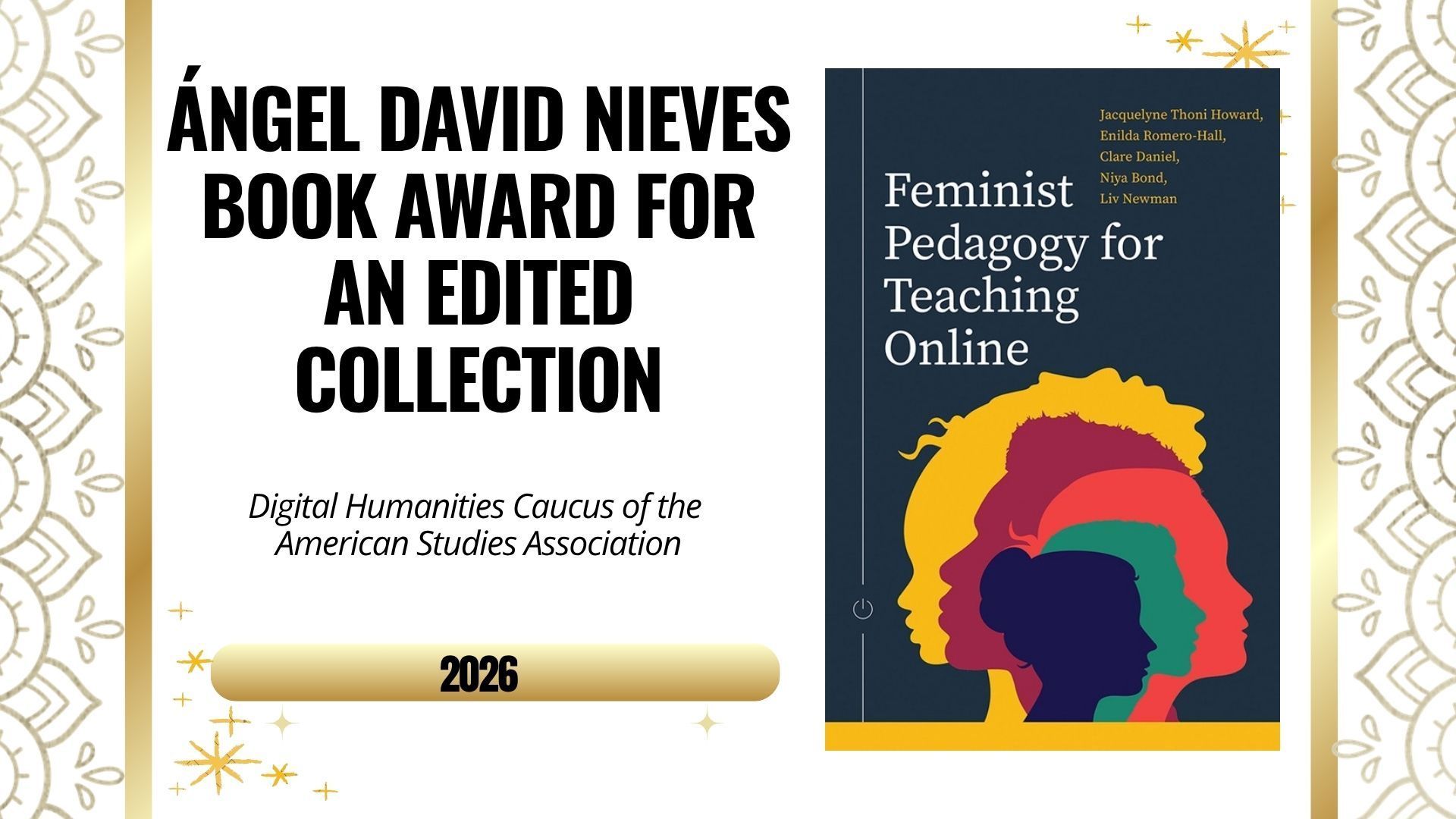
Our book, “Feminist Pedagogy for Teaching Online,” has been selected by the American Studies Association (ASA) Digital Humanities Caucus as the recipient of the Ángel David Nieves Book Award for an Edited Collection! Thank you ASA for this recognition!
“The ASA DH Caucus Ángel David Nieves Book Awards memorialize the profound scholarly, social justice, and personal impacts of Dr. Nieves on his colleagues and the field of digital humanities. The Ángel David Nieves Book Award recognizes exceptional work that grapples with urgent questions that are specifically situated in practices of studying at the intersection of American Studies, Digital Humanities, and Digital Studies.”
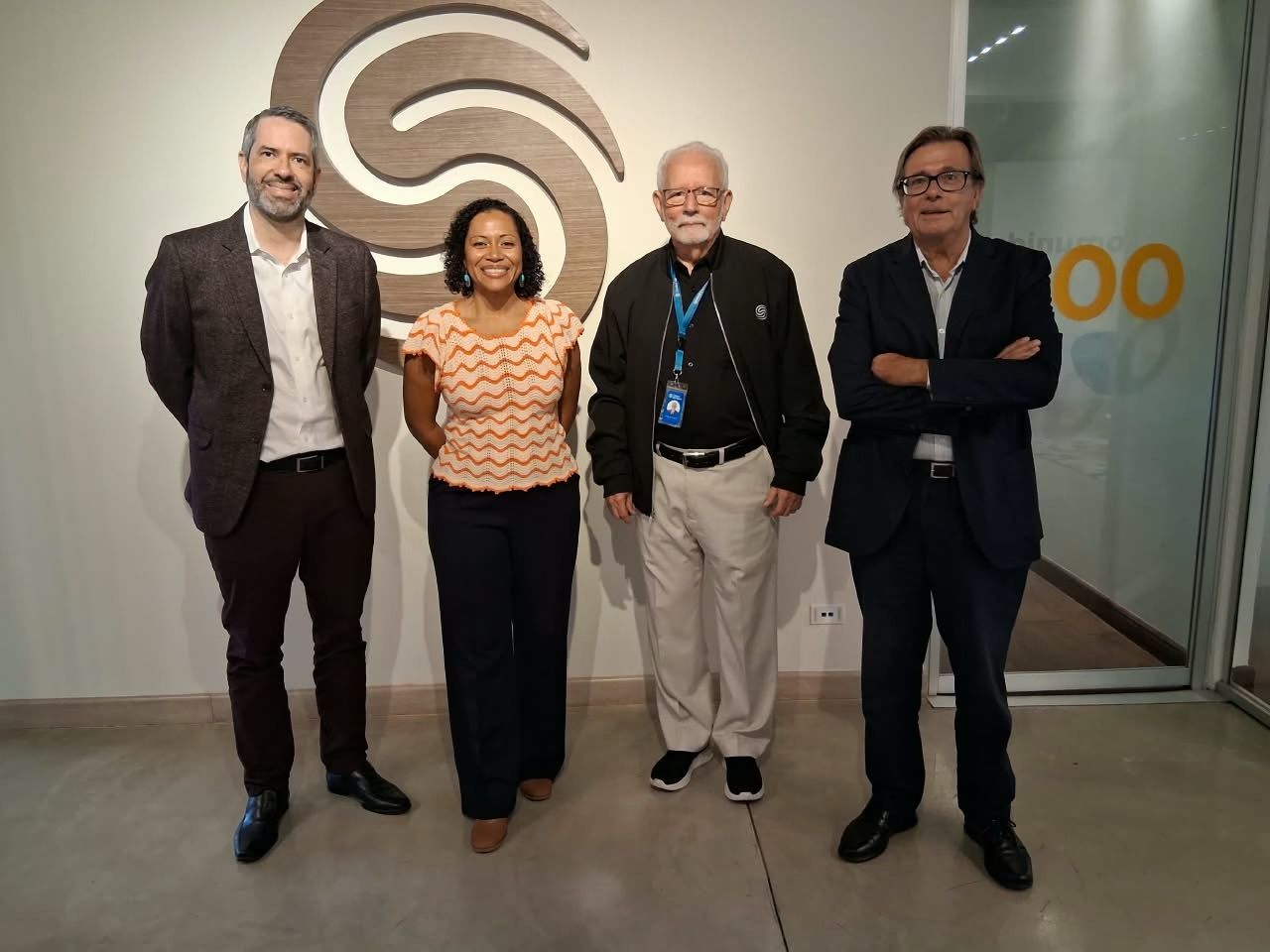
At the end of August I travelled to Panama to serve as part of the evaluation committee for Centro de Investigación Educativa CIEDU AIP located in Panama City, Panama. It was great to meet the researchers, interns, affiliated researchers, and board members who support the mission of this education research center.
In collaboration with Dr. Julio Cabero Almenara (Catedrático de Didáctica y Organización Escolar de la Universidad de Sevilla) we spent a couple of days having interviews and meetings with different stakeholders. Those meetings served to provide recommendations to CIEDU to help guide their strategic plan for the coming years.
Last December, right before Winter Break, I got an email with this message:
Dear Dr. Enilda Romero-Hall,
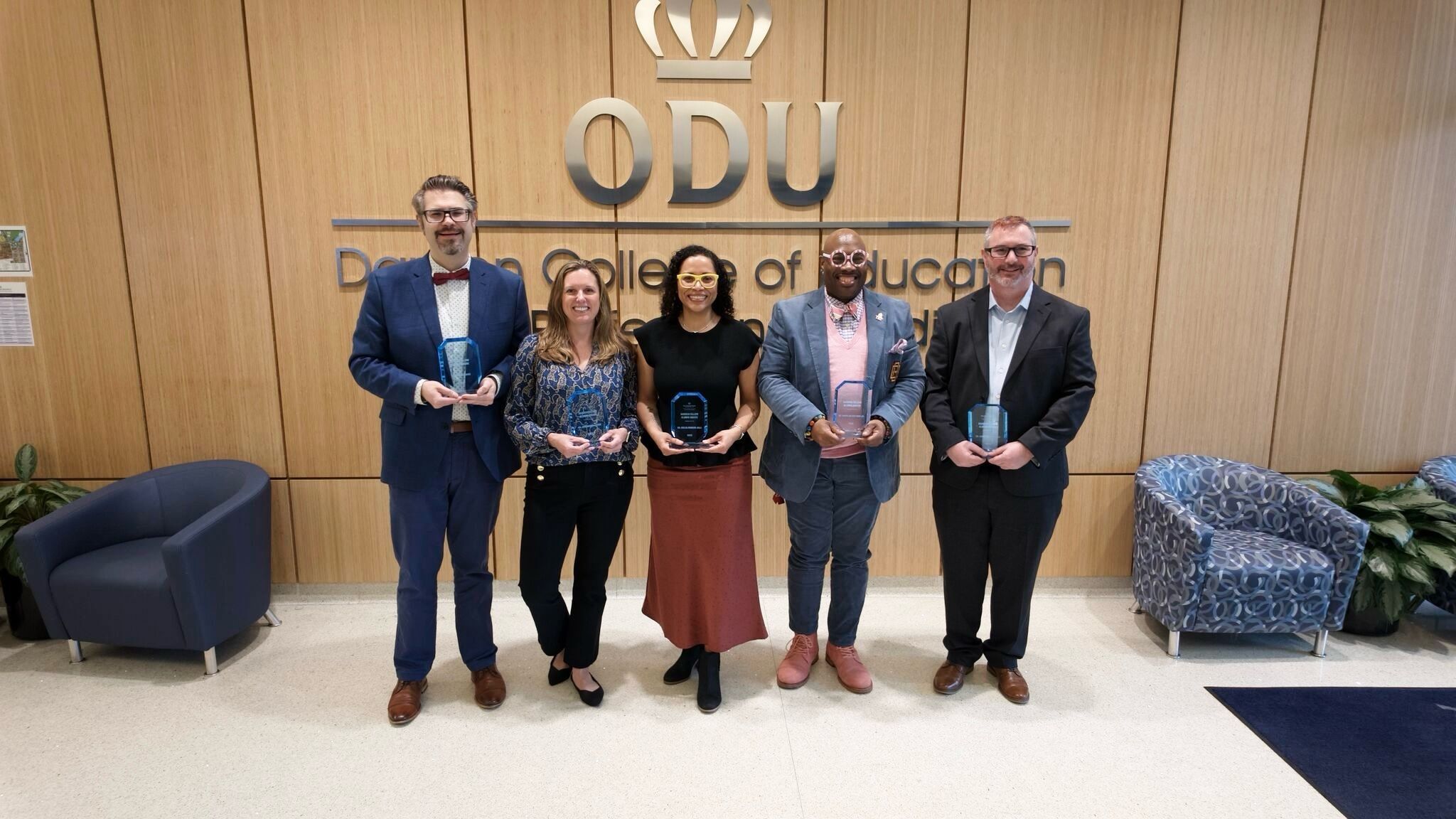
Congratulations on being selected as a 2026 Darden College of Education and Professional Studies Fellow!
Each of the college’s five academic departments nominates individuals who have received one or more academic degrees from the College for this honor. You were nominated by the faculty of the Department of STEM & Professional Studies because you have made significant contributions to the profession and distinguished yourself in your career. Your selection as a Darden Fellow was a unanimous decision. I hope you will be able to accept this honor and participate in the College’s celebration of your accomplishments along with the College’s other Darden Fellows.
This was completely unexpected. I had no idea that I had been nominated, which made the recognition even more special. Although I know the faculty who currently lead and teach in the Instructional Design and Technology program at ODU, the professors and academic advisor who supported me during my time at ODU have since moved on to other institutions or taken on different roles within ODU. Therefore, I was specially touched and happily surprised to learn that the current faculty had nominated me for this recognition.
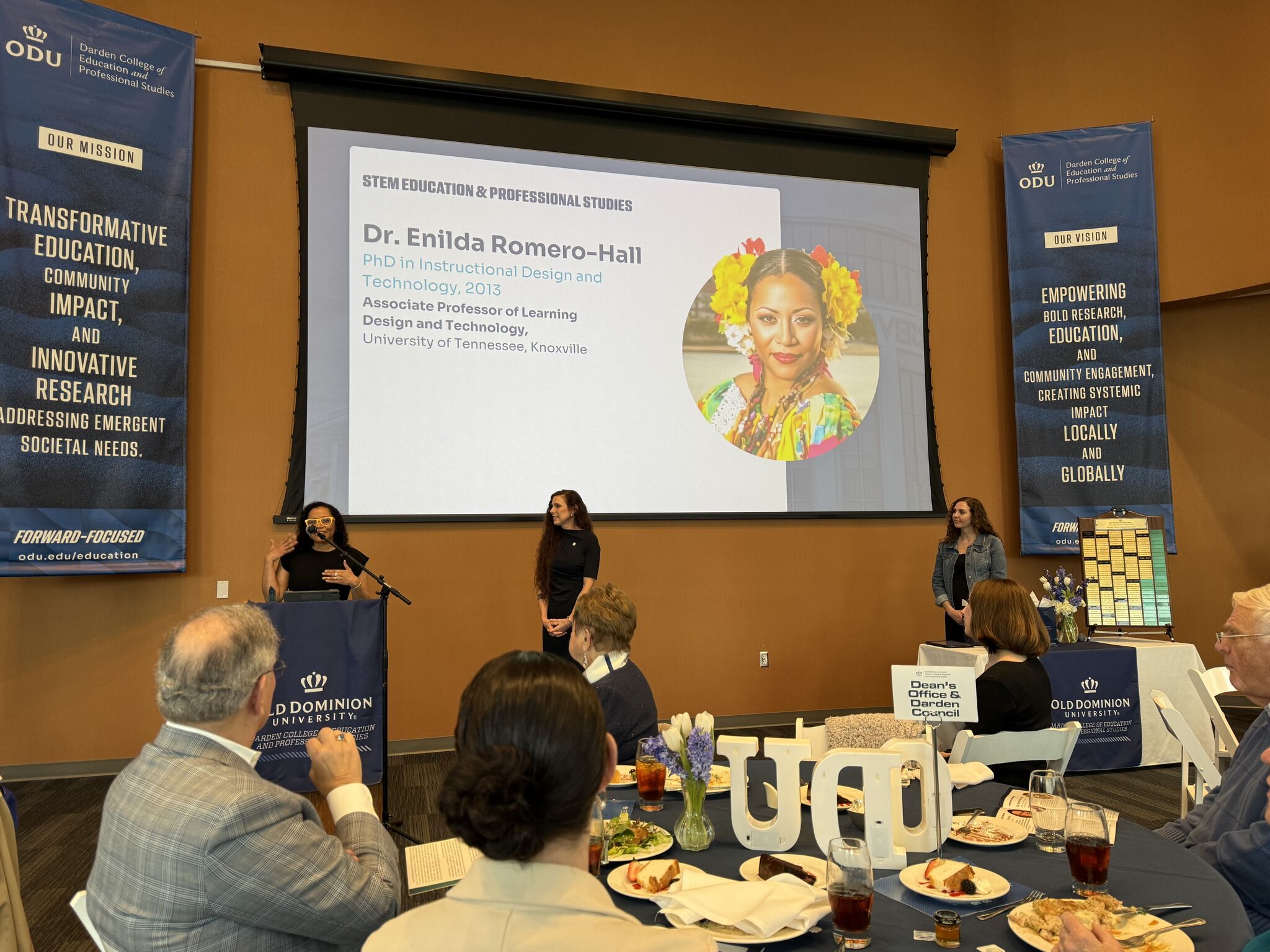
A few months later, I had the opportunity to travel to Norfolk, Virginia and participate in a special ceremony at the Darden College of Education in the ODU campus. My visit to Norfolk brought back so many memories about my time in the Hampton Roads area. It was also wonderful to see my academic advor, Dr. Ginger Watson and to connect with the current IDT faculty.
A longstanding tradition, Darden Fellows are nominated annually by faculty in each of the College’s departments. Selected from a pool of 47,000 Darden College alumni, awardees are recognized for significant contributions to their professional fields and for exemplifying service and excellence in their communities. Beyond personal achievement and community service, Darden Fellows also highlight the impact that ODU’s education alumni continue to make in Hampton Roads and beyond.
It is kind of crazy how opportunities sometimes come your way when you least expect it.
Earlier this year, I gave a keynote address at the TESOL International Convention in Salt Lake City, Utah. That morning the most important thing to me was to make sure I felt good about the keynote and that I stayed on time (attendees could not see this but in my view from the stage, I had a countdown to how much time I had left to talk — I may have gone over by 5 minutes). After the keynote, I felt good. I felt it had been successful. I was not expecting an attendee (Isadora Pereira Costa) of the conference to approach me immediately after my keynote to ask if I was interested in being a keynote at a conference she was helping organized in Brazil! She said, she would follow up and I just left it there. A week later she emailed me and said should would like to get this keynote setup and she forwarded my contact info to the lead conference organizer. That is how this BRAZ-TESOL journey started!
After the official invite was sent, a quick discussion with my family happened, plans were re-arranged to aligned it with our summer holidays, and travel plans were put in motion.
Three months later, my family and I started the journey that took us to:
A 45 minute layover (and what felt like a 5K) to Lima, Peru.
The most turbulent 5 hour flight between Lima, Peru and Rio de Janeiro
Landing in beautiful Vitória, Espírito Santo, Brazil
Vitória, Espírito Santo, Brazil
Vitoria is a wonderful city on the Brazilian coastline and it home to the Universidade Federal do Espírito Santo where the 22nd BRAZ-TESOL International Conference was hosted. This year was especially significant for BRAZ-TESOL, as the organization also celebrated the 40th anniversary of its founding. Of course, I was honored to be part of it!
As part of the conference, I attended a few sessions including a presentation by my former graduate student Adriana Vianna on Andragogy. I also attended a presentation by Isadora, in which she discussed learning strategies that she uses with her Brazilian students as part of their English Language Learning journey.
On Friday morning, I had the privilege of giving a keynote address to the members of BRAZ-TESOL:
The keynote drew on Learning Designers in Context (Discount Code for 20% off: 26SMA2) to examine how learning design is shaped by the environments in which it takes place. The book challenges the notion of design as a neutral or purely technical process, instead positioning it as a practice influenced by social, cultural, institutional, and technological contexts. By foregrounding context, the keynote invites educators to reflect on how their local realities inform their instructional choices. It will illustrate how educators and learning designers make decisions within constraints and negotiate competing priorities into the design process. The aim is to emphasize the importance of designing learning experiences that are responsive, situated, and aligned with learners’ needs, rather than relying on universal models or decontextualized approaches.
I am incredibly grateful for the warm welcome that I received at the 22nd BRAZ-TESOL International Conference! It was wonderful to meet many of the members of the organization and to deliver a keynote address focused on “Learning Designers in Context”! Thank you to Isadora Pereira Costa, Catarina Pontes, and the board of BRAZ-TESOL for the invitation!
P.S. Another major highlight of this trip was getting to spend time exploring Rio de Janeiro. Rio is unlike any other city I have ever visited!
View of Rio de Janeiro, Brazil from the Cristo Redentor
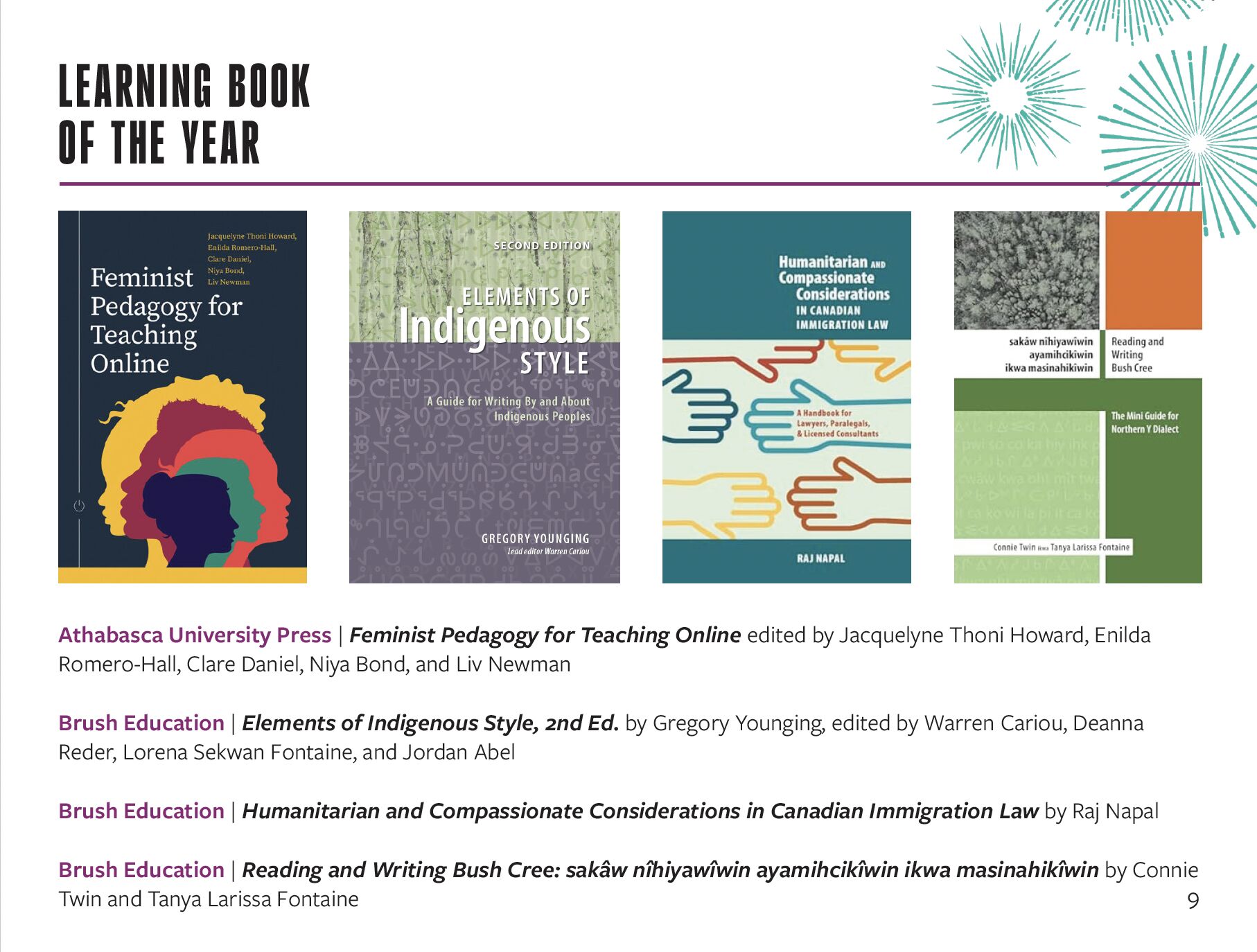
At the end of June, my co-editors and I were notified that “Feminist Pedagogy for Teaching Online” was shortlisted for the Learning Book of the Year Award at the Alberta Book Publishing Awards!
These awards recognize and celebrate excellence in the book publishing industry across the province of Alberta, Canada. We are thrilled and honored to have our work recognized among such wonderful contributions to the field. Huge congratulations to all the shortlisted publications: https://bookpublishers.ab.ca/programs/awards/
Feminist Pedagogy for Teaching Online provides a valuable toolkit that could be readily implemented in course planning and development, teaching activity design, faculty development workshops, and instruction design.
This chapter is based on a keynote address I delivered at the Association for Educational Communications and Technologies (AECT) International Convention on October 22, 2024, in Kansas City, Missouri. The speech has been adapted for this book, maintaining its original themes and ideas while refining the content for a reading audience. I hope it captures the spirit of the event and offers meaningful insights to readers. Through deep canvassing and listening to practitioners’ stories, the chapter highlights how context-specific experiences shape competencies and practices. It advocates for moving beyond Anglocentric and Eurocentric paradigms to embrace inclusive approaches. By reflecting on personal journeys and collective actions, the chapter underscores storytelling as a transformative tool for fostering understanding and innovation in education technology and learning design.
Discount Code for 20%: 26SMA2
Romero-Hall, E. (2025). Learning Designers in Context: Examining Practices Across the Global South. Routledge. https://doi.org/10.4324/9781003270591
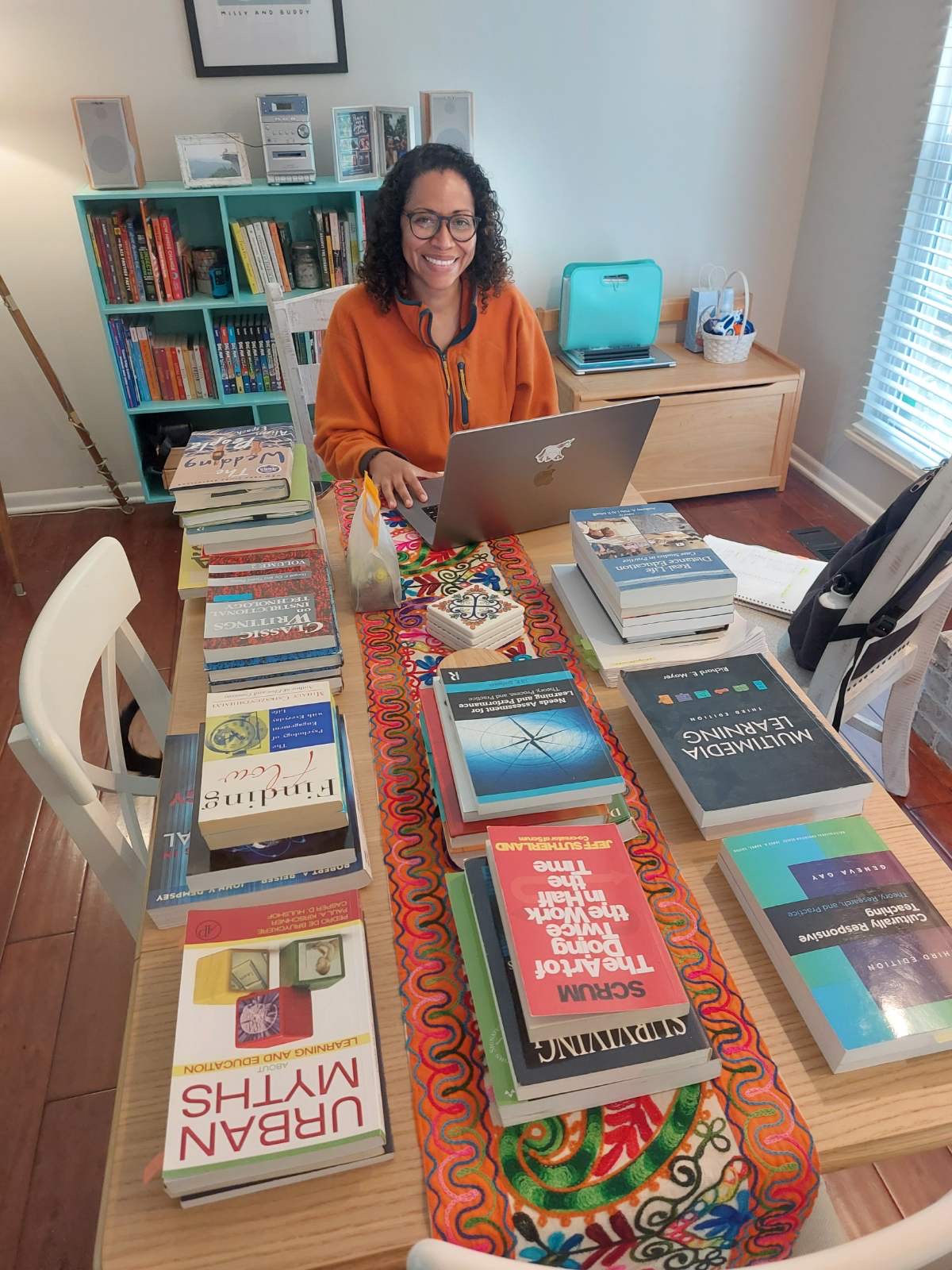
Enilda Romero-Hall (June 2025) revising the last chapters of the book.
Ruben, a learning designer from Lima, Peru, holds a psychology degree with specializations in clinical and educational psychology from Universidad Peruana Cayetano Heredia. After starting his career as an instructional designer, he transitioned to learning design consulting. Since 2020, Ruben has worked remotely from Groningen, Netherlands, while pursuing a master’s in organizational psychology. He collaborates with Peruvian organizations serving industries like insurance, real estate, and retail.
I like doing more work on the analysis and design phases. But, sometimes, I get projects in which I am “added” and, many times, that means I will work on the development phase. I feel like a third wheel of the car. This means that I get a job where the first two stages have already been done. So, I get to work on the development of materials, and it is the one that I like the least. When you contract with an organization, you don’t necessarily get the work that you want to do, but the work that they define that has to be done. I do not get to meet with the client and get the opportunity to do a little bit more consulting with them. I don’t have that access to that first meeting between the final customer and the contracting company. Obviously because I’m not in the company! So, I miss the opportunities to do that type of work. The other daily issue is that if I have to contact my contact, the redundancy! The company that hired me has to contact the end customer for any type of information that I need, so that can make the process bureaucratic and therefore slow it down. The processes are not finished in a length of time that are very efficient. On the other hand, one of the benefits is that the one responsible for what has to be done is the company that contracted me, not me. Obviously if I do a bad job, in the long run, even if you don’t meet the final client, the company that contracted me will stop hiring me. But, the effect of an error in the final product is not as direct on me, the contractor. There is less stress!
In his interview, Ruben emphasized the importance of strong analytical skills for learning designers, particularly in distinguishing between human performance needs and learning interventions. He also highlighted creativity as a vital component in crafting engaging and learner-centered materials. Ruben’s experiences underscore the value of adaptability and foundational competencies in delivering impactful and effective learning solutions.
It’s a good question, in terms of instructional design, I have only worked with Peruvian clients. We talked about a while ago, training or in general any educational event is also an act of communication. So, the communication we have in Peru is hardly direct, on the contrary, it is very circular. It takes us [Peruvians] so long to get to the point. Because that’s how it is, even in our literature. We very much take different paths until we get to the point. It is rare then, that in my culture, an email is less than two paragraphs. It is rare! That also affects the way we design training. Sometimes we are wordy. We sometimes do that because in our culture, we do it unconsciously. It is also reinforced because the client agrees with this wordy culture. When we are very straightforward, the client ends up telling us: Hey, something is missing, right? You have to explain more, you have to say more.
Romero-Hall, E. (2025). Learning Designers in Context: Examining Practices Across the Global South. Routledge. https://doi.org/10.4324/9781003270591
Abeo, a learning design professional from Nigeria, transitioned from teaching chemistry and mathematics to educational technology. His role as an academic advisor, where students expressed dissatisfaction with coursework, inspired his career shift. Abeo pursued a master’s in educational technology at the University of Ibadan, securing a position in a multinational organization before graduation due to his expertise and work ethic.
So in terms of culture, in a way I will say culture affects my design. I remember an experience where I had to substitute a voiceover artist for someone with a neutral accent, just because I’m dealing with a global community. So, that is part of the considerations: Who is going to use this course? They are people who are not first users of English. They are not native speakers of English. There are people whose official language is not English. Like for example in Nigeria, if you have gone through the four year university program, you should be able to at least express yourself [in English] and you might not have the perfect diction. But at least you’ll be able to express yourself and understand other people when they speak. But in some other parts of the world, people probably go to school where they don’t even use English as a medium of instruction. So, they are now working and they can do what they’re supposed to do on the job, but they don’t speak English or maybe they just speak very little English. If you speak too much in these e-learning modules, they [trainees] will not really comprehend. So you need to at least make it [the English language] neutral with a very simple choice of words. You have to consider all of those inputs in your design when writing your scripts. In a global environment, we have to respect the place of diversity and include everyone.
This interview emphasizes the importance of mastering the ADDIE framework and project management skills for learning designers in multinational organizations. He highlights the importance of evidence-based practices in learning design. Abeo underscores the need for adaptability and iterative feedback to ensure high-quality instructional design tailored to diverse learner needs.
I will say you have to be in a way flexible, while you are still sticking to the principle of instructional design. We currently work with an agile approach, where as I’m doing this task, the other person is doing that task. We are working all together to ensure we deliver on time. So, if you’re not flexible there’ll be friction. Either with your colleague or with the stakeholder. You just have to, at times, consider other people’s view about what you are creating. You are creating in your mind and in your head. You may feel you’re creating wonders. But when people appraise it and give you feedback, you must actually evaluate it and be flexible. Don’t be rigid. Do not say: I’m an expert, I have a master’s, and that certification. So flexibility is number one Number two: Never sacrifice professionalism all in the name of probably saving costs for your employer.
Romero-Hall, E. (2025). Learning Designers in Context: Examining Practices Across the Global South. Routledge. https://doi.org/10.4324/9781003270591
Kaya, a learning design professional in South Africa, works as an instructional design intern at the University of Johannesburg. Formerly a secondary school teacher of life orientation and English, she transitioned to learning design after pursuing a bachelor’s and master’s degree in ICT in education at the same university. Kaya’s passion for computer-based learning drove her career shift.
I decided to do a short course because I realized I need practical experience with regard to instructional design. I needed to have hands-on experience. I registered with the University of Pretoria, because it seemed to be the only university that offered a short course on international design, based on my research. It is further away from where I stay. I would have to drive for an hour to get there, but it was an online course. Fortunately, for me, I would go to work and then after hours I would engage with everything that my classmates were posting online and engage with the activities. I felt it was empowering for me, because it actually exposed me to other tools that I never thought I could use as a teacher. Also, as someone who wants to design learning material for online learning I really enjoyed the course. It was an 8 week course. After completing this course, I decided that I should just resign from my workplace and fully focus on looking for instructional design opportunities.I was looking for an instructional design internship opportunity. I got called to work as an instructional design intern at University of Johannesburg. I actually told them [hiring managers] that I did this course at University of Pretoria, and they liked that. I think it put me at an advantage! That’s how I got the position that I’m in now.
Key takeaways from this interview highlight essential competencies for South African higher education learning designers, including online solution development, collaboration with lecturers and team members, and creativity to adapt content for diverse audiences. Kaya emphasizes translating K-12 teaching experience into learning design practice and notes the importance of proficiency in African languages to engage effectively with course materials in multilingual contexts.
But now, I have to be able to convince people on what works or what cannot work. At the same time, I have to be creative to say, if we can’t do it like this way, we [can] do it in this other way. So, I believe now I have to be more creative. Because I want to present ideas and suggestions that are going to be interesting to people, that are going to wow them. At the same time, I do not want to forget that this is a professional course that I am working on. I am supposed to be professional, I can’t suggest options or develop content in a way that will suit younger children or that will suit secondary students when that is not my audience. As learning designers, you have to ask yourself: What is it that I need to do? The work should be professional, because at the same time, it will represent you as an individual and it will also be representing the institution.
Romero-Hall, E. (2025). Learning Designers in Context: Examining Practices Across the Global South. Routledge. https://doi.org/10.4324/9781003270591
Evelyn is a learning design professional in Argentina. She studied at the Universidad de Buenos Aires to become a certified translator. She is also a faculty member at the Universidad de Buenos Aires, where she teaches as an adjunct instructor and at times collaborates with other faculty members conducting research. In addition to her undergraduate studies, Evelyn completed a two-year master’s program in pedagogy. Due to her fluency in both English and Spanish as well as her knowledge of pedagogy, she transitioned to a role in learning design, working at a global corporation with headquarters in Houston, Texas, with clients all over the world. In her interview, Evelyn emphasized openness to learning, creativity, and teamwork as vital competencies for instructional designers.
As an instructional design manager, also, I have one-on-one meetings with my instructional designers. They tell me about their agendas and the projects they are working on. Then we have some brainstorming sessions. I consider myself a very creative person. If they get together with the client and have a specific training need, they [the client] want something out of the box. They want something that is not the typical solution. Instead they are trying to find something new or something different. That is when we get together and have maybe a short brainstorming session. I tell them about other projects that we have made because I, as an instructional design manager, have my eyes on all the projects that we develop. Maybe we have done something for another client, and that solution worked well. Maybe we can leverage some of the things from that solution and apply them to this one. I like to call it or refer to it, as a source of inspiration. I give them options! Or, maybe I can say: What if we combine these two things and we have this other new stuff or something?
Her role includes managing client relationships, resolving project challenges, and mentoring team members. Key takeaways from this chapter highlight the importance of strong writing skills, proficiency in emerging technologies, and adaptability to cultural differences. As a leader, Evelyn advocates for instructional design innovation and collaboration across diverse teams.
Another important competency is their commitment, because of the way we work. We tell them [our instructional designers] that we do not expect them to know everything. But we want our instructional designers to be willing to learn. Therefore I need them to be committed to their product(s) or to what they are doing. I always tell them: each process and each project has its own constraints and limits. Perhaps it has to be ready in two weeks and you cannot create a piece of art (in two weeks). So, I get that. But, it is that commitment with what you do that in the next opportunity you will try to do something different, something better. I hate these misconceptions around e-learning: e-learning is boring or e-learning does not teach. These misconceptions exist, in part, because of how we do our work [as instructional designers]. Because we do e-learning as an additional bullet in our checklist. We are teaching and we are working, so I need to feel that commitment and that passion that at the end of the day we have for what we do.
Romero-Hall, E. (2025). Learning Designers in Context: Examining Practices Across the Global South. Routledge. https://doi.org/10.4324/9781003270591










You must be logged in to post a comment.