In the Fall 2019, The English Department at The University of Tampa hosted Drag Queen Story Hour. To be honest, I do not remember if the event was hosted every year or if that was the first time. I just know that a flyer about the event reached my inbox and it caught my attention. At that time my child was 3 years old and I thought for sure he would enjoy story time. Also, he love going to campus on the weekends to see where his mom worked. For us as parents it was a great to teach him about inclusivity at a young age and to encourage a love for learning and reading.
That Saturday, we made our way to campus and we mentioned to our son that we were going to “drag queen story hour.” We got there, found some good seat, and proceeded to hear the stories that the drag queens were reading for us. It was a really good crowd. There were lots of children and parents, also faculty and staff from the university. After the readings, we wanted to say thanks to our readers. My family and I made out way to the front of the room and talked to the wonderful queens. One of them asked me what my role was at the university and I mentioned that I was a professor in the department of education. They were a bit shocked because according to them ” I looked very young” (I laughed). So they proceeded to tell me that they were interested in getting masters in education, so I gave them my business and told them to reach out to me if they had any questions. My family and I then took a picture with the drag queens! It was a wonderful event.
As we were walking back to our car I ran into the Provost, who stopped by the say hi to me and my family. In the exchange we mentioned that were coming to from the Drag Queen Story Hour event and he was happy to hear we enjoyed it and that there was a great turn out. He mentioned that there had been some threats made about potential protest but that he was happy everything had gone smoothly.
Once were in our car out little one said to me: “mommy were were the dragons? I did not see any dragons”
I was confused. So I said: “dragons? Why did you think were going to see dragons?”
He responded: You said we were going to “dragon queen story hour!”
My partner and I just burst out laughing! We explained the title of event to him (and what exactly were meant by drag queens) and he said: “Oh, okay!” and moved on with his day!
This week's episode of The Key is about a form of blended learning called HyFlex and features two professors who have both taught in the format and done research on its impact. #AcademicTwitter
A few weeks ago, I was invited to join a podcast to talk about HyFlex Instruction. I was on travel when I saw the email from the editor in my inbox and, without too much information, I accepted to join the conversation. I really did not know what direction the podcast was going to take. I know HyFlex learning is “controversial” and even “unwelcome” by many, but I really was just going to speak facts. I reviewed some of the research I have done on the topic and the reviewed the literature I have read on the past in preparation for the podcast. I am very happy that the editor had a conversation approach to the podcast and that guided the conversation on the “what comes next” direction. I will be speaking and doing more research on this topic in the upcoming months. So, this is just the beginning of the conversation.
I really do not like listening to my voice in recordings so I just know what I said from the actual recording session. I have not heard the podcast, so I appreciate colleagues who have reached out to let me know that they enjoyed listen to the podcast and the points I shared as part of the conversation. Above is a link to the tweet from Inside Higher Ed and here is the link to the webpage: Ep.91: The Pros and Cons of HyFlex Instruction
Earlier this year, I made a radical decision to cut off all social media from my life. I am grateful for the detox. I eventually returned to Twitter and LinkedIn, quietly, over the summer but now I am bit more active (let’s see how long that last). But I am not going to lie, one of the most difficult parts of that decision was leaving the groups and social communities to which I belonged that kept me informed or in which I could ask questions. These groups and social communities have also served as inspiration for my research on networked learning and informal learning in online social communities. So having said all of that, I want to share some of my most recent publications on online social communities in this post.
This chapter is really a self reflection on the work that independent study students, interns, and I did while working at The University of Tampa connecting the current students, alumni, and public to IDT program using institutional social media accounts. But in all honestly, those practices were highly influences by the practices of other IDT programs who run their own institutional social media and research on networked learning. Here is a short blurb from the abstract: “In this paper, it is argued that social media represents a convivial technology in which individuals are engaging in networked learning. A review of the literature yielded examples of how institutional social media is been used in teaching and learning specifically in instructional design and technology programs. Insights from a case study about an instructional design and technology program that has been actively using different institutional social media to enhance the networked learning experience of the graduate students (and other stakeholders) in the program is shared as a way to connect research with practice.”
Gomez-Vasquez, L., Romero-Hall, E., Jaramillo Cherrez, N., Ghani, S., Rodriguez, A. & Ripine, C. (2022). Keeping Citizens Informed and Engaged During the COVID-19 Pandemic Using #YoMeInformoPMA: A Case from Latin America. Health Communication. https://doi.org/10.1080/10410236.2022.2035509
This paper is dedicated to my motherland, Panama! When the World Health Organization declared COVID-19 a pandemic, I was on sabbatical in Panama. The days after a pandemic was declared were crazy. I have written a bit about it in this blog post. To keep myself informed of what was happening in Panama in response to the pandemic the Panamanian Health Ministry recommended that everyone use the hashtag #YoMeInformoPMA (which literally translated to: “I stay informed Panama”) in social media. As a researcher, it immediately triggered my desire to know: “What are people learning, discussing, and sharing using this hashtag?”. So I quickly emailed my collaborator Dr. Lina Gomez-Vasquez so that we could start tracking tweets with this hashtag. Huge thanks to Lina for leading the write up of this paper and co-authors for assisting with the analysis. Here is a short blurb from our abstract: “Using quantitative content, social network, and thematic analysis, this study examined 2,500 tweets from April to August 2020 that included the hashtag #YoMeInformoPMA. Panama’s Public Health Ministry created the #YoMeInformoPMA hashtag to keep citizens informed and engaged during the COVID-19 pandemic. Research on social media use and implementation in Latin America during the COVID-19 pandemic, to inform and engage the public, is limited. Therefore, the aim of this investigation was to analyze strategies, themes, multimedia formats, key actors, and overall communications patterns of a Latin American health community hashtag. Our results determined that actors using the hashtag #YoMeInformoPMA mainly used an interactive strategy, a message that aims to promote casual conversations, advice, and problem-solving.“
Romero-Hall, E.J. (2021). Undergraduate students in online social communities: An exploratory investigation of deliberate informal learning practices. Journal of Applied Instructional Design, 10(3). https://dx.doi.org/10.51869/103/erh
We often do not realize that there are many instances of informal learning practices: implicit learning, reactive learning, and deliberate learning. In this paper, I focus on “deliberate learning refers to informal learning that occurs when an individual takes time to think about how and where to gather information.” This paper further analyses data that was collected as part of an internal grant sponsored by the University of Tampa on the use and participation of undergraduate students in social media (with a specific focus on teaching and learning). Here is a blurb from the abstract: “A total of 573 undergraduate students consented to participate in this investigation about deliberate informal learning practices using social media. Data analysis consisted of parametric and non-parametric statistical procedures. An analysis of the rankings provided by undergraduate students for the different deliberate informal learning activities performed in their most used social media (MUSM) showed that listening to podcasts related to their area of study, following/connecting with professional organizations, and connecting with leaders in their field of study were ranked higher than the other activities. The results also showed evidence of statistically significant differences in the ranking provided to the informal learning activities performed by undergraduate students in their least used social media (LUSM). Listening to podcasts related to their area of study, viewing videos that can assist with coursework, and following/connecting with professional organizations were ranked higher than the other deliberate informal learning activities.” This journal article is open access.
Guest Edited Special Issue
Romero-Hall, E.J. (2021). Informal Learning in Online Social Communities. Journal of Applied Instructional Design, 10(3), https://edtechbooks.org/jaid_10_3
I wrote my last post back in May after participating in OTESSA conference: The #OTESSA22 Recap and Resources and honestly I had no idea the craziness of a summer that I had ahead of me! It has been 1.5 months since we moved to Knoxville. The boxes are unpacked and we have settled. I think that has been the number one questioned I have received for the last month from friends and colleagues.
There is so much that has happened this summer, I really do not know if I can sum it up into a blog post but here are the highlights:
I completely deleted my Facebook and Instagram accounts. Initially those were going to be temporary deactivations but every time I thought about reactivating my account, I hated the fact that I was going to fall into old habits or deal with the social media non-sense (one day I will write about this term “social media non-sense”). It has been challenging at times because there are connections that I really miss and some that I honestly cannot connect in any other ways (i.e., friends who live abroad). But, I am still undecided on whether I will rejoin again.
We no longer live in our Seminole Heights bungalow in Tampa. I can’t believe we sold our first house. The process of selling was difficult in so many ways. It was exhausting mentally. It took over our lives. I will miss our neighborhood. Seminole Heights will always have a special place in my heart (i.e., it is the house were I saw my son take his first steps and the neighborhood he learn to ride his bike) but I am happy that the house sold allowing us to move and fully focus on our new chapter in Knoxville.
I became a U.S. citizen. I remember arriving in the United States January 2004 and landing in Kansas City to attend school at Emporia State University. That was an absolutely crazy adventure. I took the Greyhound bus from KC to Emporia (a two hour ride) and when we arrived in Emporia I was dropped off at a gas station. I was like “What the hell? Where is the bus terminal?” I asked the gas station employee to please call a cab for me and he was like “Well there is only one cab in town so know that it will be a while” (Yes, this was life pre-UBER, imagine that!). I really should write more about my adventures as an international student. Anyways, glad I completed all the requirements and applied for citizenship. The best part is that I get to vote!
I did the bare minimum in terms of scholarship. Instead I focused on the relocation process and I am so happy I didn’t kill myself trying to do a million things. Early in May I was contacted about a project that “must be written over the summer because the institution was going to pay us $$ over the summer to write the paper”. My response was: “Well the institution can keep their $$ because I am not about to comprise my sanity over a paper I can write in the Fall”. Best decision ever!
I did teach a two-week course on “culturally competent design for online learning” as part of a grant funded project “Online Ready” by colleague Dr. Lucy Green and colleagues. It was so much fun designing the course and launching it. It was an online asynchronous course for K-12 school librarians. This was the first iteration of the course now we get to address the feedback and launch it again next year with a different cohort.
There was minimum travel this summer but in the road trip to Knoxville we did get to explore two other major Tennessee cities: Chattanooga and Nashville. Definitely visiting again!
One of my favorite things to do after a good conference is to collect the resources acquired in a blog and re-share it with others. It is also a great way for me to tag a resources to a specific event (in my blog) in case I want to go back to it in the future. Don’t ask me why, my brain just works that way. Any who, last week I attended OTESSA 2022 which was her virtually and is organized by the Open/Technology in Education, Society, and Scholarship Association (OTESSA).
Here are a few thoughts on the conference:
Really enjoyed the conference sessions, social events, and the schedule.
I was also really appreciative of the active efforts to promote all sessions via social media, at times it served as a reminder to a session I wanted to attend.
I was not sure how the sessions were going to relate to theme of the conference “Critical Change” but at least based on the sessions that I was able to attend, there were several critical conversations happening about “what is next” and “how we do it in a meaningful, critical way”.
Going back to the schedule, it was a bit more challenging to catch the evening talks but glad I can catch the recording until the beginning of June.
The conference organizers did a phenomenal effort running is smoothly (i.e., sharing updates daily, the pre-conference info to check login information, and just attending sessions to make sure everything was going as planned).
At the beginning of the week I made a post on Twitter stating that I would be sharing resources during the week but honestly it was too much for me to tweet out every day. Trying to attend sessions, tweet giving proper credit (important to me), and trying to keep up with what is going at home was too much. So, instead I bookmarked and hope to proper share in this blog post. I will include the session the resource was mentioned or shared.
Surveillance in the System: Data as Critical Change in Higher Education (Research-Oriented), Bonnie Stewart (University of Windsor), Samatha Szcyrek (University of Windsor)
@bonstewart and @samanthaszc discussed findings on research related Surveillance in the System: Data as Critical Change in Higher Education. What do you know about datafication in your institution?
Resource: Polisis gives you a glimpse of what websites actually say in their privacy policies: https://pribot.org/polisis
Online or Remote Learning and Mental Health (Research-Oriented), Stephanie Moore (University of New Mexico), Michael Barbour (Touro University California), George Veletsianos (Royal Roads University)
Wrapped up the first day of #OTESSA22 with a session discussing Online or Remote Learning and Mental Health @steph_moore@mkbtuc@veletsianos. Looking forward to reading the final results!
Hide and Seek: On Kids, Power, and Resistance in Education, Sherri Spelic, American International School Vienna
There were some many words of wisdom and amazing poetry in the keynote by @edifiedlistener at #OTESSA22. One of my favorites words of wisdom was on her initial slides “my students are tireless teachers”
Outside-In: Openness as Subversion, Maha Bali, American University in Cairo
Embracing Feminist Pedagogies in Learning Design, Enilda Romero-Hall, The University of Tennessee Knoxville
Huge thanks to #OTESSA22@otessa_org for the opportunity to participate and contribute to the conversation on Critical Change. Here are the slides from my talk today on “Embracing Feminist Pedagogies in Learning Design”: https://bit.ly/38C25Q6
Exploring university teaching during a pandemic to derive recommendations for post-pandemic times (Research-Oriented), Joerdis Weilandt, Sandra Dixon, Richelle Marynowski, Lorraine Beaudin, Rumi Graham, Stavroula Malla, Angeliki Pantazi (University of Lethbridge)
Multi-Section Open Course Design: Design and Implications for Faculty, Sessional Instructors, and Learners (Practice-Oriented), Valerie Irvine, Michael Paskevicius, Colin Madland, Rich McCue, Verena Roberts (University of Victoria)
The social events were lots of fun! The Bhangra dance with @GurdeepPandher was a great workout and I definitely need more of it my life. I was a bit uncoordinated at first and too shy to turn my camera on but I finally got it and still too shy to turn my camera on. The DJ session so much fun too! I didn’t participate in the trivia challenge but I enjoyed all the beats. Thank you again to all involve with planning and organizing the conference (Valerie, Aras, and Terry!) .
This past week I attended my first in person conference since February 2020. It was the Annual Conference of the National Society for Experiential Education. Back in early Summer, when I received the email from the Center for Teaching and Learning about attending the conference I felt good with attending the conference. Florida at that time was doing better with the number of COVID-19 cases but that quickly changed and I was starting to become hesitant about attending the conference. Thankfully the numbers are starting to decline after a massive spike due to the Delta variant. Another encouraging aspect was that the conference had a mask mandate for all attendees. It was sent out via email several times prior to the conference. It was also nice that the conference was in Orlando so if I didn’t feel comfortable with the COVID-19 measures, I could drive home in 45 minutes. Thankfully after I walked into the keynote session I immediately noticed that everyone was wearing their masks and wearing them properly. The conference did include a lunch but I didn’t attend because I didn’t feel comfortable attending this event so I just ordered some UBER eats.
The conference this year had an overall theme focused on social justice in experiential education. My first session was the keynote by Dr. Raja Gopal Bhattar (they/them/theirs) on Tuesday morning. As stated in the website of the conference: “Dr. Bhattar is a nationally recognized higher education leader, advocate, consultant and author. Raja will address how effective experiential learning requires intentionality and clear understanding of outcomes for our communities. Through storytelling and reflections, this keynote will offer insights and strategies on how experiential education leaders can incorporate equity, inclusion and belonging in all aspects of our work.” I loved the keynote speaker! I like it when keynote speakers make me reflect and this was a perfect example of this. Some of the questions I had to think about white listening to keynote speaker:
How do we show up?
Identity versus perception?
What is our role in upholding/disruptive inequitable systems?
How our students receive us?
Whose perspective is not on the table?
How do societal systems enhance or inhibit student success on campus?
We also had to do an identity grid that helps us reflect on “how often do we think about who we are beyond our titles? ”
Identity Grid at NSEE 2021
Other sessions that I really enjoyed were:
Social Justice and Antiracism in Career Education and Experiential Education: Session discussed a process for creating a Call to Action with accountability measures, equity-oriented course syllabi, and a 5-step model to consider in your own work. This is a wonderful resources shared during the session: https://tinyurl.com/4j2tmxaw. This resources were used to create the Social Justice and Career Education infographic. Please see image below.
Providing career readiness support to female students in male dominant industries: This was a nice round table session focused on different kind of events that staff and faculty can use to create opportunities for networking, grow , and support for female students and those who identify as woman.
Using immersive virtual reality in higher education to facilitate authentic learning experiences: This was a very introductory session into VR and how a university had employed VR experiences into the curriculum to provide learning experiences related to manufacturing at the start of the pandemic in lieu of in person field trips. We got an opportunity to brainstorm ideas for our own curriculum.
Learner-centric virtual exchanges: No travel, no problem: This session related to a virtual global challenge that an institution took at the beginning of the pandemic in lieu of study abroad programs. As soon someone who has coordinated a study abroad program in the past and who is considering one next Spring I want to think of alternatives in case the pandemic requires me to make a change in plans. This session helped me think about different approaches that I can take virtually.
Influencers abroad: Enhancing cross-cultural awareness through social media activities: This session explored leveraging strategically designed social media learning activities to enhance cross-cultural awareness. I thought it was a creative to consider alternative assignments during study abroad experiences. Some of this assignments included: Vlogs, Instagram stories (academic versus personal accounts) every day, Instagram food related posts, and end of a program presentation/reflection.
The curators of the Feminist Pedagogy for Teaching Online guide (Jacquelyne Thoni Howard, Clare Daniel, Niya Bond, Liv Newman, and myself) are putting together a new edited collection on this topic. A list of potential topics is included in the call.
Please consider submitting a book chapter proposal by July 2nd, 2021. The book will be proposed to the Distance Education series at Athabasca University Press for publication in an open-access format.
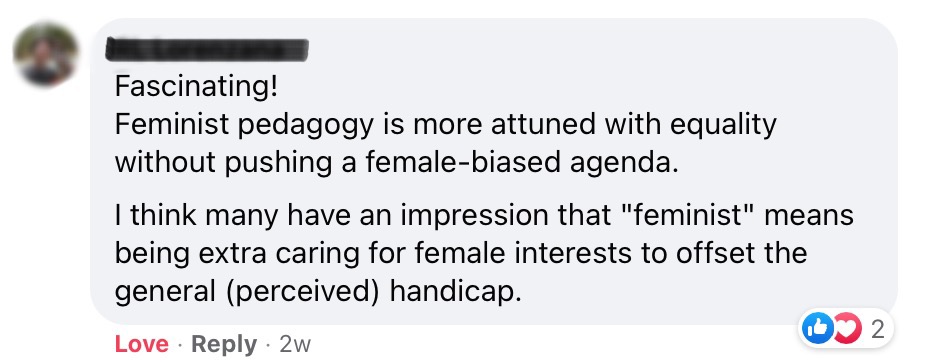
I was recently invited to write a post for the newly established AECT Interactions digital publication. I welcomed the opportunity to write about a topic of my choice and was honored to be amongst those invited (which included colleagues who I deeply admired and whose work I value). Since I am starting to explore and write about feminist theories in various ways in my work, I decided that I wanted to write a short practical piece about feminist pedagogy. The lead of this new AECT initiative, Dr. Michael Grant, encourages us to write pieces that serve as a reflection of our own teaching experience and/or research outcomes. It seemed natural to me to write about my own experience embracing feminist pedagogies in my teaching. You can read my published post in AECT Interactions here: How to Embrace Feminist Pedagogies in your Courses
I shared the post widely online in different social media outlets and received fairly positive feedback on the topic and content covered. One of my favorite comments was shared in a Facebook group. It put a smile on my face. Below is a screenshot of the comment.
For the last few years, I have taught an ID Project Management course. I normally teach this course during the Summer term, which is a 6-week intensive session (and I mean truly intensive!). However, the rotation of electives in our program now allows me to teach the course during the regular 14-week term. This meant, that I now have room in the course for guest speakers who share their experiences related to project management in instructional design in various settings.
This semester, I was able to record the guest speaker sessions and share them with the students who are not enrolled in the course. These recordings are now uploaded to YouTube. Apologies in advance if YouTube is unavailable in your area due to Internet restrictions.
I do a short writing assignment every semester in my “Intro Seminar to Instructional Design and Technology course.” The main purpose of the assignment is to expose students to diverse topics in the instructional design field, to share an open access book with them (so that they can have as a future reference), and to assess their writing abilities (in order to provide support or share resources when needed).
There are so many great reflections this semester. One of the main takeaways was “openness as more than just textbooks and access but as a way of to improve our practice, sharing, and collaborating.” The chapter “Open Education in Palestine: A tool for Liberation” was selected by three different students and “Diversity, Equity, and Inclusion in Open Research and Education” was selected by two students. Clearly, the topics/titles peaked the students’ interest.
Next week, I will ask the students if it is okay to share some of their reflections. Happy Friday!




You must be logged in to post a comment.