The “Quick Update” Post

I wanted to write a couple of posts about things I experienced this last semester and then life happened! So, I am merging it all into this post. Please forgive the imperfection of my writing. I probably will not take the time edit and re-edit. What you are about to read are the words as they flow from my brain to the keyboard to this blog.

Since I last wrote a blog post (not an announcement but an actual blog post) I became a mom. This time last year, I was in Switzerland in a Faculty Exchange program. It was exactly during the exchange that I discovered that I was expecting a baby. Yes, the pregnancy test results read “Schwanger.”


image

Many things have happened in my personal/professional life in the last year (since I found out I was pregnant) and I want to share them in my blog. However, I am still trying to figure out how to best express those experiences and feelings in a blog post (or maybe more than one). I hope to take some time to write about this experiences in the near future.

What I do want to share in this blog post is that I have officially completed my third year in  a tenure track position. At the beginning of the Spring 2016 semester, I submitted all my materials and by mid March had received all the pre-tenure letters. This is a minor milestone but I still consider it a milestone. I guess the questions that I need to answer now is: what is happening past pre-tenure? Well, pretty much just keep on working hard. I have a long term “to-do list” that I have to tackle and of course, the everyday “to-do list.”

The last three years served to connect with really amazing faculty and graduates students with whom I have found common ground (topics of interest) to work on projects. Some of these projects are strictly related to the instructional design practice and others are more multidisciplinary. I am very excited about this projects and some of them will presented in conferences later this years (currently working on getting some manuscripts out for review). Other projects are just starting so more details coming soon.

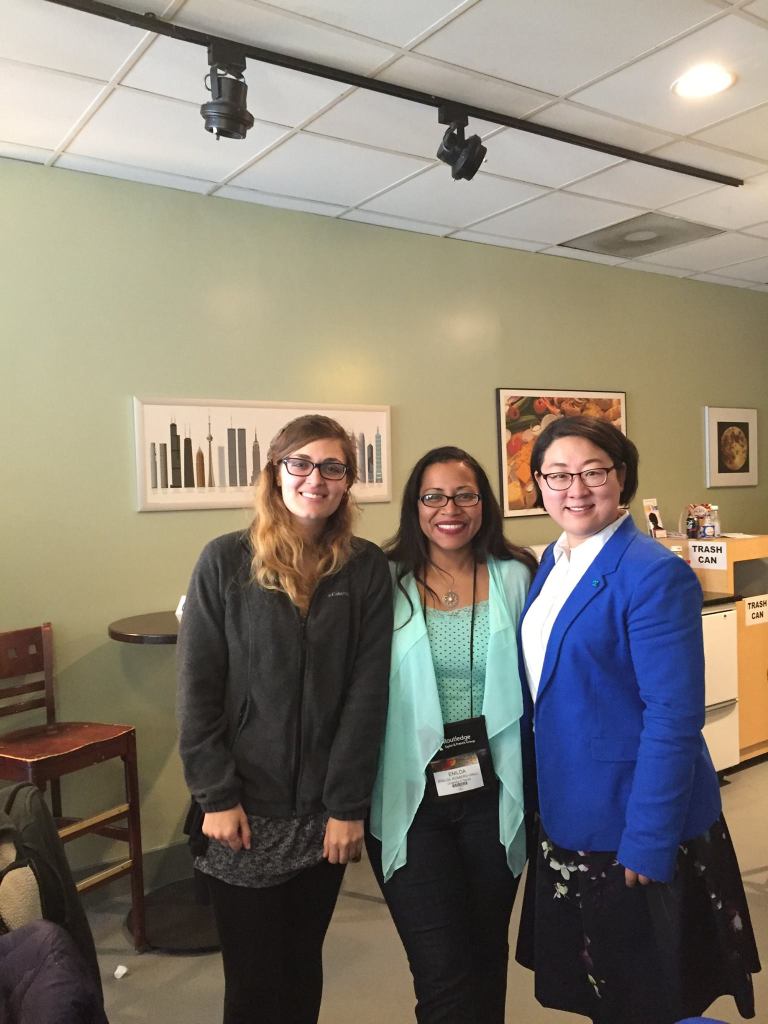
I also want to quickly mention that I also started professional service with the AERA SIG Design & Technology as a Technology Liaison. I am excited for this opportunity and very much looking forward to working with colleagues in the SIG. This previous sentence reminded me that I wanted to mention how much I enjoyed attending AERA 2016. I did not present a paper but instead had the opportunity to participate in a mentoring program sponsored by the AERA SIG Design & Technology. I met two outstanding graduate students, Amanda and Yi.
13087222_903053373151445_3939118171814845924_o

I hope the SIG continues the mentoring program in the future. It was a great opportunity to share my graduates student and faculty journey. Most importantly, it was an opportunity to listen to the concerns of graduate students and, hopefully, provide guidance. I also learned from the graduate students in the process. Both graduate students, Amanda and Yi, shared conferences, resources, and research groups that were completely new to me.

During the conference I also participated as moderator in a panel discussion on the past, present, and future of the design and technology field. The panelist included Elizabeth Boling, Pat Hardre, and George Veletsianos. It was nice to listen to the panelists’ perspective on the current state of the field as well as suggestions for graduate students and faculty doing research on topics related to design and technology. The current Graduate Student Representative of the SIG Design and Technology board, Shonn, live tweeted the panel presentation. If you are interested in reading more about it, you can check out the AERA SIG Design & Technology Twitter stream.

That is all I have for now. Hoping to be post more in the near future. Hopefully, future post will not be as lengthy.

New Faculty Mentoring Program: 2015 Cohort [Research, Teaching, Collaboration, & Support] #AERA15 #AERADivC

During the AERA 2015 conference in April, I attended the Division C New Faculty Mentoring Program. I had attended a mentoring program in the past at AECT 2012. The AECT 2012 mentoring program was a two-day seminar with three mentors who volunteered their time to provide advance graduate students and new faculty with words of wisdom and practical advice for the tenure track journey. It was also great for networking. Unfortunately, due to Hurricane Sandy I was not able to catch my initial flight from Norfolk, VA (where I was living at that time) to Louisville, KY (where AECT was having the conference). My flight was delayed an entire day, this meant I was not able to attend in person the first day of the mentoring program. Instead, I joined the discussing via Google Hangout but it was not the same. I was relaying on hotel conference room wi-fi which was “okay.” Also, it was hard to be part of the conversation because it was not something the organizers were expecting. I did manage to join the conversation the second day of the mentoring program at AECT 2012 [Sorry, that was my “blast from the past” portion of this post].

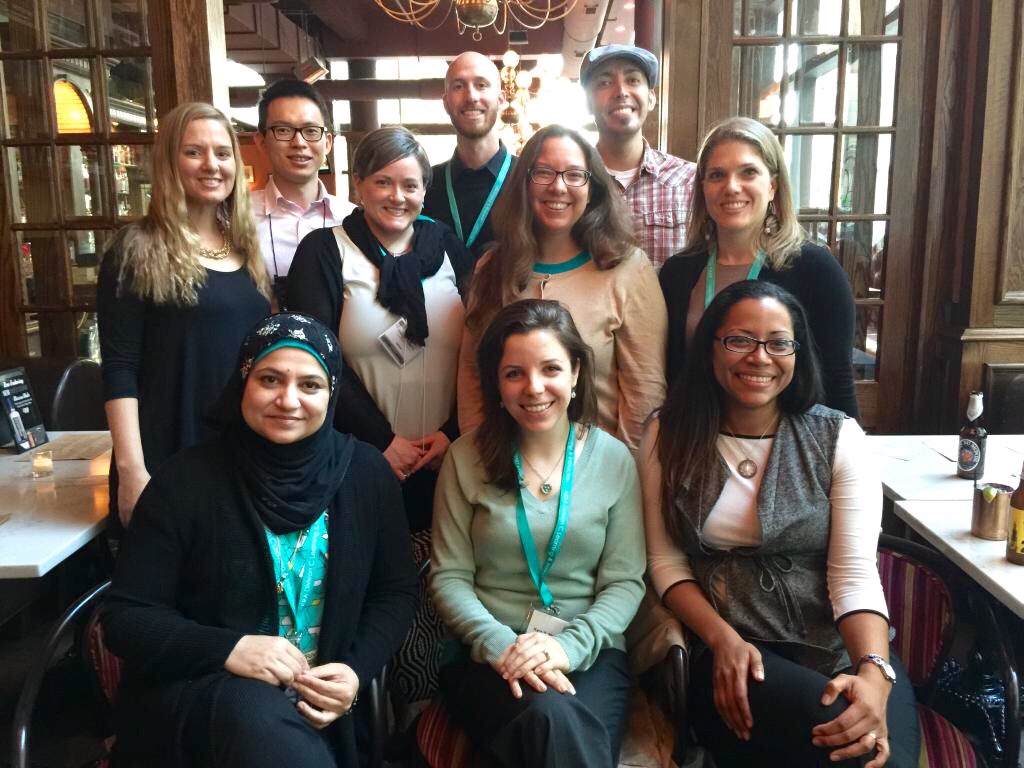
Back to AERA 2015: This year during the mentoring program at AERA15, the organizers [Gwen & Rayne] emailed us in advance the program with the different sessions and speakers. I was thrilled about the sessions and excited to meet my cohort. We were a very diverse group based on our universities and our cultural/regional backgrounds. The first day of the mentoring program we all provided a brief introduction of ourselves and what we hoped to get out the program. Then, worked on an exercise about our identities, which by the way was very difficult to write. I mean — How often do you think about your identity (in your community, your institution, your department, and your field)? We also had various sessions related to grants and external funding opportunities. We talked to faculty members that have in the past successfully acquired grant funding. They definitely shared some insight into grant writing, selecting a collaborator, what happens after you get a grant, and myths about grants/external funding. The best advice we got (from my perspective) was to have a good budget, have a great idea, select a collaborator that you want to interact with on a very regular basis, and polish your project management skills. We also had a session with two program officials. One from the National Science Foundation and one from the Spencer Foundation. This was just amazing because they shared some of the programs that their institutions offer to new faculty (at least within the first five years of appointment). One of the best recommendations given to us by the NSF program officer was to volunteer as a reviewer.

image

One of the most interactive sessions was definitely the session related to teaching. We had a speaker from the Center for Teaching and Learning at Penn State University who talked about strategies we should consider, the amount of time we spend preparing our courses, evaluations, resources our universities provide, and other related topics. One of the highlights of this session was that we were sitting in different tables (about 4 new faculty members in each table) and we were sharing our information with two teaching mentors per table. This mentors were individuals in field that are well known for their teaching. This is pretty unique. We often hear about research mentors but we rarely hear about teaching mentors. It was nice to have the small group discussion with our colleagues and the teaching mentors.

We also had a discussion session with faculty members who have been publishing for over 30 years and gratefully shared some much needed wisdom on putting together your research agenda (post on this coming soon), writing habits, submitting to peer review journals (and re-submitting, revising, getting rejected), and just been scholars in our field. I loved the informal environment of this discussion. It was more than anything a Q & A session.

Of course, we spend the two day program with Gwen and Rayne who not only organized all the sessions, the speakers, our delicious dinner, and happy hour but also provided their own wisdom and experience. Thank you ladies for your work and dedication. BTW — Gwen will be the main organizer of the NFMP next year so make sure to check in November and December for an email from Division C. If you are a new faculty member, this program will be very refreshing, eye opening, and definitely worth your time/energy. As a cohort, we have managed to stay connect (I know it has been less than a month since we met). We took steps to ensure we can reach out to each other if we have questions or need feedback or are struggling with an issue — you get the point. To help us stay in touch we started our social media group and we are currently working on starting a writing group.

image

Last, thank you to the AERA Division C for their commitment to their members!

EERA & #AERA15: My Two Cents

This semester, I had the pleasure of presenting and attending at two different conference. At the regional level, I attended the EERA (Eastern Educational Research Association) conference in February which was hosted this year in Sarasota, Florida. A nice one hour drive from Tampa. Some of the highlights for me from the conference were a session on:

  • Mindfulness practice in schools
  • Partnerships between institutions of higher education and private organizations to develop multi-institutional online courses
  • Large scale datasets

My objective when attending a conference is always to attend sessions that relate to my research interest but I also like to attend sessions that are on topics completely new to me. I was very interested on the mindfulness practice in school presentations primarily because I am a yoga practicioner and I was curious to know the research behind mindfulness/mindfulness-related activities and it how it affected learning (if it did). The presentation helped me understand the benefits and challenges of mindfulness in schools but it also made me realize that it can be applied to higher education. I immediately started to think how I could apply this with my students in the graduate classes. We are pretty lucky at UTampa because there is an active initiative called “the mindful mediation hour” which, I believe, is hosted every Monday. Other colleagues mentioned that this would be extremely difficult to implement in their institutions.

The session related to partnerships was a great opportunity to learn about a topic but it was also great to meet Barbara Lockee (Past AECT president). We had met in the past via email but I’ve never had the opportunity to talk to her face to face. It was wonderful to talk about AECT, Virginia Tech, the field of instructional design and she even gave me some great advise for the tenure track journey!

Similarly to the two previous sessions, I was interested in learning about large scale datasets and I thought it would be beneficial to sit in this session. It definitely was worth the time. I have never given much thought to the idea of using available datasets to conduct research but after sitting in this session I was considering it for my own research, research with my students in the classroom, and potential collaborations with colleagues. It was good to learn from others that use large datasets on a regular basis and to learn some of the do and don’t of large datasets analysis.

During the conference, I also presented on the use of VoiceThread as an interactive tool for audio/video discussion boards in a hybrid class.  This presentation was reporting on a data collection that I had done earlier in 2014 in which students provided feedback on their experience with VoiceThread through the semester and provided suggestions for improvement. It was nice to share some insight into the use of audio/video discussion boards in a hybrid class. Overall it was a nice of groups presentations in the session and good questions.

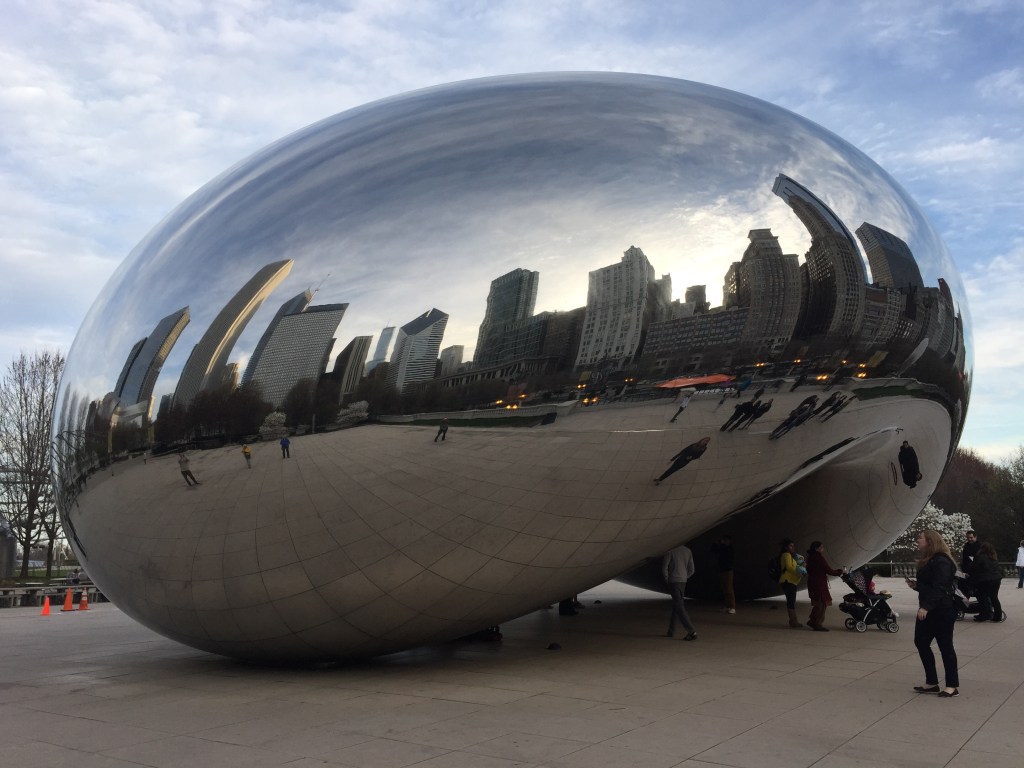
At the national/internationals level, I attended the AERA (American Educational Research Association) conference in April. The AERA meeting was held in the Chicago. I still consider myself a newbie to AERA but I feel that every year I learn something new about the organization, the different divisions, and the special interests groups. In previous years, I have carefully crafted my schedule to figure out exactly what sessions I am attending before arriving to the conference but given the intensity of the Spring 2015 semester, the best I could do was download the app and figure out my schedule a day before the conference started. I think my ability to put together a schedule was also influenced by the fact that I was attending the New Faculty Mentoring Program (sponsored by Division C — I am working on a blog post about my experience — coming soon) and I knew I was going to have two days of back to back sessions. In a way, I was not sure how energetic I would be by the first day of the actual AERA conference.
image

Once I did get around to selecting the sessions I was planning to attend, I focused primarily in divisions sessions and SIGs that related to topics that are a research interest to me and that I would like to present in the future at AERA. I wanted to get an idea if anyone else was doing similar research, using the same tools, similar methodology, or what it was like to present to individuals in specific SIGs. One of the SIGs that was of interest to me was Educational Neuroscience. I am currently working in a project with JoAnn Scott, Alumni of the UT ID&T program, related to cognitive processing in geriatric learners and we are considering submitting a paper in the future about this topic. One of the big takeaways of attending the Educational Neuroscience sessions were that: 1) the sessions are very well attended (I was standing in the back of the room for the three different sessions I attended on this topic), 2) there was significant talk about methodological concerns and the use of EEG to collect data, and 3) we (researchers) have to be carefully with broad generalization of the findings.
image

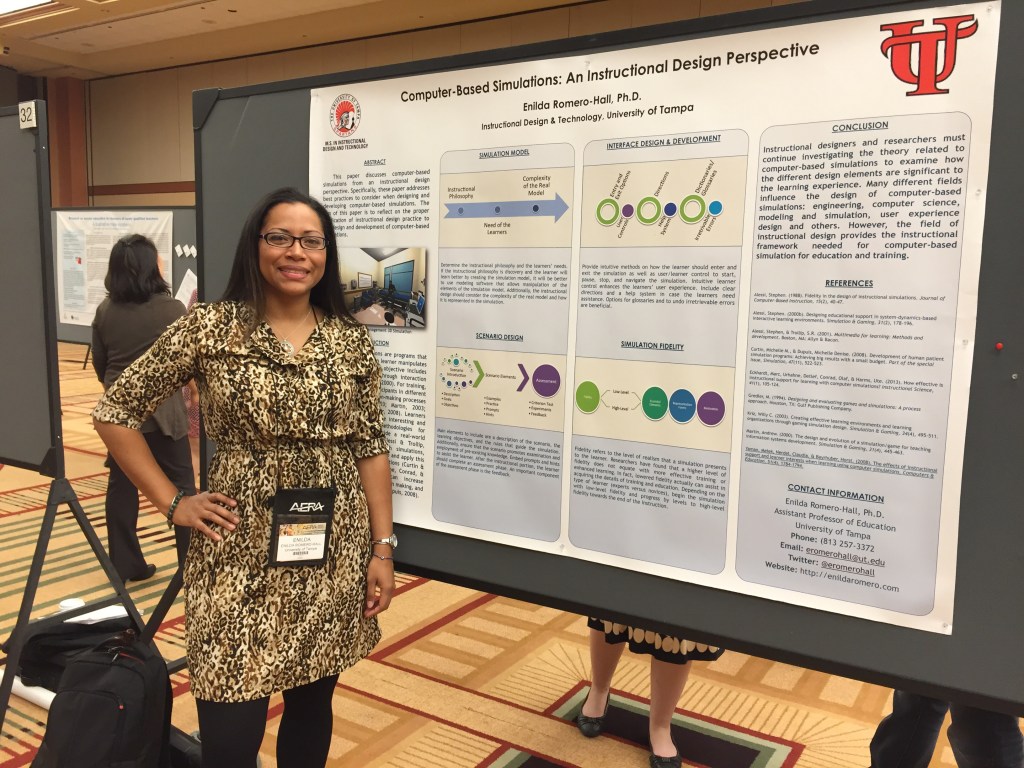
During the AERA conference, I also presenter a poster titled “Computer-Based Simulations: An Instructional Design Perspective.” This poster related to research I’ve been conducting using since I was in my doctoral program. Here it is in a nutshell: I started reading about computer-based simulation in the educational technology literature and I noticed most of the theoretical and conceptual work was back in the ’80 and early ’90. Since then, we have primarily focused on computer-based simulation within a specific context (is it a math simulation? is it a biology simulation? — you get the point). Yet, we (researchers) are rarely focusing on research related to the design of computer-based simulations (regardless of the context) based on instructional design components to make the simulation instructional, interactive, engaging, functional, and realistic. That is the short version of the story.

In summary, I truly enjoyed my experience at EERA and AERA15. I know I didn’t say much about the locations but I want to say that been able to drive to Sarasota for a conference was nice (except for the rush hour traffic back into Tampa) and Chicago was just amazing! I was a first time visitor to Chicago and I love it!

image

#AECT14: Learning, Design, and Technology

This year the AECT conference was held in the wonderful state of Florida, just 3 hours northeast of the Tampa Bay area, in Jacksonville. It was a conference that I was looking forward to attend because several of the students in the UT ID&T program [Follow the program in Facebook and Twitter] were attending and presenting!

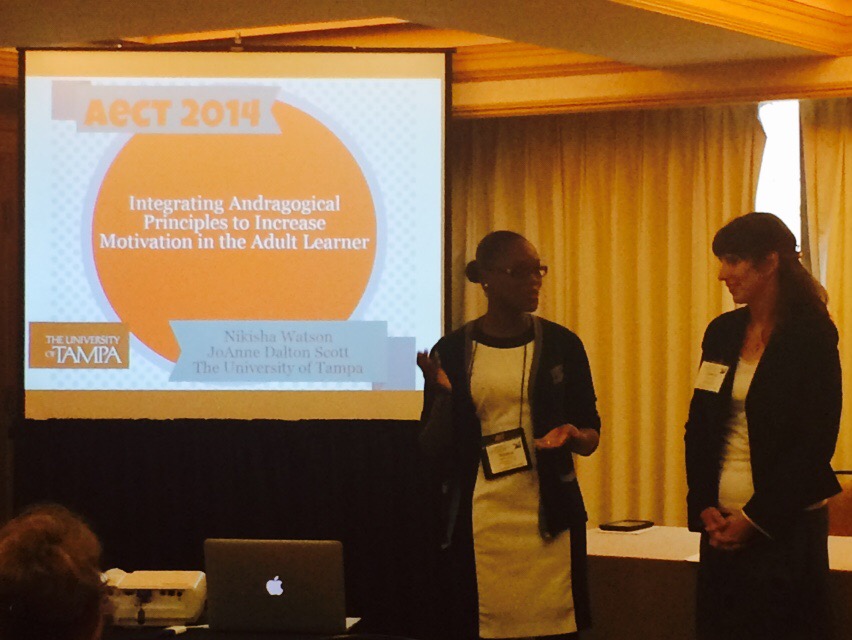
The first day of the conference for me was the Wednesday afternoon, two grad students from the UT ID&T program were presenting and I wanted to be there for their session. They wrote the initial version of their proposal as part of a midterm paper assignment in a course I taught in the Fall 2013 semester (my first semester as a faculty member). The topic of their papers were mainly related to motivation elements in the learning process. Their session was well attended and I felt extremely proud of their first conference presentation. Several attendees of the sessions had comments and questions about the topic of the presentation as well as feedback on their research topics. It was also nice to see the support from other UT ID&T classmates and faculty that attended the session. This was definitely a highlight of the conference for me.

IMG_2314.JPG
Another important part of the conference was to meet with my colleagues and friends from the AECT Research and Theory Division to discuss important topics related to future conference proposals, the professional development webinars, and future elections. I was not able to attend the RTD board meeting but I was there for the membership meeting, which included all the board members. It was nice to catch up with all of them, I know some of my fellow board members for many years now. One of the decisions that was made during the meeting is that the division will continue to elect a PD webinar facilitator for future webinars. I am glad that the RTD Professional Development Webinars started by Dr. Min Kyu Kim and myself as a suggestions Dr. Michael Grant will continue to be a part of the RTD division mission. While at the conference the PD webinars were recognized by the AECT leadership as well as the RTD board members.

I will continue to participate in the RTD board for one more year as Secretary. One of my primary roles will be the RTD newsletter and I am excited to make it happen. I want them to be fun, creative, and interactive. I am considering running another RTD position in the future but I am still thinking about it.

During the conference I presented in two sessions. One of the sessions related to a new research effort on the use of social media initiatives and strategies for professional development. In my particular case, I discussed the social media initiatives started for the ID&T program at the University of Tampa. The presentation discussed the current strategies implemented for the professional development of the instructional design graduate students. I also discussed the second phase of this research effort which includes data collection using qualitative and quantitative data. The other presentation that I had during the AECT conference was an informal panel presentation in which a group of international faculty (including myself) discussed with international graduate students the lessons learned during the first year in a tenured track faculty position and the tenure process in different universities. I am halfway through my second tenure-track year so it was nice to share my experience of the first year with the audience. In a way it helped me reflect on my experience. It was also nice to hear the experiences of other colleagues.

IMG_2338.JPG
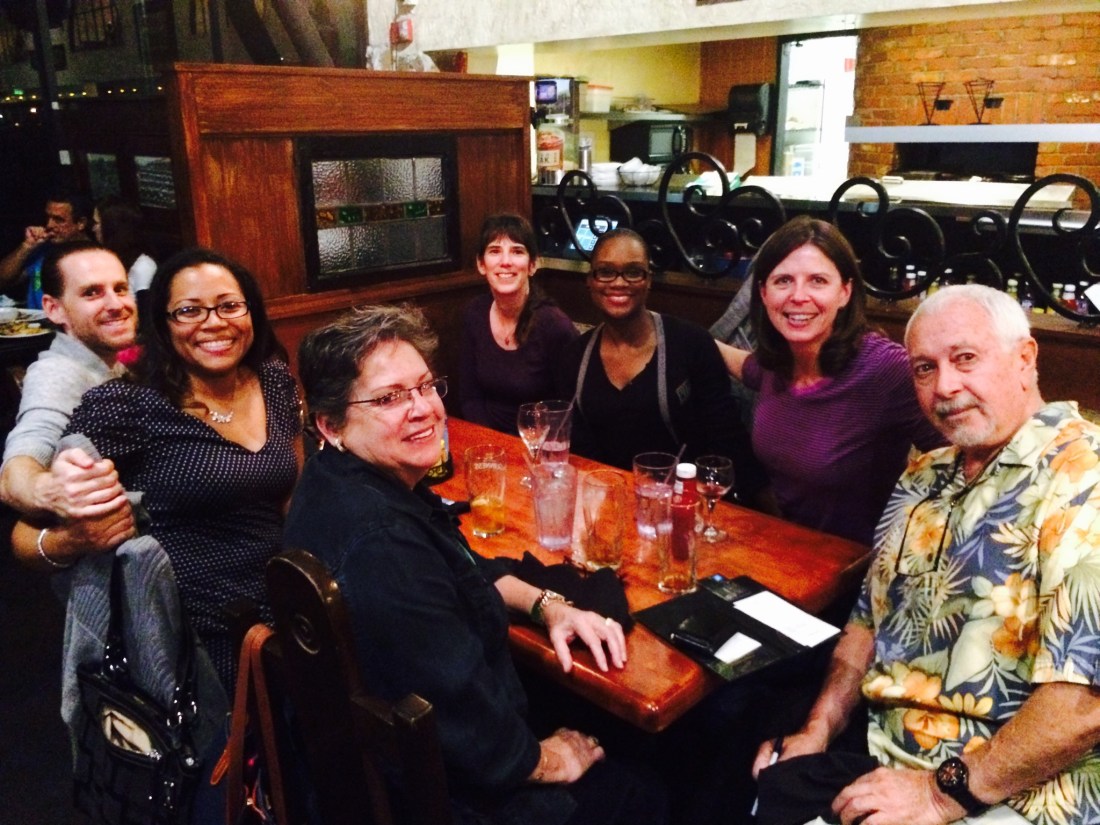
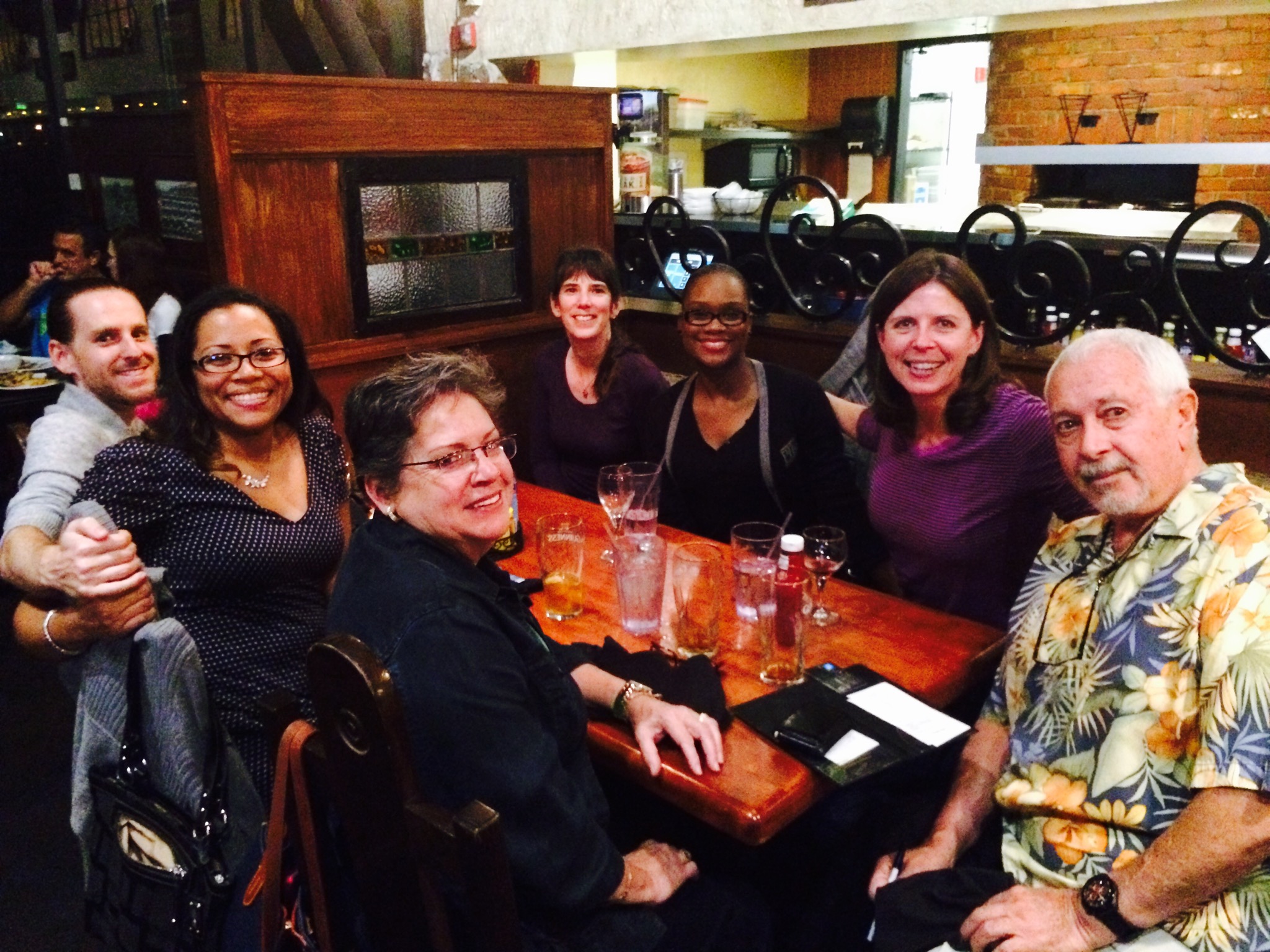
One of my favorite social gatherings during the AECT conference was the UT ID&T dinner. We were a small group of seven but it was such a nice and relaxing time. We talked about the AECT experience, the people we had met, the topics of discussion in different sessions, and we talked about our own program. As I mentioned in my tweet about the dinner: “Good food and good conversations!”

IMG_2353.JPG
I look forward to AECT next year (as I always do)! I hope the UT ID&T program continues to have a graduate student presence and that the students in the program continue to present at the conference. I also hope that next year I have more time to chat with so many colleagues and friends. It was very nice to see them and it really reminded me of how lucky I am to be part of such an amazing professional family. See you all at #AECT15 in Indianapolis!

#EdMedia2014 — The Finnish Perspective

A few weeks ago I had the opportunity to attend and present at #EdMedia2014 in Tampere, Finland. I was thrilled to visit Finland because I had heard so much about their exceptional educational system and I wanted to know how it translated to their educational technology practice. Also, I wanted to learn more about the Finnish culture. When I was working on my undergraduate degree I had several Finnish friends that had come to Emporia State University for a one semester exchange program. It was very neat to hear them speak Finnish and to learn about their country. One last factor that made me excited to attend the EdMedia2014 conference was the international nature of the meeting. I attended EdMedia in 2010 when it was hosted in Toronto, Canada and I enjoyed meeting colleagues from so many different countries.

2014-06-23 17.04.52

The conference this year was hosted at the University of Tampere in the city of Tampere which is about 2 hours northwest of Helsinki. It is a beautiful city with very friendly people. That same kind of friendly environment was shown by our host at the University of Tampere. When I arrived at the registration desk I was greeted by the “minions.” The conference minions were students from the University of Tampere who were volunteering in registration and providing directions to all conference participants.

My presentation was on the first day of the conference so immediately after registration I proceeded to look for the room where I would have my presentation so I was not rushing before my session. After finding the room for my presentation I decided to have some lunch. The cafeteria of the university was in the building where the conference was held so it was a popular place for lunch. I was fortunate to sit in a table with a colleague from Japan and another one from South Africa. We started sharing information about our research interest. We already knew it but our conversation reminded us that educational technology issues have no geographical boundaries.

After lunch, it was time for my session. The session was very well attended, which is important because you want to know that others are interested on your research topic. The titled of my presentation was: Measuring Cognition in CBI using an EEG: A Review of the Literature. If you click the link it will take you to the Prezi of the presentation (you can also visit my “publications” page if you would like access to a full version of the paper). After the session, during the Q&A part of the presentation, I received several interesting questions and some session participants shared very useful information on the topic (conferences, journal articles, etc.). I sat through various sessions that afternoon including presentations related to self-publishing, student portfolios, social media, etc.  That evening the EdMedia organizers had prepared a nice event for all conference attendees. The event was a reception in the Old City Hall. It was a beautiful building. There was food, wine, and music.

2014-06-24 12.38.35-1

The second day of the conference started early. There was a keynote presentation. The topic of the keynote was learning analytics. After the keynoted there was a post presentation discussion for those interested on the topic. It was nice to have that informal conversation with the presenter — we should have this type of discussions in other conferences. I made sure to mention to a few of our attendees that there was a recorded webinar that my colleague Min Kyu Kim and myself had facilitated as part of the AECT RTD Division Webinar Series (wooohoo!). The rest of the day included several presentations related to design-based research and other topics of personal interest as well as a poster session with range of educational technology topics. Again, it was very interesting to see the research related to educational technology on a global scale.

2014-06-25 11.37.12 2014-06-25 13.40.352014-06-25 13.44.08

Some time during the conference, I stopped by the table were the University of Tampere was showcasing their research projects.  Some of their projects included workshop for technology integration and mobile learning. However, the majority of their research related to open education resources and accessibility to research data (I guess you could call it “open research”). It was nice to see this type of initiative and to learn about their application of open educational resources. I also had the opportunity to learn about a their efforts to design and develop physical environments that promote informal learning and social interaction flow. As a tour, some of the attendees visited the Oasis Room, which is a room open to all students and staff. As I mentioned it is a space in which informal learning should occur. I also think that it uses some play-based approach because in the room there are lots of fun activities the students can use during play time.

2014-06-25 05.52.05

I truly enjoyed presenting and attending EdMedia2014. I met colleagues from different regions of the world that are doing great research. Also, there is good and important research happening in Finland. We will definitely see more in the literature coming from this and other Scandinavian countries.

ID&T Job Ads Data Analysis #EME610

The graduate students in the EME610 Trends and Issues in ID&T course (Spring 2014) presented their research results from the analysis of 150+ ID&T job ads. The students were divided into groups and each group focused on a specific job market (faculty, corporate, higher education/K-12, government/military).

ID&T — Corporate:

TeamCorporate_EME610_IDT Job Ad Analysis

ID&T — Faculty

TeamFaculty_ID&T Job Ads Data Collection and Analysis

ID&T — K-12

TeamHigherEducation&K-12_ID&T Job Ads

ID&T — Government & Military

TeamMilitary&Government_EME610 JobAdsPresentation

AERA2014 — The Power of Education Research

Unfortunately, I do not have the time needed to write everything that I experienced and learned at AERA 2014 (end of the semester is here!) but I did wanted to share some quick highlights:

20140423-105209.jpg

The SIG TICL business meeting provided an opportunity to review and learn more about “Instructional Design Research on Complex Learning: Past, Present and Future” with keynote from Jeroen van Merrienboer.

20140423-105228.jpg

Of course, I presented my research on emotive animated agent in simulation-based training. Had a significant number of conference participants stop by to learn more about it (Thanks to all the ODU faculty and students!). I did have a journal editor recommend his journal for publication. I am still considering my options but I am happy to say that this manuscript should be out in a few weeks!

20140423-105244.jpg

The following graphics caught my attention as I sat in the audience listening to the presentations. The first graphic was from a presentation by Jered Borup (GMU) about the use of feedback  in asynchronous video communication. It applied to feedback in general and I though it was worth sharing. Sometimes as educators we forget how to give effective feedback and how important it is for the learners. The second graphic was from a presentation related to research on different levels of e-learning. We are currently implementing some changes in the use of hybrid education at my current institution and I thought this graphic would help illustrate that there are many models of blended learning that can be considered.

20140423-105311.jpg20140423-105321.jpg

I was pleasantly surprised by Philly. The people are friendly and the city has a lot to offer! Having good restaurant is also a bonus. I enjoyed attending AERA 2014 and hoping to attend again next year!


20140423-105351.jpg

I survived my first semester as a faculty member!

Hard to believe it is already December!

Before starting the Fall 2013 semester I was told by many colleagues that the semester would go by so fast, it was going to feel like a blur at the end of the semester. I was a bit reluctant! But now that is all said and done, I have to say that it went by faster than expected.

One of the things that was a bit harder to do in this new academic environment was the adjustment to teaching night-time classes. In all honesty, I am all about cooking dinner with my significant other, decompressing at the dinner table, a nice evening walk and then some work. I have managed to figure it out. I combined working from home, working from the office, teaching a few classes in a hybrid format and teaching other classes completely face to face. I figured that if most of my students were able to do a 8 hour job and then make it to a 6 to 9 pm class, then I could do it too. It does make the days I have nights off and weekends even more special.

Another adjustment this past semester was the amount of email that I had to manage and all the work that comes with it. While I was in the doctoral program, I received a moderate amount of email related mostly to my dissertation. I also received email related to service at my professional organization. But between the students, the department, the college, the university, professional organizations, and every one else that decided to email me at some point in time, email was at times a major consumption of productivity. I am starting to think it should be part of self evaluations (how much time did you spend replying to emails during the semester?). I guess I have improved my emailing skills and management of emails.

Of course, the biggest adjustment is finding the balance between research, teaching, and service. I am not going to claim that I found it because I would be lying. I had, as recommended by several colleagues, designated a writing day for the week. However, I was not able to keep up with it. I still managed to get conferences proposals written and a few manuscript to a decent level. But I really wish I could immerse myself in writing a bit more. It is still “work in progress.”

A few other things to keep in mind if you are going into your first semester as a faculty member are:

  • Meetings take a chunk of your time: Days in which I had meetings (that were longer than an hour) were the most challenging. I tried hard to prepare in advance but I always was catching up after the meetings right until the 6 pm class. This had mainly to do with my personal and class schedule. Since most meeting started around 11:30 am , I would have to cut short work time in the morning and catch up with work in the afternoons.  Although, I am glad that the meetings are mainly around 11am since I have stay around campus for 6pm classes.
  • Be prepare to explain your grading criteria and assigned grades: We need to create a culture of “constructive feedback” in the classroom. I know that grades and points are important but what I really like is a focus on creativity, higher order thinking skills and problem solving. I like to see assignments in two ways: what was done correctly and what can be improved. I remember that when I was working on my dissertation I would asked my significant other to just criticize my work as if I was his worst enemy. But I know that sometimes it difficult to received that constructive feedback. After all, that student just spent a few sleepless nights working on it. I do have to say that once I explain my grading criteria students see it with a very different mindset.

Overall, reflecting on my first semester, I am still learning how the academic systems works. But, I am happy to be part of the UT family and to be a Floridian (the sunshine state!). One of the nicest comments I received at the end of the semester on a one on one meetings was when I student said “Dr. Romero-Hall you are a great addition to the UT IDT program, I want to take the rest of the classes with you! I really appreciate your honest feedback.” So, I guess I must be doing something right 🙂

The Dissertation Journey – Part II

Here is a post on the second part of my dissertation journey. Since my last blog update my dissertation started moving fast. I completed the design and development of the simulation that I used in my dissertation research. I also completed recruitment and data collection procedures. After the data collection, it was time to start the data analysis. Throughout the entire research process, I was also re-writing chapters one, two, and three. Once I had completed my revisions to the first three chapters, I wrote chapter 4 and chapter 5. I have to say that it was a tremendously stressful period. I am very grateful for my family, friends and colleagues who provided words of support throughout the entire journey.

I don’t know if I can provide specific advise for others that are completing their dissertation but here are some of the important elements that helped me throughout the dissertation process:

1. Start writing early in the morning. You will get in a nice writing mood since it is nice and quite in the morning. I started writing at 5am every day for about two months and it was a good start to my day. It was definitely hard at first because I had to change my schedule but it was worth it.

2. Write every day.I got in a habit of writing every day as much as possible. You will not loose track of your ideas and you immerse yourself in the topic. Basically, you will get into a state of flow. It feels good. Also, it helps you keep up with your dissertation schedule.

3. Sacrifice a few weekends for dissertation work. I had to completely devote my time and energy to my dissertation for a few months. Social life and family life were very limited. Again, it helps to have a very understanding family and husband. Every weekend, I would would work a few hours (10 – 12 hours) in the lab. I would basically continue my writing flow during the weekends.

4. Read all the material for a section before you write that section. I divided my literature review into key sections that combined served as the basis for my research. I always finished reading all the articles, conference papers, and dissertations about the topic before I started writing about it. It helped me because I knew how to write and cite that specific section.

5. Think about recruitment in advance. One of the majors issues that I had with my dissertation was the recruitment of participants. I was collecting data from a fairly specific group and I was not expecting delays. If I could give one word of advice to others, it would be to plan for delays due to recruitment. Or, to have the connections in place to help you recruit the specific groups of participants you need to complete your research.

6. Limit your email, meeting, and social networking time. This is pretty self-explanatory advice. The better you are at organizing your time with electronic and face to face meetings, the more time you will have to work on your dissertation.

7. Take small breaks. Taking breaks while writing your dissertation gives you clarity and it will help your health. Sitting down for hours is not good for your physical health and it can also hinder your writing judgement. I tried to take breaks at least every 45 minutes (15 minute break to make more tea).

9. Have a support system. As you go through your dissertation research and writing you will have moments of self-doubt. Having a support system will give you the strength needed to keep going. For some of us this groups is our family but sometimes it will be your friends, classmates or colleagues. In any case, you get the point! Don’t think you can do it alone. It is okay to have a group of people that will cheer you in the difficult moments. They will likely be the ones that you will include in your acknowledgments.

Good luck!

Literature Review Table Literature Review Table