Learning Designers in Context: Examining Practices Across the Global South [Book in Progress]

I guess it is time for me to write a blogs post about my forthcoming book 😊

It has been a while since I first announced that I was working on my next book and sadly due to various reasons I had to rescheduled my submission of the book to the publisher twice! But over the last two months I have moved full steam ahead with this book project.

I love how it is taking shape and that I get to work on it. Today, I was working on chapter 12 (in a coffee shop) and I was just smiling thinking that someone else would get to read this work.

This is not a book in which I tell someone else’s stories or tell you how to be a learning designer. The book is about learning designers telling their stories. It is about conversations, experiences, and journeys.

More on this coming soonish 😊

10 Years!

You know when you go to an interview and the hiring committee ask you to predict the future! The typical question: Where do you see yourself in 5 or 10 years? Honestly, can we even answer this question? Don’t get me wrong I have asked this question and I have answered this question. We’re my predictions accurate? I don’t remember 😊

Today I was trying to make my way through my to-do list when I got a notification on my phone. It was one of those were you see a photo “on this days” years ago. I looked at it and it show me that:

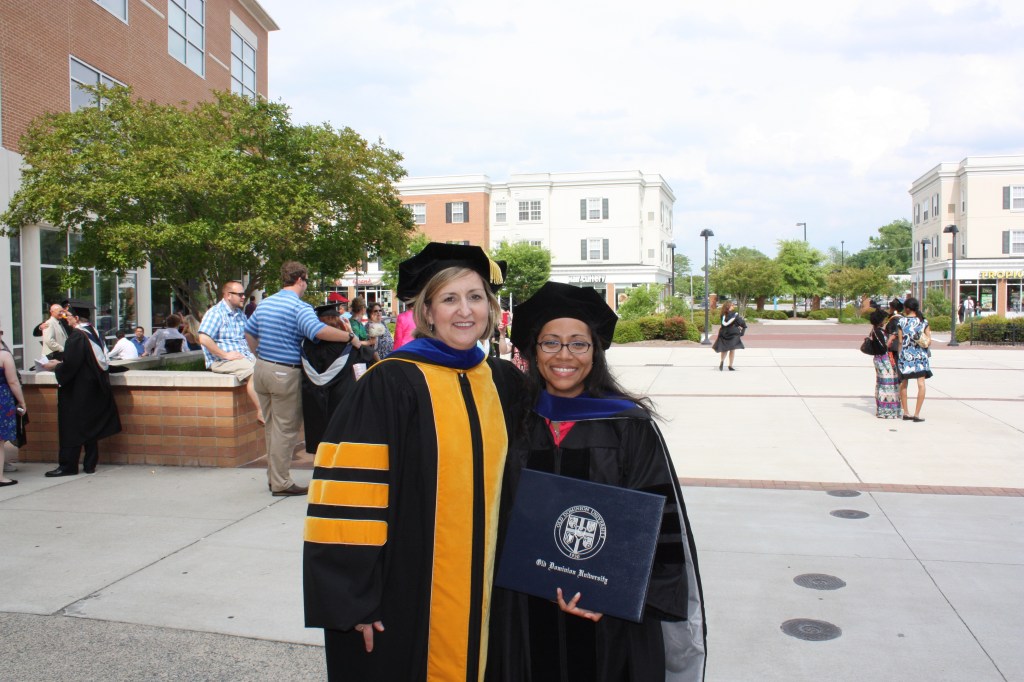
10 years ago today I was hooded by my doctoral advisor, Dr. Ginger Watson and I celebrated my earning my doctoral degree (I actually had a bunch of revisions and didn’t really graduate until the end of summer but who cares I still partied like a rockstar!). I remember my mom and my brother came to celebrate with me and that was pretty awesome.

Doctoral advisor and a scholar who recently received her Ph.D. In their academic regalia.
Drs. Ginger Watson and Enilda Romero-Hall

5 years ago I was in Zurich, Switzerland leading a study abroad program with primarily undergraduate students and an alumni of the Instructional Design and Technology program from The University of Tampa. My co-coordinator Merrie was honestly the best! I don’t know how I would have finished this trip without Merrie! 💖

Switzerland study abroad program

Reflection on this post:

So I am now, 10 year later from getting hooded, wrapping up my first year as a faculty member at The University of Tennessee Knoxville. I am working on a research plan with my first doctoral student. I am conducting research with two additional graduate students. I am the graduate coordinator of the learning, design, and technology doctoral program and we are in the process of welcoming a nice group of doctoral students this fall (very exciting!). I am also working on other research and writing projects.

If you had asked me 10 years ago or even 5 years ago, where I was planning to be in ____ number of years, I do not know if I would have even been to come up with my current life. As we say in Panama: la vida es loca y a cualquiera le toca!

UTK STEM Education Seminar

This past week, I was invited to speak as part of the STEM education seminar sponsored by the Theory and Practice in Teacher Preparation (TPTE) Department STEM team. I am part of the STEM Education team in the department and this semester a group of colleagues are organizing this seminar with presentations for faculty and graduate students every two weeks. I have really enjoyed all of the presentations this semester. Our STEM Education team is doing really amazing work and I love learning about it.

For my presentation, I was a bit nervous because I was not sure how my work would relate to STEM education. I know educational technology is consider part of STEM education. However, I think of my work as more than just educational technology. I actually see Learning, Design, and Technology as the umbrella term under which educational technology, instructional design, instructional technology, learning engineering, and others similar terms come together. Perhaps one of my main concerns is that under the term STEM, learning design is primarily associated with the “technology” term which I really see as just one aspects of the far more complex ecosystems of the learning, design, and technology field.

The presentation focused on how it is okay to have many areas of research interest. We are often encouraged to stay very narrowly focused on a topic. But, what if you are curious about other topics and want to explore them? So, basically, I used myself as an example of an eclectic research agenda. My research has evolved so much and in part it due to my curiosity to explore other topics. This has also been true in my life, curiosity to try new things or study programs outside my focus has helped me evolve and grow. Here is the link to the slides, in case you are curious.

Recent Publications Related to Social Media in Education

It feels like I have not blogged in a while, so I decided to take a break from other social media and give some love to my blog. In this post, I want to share some research that I have co-authored and published this year on the use of social media in education:

A Syllabi Analysis of Social Media for Teaching and Learning Courses
You can access this journal article here.

Earlier this year, my former student (Linlin Li) and I published this journal article. It was a really neat experience doing the syllabi analysis. It helped me understand some of the topics that are often overlooked when we teach about social media. It also allowed me to see what books and sources are used in the curriculum. The reality is that we have so much literature related to social media and it understandable because the experiences, the environment and the individual using them are constantly changing. This was an open access publication.

An Exploration of a Social Media Community: The Case of #AcademicTwitter
You can access this conference proceeding paper here.

This was my first collaboration with colleague Lina Gomez-Vasquez, a fellow Latinx researcher. It was a high level analysis of the #AcademicTwitter hashtag and those who often post to this online community. Love that we can look at how faculty (and other academics use social media). As the abstract stated: “This paper examines participants and communication patterns in the #AcademicTwitter community. Using content analysis and social network analysis techniques, the researchers examined tweets including the #AcademicTwitter hashtag to discover the community’s network properties, roles of the participants, sentiment, and conversational themes.” We have other follow up projects related to the #AcademicTwitter hashtag, so stay tune.

Most versus least used social media: undergraduate students’ preferences, participation, lurking, and motivational factors: You can access this journal article here.

In this paper, we surveyed 769 undergraduate students and asked them about their social media preference and participation. Snapchat and Instagram were their preferred social media. We also asked questions related to lurking. As we mentioned in the paper: “It is equally important that as part of the research focused on the use and participation of undergraduate students in social media, we also address lurking behaviors. In comparison to the large number of research efforts focused on active users of social media, very little research has focused on lurkers in online environments or even consider lurking an important form of online behavior (Edelman, 2013). The 90-9-1 rule states that amongst members of an online community there are ninety percent lurkers who never contribute, nine percent who contribute very little, and one percent who actively create new content (Sun, Rau, & Ma, 2014). There are multiple reasons why people lurk.”

Photo by Adam Jang on Unsplash

A sabbatical during COVID-19

Where do I start?

I guess I can start by writing that a few months into my sabbatical the world turned upside down due to the COVID-19 pandemic. Yet, I was able to use my time to complete the tasks that I had outlined for my sabbatical period. April and May did require a significant adjustment since we had to manuoiver a new work schedule without child care. Maneuvering this new schedule required being realistic about what I could accomplish and saying “no” to some invitations for new collaborations.

The first two months of my sabbatical were as planned. I worked on writing two chapters for the book “Research Methods in Learning Design and Technology.” Book chapter authors submitted their completed and revised book chapters to me by the end of January and I worked on doing final reviews of each book chapter. I initially had planned to submit the book to the publisher by mid-March, but I switched the format of the last chapter, and this required giving extra time to my co-authors to complete their writing. This meant that I had to delay the submission of the book documents to the publisher until mid-April. Thankfully, by the time the world turned upside down in mid-March, all my co-authors and book chapter authors had turned in all required documents to me.

One of the elements of my sabbatical that was partially affected by the COVID-19 pandemic was work-related travel. I was scheduled to attend the American Educational Research Association (AERA) Annual Convention in San Francisco in mid-April and the conference was canceled. I am glad it was canceled, I am also glad it was not held virtually. April was a month of re-adjustement, tension, and stress for many. I was also scheduled to travel to Florence, Italy to present at the DEPIT Annual Meeting at the University of Florence. This event was re-scheduled for an online format.

I had some personal travel plans changed because of travel restrictions. I was scheduled to spend all of March and a portion of April in Panama City, Panama, where I was going to work while spending time close to my family. So, I traveled to Panama at the end of February and was monitoring all the news related to COVID-19. Due to the way the virus was spreading, my family and I decided it was best for us to travel back to the United States, so we changed our flights to travel back on March 22 (which is the day Panama was scheduled to close their international airport). On the evening of March 20, I received an email from COPA airlines letting me know that our flights had been cancelled. I was shocked and extremely disappointed. However, we all stayed calm and determined that we would just ride the storm in Panama. That same evening, as a last attempt, we figured we would see if there were any flights on March 21 to Tampa with a different airline. Thankfully, we did manage to fly back to Tampa on March 21. My dad was in Panama with me and we were also able to find a flight for him to fly back to Toronto (within one hour difference of our flight), which gave peace of mind. I would not have left Panama without my dad.

The weeks after returning from Panama, were weeks of adjustments as mentioned at the beginning of this post. In addition to all the tasks for the book, I was also scheduled to write a manuscript (with a deadline) that I had not even started. It took discipline to stay focus. I admit that there were many emotions related to what was happening in the world with the pandemic, leaving Panama, and experiencing the “new normal.” I felt like I had to work hard on my “emotional intelligence” to get the paper written and deliver all the book materials to the publisher.

I am thankful for the sabbatical term. In addition to the tasks mentioned in this post, I also used the time to work in revisions to several manuscripts and continue mentoring my undergraduate student (we presented at a conference in February and are currently working on a few writing tasks). Of course, I spend time with my family (even more than planned due to the lack of childcare).

Since my sabbatical ended, I am back to serving as the Graduate Coordinator of the Instructional Design and Technology program and I taught a six-week summer intensive course on Learner Motivation in June. I definitely missed my students and the joy of our convos.

 

Instructional Design Practitioners, Students, and Faculty: Social Media Groups

I am putting together a list of social media groups, specifically Facebook and LinkedIn groups, to share with the students in the UT IDT program. I thought it would be a nice resource that would allow them to be expose to diverse groups of instructional designers in different settings, levels of experience, and locations. I remember when I first started my IDT master program it seemed like there was hardly anyone else who knew what was instructional design. In any case, I know it can feel like just you and your classmates are learning about instructional design. In reality, we have large communities of instructional design practitioners, students, and faculty. This is a work in progress list, I will add more groups as I come across them.

The EduTech research group at #FURC2019 (@UTinquiry)

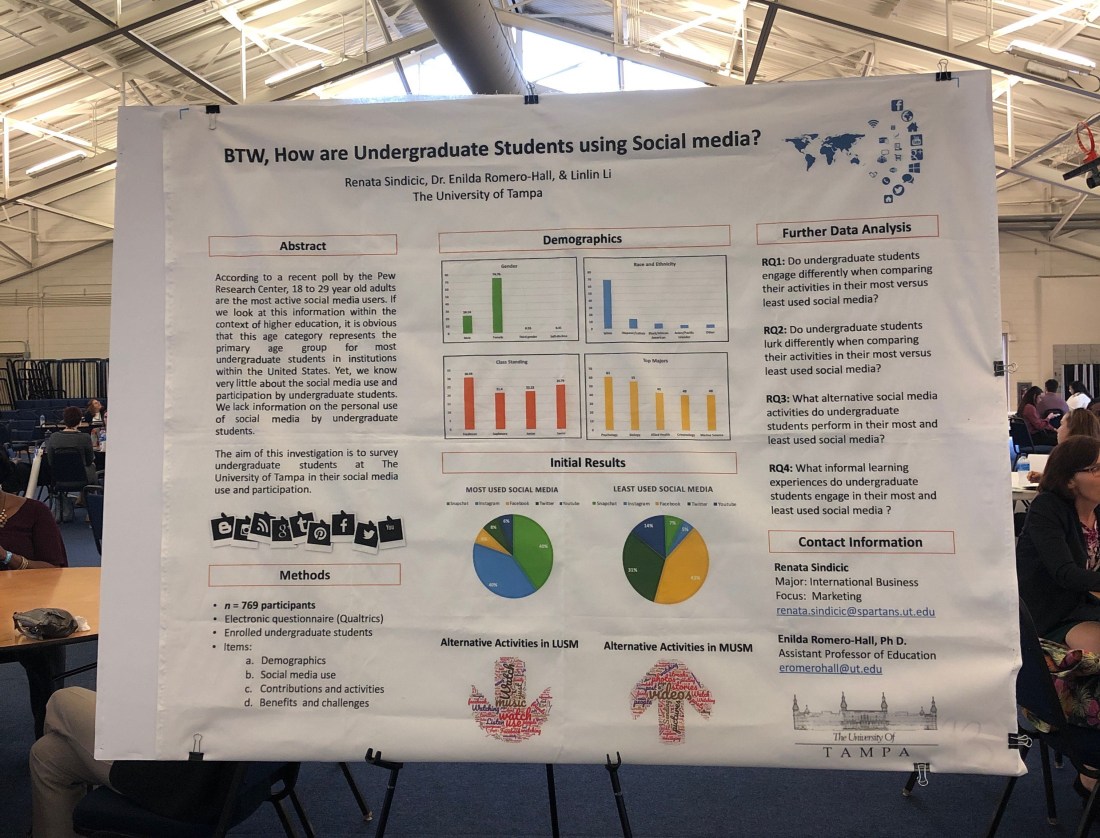
This past weekend The University of North Florida hosted the Florida Undergraduate Research Conference (FURC). Many undergraduate students from The University of Tampa presented topics in which they engage on research. One of these students was Renata Sindicic, who has been working with me and collaborating in research since last August 2018. I feel extremely proud of Renata, #FURC2019 was her very first time presenting in a conference! She worked hard on the design of the poster and practice her presentation prior to the event. I am thankful to have her as part of the research team!

Renata presented preliminary results of our research related to the use of social media by undergraduate students.

img_7254.jpg

Renata_Sindicic

Instructional Design Research Women’s Caucus #AECT17

Please consider joining us during this Research and Theory Division panel session at the AECT 2017 International Convention:

Women Caucus
Lead Discussant:
Enilda Romero-Hall
University of Tampa

Discussants:
Zeni Colorado-Reza
Emporia State University

Ginger Watson
University of Virginia

Camille Dickson-Deane
University of Melbourne

Ayesha Sadaf
University of North Carolina at Charlotte

Tugce Aldemir
Pennsylvania State University

See you in Jacksonville. Hope you can join us!

#UTampa Honors Program Symposia [Presentation]

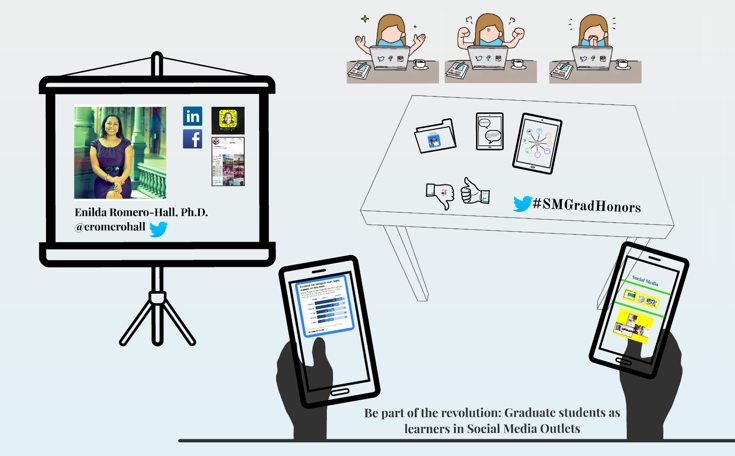
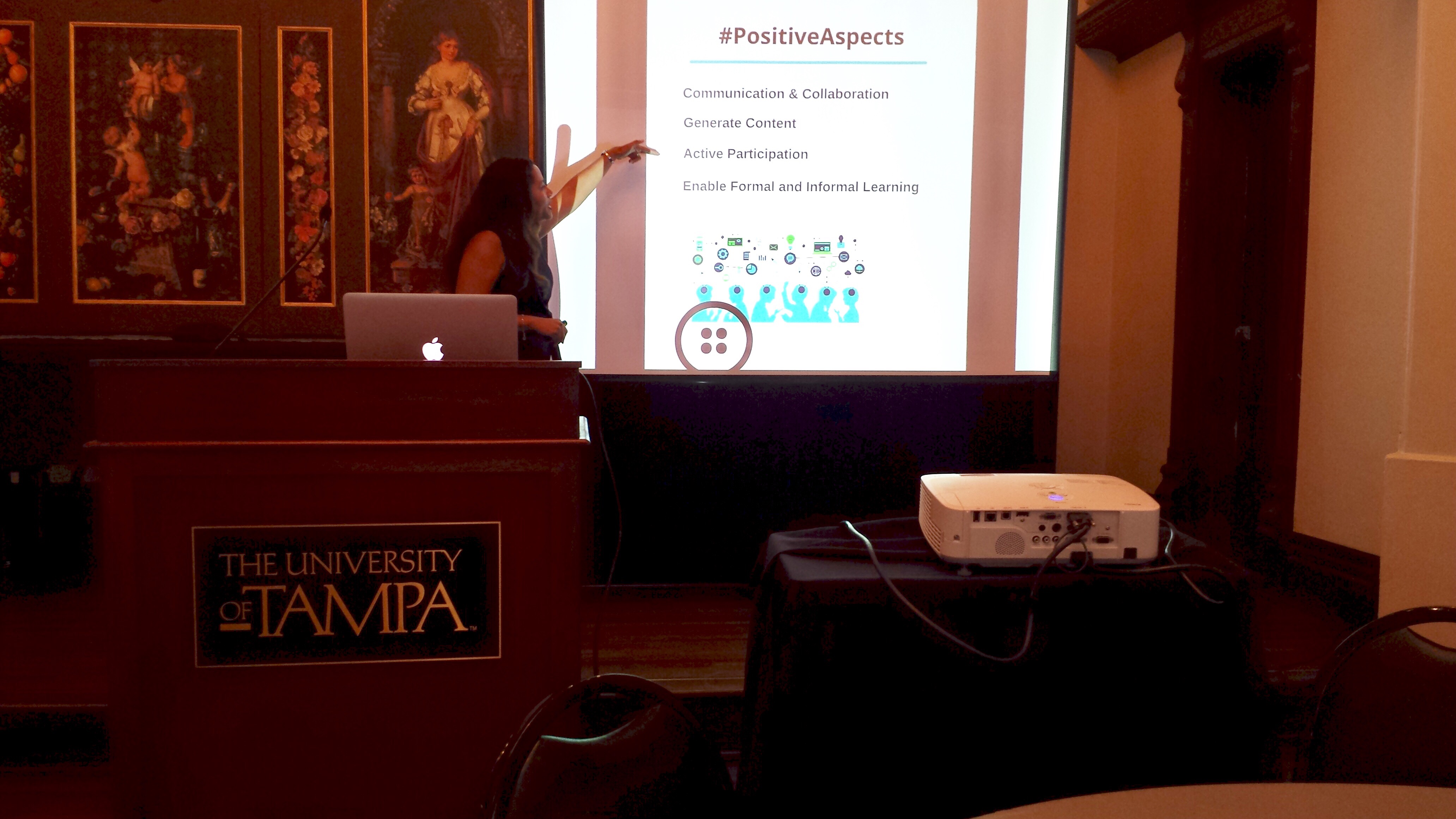
Yesterday, I had the pleasure of presenting to the UT Honors Programs students and faculty as well other UTampa colleagues and staff members. I presented on the topic: “Use of Social Media by Graduate Students and Programs.” This is a research area that I am currently exploring and I was able to share some preliminary results. Click on the image below to access the link to the complete Prezi presentation:

image001 Click on the Image to Access the Slides

Photo Credit: Gul Sahin

Sneak Preview: #AECT16 Research & Theory Division Highlights

Yesterday, I purchased my plane ticket to Las Vegas (to attend the AECT 2016 International Convention later this year).  This reminded me that I wanted to share a sneak preview of the AECT Research & Theory Division (RTD) sessions. As you know (if you read my blog posts regularly), I have the pleasure of serving as the AECT RTD Convention Planner as well as the Featured Research (FR) Sessions planner. The peer review process for all the sessions was earlier this year (it was not an easy process). The AECT RTD had a large number of good submissions and, at the same time, it had a limited number of allotted presentation hours (plus we had very rigorous reviewers). Now that the review process is completed and all accepted authors have been notified, all planners put together division highlights for the conference printed program. Below are the sneak preview or “highlights” for the AECT RTD and Featured Research Sessions. The full AECT16 schedule will be available in a few months.

Featured Research Sessionshttps://cloudup.com/cZomjap6oqL

Research and Theory Highlightshttps://cloudup.com/cs6T_t6JAID

For more info about the conference, visit the AECT 2016 website: http://www.aect.org/events/convhotel/