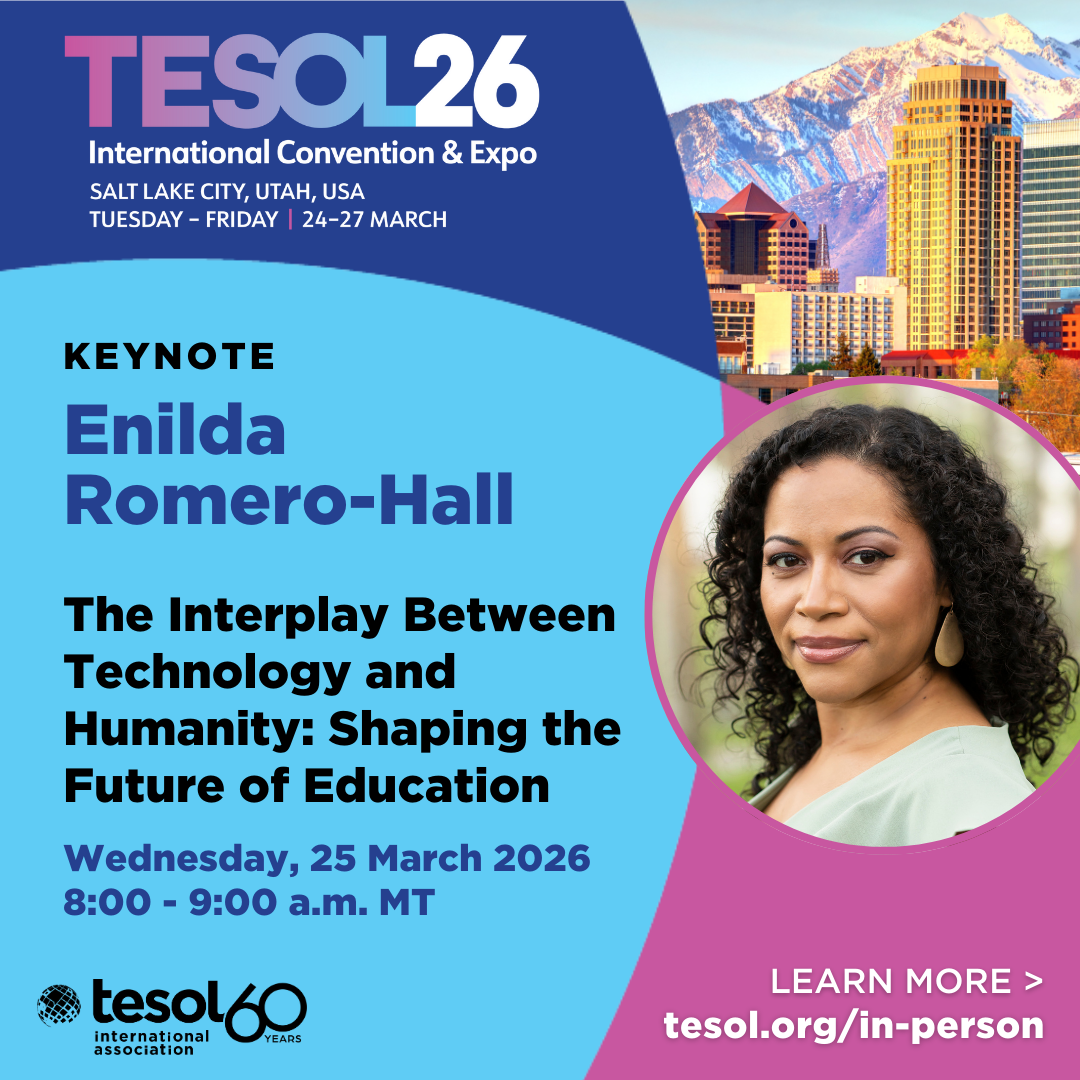
A few months ago I got a message from a former student, she is part of the TESOL leadership team and she had nominated me as the keynote speaker for their upcoming international convention. I was truly honored by the invitation!
This will be my first time at the TESOL International Convention but I am excited to engage with the members of this community. There is a tremendous amount of educational technology use by TESOL educators and professionals. Many of my educational technology colleagues were TESOL instructors prior to their transition into edtech and learning design.
Wenger, E. (1998). Communities of practice: Learning, meaning, and identity. New York: Cambridge University Press.
Luo, T., Freeman, C., & Stefaniak, J. (2020). “Like, comment, and share” —Professional development through social media in higher education: A systematic review. Education Technology Research and Development, 68, 1659-1683. http://doi.org/10.1007/s11423-020-09790-5
Veletsianos, G and Kimmons, K. 2012. Networked participatory scholarship: Emergent techno-cultural pressures toward open and digital scholarship in online networks. Computers & Education, 28: 766–774. DOI: https://doi.org/10.1016/j.compedu.2011.10.001
Romero-Hall, E. (2017). Posting, Sharing, Networking, and Connecting: Use of Social Media Content by Graduate Students. TechTrends, 61 (6), pp. 580-588.
Romero-Hall, E., Gomez-Vasquez, L., Forstman, L., Ripine, C. & Dias da Silva, C. (2023). The Complexities of Using Digital Social Networks in Teaching and Learning. The Open/Technology in Education, Society, and Scholarship Association Journal, 3(1), 1–18. https://doi.org/10.18357/otessaj.2023.3.1.48
Rodriguez, J. (2011). Social media use in higher education: Key areas to consider for educators. Journal of Online Learning and Teaching, 7(4), 539-550.
Marwick, A. E., & boyd, danah. (2010). I tweet honestly, I tweet passionately: Twitter users, context collapse, and the imagined audience. New Media & Society, 13(1), 114-133. https://doi.org/10.1177/1461444810365313 (Original work published 2011)
Leeder, C. (2019). How college students evaluate and share “fake news” stories. Library and Information Science Research, 41(3). https://doi.org/10.1016/j.lisr.2019.100967
Bastick, Z. (2021). Would you notice if fake news changed your behavior? An experiment on the unconscious effects of disinformation. Computers in Human Behavior, 116. https://doi.org/10.1016/j.chb.2020.106633
Hodson, J., Gosse, C., Veletsianos, G., & Houlden, S. (2018). I get by with a little help from my friends: The ecological model and support for women scholars experiencing online harassment. First Monday, 23(8). https://doi.org/10.5210/fm.v23i8.9136
Asino, T. I., Gurjar, N., & Boer, P. (2021). Bridging the Informal and Formal Learning Spaces with WhatsApp. The Journal of Applied Instructional Design: September 2021, 10(3). https://doi.org/10.51869/103/tangpb
Bohemia, E., & Ghassan, A. (2012). Globally Networked Collaborative Learning in Industrial Design. American Journal of Distance Education, 26(2), 110–125. https://doi.org/10.1080/08923647.2012.663678
Szcyrek S., Stewart B., & Miklas E. (2024). Educators’ understandings of digital classroom tools and datafication: perceptions from higher education faculty. Research in Learning Technology, 32. https://doi.org/10.25304/rlt.v32.3040
Krutka, D. G., Manca, S., Galvin, S. M., Greenhow, C., Koehler, M. J., & Askari, E. (2019). Teaching “Against” Social Media: Confronting Problems of Profit in the Curriculum. Teachers College Record, 121(14), 1-42. https://doi.org/10.1177/016146811912101410
Traxler, J. (2018). Learning with mobiles: The Global South. Research in Comparative and International Education, 13(1), 152-175. https://doi.org/10.1177/1745499918761509
Drexler, W. (2010). The networked student model for construction of personal learning environments: Balancing teacher control and student autonomy. Australasian Journal of Educational Technology, 26(3). https://doi.org/10.14742/ajet.1081
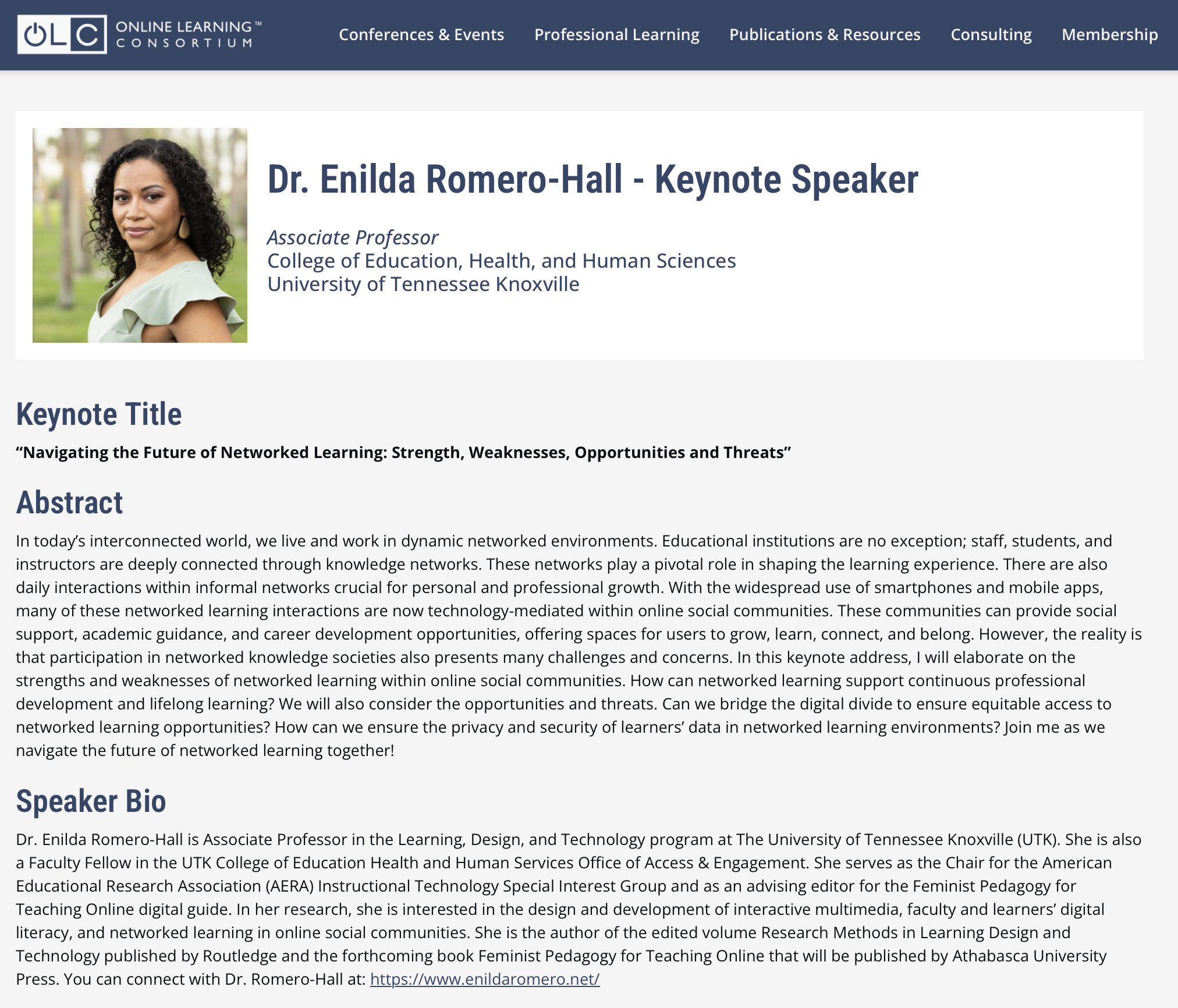
Huge thanks to the Online Learning Consortium (OLC) for the invitation!
The SIG Instructional Technology (IT) will once again offer Travel Scholarships to the top 10 proposals where a graduate student is the first author. The SIG Instructional Technology Graduate Student Travel Scholarship aims to alleviate the cost of attending the AERA 2025 Annual Meeting. More importantly, it serves as an honor for us to recognize these emerging scholars.
The following graduate students were (1) selected as recipients, (2) accepted the scholarship, and (3) submitted the required information:
Congratulations to all the SIG Instructional Technology Graduate Student Travel Scholarship recipients!
This seems like the perfect time to come back to write a blog post again, after recently returning from the 2024 AECT International Convention. I am worried that if I share everything that I want to share, this blog post would be super lengthy. So, I going to do my best to it keep short and sweet!
I first joined AECT in 2009 and that year I attended my first AECT conference. I had ZERO funds to attend the conference but a classmates of mine offered to let me crash in her hotel (at no extra cost) and share her per diem with me (our plan was to live off pizza for a a few days). The organization she worked for was paying for her trip and she wanted to support me. I am never going to forget that. Thank you Dr. Sonya Bland-Williams!
Back to #AECT24.
This year the AECT International Convention was special in many ways. First, the conference was returning to Kansas City. A place that is very special to my heart:
In the spirit of sharing stories, which is the theme of AECT 2024, I thought I would share a short but special story with all of you: Exactly twenty years ago, I embarked in my higher education studies in the United States. I was accepted into an International Business program at Emporia State University in Emporia, KS. I left the safety of home and started my own journey. The first stop on that journey was Kansas City and very specifically this hotel, The Kansas City Marriott Downtown. So, in many ways, getting to do this AECT keynote here, in Kansas City and in this hotel, feels to me like I have come full circle. So, for that I am very thankful!
Also, conferences in Kansas City are wonderful opportunity to meet with my college roommate, Mikelle. There is something about sharing a college dorm with someone else, you either become really close or you may never want to see each other again. Mikelle and I have been friends from the moment we met, 20 years ago! She is such a kind soul! Her and her family were so incredible welcoming of me when I was in college. Mikelle was living in the dorm just for fun, because her family actually lived in our college town. So I was able to spend time with them (her family) regularly!
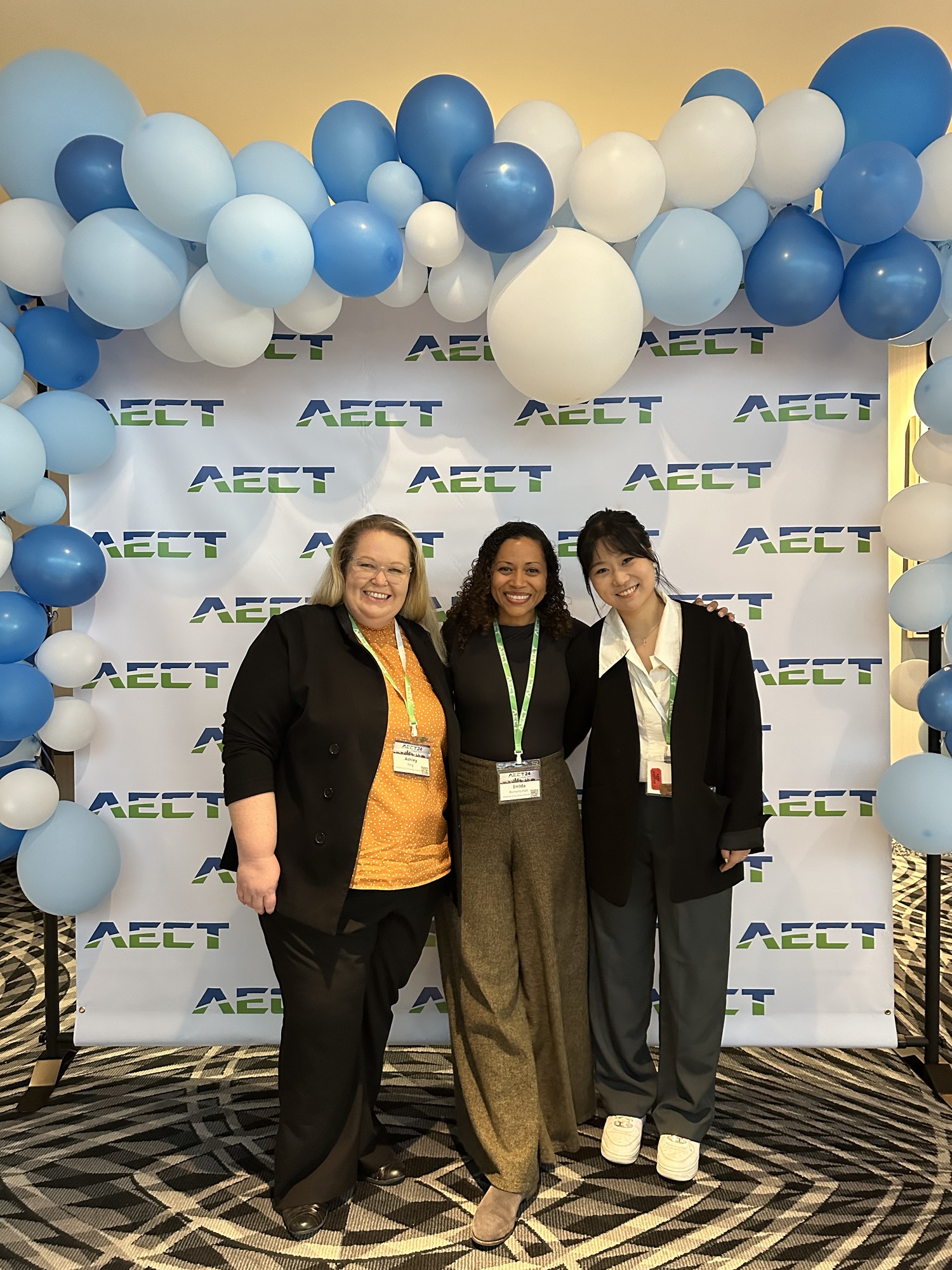
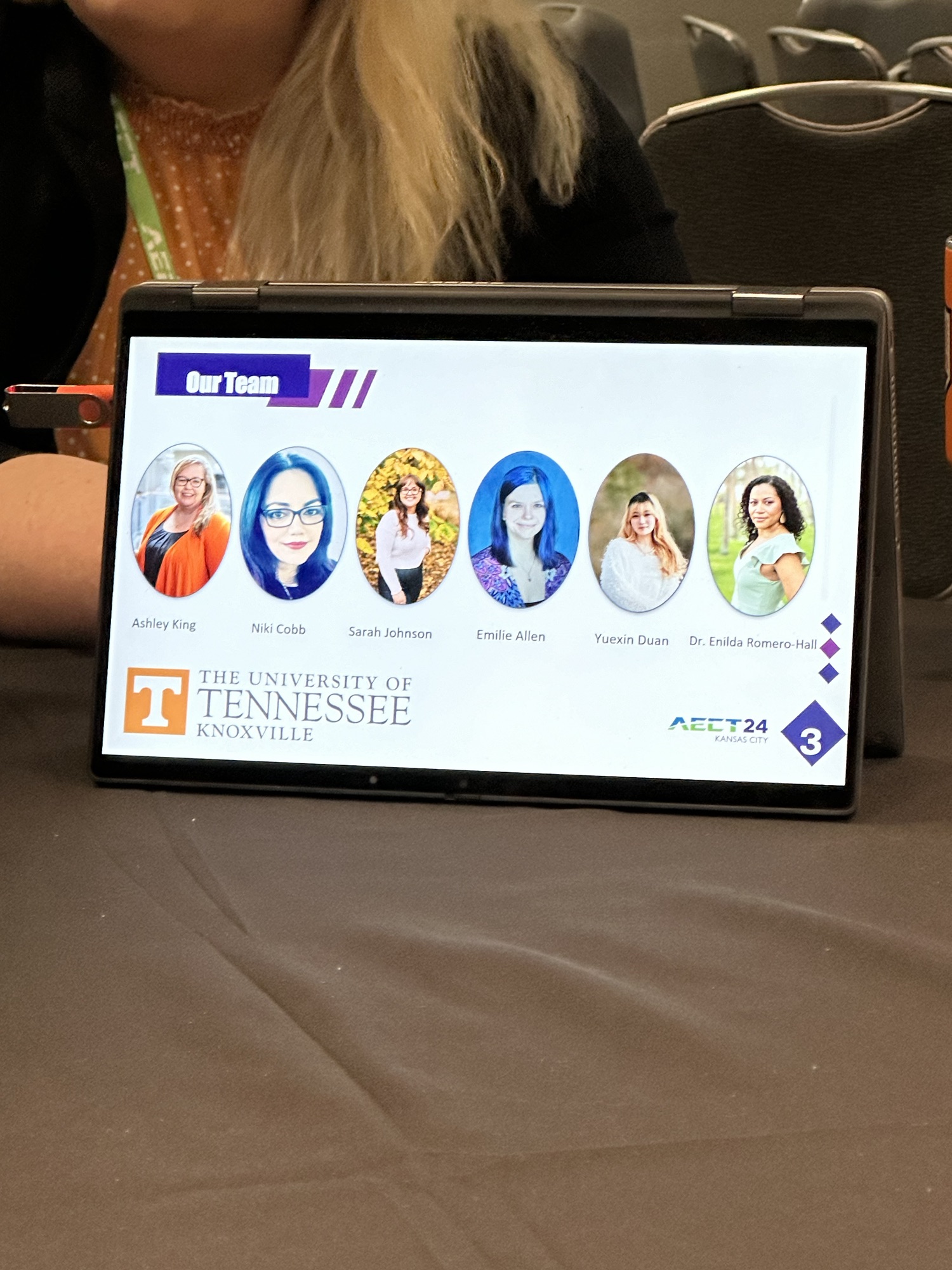
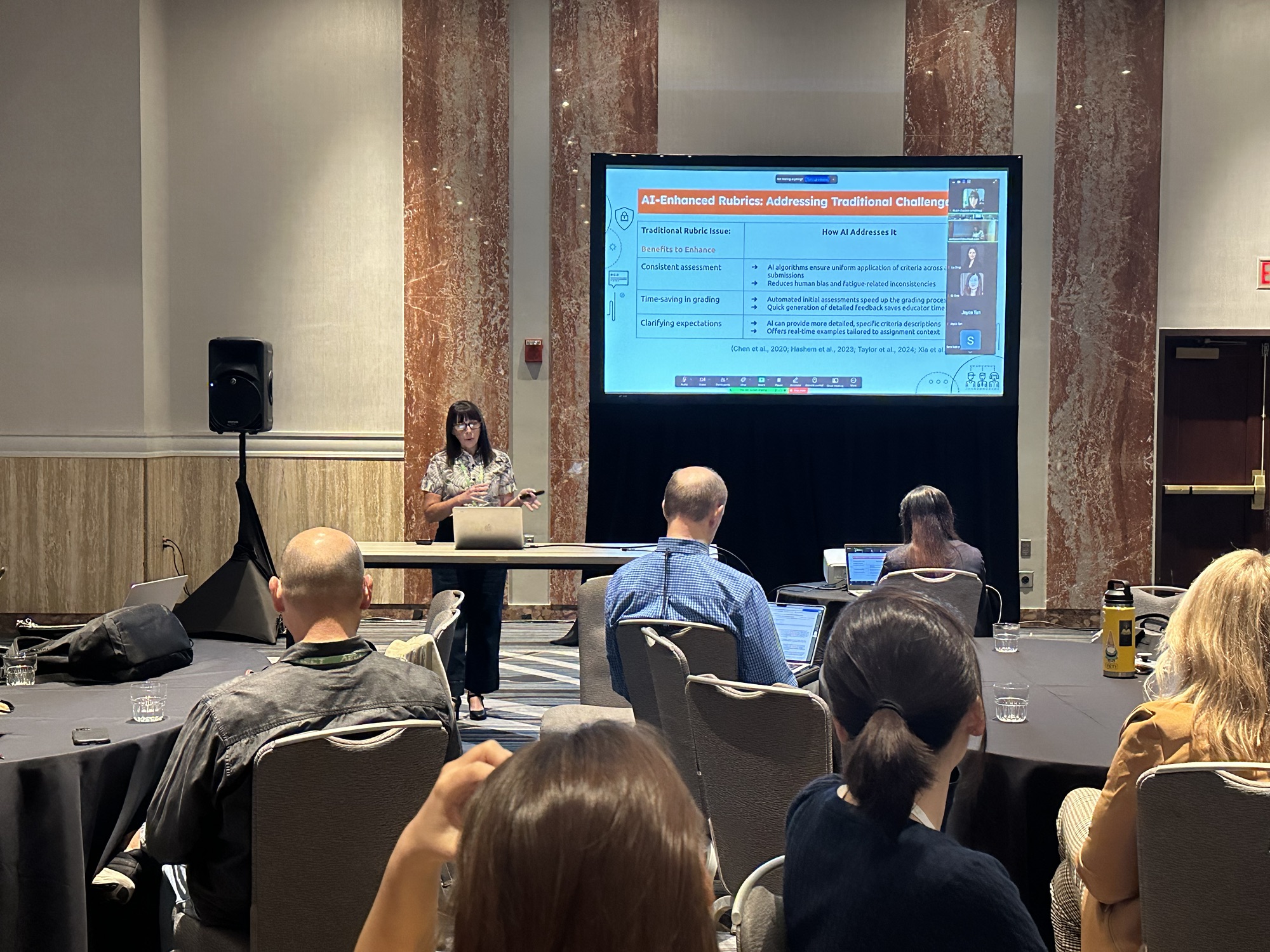
Another aspect that made this conference so special was that I was attending #AECT24 with my doctoral advisees: Wei Wang, Ashley King, and Yuexin (Jennifer) Duan. We have been working on projects for some time but we were finally able to start sharing some of the findings from our research with the AECT community this year. Wei is a force to be reckoned with! He is making moves as a researcher and a graduate assistant for the Digital Learning team at UTK. This year, Wei and his colleagues from Digital Learning presented “Implementing Generative AI in Practice: Designing Assessments and Learning Activities in Faculty Development Programs“. This work focuses on professional development that Digital Learning has been doing in the UTK campus to engage in conversations with faculty about the use of generative AI in higher education and its implications.
Ashley and Jennifer presented on a “work in progress project”. As a research team, we have been working a on a range of different systematic reviews. The project that Ashley and Jennifer shared related to “small group dynamics in asynchronous online learning”. The presentation primarily focused on the introduction of the topic up until the process of analysis of the journal articles for inclusion in the systematic review. We will continue to move forward with data extraction and the remainder of the process. Also, quick shout to all the members of our team who were not able to attend but have worked with us on this project!
The best way I can describe this experience is that: I am a proud advisor and that I am lucky to work with such an amazing team!
Then there is Dr. Lucy Santos Green! What else do I need to say! Lucy is the mastermind behind this project called “Online Ready”. Long story short, Online Ready is a federally funded project that aims to equips school librarians to deploy effective practices for culturally competent and inclusive K-12 online instruction. Having Lucy at AECT to speak about this project with me, was definitely a highlight! We have been working on this project for the last 3 years virtually and getting to see her and feed off her energy is just so amazing! Here are our slides. Our presentation at AECT 2024 focused on the implementation of Online Ready with school librarian with the goal of receiving feedback during Summer 2023. Online Ready will be available open access for anyone to use and share by next spring! More on this coming soon!
This is getting long! Yikes!
This year, it was such a humbling experience to also be the closing keynote for the conference. When the organizer of AECT 2024, Drs. Tonia Dousay, Tutaleni Asino, andRebecca Reese reach out early this year, I was so incredibly honored! I know that we have a wide range of colleagues who are doing impactful work, so it meant a lot to be considered for this role. What made it even more special was that a dear friend and colleague was also going to be a keynote speaker, Dr. George Veletsianos. George’s keynote, as expected “delivered”! It already had a major impact on my advisees and their career goals. So, I am very grateful for his message!
Technology, Imagination, and Education Futures: Education systems worldwide face profound economic, demographic, political, environmental, and social challenges. Traditionally, our field has responded by either embracing the latest technological advancements or striving to make instruction more effective, efficient, and engaging. However, these approaches are not enough. They are limiting and insufficient. They constrain our imagination and curtail our ability to create better educational futures for ourselves, our students, and our societies. In this talk, I will explore how speculative methods can offer creative, exploratory, and fruitful ways to examine, produce, and rethink the learning environments we are developing and supporting.
As George’s colleague, Dr. Bruna Damiana Heisfeld mentioned: “great minds think alike.” Because both keynote discussed how we can move forward as a field considering ways in which we can humanize learning design research and practice. Here are the slides from my closing keynote and my abstract:
(Re)Igniting Empowered Actions: Over the last few years, we have seen many political, social, and educational shifts that have impacted how we live, work, and learn. We have also experienced a global pandemic that changed us. In many ways we have spent a great deal of time simply surviving. All of these experiences have shaped who we are as individuals, but also as learning designers, educators, and researchers. Today, as we move forward, it is even more important than ever before that we critically reignite our purpose with empowered actions. This talk reflects on why and how we connect with the world around us in intentional empathetic ways that at the core aim to humanize learning design practice and the use of emerging technologies in education. Let’s tap into the power of our stories to share the narratives that often go untold. For good reason, there is a strong focus on the reimagining of our educational futures. Yet, we need to be cognizant that our actions today already shape those visions of tomorrow. Today, equitable and ethical learning design practices and research are not just a “good idea,” they must be the norm. The reality is that efficient, effective, and engaging in not enough to fully capture the socio-cultural context of the world we live in.
Thank you AECT for such a memorable experience!
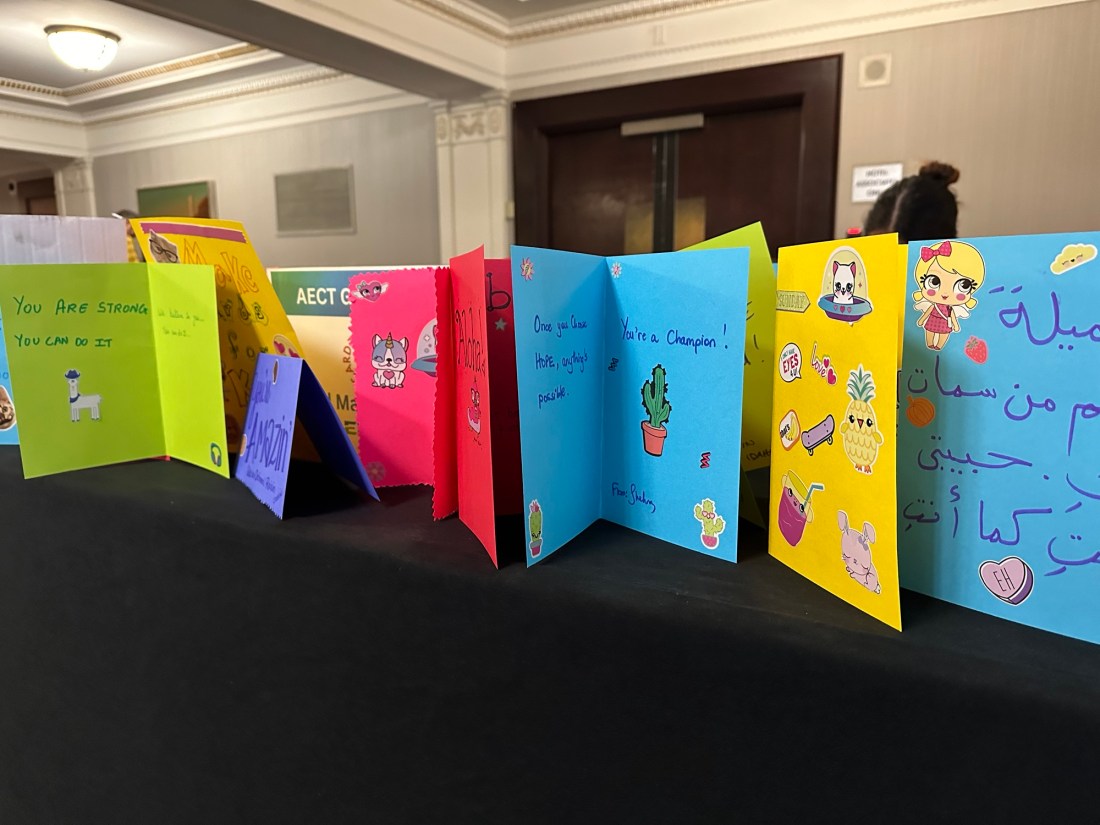
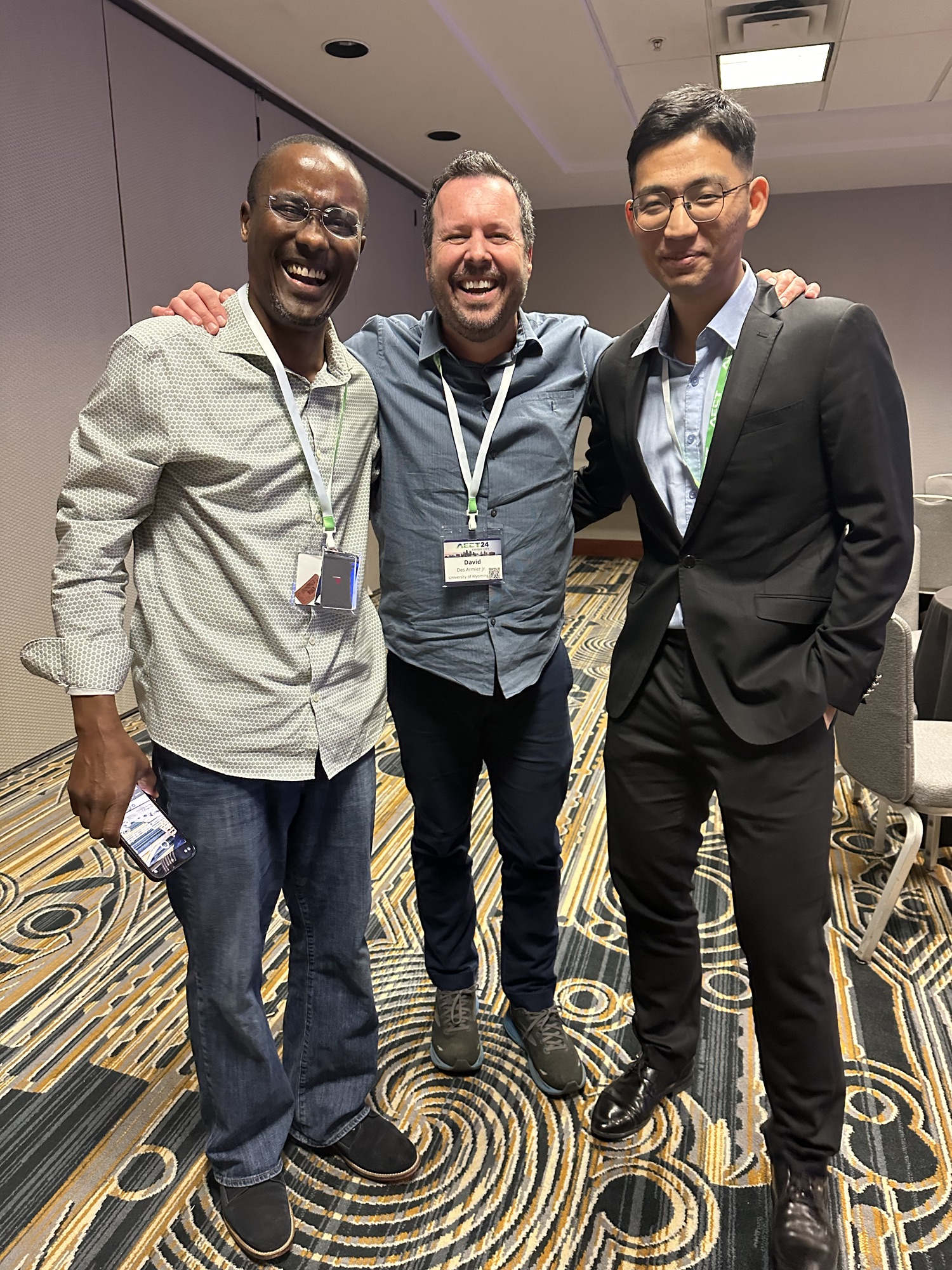
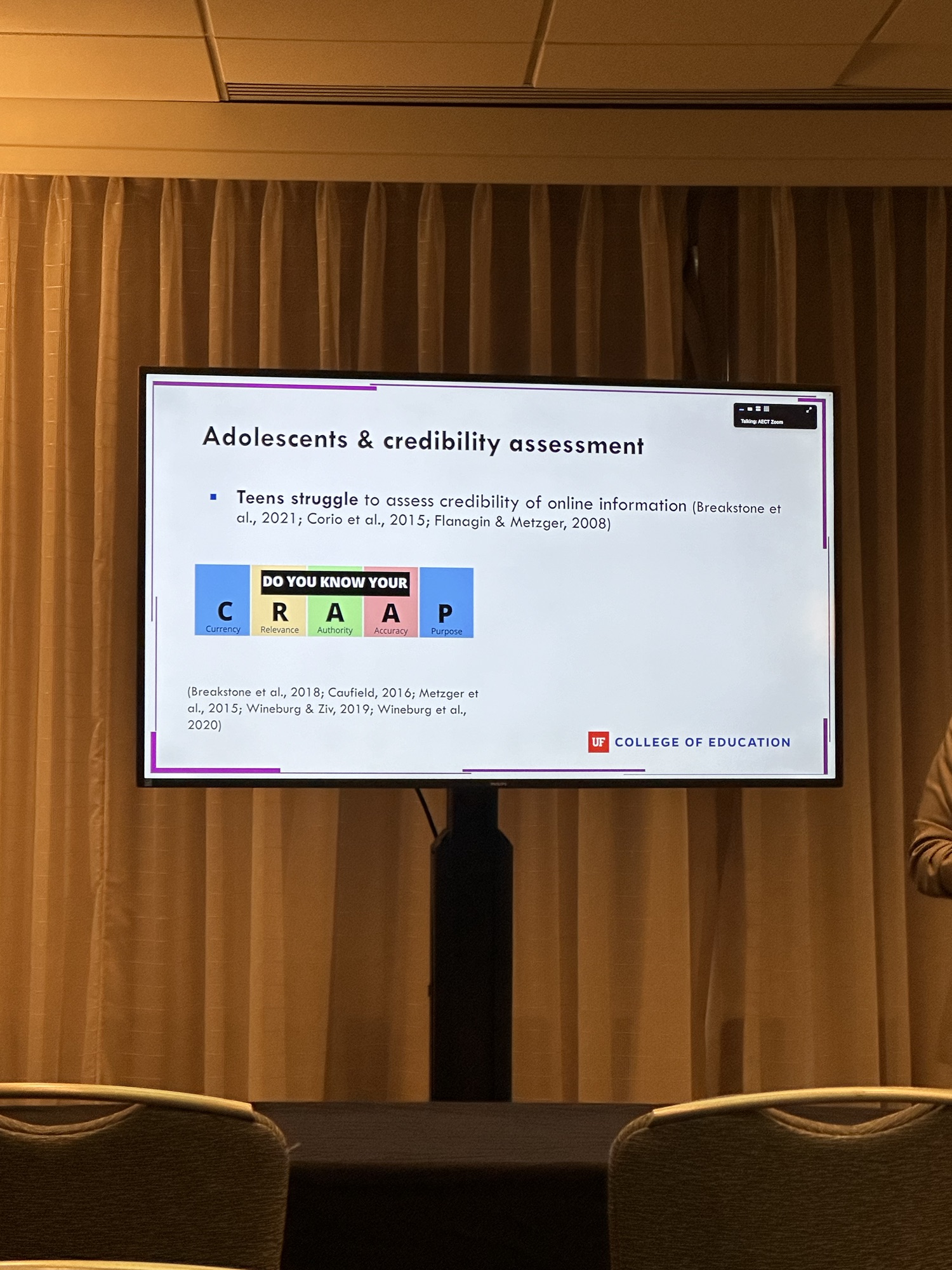
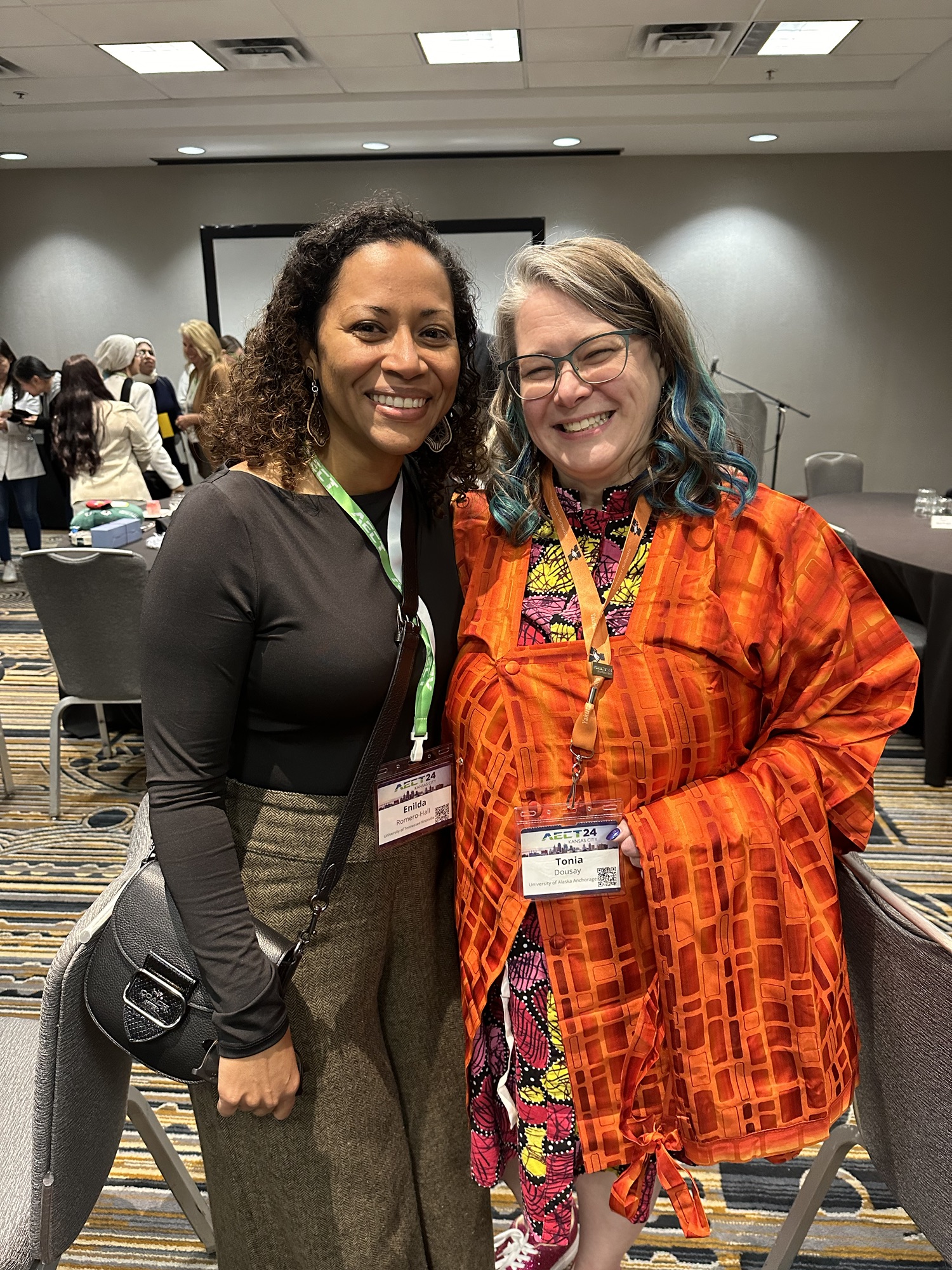
Also because I always take a million photos: Here you go! Also, thanks to those who shared photos with me!
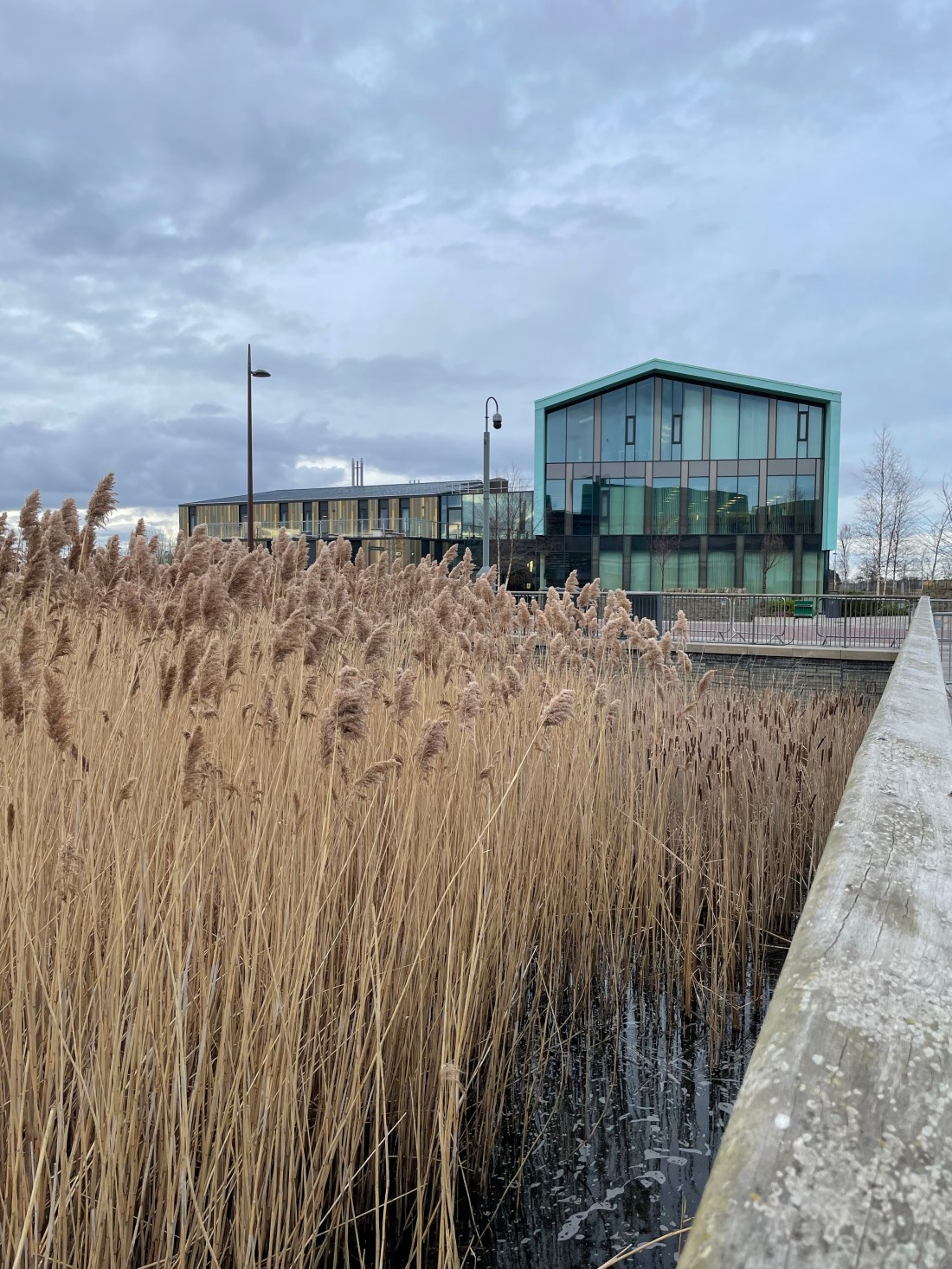
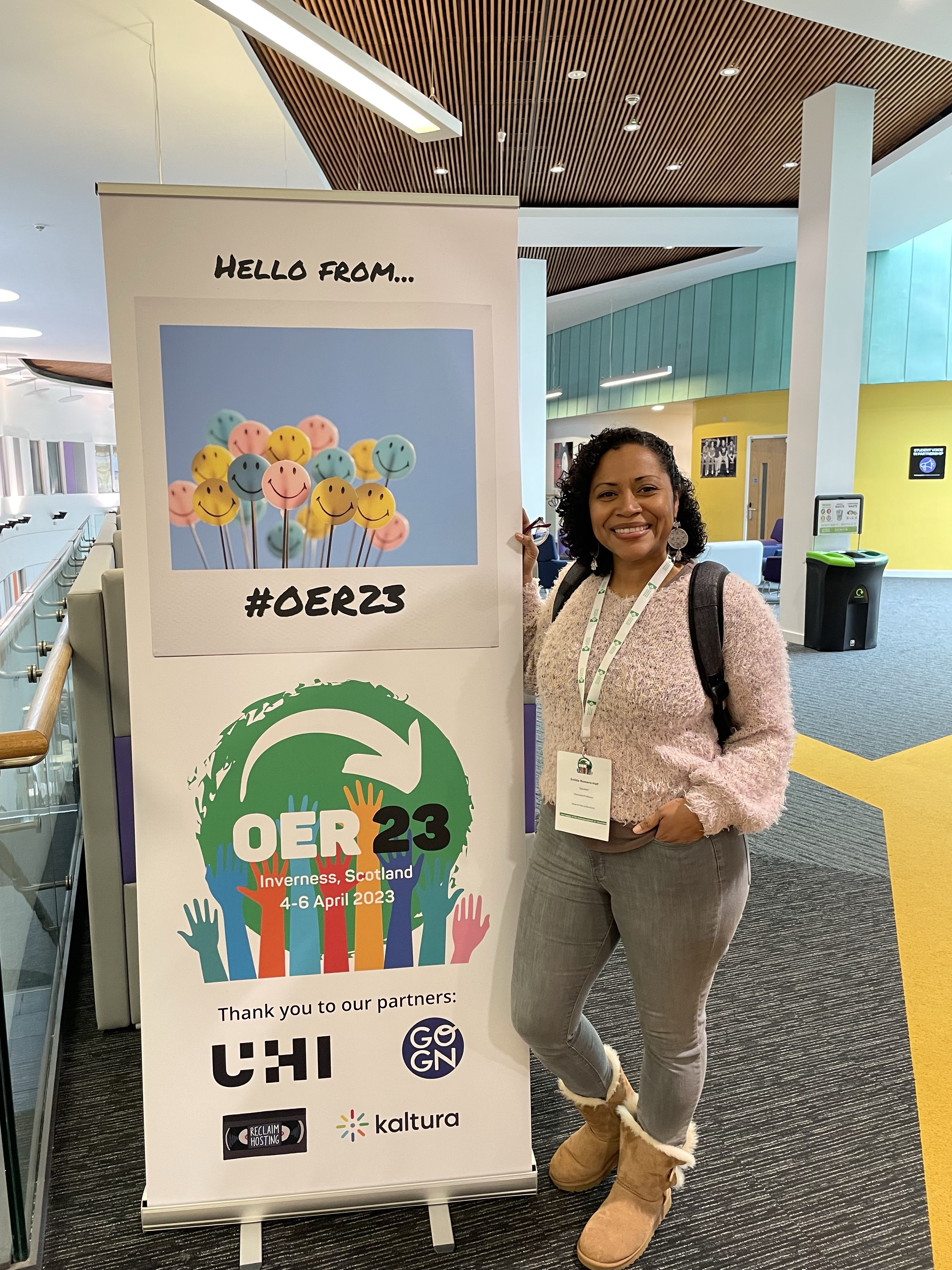
This past week I attend the Open Education Conference! Going to a conference you have never attended before and in a different continent is actually very intimidating. But, I made the travel arrangements and (despite some frustrations with airlines) made the journey to Inverness, Scotland to attend #OER23.
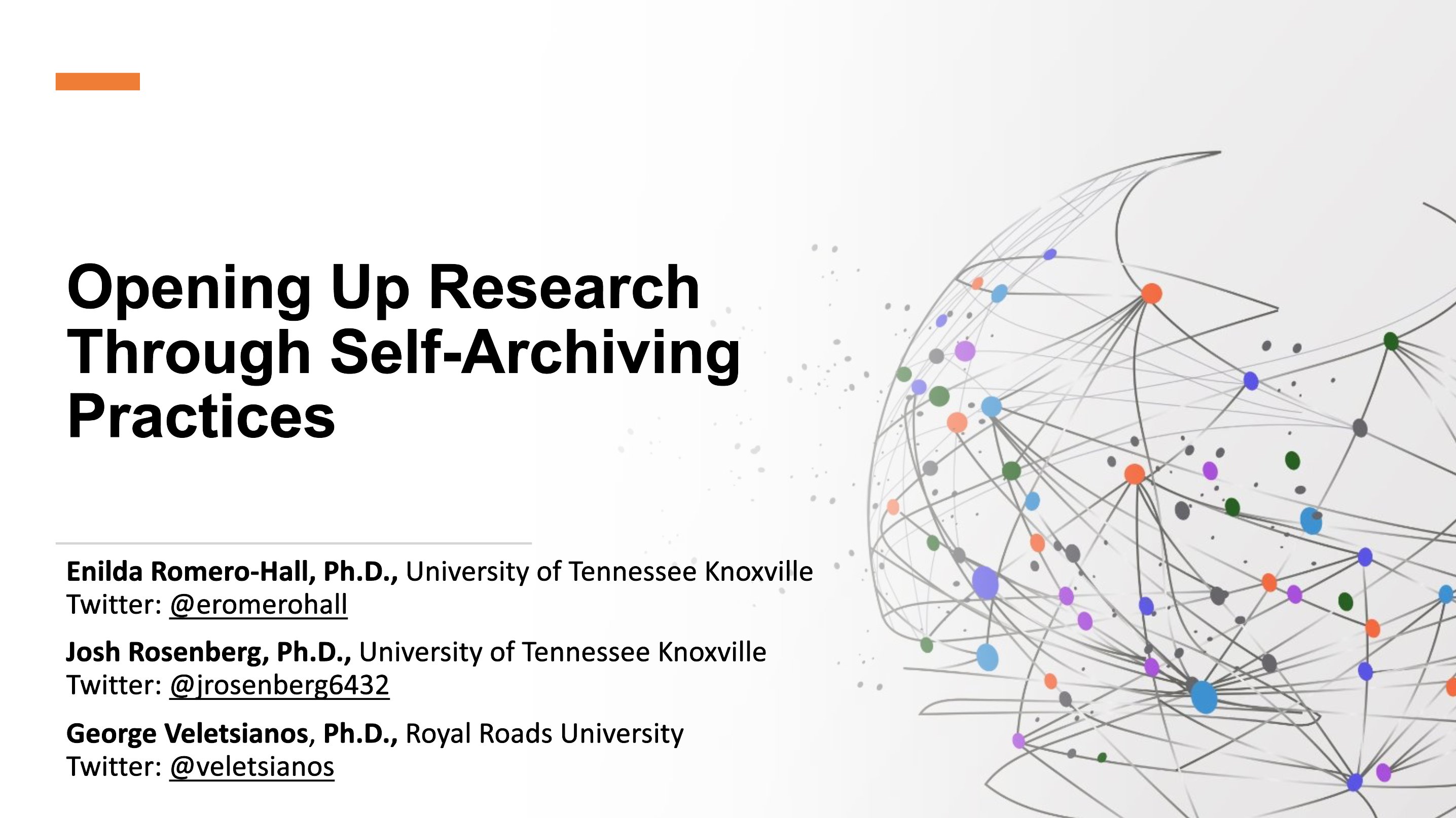
First, a shoutout to my co-authors: Josh Rosenberg and George Veletsianos. Our team has been working on a project related to self-archiving practices amongst scholars in higher education. This work has been inspired by similar work that both Josh (see blog post) and George have done in the past. The purpose of my travel to #OER23 was in part to present some of our initial findings and to get the conversation started on this topic. Here are the slides from the presentation: tiny.utk.edu/OER23
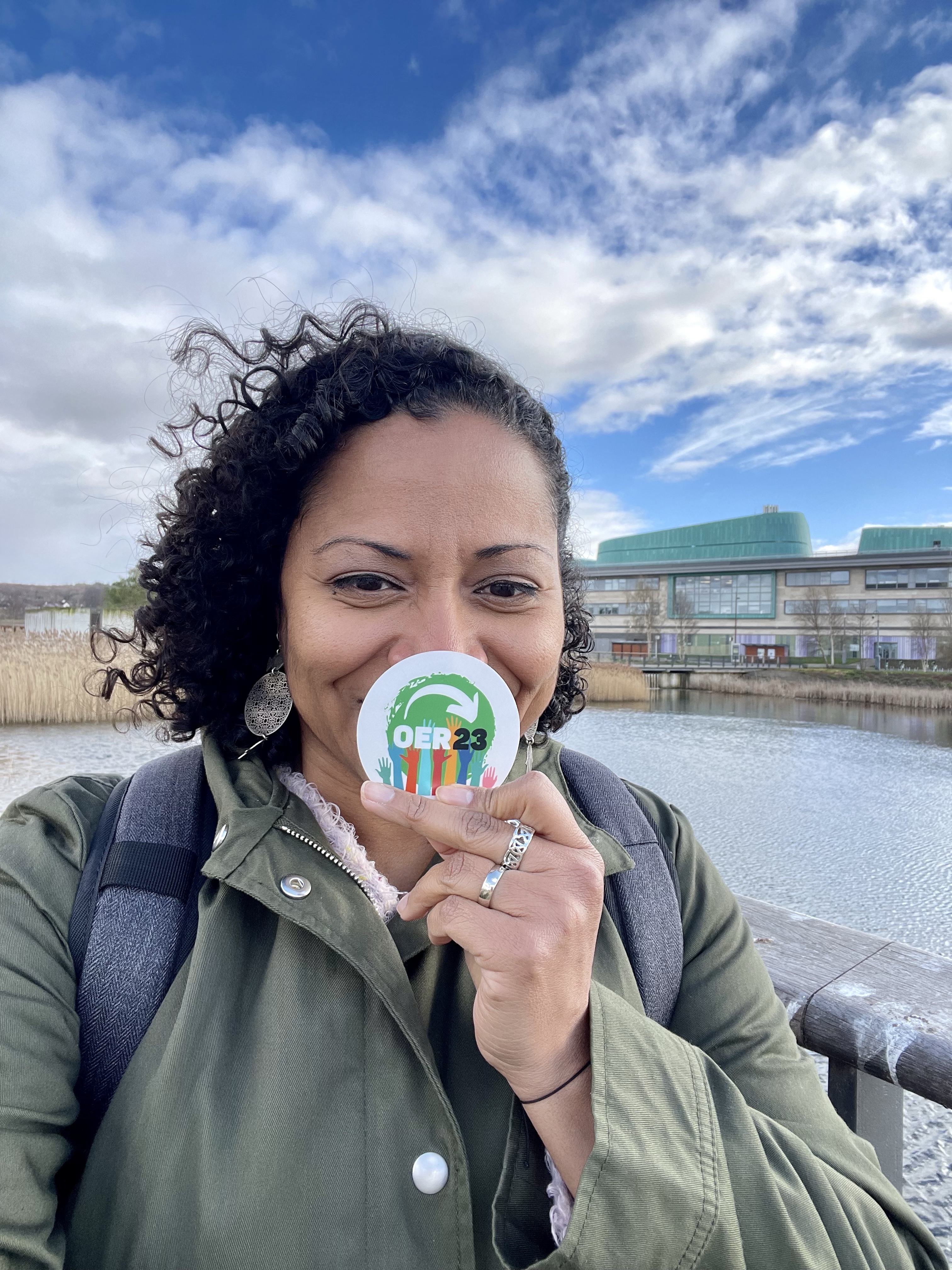
Back to the conference experience! Arriving at the conference venue (The UHI Inverness Campus so serene, accessible, and full with natural beauty) I did not know what to expect from from the conference. But I was immediately welcomed. A colleague sitting next to me an at the opening keynote introduce herself and she, just like me, was attending for the first time and had made her way to Inverness from Sri Lanka. I quickly realized that the #OER23 conference was an event with a global representation.
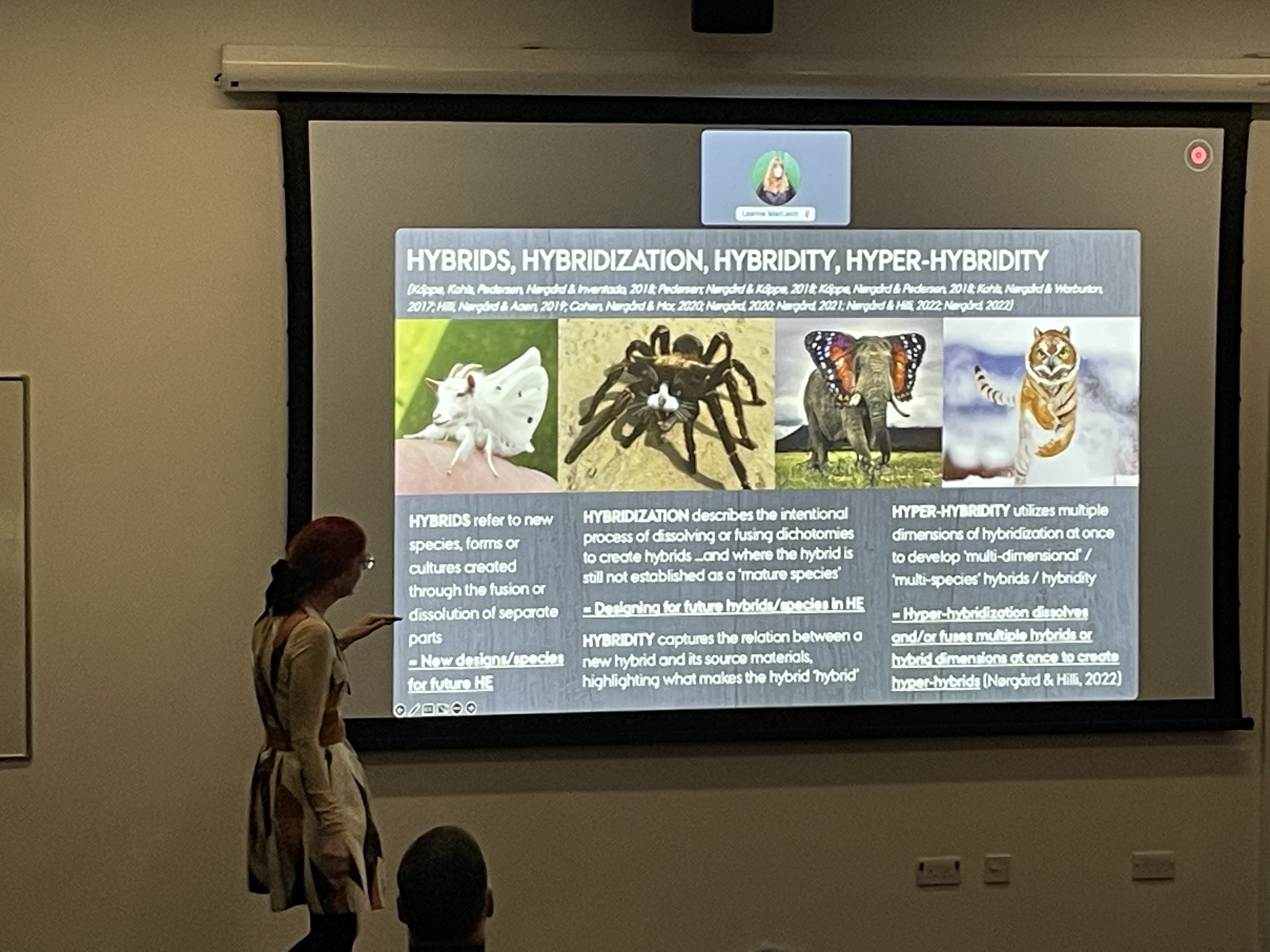
The second day of the conference was full of inspiration:
I learned about an upcoming book edited by Catherine Croning and Laura Czerniewicz. Very much looking forward to reading this book: bit.ly/HE4Good_updates
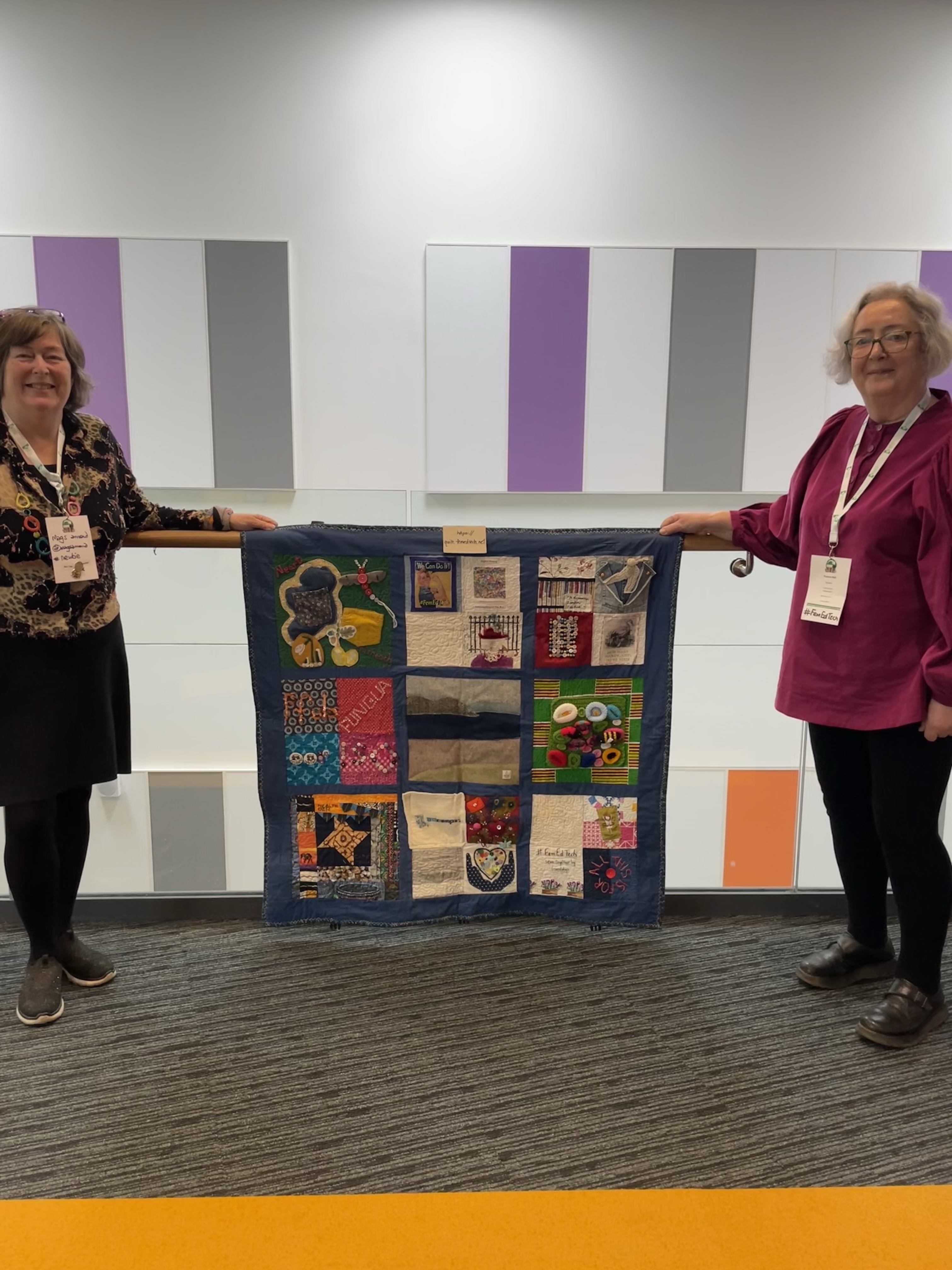
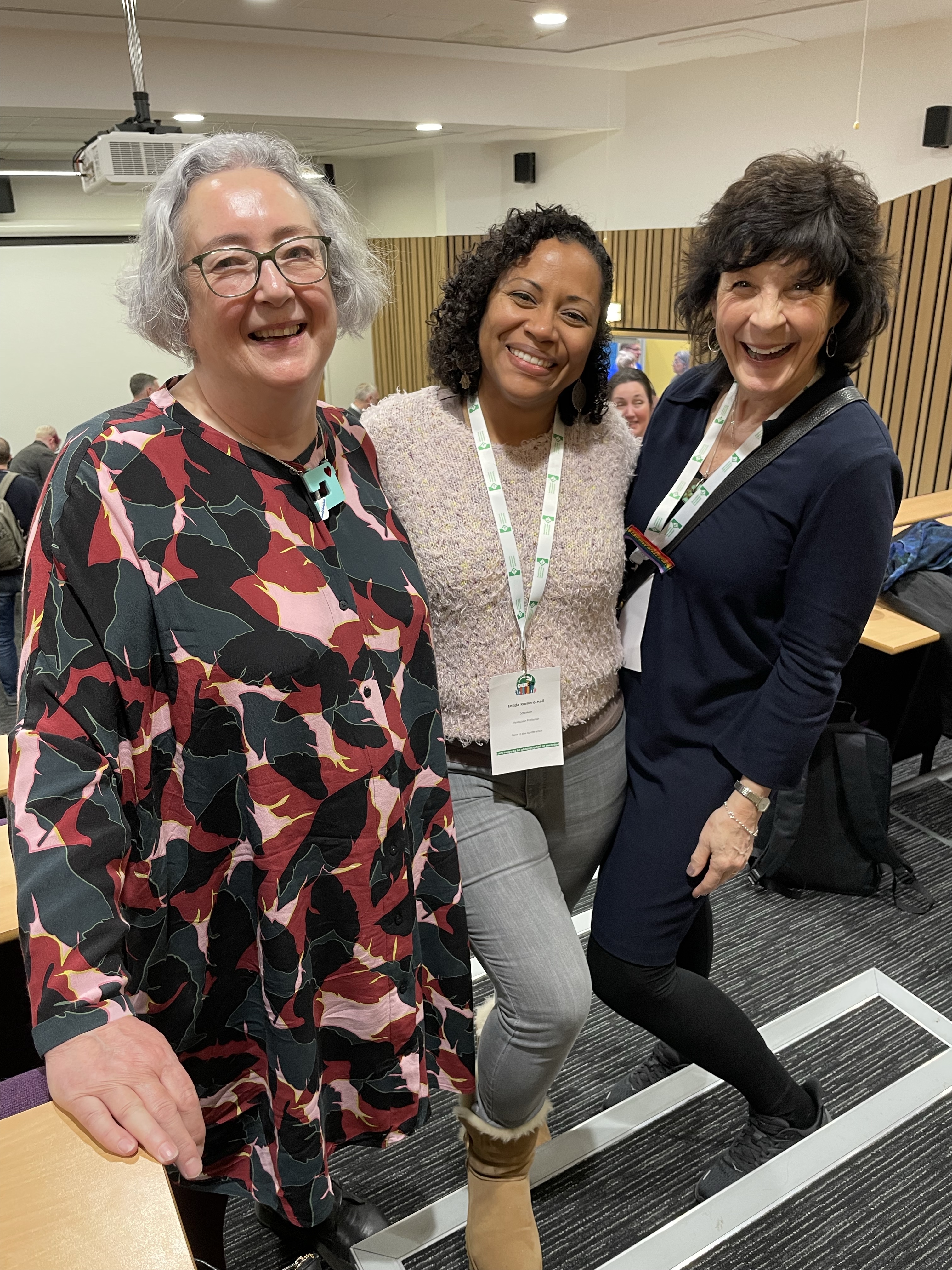
There are many other sessions that I could mention. I am still gathering links and resources from the conference. Thankful for all the presenters who shared their slides via Discord and other online platforms. I love that I got to meet so many online connections that I have in one way or another linked with in the past (likely in the bird app). Also, grateful for the opportunity to met colleagues who I did not know before and who share a passion for openness! It was also great to learn more about OER practices and policies in Scotland. Looking forward to future OER conferences!
I almost forgot! How could I forget? The OER GASTA was epic (also just in case you are wondering what is a GASTA?)! I do not have links to all of the GASTA presentations but here is the one presented by Eamon “Beyond the pedagogies of perpetual panic“. All of them were pretty epic!
Last week, I attended the AECT International Convention. It was my first time since 2019 that I attended in person. It was great to see so many colleagues who I have communicated with via email or Zoom for the last three years. Also, I got to meet new colleagues who I had never connected with before.
It was a fairly busy but rewarding schedule for me. I started early every day with a conference presentation or panel session. I am writing this blog post primarily to share some resources and presentation slides from AECT.
CLT- Prioritizing Care, Respect, Empowerment, and Intersectional Identity while in Emergency Remote Teaching: Analysis through a Feminist Pedagogy Lens
This was a presentation with co-author, Dr. Nadia Jaramillo Cherrez. It is work that we have written up and plan to published as part of a forthcoming book on Feminist Pedagogy in Online Learning. Here are our presentation slides.
CLT- Marginalizing What ALSO Matters: It’s time to consider equity factors in design that impact student learning
This panel was great. I do not have slides to share, but here is the link to the recording. Unfortunately, it will only be available until Nov. 15 so please view it before then if you want to learn more about our discussion.
LED- Authentic Practices and Considerations for Mentoring ID Professionals
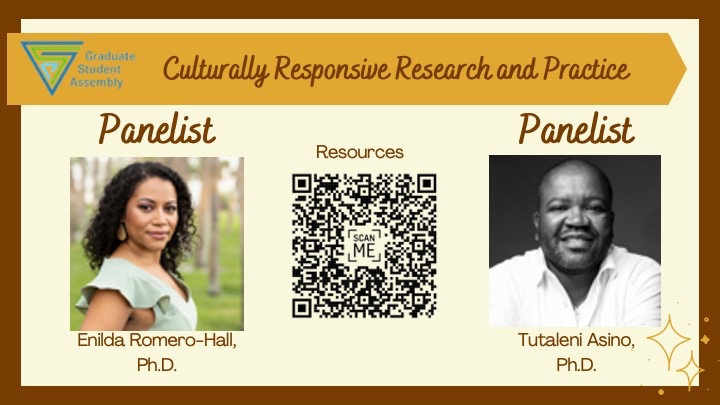
This panel was organized by members of the AECT Graduate Student Assembly (Mia Knowles, Lili Yan, and Bree Kirsch). Thank you so much for your work organizing this panel. Some of the central questions that Dr. Tutaleni Asino and I discussed during this session were:
How would you describe culturally responsive research, pedagogy, and practice? What are other relevant concepts that show up in your work?
What are your experiences in doing work with culture? Any important stories or challenges to share?
What is your favorite methodology for culturally responsive research?
How would you negotiate the cultural self and the academic self in your work?
Advice/resources for grad students doing work with culture, particularly in our field?
Mia, Lili, and Bree created this slide with a QR code that links to additional resources and readings.
2022 Early Career Symposium
This year during AECT, I was also invited to serve as a mentor as part of the Early Career Symposium. I hope the insights I shared with my mentees are beneficial to them. I also learned a great deal from their experience and knowledge. I am thankful to those who presented during the symposium because I found their presentations useful even in my current career stage as an academic. I hope AECT continues to support the Early Career Symposium. I have served as a mentor twice and was a mentee many years ago. It is truly a great way to give back to our learning design and technology community.
University Receptionand Distance Learning Award
Huge thanks to my colleague, Dr. Rachel Wong, for traveling to the AECT 2022 conference with our University of Tennessee Knoxville poster and goodies to give away during the university reception. We met many colleagues and graduate students during the university reception. Thank you to everyone that stopped by and grab some goodies. Also, thanks to the AECT Distance Learning Division for recognizing one of my recent publications with 1st Place Mixed Methods Journal Award (“Hybrid flexible instruction: Exploring faculty preparedness” published with co-author Caldeira Ripine in the Online Learning journal). Last, but not least, during the welcome reception I put my name in a raffle and won some DDL gear. I never win raffles, I was so excited.
One of my favorite things to do after a good conference is to collect the resources acquired in a blog and re-share it with others. It is also a great way for me to tag a resources to a specific event (in my blog) in case I want to go back to it in the future. Don’t ask me why, my brain just works that way. Any who, last week I attended OTESSA 2022 which was her virtually and is organized by the Open/Technology in Education, Society, and Scholarship Association (OTESSA).
Here are a few thoughts on the conference:
Really enjoyed the conference sessions, social events, and the schedule.
I was also really appreciative of the active efforts to promote all sessions via social media, at times it served as a reminder to a session I wanted to attend.
I was not sure how the sessions were going to relate to theme of the conference “Critical Change” but at least based on the sessions that I was able to attend, there were several critical conversations happening about “what is next” and “how we do it in a meaningful, critical way”.
Going back to the schedule, it was a bit more challenging to catch the evening talks but glad I can catch the recording until the beginning of June.
The conference organizers did a phenomenal effort running is smoothly (i.e., sharing updates daily, the pre-conference info to check login information, and just attending sessions to make sure everything was going as planned).
At the beginning of the week I made a post on Twitter stating that I would be sharing resources during the week but honestly it was too much for me to tweet out every day. Trying to attend sessions, tweet giving proper credit (important to me), and trying to keep up with what is going at home was too much. So, instead I bookmarked and hope to proper share in this blog post. I will include the session the resource was mentioned or shared.
Surveillance in the System: Data as Critical Change in Higher Education (Research-Oriented), Bonnie Stewart (University of Windsor), Samatha Szcyrek (University of Windsor)
@bonstewart and @samanthaszc discussed findings on research related Surveillance in the System: Data as Critical Change in Higher Education. What do you know about datafication in your institution?
Resource: Polisis gives you a glimpse of what websites actually say in their privacy policies: https://pribot.org/polisis
Online or Remote Learning and Mental Health (Research-Oriented), Stephanie Moore (University of New Mexico), Michael Barbour (Touro University California), George Veletsianos (Royal Roads University)
Wrapped up the first day of #OTESSA22 with a session discussing Online or Remote Learning and Mental Health @steph_moore@mkbtuc@veletsianos. Looking forward to reading the final results!
Hide and Seek: On Kids, Power, and Resistance in Education, Sherri Spelic, American International School Vienna
There were some many words of wisdom and amazing poetry in the keynote by @edifiedlistener at #OTESSA22. One of my favorites words of wisdom was on her initial slides “my students are tireless teachers”
Outside-In: Openness as Subversion, Maha Bali, American University in Cairo
Embracing Feminist Pedagogies in Learning Design, Enilda Romero-Hall, The University of Tennessee Knoxville
Huge thanks to #OTESSA22@otessa_org for the opportunity to participate and contribute to the conversation on Critical Change. Here are the slides from my talk today on “Embracing Feminist Pedagogies in Learning Design”: https://bit.ly/38C25Q6
Exploring university teaching during a pandemic to derive recommendations for post-pandemic times (Research-Oriented), Joerdis Weilandt, Sandra Dixon, Richelle Marynowski, Lorraine Beaudin, Rumi Graham, Stavroula Malla, Angeliki Pantazi (University of Lethbridge)
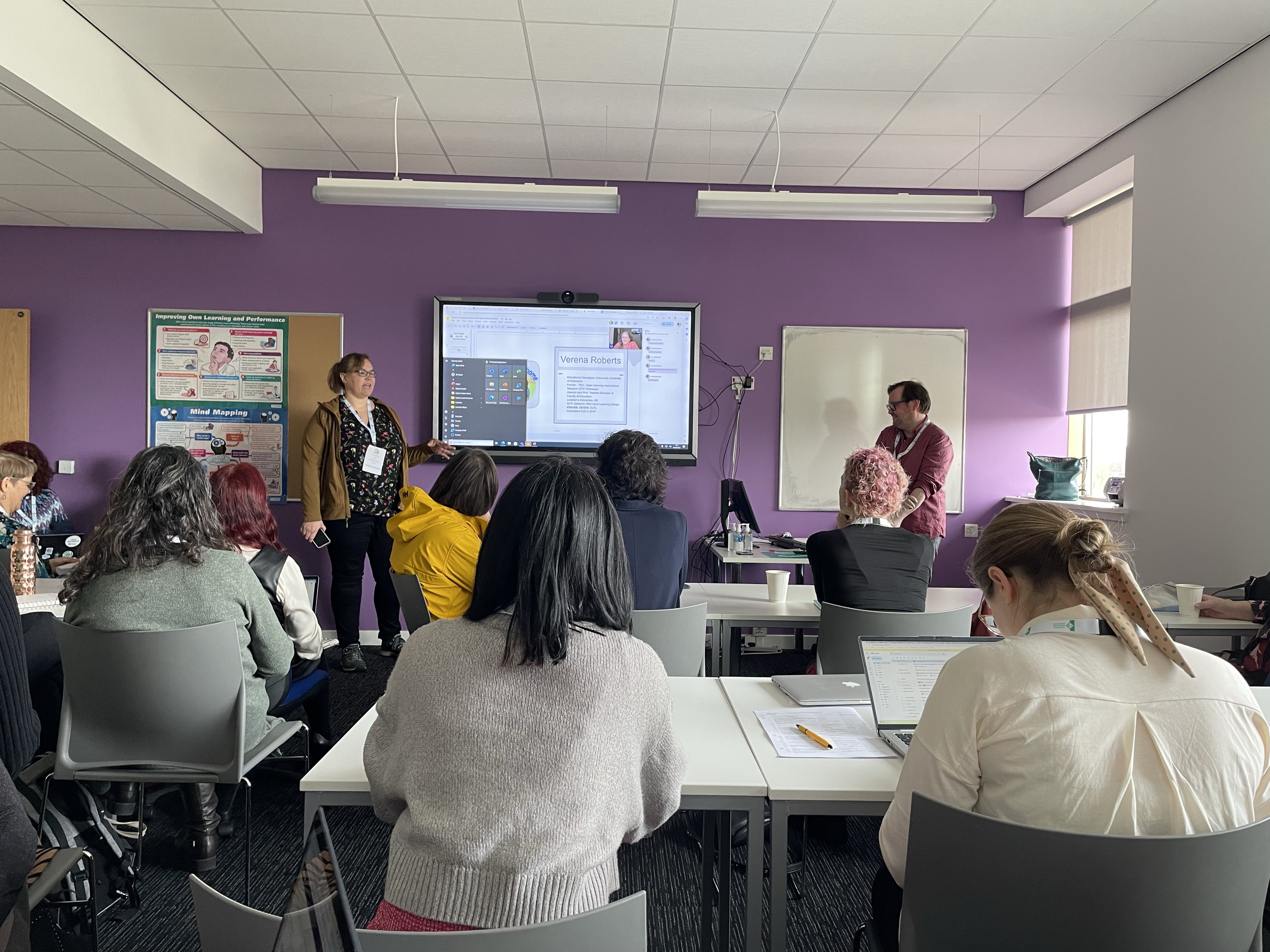
Multi-Section Open Course Design: Design and Implications for Faculty, Sessional Instructors, and Learners (Practice-Oriented), Valerie Irvine, Michael Paskevicius, Colin Madland, Rich McCue, Verena Roberts (University of Victoria)
The social events were lots of fun! The Bhangra dance with @GurdeepPandher was a great workout and I definitely need more of it my life. I was a bit uncoordinated at first and too shy to turn my camera on but I finally got it and still too shy to turn my camera on. The DJ session so much fun too! I didn’t participate in the trivia challenge but I enjoyed all the beats. Thank you again to all involve with planning and organizing the conference (Valerie, Aras, and Terry!) .
A few weeks ago, I attended the American Educational Research Association (AERA) 2022 Annual Meeting. I really had two-days of sessions that I could attend and I wanted to make the most out of it. This post is primarily for me to compile the list of resources collected as I attend the sessions and that are currently in my Notes application.
Critical Race Theory, White Supremacy, and the Ongoing Fight for Black Existence
This past week I attended my first in person conference since February 2020. It was the Annual Conference of the National Society for Experiential Education. Back in early Summer, when I received the email from the Center for Teaching and Learning about attending the conference I felt good with attending the conference. Florida at that time was doing better with the number of COVID-19 cases but that quickly changed and I was starting to become hesitant about attending the conference. Thankfully the numbers are starting to decline after a massive spike due to the Delta variant. Another encouraging aspect was that the conference had a mask mandate for all attendees. It was sent out via email several times prior to the conference. It was also nice that the conference was in Orlando so if I didn’t feel comfortable with the COVID-19 measures, I could drive home in 45 minutes. Thankfully after I walked into the keynote session I immediately noticed that everyone was wearing their masks and wearing them properly. The conference did include a lunch but I didn’t attend because I didn’t feel comfortable attending this event so I just ordered some UBER eats.
The conference this year had an overall theme focused on social justice in experiential education. My first session was the keynote by Dr. Raja Gopal Bhattar (they/them/theirs) on Tuesday morning. As stated in the website of the conference: “Dr. Bhattar is a nationally recognized higher education leader, advocate, consultant and author. Raja will address how effective experiential learning requires intentionality and clear understanding of outcomes for our communities. Through storytelling and reflections, this keynote will offer insights and strategies on how experiential education leaders can incorporate equity, inclusion and belonging in all aspects of our work.” I loved the keynote speaker! I like it when keynote speakers make me reflect and this was a perfect example of this. Some of the questions I had to think about white listening to keynote speaker:
How do we show up?
Identity versus perception?
What is our role in upholding/disruptive inequitable systems?
How our students receive us?
Whose perspective is not on the table?
How do societal systems enhance or inhibit student success on campus?
We also had to do an identity grid that helps us reflect on “how often do we think about who we are beyond our titles? ”
Identity Grid at NSEE 2021
Other sessions that I really enjoyed were:
Social Justice and Antiracism in Career Education and Experiential Education: Session discussed a process for creating a Call to Action with accountability measures, equity-oriented course syllabi, and a 5-step model to consider in your own work. This is a wonderful resources shared during the session: https://tinyurl.com/4j2tmxaw. This resources were used to create the Social Justice and Career Education infographic. Please see image below.
Providing career readiness support to female students in male dominant industries: This was a nice round table session focused on different kind of events that staff and faculty can use to create opportunities for networking, grow , and support for female students and those who identify as woman.
Using immersive virtual reality in higher education to facilitate authentic learning experiences: This was a very introductory session into VR and how a university had employed VR experiences into the curriculum to provide learning experiences related to manufacturing at the start of the pandemic in lieu of in person field trips. We got an opportunity to brainstorm ideas for our own curriculum.
Learner-centric virtual exchanges: No travel, no problem: This session related to a virtual global challenge that an institution took at the beginning of the pandemic in lieu of study abroad programs. As soon someone who has coordinated a study abroad program in the past and who is considering one next Spring I want to think of alternatives in case the pandemic requires me to make a change in plans. This session helped me think about different approaches that I can take virtually.
Influencers abroad: Enhancing cross-cultural awareness through social media activities: This session explored leveraging strategically designed social media learning activities to enhance cross-cultural awareness. I thought it was a creative to consider alternative assignments during study abroad experiences. Some of this assignments included: Vlogs, Instagram stories (academic versus personal accounts) every day, Instagram food related posts, and end of a program presentation/reflection.

























 Design Goodiness
You must be logged in to post a comment.