I guess it is time for me to write a blogs post about my forthcoming book 😊
It has been a while since I first announced that I was working on my next book and sadly due to various reasons I had to rescheduled my submission of the book to the publisher twice! But over the last two months I have moved full steam ahead with this book project.
I love how it is taking shape and that I get to work on it. Today, I was working on chapter 12 (in a coffee shop) and I was just smiling thinking that someone else would get to read this work.
This is not a book in which I tell someone else’s stories or tell you how to be a learning designer. The book is about learning designers telling their stories. It is about conversations, experiences, and journeys.
Super excited to connect with a second cohort of school librarians this summer as part of the Online Ready project led by my colleague Dr. Lucy Green and funded by a grant from the Institute of Museum and Library Services.
As part of the project, I am teaching an online asynchronous mini-course on Culturally-Competent Design. Here is an overview of the mini-course: tiny.utk.edu/MiniCourse_CCD
Also, here is a short video I made for one of the modules:
You know when you go to an interview and the hiring committee ask you to predict the future! The typical question: Where do you see yourself in 5 or 10 years? Honestly, can we even answer this question? Don’t get me wrong I have asked this question and I have answered this question. We’re my predictions accurate? I don’t remember 😊
Today I was trying to make my way through my to-do list when I got a notification on my phone. It was one of those were you see a photo “on this days” years ago. I looked at it and it show me that:
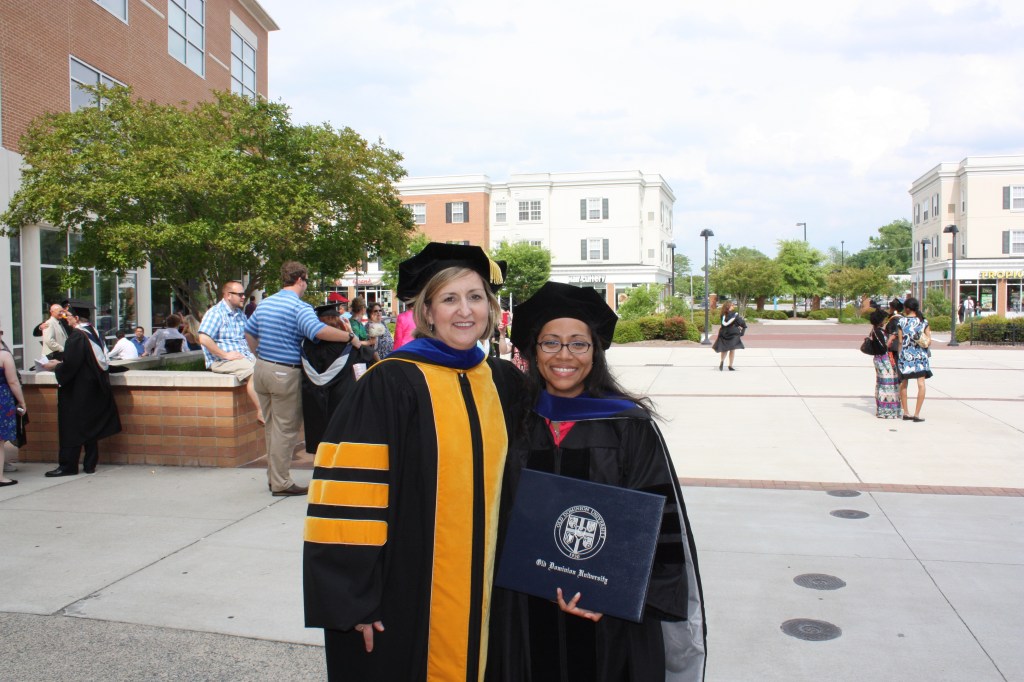
10 years ago today I was hooded by my doctoral advisor, Dr. Ginger Watson and I celebrated my earning my doctoral degree (I actually had a bunch of revisions and didn’t really graduate until the end of summer but who cares I still partied like a rockstar!). I remember my mom and my brother came to celebrate with me and that was pretty awesome.
Drs. Ginger Watson and Enilda Romero-Hall
5 years ago I was in Zurich, Switzerland leading a study abroad program with primarily undergraduate students and an alumni of the Instructional Design and Technology program from The University of Tampa. My co-coordinator Merrie was honestly the best! I don’t know how I would have finished this trip without Merrie! 💖
Switzerland study abroad program
Reflection on this post:
So I am now, 10 year later from getting hooded, wrapping up my first year as a faculty member at The University of Tennessee Knoxville. I am working on a research plan with my first doctoral student. I am conducting research with two additional graduate students. I am the graduate coordinator of the learning, design, and technology doctoral program and we are in the process of welcoming a nice group of doctoral students this fall (very exciting!). I am also working on other research and writing projects.
If you had asked me 10 years ago or even 5 years ago, where I was planning to be in ____ number of years, I do not know if I would have even been to come up with my current life. As we say in Panama: la vida es loca y a cualquiera le toca!
What are the objectives, aims, and values of the tool designer?
What does the tool designer gain from your use of this tool?
Who is the target audience for this tool? How do you know this?
Who is harmed and who benefits from this tool?
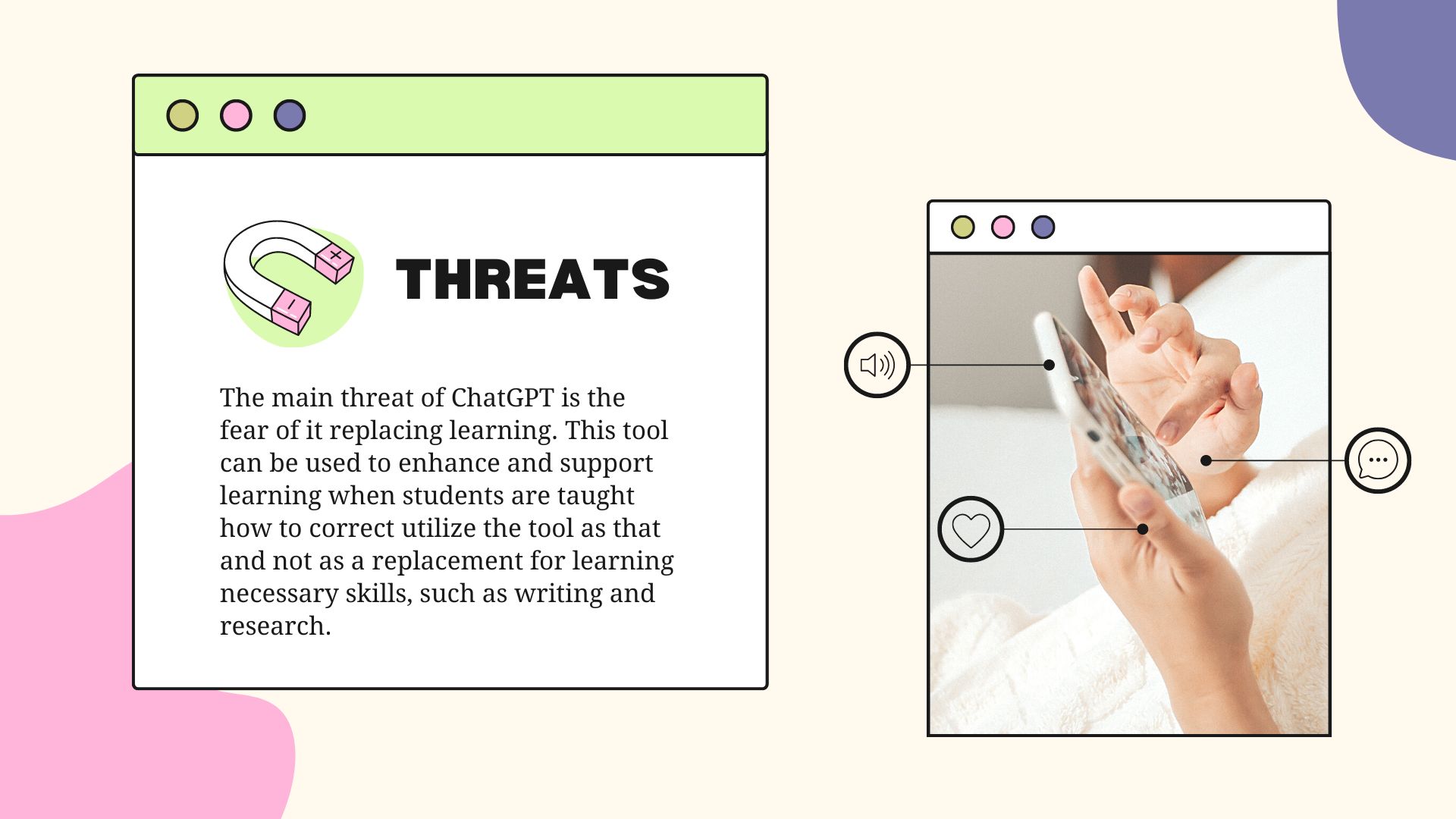
As you are using chatGPT think about the Strength, Weaknesses, Opportunities, and Threats (SWOT) of this tool in teaching and learning
Create a figure (using Canva) that helps illustrate your SWOT analysis
I was pretty excited to see the outcome of the exercise but also to hear the stories during our discussion. Here are some examples of the SWOT analysis created by the students, shared in this post with their permission.
Designed by Keiko EdaDesigned by Hunter Preston Carlheim
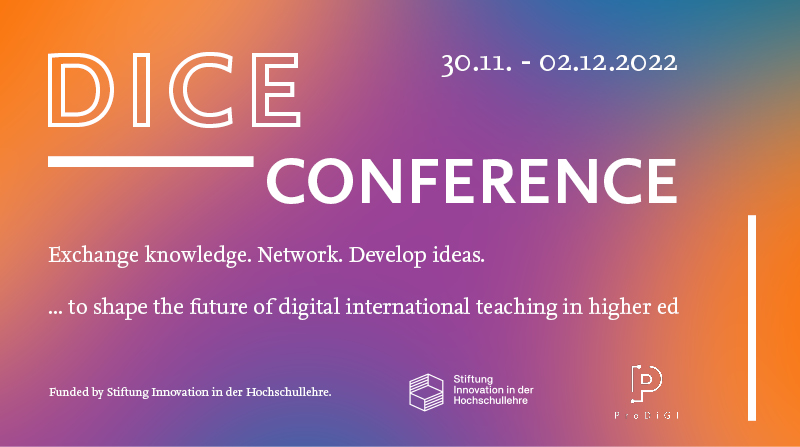
This past week I joined the DICE Conference to host a workshop on Digital Literacy. The aim was not to enhance the digital literacy of the participants but to discuss how we can organize, collect data, and execute a digital literacy plan. The workshop was hosted at 3 am local Knoxville time. I really did not know how responsive I was going to be, but it is amazing how you feed from the energy of others. The participants of the workshop were energetic, open, and engaged, they made the three-hour session go by so fast. Grateful to the organizers of the DICE conference for the invitation to join the conference and organize this workshop. Here are some of the resources I used during the workshop:
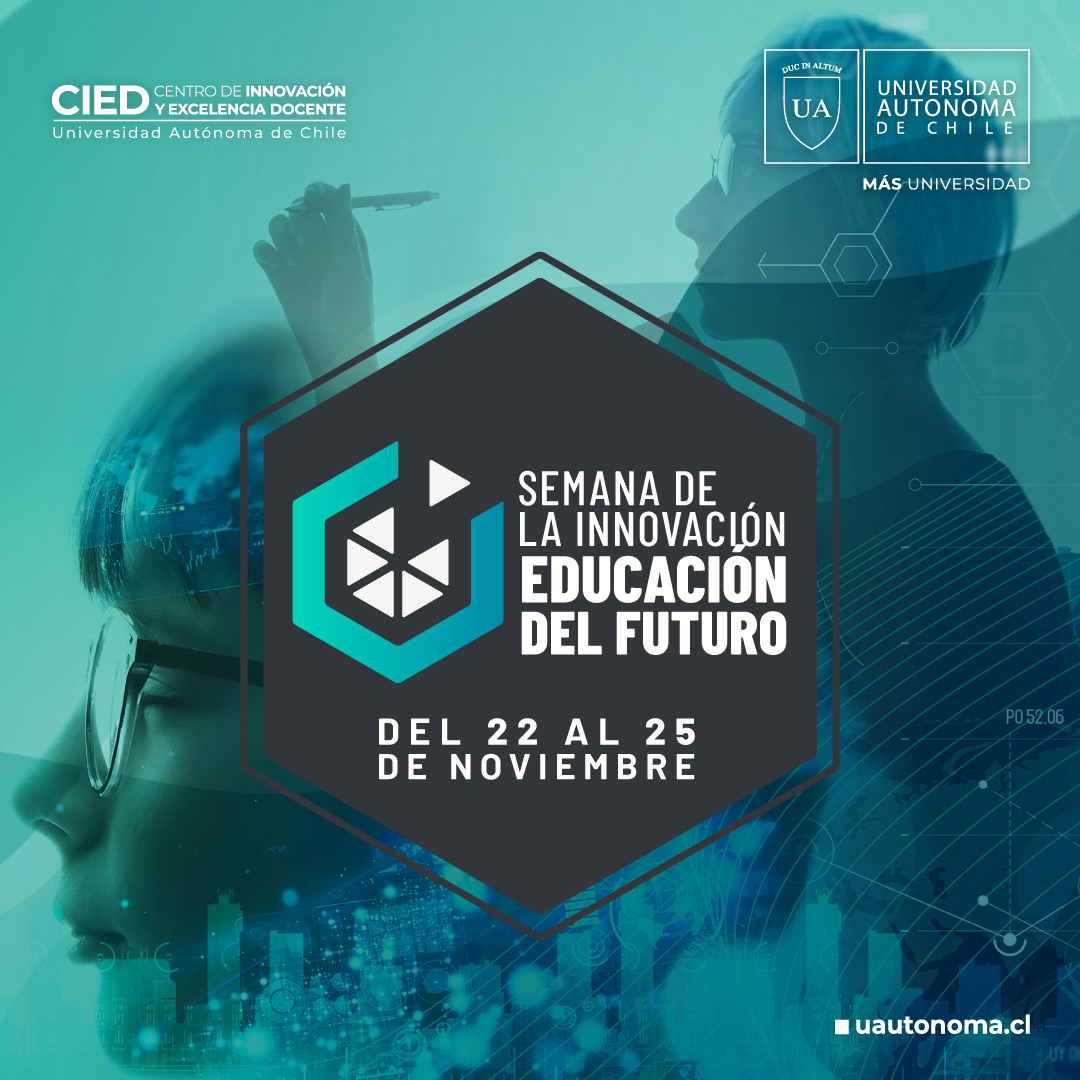
During the week of November 22 to November 25, 2022 the Centro de Innovation y Excelencia Docente (CIED) of the Universidad Autonoma de Chile hosted the Semana de la Innovation: Education del Futuro.
I was honored to join the event as an invited speaker for the day of “Mujeres Innovadoras”. It was a wonderful experience to shared an hour with colleagues in Chile and other Spanish-speaking scholars. The hosts of the event Claudia Osorio Alfaro, Maria Jose Suazo Ocares, and Ignacio Andres Vilos Fredes were amazing and very welcoming. The title of my presentation was “Pedagogia Intersectional Digital: Inclusion y Equidad en la Enseñanza en Linea”. Here are the link to my slides: tiny.utk.edu/CIEDChile
To learn more about the event here are two press releases by the Universidad Autonoma de Chile:
A few weeks ago, I found out that the Tenured Upon Appointment process at The University of Tennessee Knoxville (UTK) was completed. I am grateful to the UTK community for honoring my work and contributions as an Associate Professor with tenure. I look forward to continuing my work as researcher, instructor, and member of my professional community. Also, thankful to the many collaborators so much of the work that I do is a join effort with colleagues and students.
This week's episode of The Key is about a form of blended learning called HyFlex and features two professors who have both taught in the format and done research on its impact. #AcademicTwitter
A few weeks ago, I was invited to join a podcast to talk about HyFlex Instruction. I was on travel when I saw the email from the editor in my inbox and, without too much information, I accepted to join the conversation. I really did not know what direction the podcast was going to take. I know HyFlex learning is “controversial” and even “unwelcome” by many, but I really was just going to speak facts. I reviewed some of the research I have done on the topic and the reviewed the literature I have read on the past in preparation for the podcast. I am very happy that the editor had a conversation approach to the podcast and that guided the conversation on the “what comes next” direction. I will be speaking and doing more research on this topic in the upcoming months. So, this is just the beginning of the conversation.
I really do not like listening to my voice in recordings so I just know what I said from the actual recording session. I have not heard the podcast, so I appreciate colleagues who have reached out to let me know that they enjoyed listen to the podcast and the points I shared as part of the conversation. Above is a link to the tweet from Inside Higher Ed and here is the link to the webpage: Ep.91: The Pros and Cons of HyFlex Instruction
This past week, I was invited to speak as part of the STEM education seminar sponsored by the Theory and Practice in Teacher Preparation (TPTE) Department STEM team. I am part of the STEM Education team in the department and this semester a group of colleagues are organizing this seminar with presentations for faculty and graduate students every two weeks. I have really enjoyed all of the presentations this semester. Our STEM Education team is doing really amazing work and I love learning about it.
For my presentation, I was a bit nervous because I was not sure how my work would relate to STEM education. I know educational technology is consider part of STEM education. However, I think of my work as more than just educational technology. I actually see Learning, Design, and Technology as the umbrella term under which educational technology, instructional design, instructional technology, learning engineering, and others similar terms come together. Perhaps one of my main concerns is that under the term STEM, learning design is primarily associated with the “technology” term which I really see as just one aspects of the far more complex ecosystems of the learning, design, and technology field.
The presentation focused on how it is okay to have many areas of research interest. We are often encouraged to stay very narrowly focused on a topic. But, what if you are curious about other topics and want to explore them? So, basically, I used myself as an example of an eclectic research agenda. My research has evolved so much and in part it due to my curiosity to explore other topics. This has also been true in my life, curiosity to try new things or study programs outside my focus has helped me evolve and grow. Here is the link to the slides, in case you are curious.
Last week, I attended the AECT International Convention. It was my first time since 2019 that I attended in person. It was great to see so many colleagues who I have communicated with via email or Zoom for the last three years. Also, I got to meet new colleagues who I had never connected with before.
It was a fairly busy but rewarding schedule for me. I started early every day with a conference presentation or panel session. I am writing this blog post primarily to share some resources and presentation slides from AECT.
CLT- Prioritizing Care, Respect, Empowerment, and Intersectional Identity while in Emergency Remote Teaching: Analysis through a Feminist Pedagogy Lens
This was a presentation with co-author, Dr. Nadia Jaramillo Cherrez. It is work that we have written up and plan to published as part of a forthcoming book on Feminist Pedagogy in Online Learning. Here are our presentation slides.
CLT- Marginalizing What ALSO Matters: It’s time to consider equity factors in design that impact student learning
This panel was great. I do not have slides to share, but here is the link to the recording. Unfortunately, it will only be available until Nov. 15 so please view it before then if you want to learn more about our discussion.
LED- Authentic Practices and Considerations for Mentoring ID Professionals
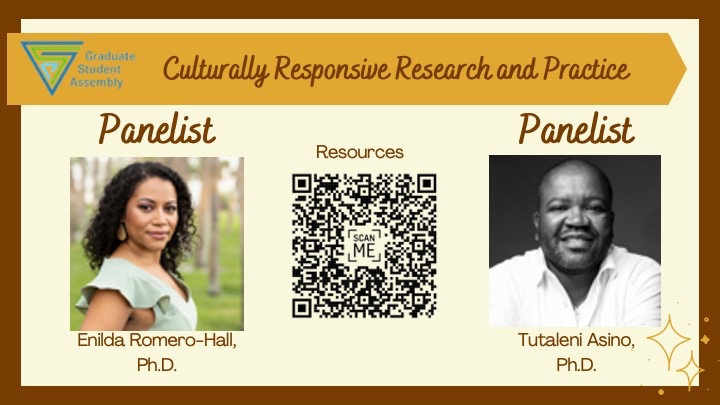
This panel was organized by members of the AECT Graduate Student Assembly (Mia Knowles, Lili Yan, and Bree Kirsch). Thank you so much for your work organizing this panel. Some of the central questions that Dr. Tutaleni Asino and I discussed during this session were:
How would you describe culturally responsive research, pedagogy, and practice? What are other relevant concepts that show up in your work?
What are your experiences in doing work with culture? Any important stories or challenges to share?
What is your favorite methodology for culturally responsive research?
How would you negotiate the cultural self and the academic self in your work?
Advice/resources for grad students doing work with culture, particularly in our field?
Mia, Lili, and Bree created this slide with a QR code that links to additional resources and readings.
2022 Early Career Symposium
This year during AECT, I was also invited to serve as a mentor as part of the Early Career Symposium. I hope the insights I shared with my mentees are beneficial to them. I also learned a great deal from their experience and knowledge. I am thankful to those who presented during the symposium because I found their presentations useful even in my current career stage as an academic. I hope AECT continues to support the Early Career Symposium. I have served as a mentor twice and was a mentee many years ago. It is truly a great way to give back to our learning design and technology community.
University Receptionand Distance Learning Award
Huge thanks to my colleague, Dr. Rachel Wong, for traveling to the AECT 2022 conference with our University of Tennessee Knoxville poster and goodies to give away during the university reception. We met many colleagues and graduate students during the university reception. Thank you to everyone that stopped by and grab some goodies. Also, thanks to the AECT Distance Learning Division for recognizing one of my recent publications with 1st Place Mixed Methods Journal Award (“Hybrid flexible instruction: Exploring faculty preparedness” published with co-author Caldeira Ripine in the Online Learning journal). Last, but not least, during the welcome reception I put my name in a raffle and won some DDL gear. I never win raffles, I was so excited.






 Design Goodiness
You must be logged in to post a comment.