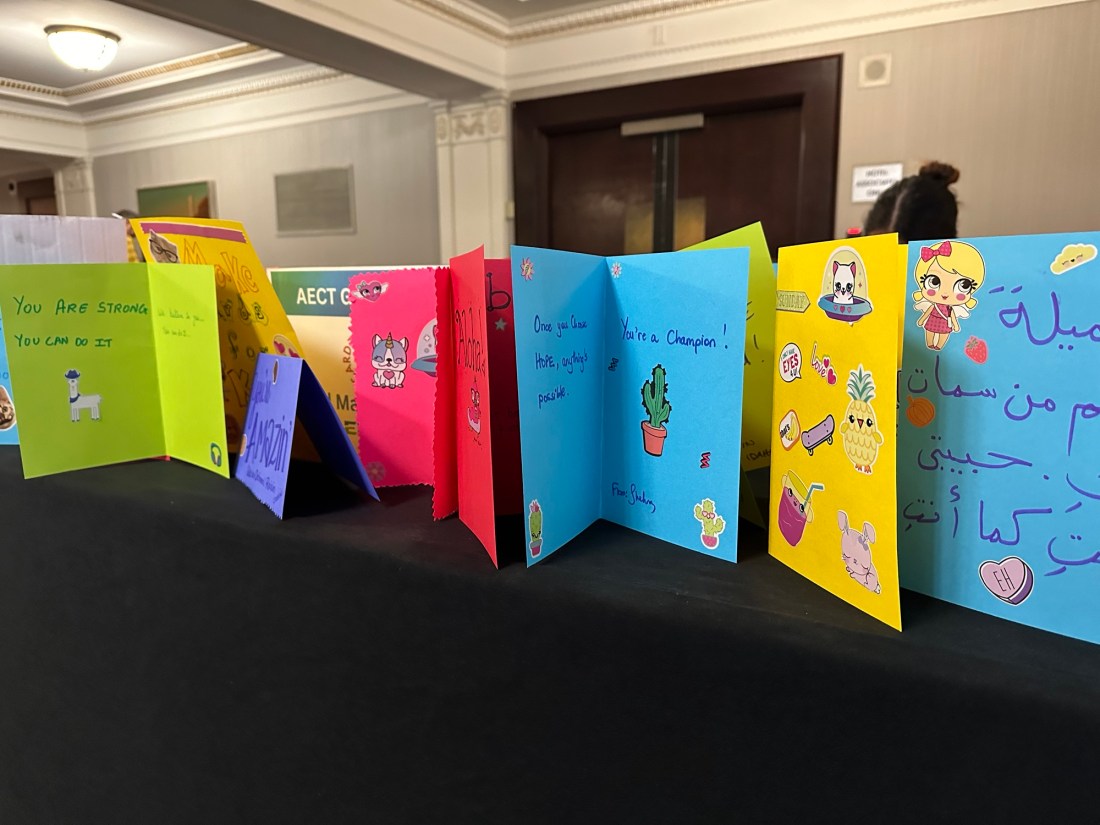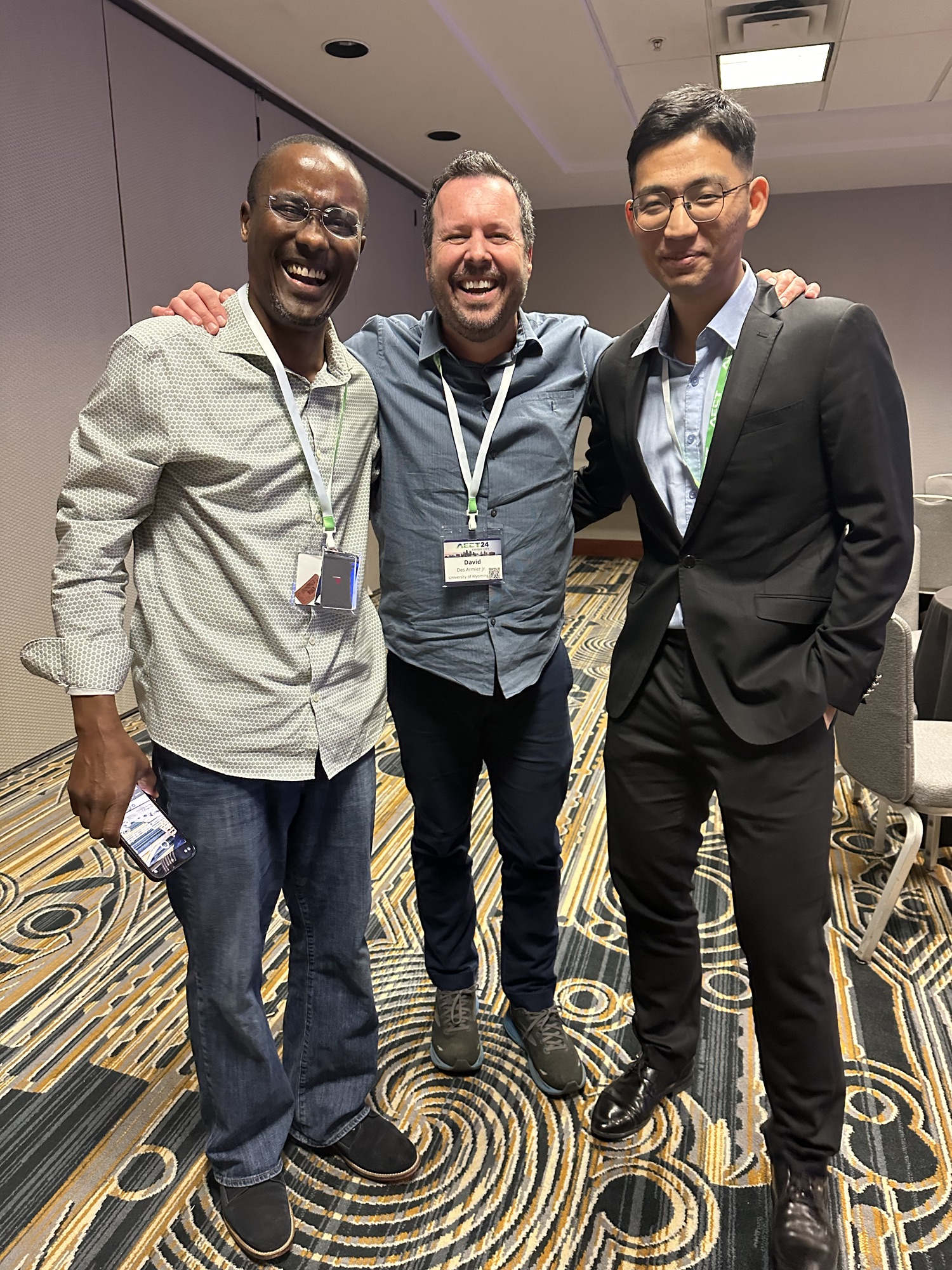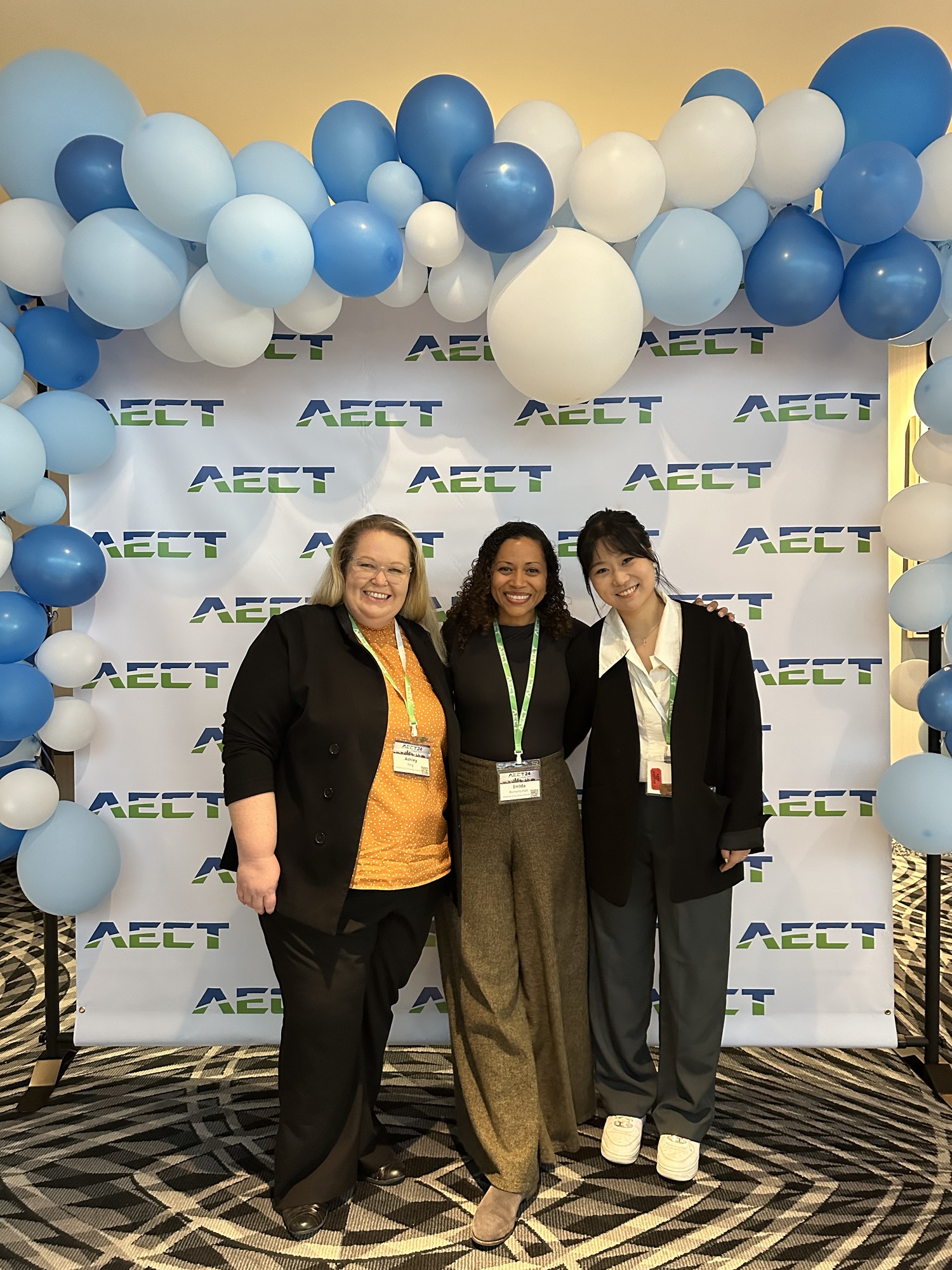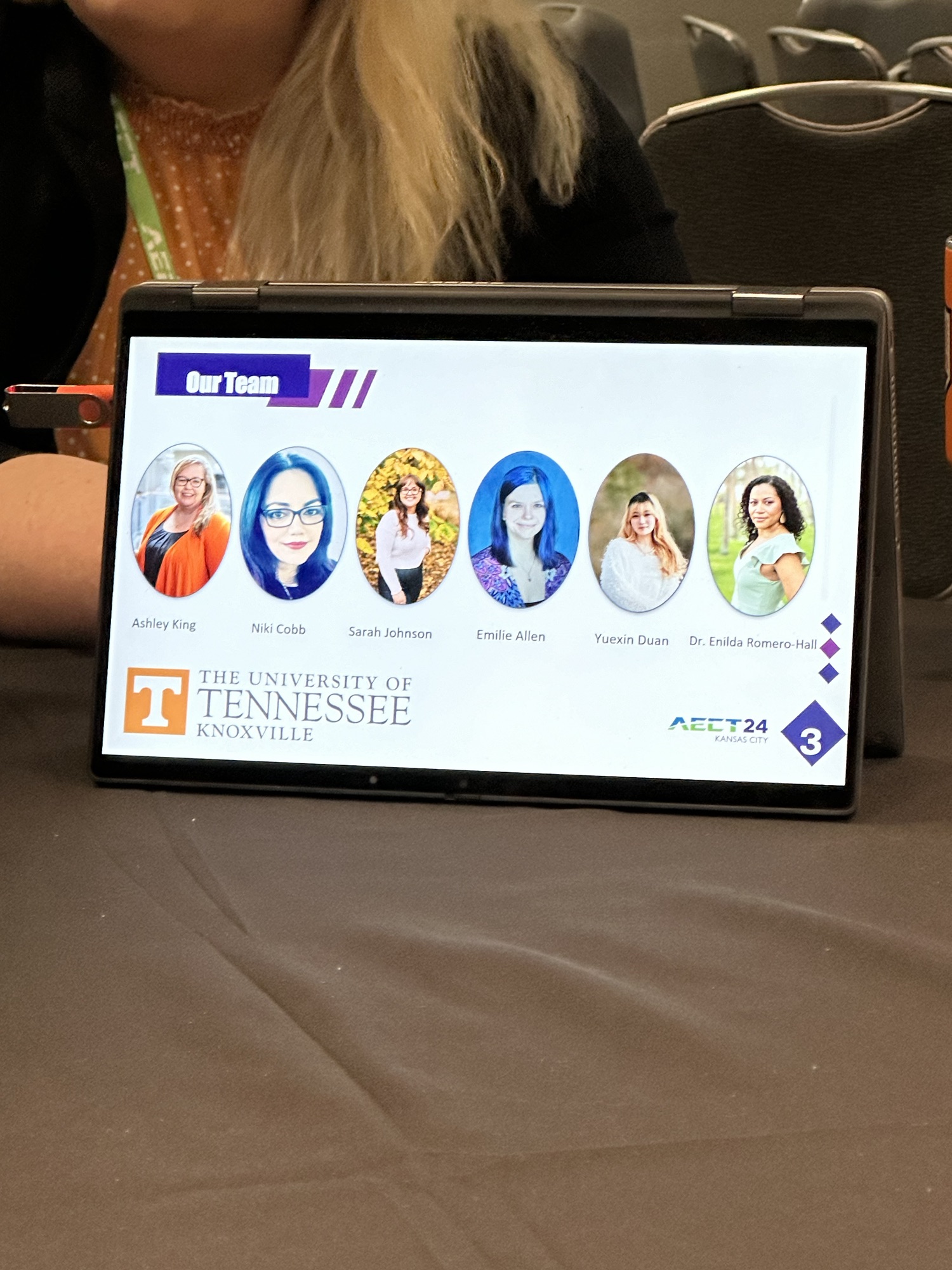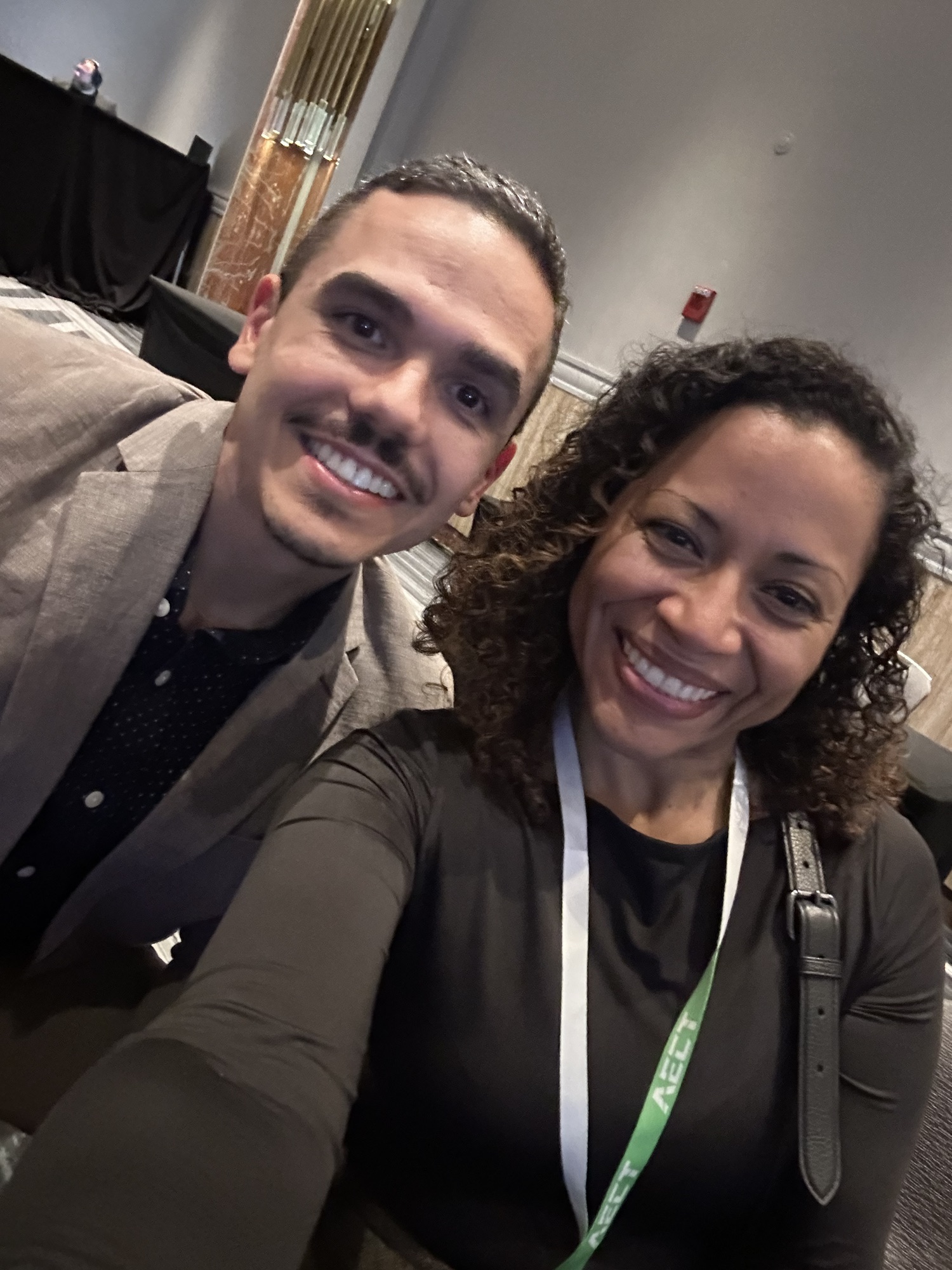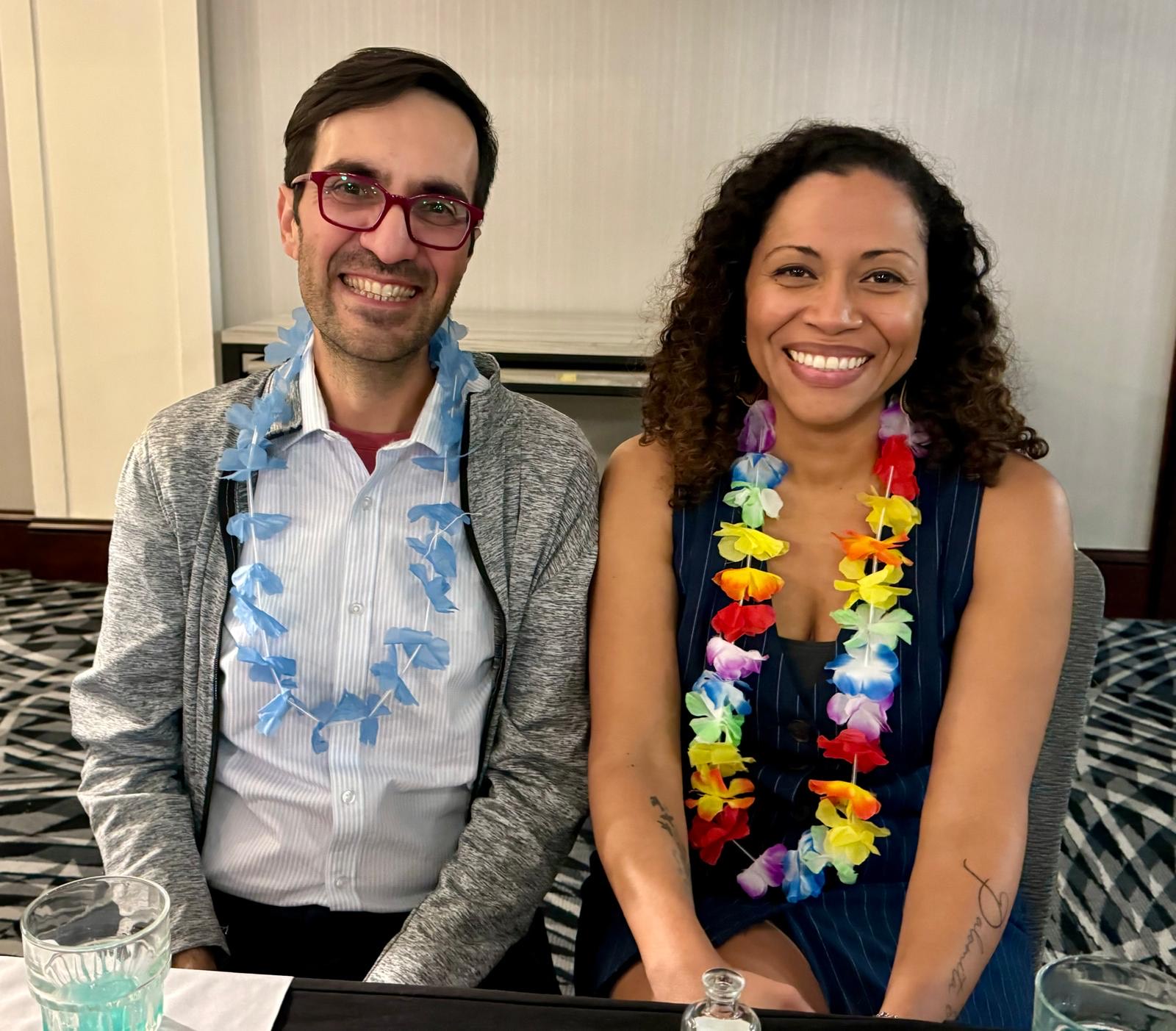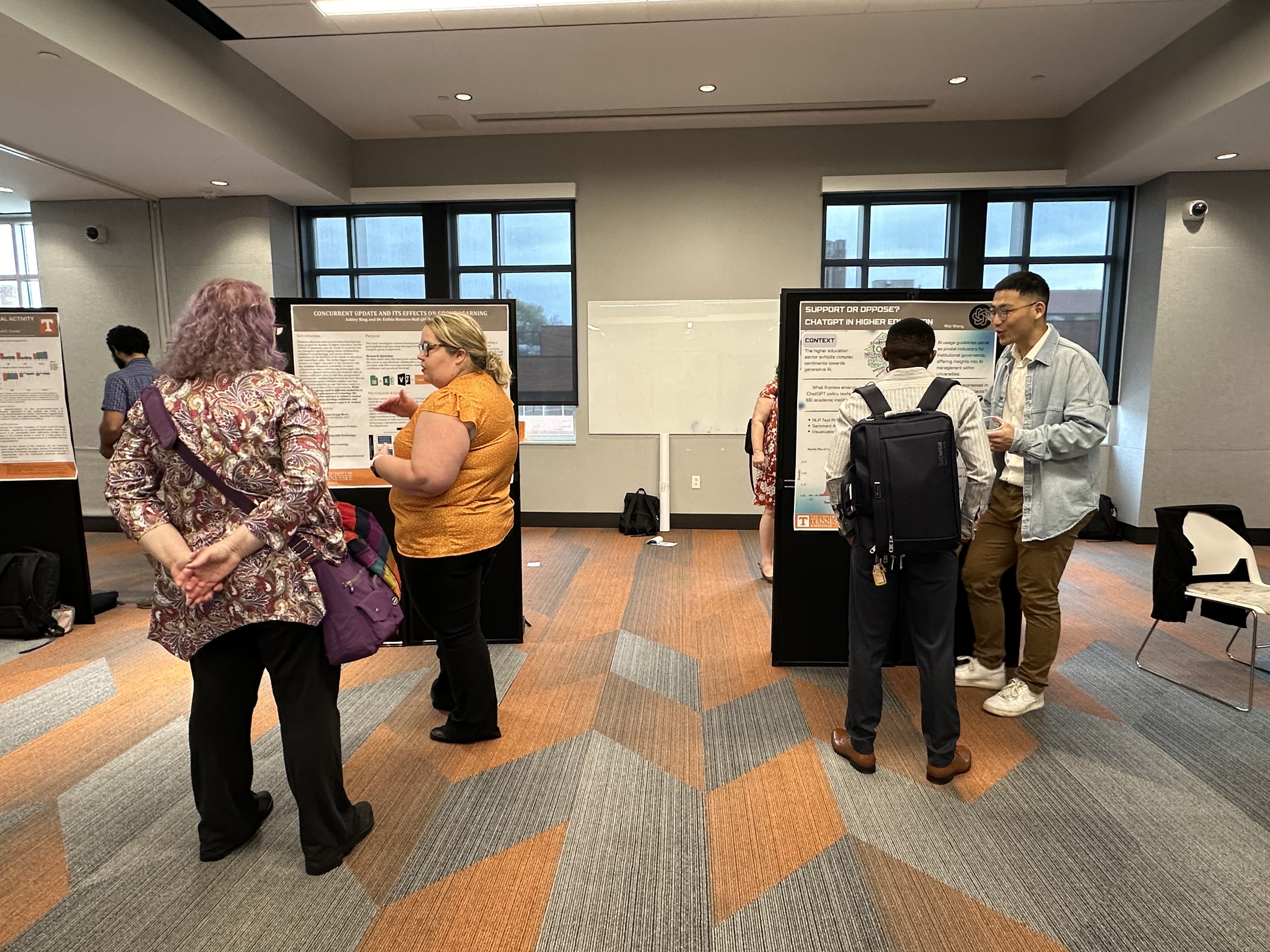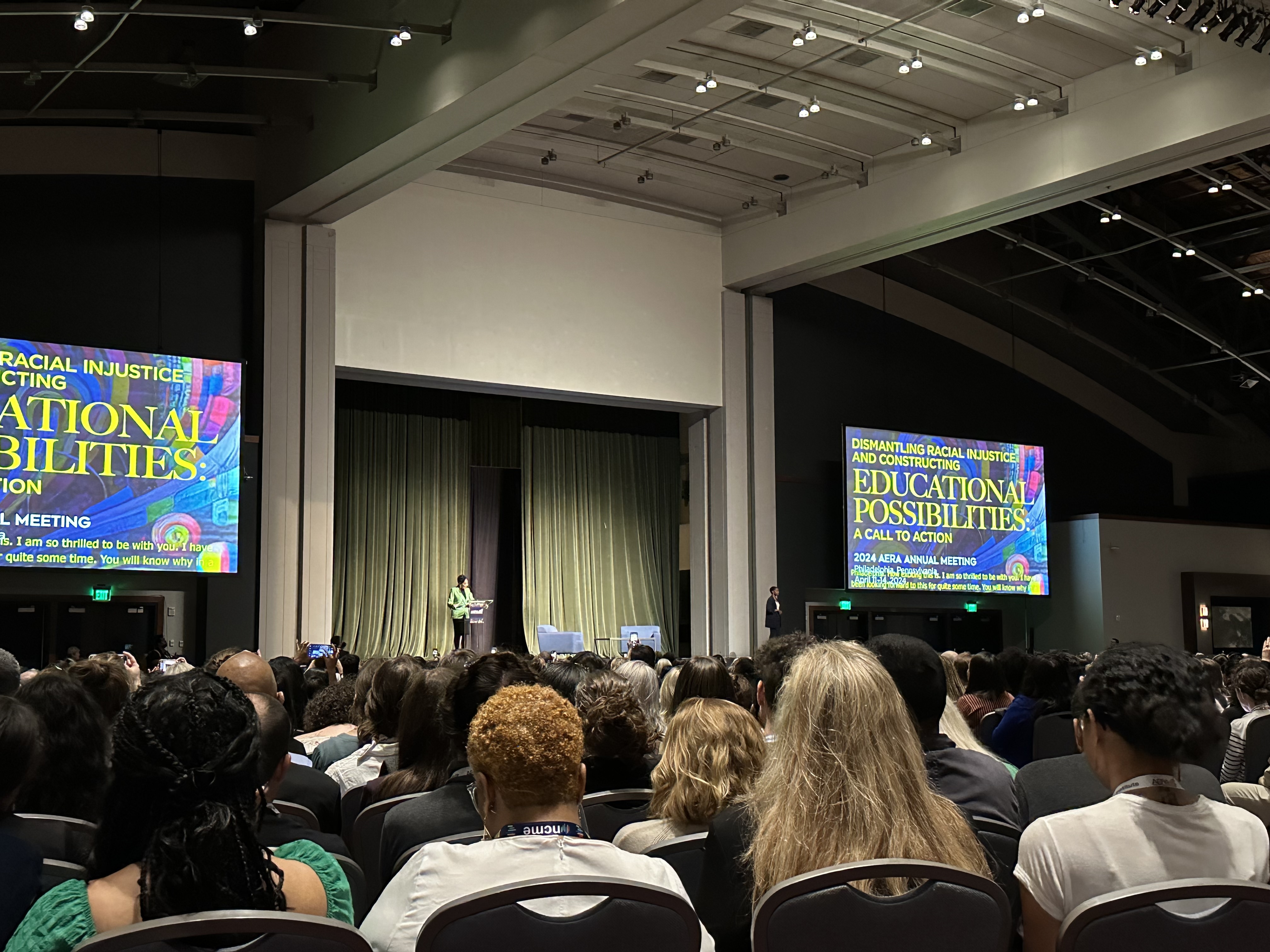
Every year the College of Education, Health, and Human Services organizes a Graduate Student Research Colloquium. Of course, when the notification for the graduate colloquium was shared with faculty, I encouraged all the Learning, Design, and Technology (LDT) graduate students to submit their research to the colloquium. I was extremely excited to find out that three of our LDT students were accepted to present! Unfortunately one of the students was unable present due to another commitment. Ashley King and Wei Wang were there to share their projects with attendees of the colloquium.
Ashley King is a lecturer at University of Tennessee Knoxville in the College of Business. She is a LDT Ph.D. candidate. I am her advisor and dissertation chair. She is also a research team collaborator! Wei Wang is an LDT first year doctoral student and I serve as his co-advisor (along with Dr. Josh Rosenberg). He recently presented at AERA 2024 in one of the graduate students research-in-progress roundtables!
Session: “Politic Born of Necessity”: Latina and Latinx Feminists Remembering Genealogies, Imagining Futures
Lugones, Maria A. 2003. Peregrinajes/pilgrimages: Theorizing coalitions against multiple oppressions. Lanham, Md.: Rowman and Littlefield. Google Scholar
Session: “Rupturing the White Gaze: Centering Chicana/Latina Feminista Methodologies and Epistemologies in Qualitative Research” Symposium Resources
You are welcome to pre-order it via Amazon. You also can wait until it is released because it will be available open access! As the date gets closers and we find out more information, I will be sharing more about the book. So excited!
I should add that Athabasca University Press has stated that it is possible that the book could be release Fall 2024. More than anything just know that the book is coming either later this year or early 2025 we will have the pleasure of sharing with you!
First and foremost, it has been a pleasure serving as the AERA SIG Instructional Technology Program Chair. Huge thanks to everyone who submitted proposals to our SIG. It was very exciting to see the range of topics covered in the proposals submitted. I was also deeply impressed with the quality of the proposal submitted, which made for a difficult peer review process for our reviewers. Speaking of reviewers! I am profoundly grateful for our 94 reviewers who took on the very meaningful tasks of providing feedback and recommending proposals for our SIG Instructional Technology program. Huge thanks to all that have volunteered as Session Chairs, you are a critical component for a smooth conference session! Gratitude!
I can humbly say that we have an amazing AERA 2024 program for the SIG! Each session was carefully designed to ideally create a cohesive line up of presentations. I look forward to meeting you in Philadelphia and to your presentations! I am excited for all of us to engage in academic discourse, professional development, and informal social conversations. See you soon! Go Vols!
Enilda Romero-Hall, Ph.D., Associate Professor, University of Tennessee Knoxville
These quote is a section of the AERA Special Interest Group Instructional Technology Spring 2024 Newsletter recently shared with our members. Below is a copy of the complete AERA Special Interest Group Instructional Technology Spring 2024 Newsletter compiled, formatted, & organized by the 2023-2024 board members of the SIG Instructional Technology:
Last year, I received an invitation from my colleague, Clare Daniel, to present in a panel to discuss the Feminist Pedagogy for Teaching Online digital guide and other scholarly efforts related to the digital guide in person at Tulane University. The invitation to travel to New Orleans was extended to Niya Bond and myself (Clare, Jacque, and Liv live in New Orleans). The goal was for all the five editors of the digital guide to join in the panel.
Fast forward to February 2024, Niya and I travelled to New Orleans for the in-person panel. Meeting my colleagues in-person for the very first time was a joyous occasion. I have been personally interacting and collaborating with the FTPO editors for the last 3 years and we had only met through Zoom. It was so nice to fully interact outside the Zoom software and engage in informal convos that allowed us to learn more about each other personally and professionally.
“We want to acknowledge that this panel discussion is part of a lecture series dedicated to Adele Ramos Salzer (NC ’40). Her interest in academic programs focusing on women’s experiences led to the establishment of the Salzer lecture series. Her donation endowing the series has been generously strengthened through gifts in her memory from her family, friends, and classmates.”
Clare Daniel
During our visit to Tulane, we all got to have an short meeting to discuss panel, have dinner to talk about every under the sun (also, celebrate Clare’s new promotion at Tulane University), and have the panel at the Tulane University’s Newcomb Institute for students, faculty, and staff.
The editors of the FPTO digital guideThe editors of the FPTO after the panel presentation
During the panel we:
Provided a brief explanation of the origins of the digital guide and the idea for the forthcoming book
Shared why and how we expanded our team of editors
Shared a brief description of the forthcoming book
Discussed how and why we expanded the guide to include annotated assignments
Shared an explanation of the blog and the collaborative editing process
Allowed for Q & A
It was really nice to have such a strong presence of students during the panel session. The students were very curious about of opinions on online learning, now past the COVID-19 pandemic. We also had some good questions and conversations with faculty who attended the event. I am very thankful for the invite to participate in this panel. I am also grateful for the opportunity to meet my colleagues in-person for the first-time. Online environments, synchronous and asynchronous, have allowed is the opportunity to genuinely connect and communicate. However, it is always nice to further engage in-person to deeper our understanding of each other (personally & professionally), converse about the future of the digital guide, and discuss upcoming projects.
You know when you go to an interview and the hiring committee ask you to predict the future! The typical question: Where do you see yourself in 5 or 10 years? Honestly, can we even answer this question? Don’t get me wrong I have asked this question and I have answered this question. We’re my predictions accurate? I don’t remember 😊
Today I was trying to make my way through my to-do list when I got a notification on my phone. It was one of those were you see a photo “on this days” years ago. I looked at it and it show me that:
10 years ago today I was hooded by my doctoral advisor, Dr. Ginger Watson and I celebrated my earning my doctoral degree (I actually had a bunch of revisions and didn’t really graduate until the end of summer but who cares I still partied like a rockstar!). I remember my mom and my brother came to celebrate with me and that was pretty awesome.
Drs. Ginger Watson and Enilda Romero-Hall
5 years ago I was in Zurich, Switzerland leading a study abroad program with primarily undergraduate students and an alumni of the Instructional Design and Technology program from The University of Tampa. My co-coordinator Merrie was honestly the best! I don’t know how I would have finished this trip without Merrie! 💖
Switzerland study abroad program
Reflection on this post:
So I am now, 10 year later from getting hooded, wrapping up my first year as a faculty member at The University of Tennessee Knoxville. I am working on a research plan with my first doctoral student. I am conducting research with two additional graduate students. I am the graduate coordinator of the learning, design, and technology doctoral program and we are in the process of welcoming a nice group of doctoral students this fall (very exciting!). I am also working on other research and writing projects.
If you had asked me 10 years ago or even 5 years ago, where I was planning to be in ____ number of years, I do not know if I would have even been to come up with my current life. As we say in Panama: la vida es loca y a cualquiera le toca!
What are the objectives, aims, and values of the tool designer?
What does the tool designer gain from your use of this tool?
Who is the target audience for this tool? How do you know this?
Who is harmed and who benefits from this tool?
As you are using chatGPT think about the Strength, Weaknesses, Opportunities, and Threats (SWOT) of this tool in teaching and learning
Create a figure (using Canva) that helps illustrate your SWOT analysis
I was pretty excited to see the outcome of the exercise but also to hear the stories during our discussion. Here are some examples of the SWOT analysis created by the students, shared in this post with their permission.
Designed by Keiko EdaDesigned by Hunter Preston Carlheim
This past week I joined the DICE Conference to host a workshop on Digital Literacy. The aim was not to enhance the digital literacy of the participants but to discuss how we can organize, collect data, and execute a digital literacy plan. The workshop was hosted at 3 am local Knoxville time. I really did not know how responsive I was going to be, but it is amazing how you feed from the energy of others. The participants of the workshop were energetic, open, and engaged, they made the three-hour session go by so fast. Grateful to the organizers of the DICE conference for the invitation to join the conference and organize this workshop. Here are some of the resources I used during the workshop:
During the week of November 22 to November 25, 2022 the Centro de Innovation y Excelencia Docente (CIED) of the Universidad Autonoma de Chile hosted the Semana de la Innovation: Education del Futuro.
I was honored to join the event as an invited speaker for the day of “Mujeres Innovadoras”. It was a wonderful experience to shared an hour with colleagues in Chile and other Spanish-speaking scholars. The hosts of the event Claudia Osorio Alfaro, Maria Jose Suazo Ocares, and Ignacio Andres Vilos Fredes were amazing and very welcoming. The title of my presentation was “Pedagogia Intersectional Digital: Inclusion y Equidad en la Enseñanza en Linea”. Here are the link to my slides: tiny.utk.edu/CIEDChile
To learn more about the event here are two press releases by the Universidad Autonoma de Chile:
This week's episode of The Key is about a form of blended learning called HyFlex and features two professors who have both taught in the format and done research on its impact. #AcademicTwitter
A few weeks ago, I was invited to join a podcast to talk about HyFlex Instruction. I was on travel when I saw the email from the editor in my inbox and, without too much information, I accepted to join the conversation. I really did not know what direction the podcast was going to take. I know HyFlex learning is “controversial” and even “unwelcome” by many, but I really was just going to speak facts. I reviewed some of the research I have done on the topic and the reviewed the literature I have read on the past in preparation for the podcast. I am very happy that the editor had a conversation approach to the podcast and that guided the conversation on the “what comes next” direction. I will be speaking and doing more research on this topic in the upcoming months. So, this is just the beginning of the conversation.
I really do not like listening to my voice in recordings so I just know what I said from the actual recording session. I have not heard the podcast, so I appreciate colleagues who have reached out to let me know that they enjoyed listen to the podcast and the points I shared as part of the conversation. Above is a link to the tweet from Inside Higher Ed and here is the link to the webpage: Ep.91: The Pros and Cons of HyFlex Instruction
You must be logged in to post a comment.