“Learning Designers in Context” Now Available for Pre-Order

I do not know how many people actually read this blog, but I figured I would go ahead and share that “Learning Designers in Context” is now available for pre-order.

It also is discounted right now, when you order it directly from the publisher: Pre-Order Here

The book is scheduled for release December 5th, 2025. Copies of the book will be shipped after the released date.

I have previously published two edited books (i.e., Research Methods in Learning Design and Technology, Feminist Pedagogy for Teaching Online) and it honestly feels so different promoting a solo-authored book! In previous instances, I wanted to recognized and disseminate their work of my colleagues who had their work in the edited books, so promoting those books felt easy! However, having to promote my solo-authored book is so hard. I feel like my introverted side all of a sudden takes over!

I also wanted to add that if anyone would like to get a copy of the book, feel free to send me an email. I am happy to share a PDF.

Sneak Preview of “Learning Designers in Context”

Over the last few weeks, I have re-read the proofs of my forthcoming book “Learning Designers in Contexts” so many times that I honestly I feel I could recite some of the chapters. Due to some communication issues, the release date has been pushed back a bit. It is all part of the process or at least that is what I tell myself.

I am very happy that last Friday I saw a final version of the proofs. But that excitement was quickly met with a very familiar feeling of seen a grammatical mistake in the final proofs. It always happens! After seen this, I laughed a bit, closed my computer, and when to my son’s soccer game.

Last week, I also contacted the publisher and asked for permission to share a bit of the book in my blog. My editor, Hannah, asked me what chapter I wanted to share and I decided to go with Chapter 15. This sneak preview PDF also includes the table of content. I will do a bit more writing about the other chapters in the upcoming month or so. But, for now you are welcome to read Chapter 15.

Abstract:

This chapter is based on a keynote address I delivered at the Association for Educational Communications and Technology (AECT) International Convention on October 22, 2024, in Kansas City, Missouri. The speech has been adapted for this book, maintaining its original themes and ideas while refining the content for a reading audience. Through the lens of deep canvassing and the acknowledgment of practitioners’ stories, the chapter highlights how context-specific experiences shape competencies and practices. It advocates for moving beyond Anglocentric and Eurocentric paradigms to embrace inclusive approaches. By reflecting on personal journeys and collective actions, the chapter underscores storytelling as a transformative tool for fostering understanding and innovation in education technology and learning design.

Citation:

Romero-Hall, E. (2026). Learning Designers in Context. Routledge. https://doi.org/10.4324/9781003270591

A thoughtful review of “Feminist Pedagogy for Teaching Online” by Dr. Perveen

A book review of Feminist Pedagogy for Teaching Online authored by Dr. Ayesha Perveen was published in the Journal of Open, Flexible and Distance Learning. Thank you Dr. Perveen for taking the time to review our book and your praise as well as thoughtful feedback!

The abstract:
“This book review critically examines Feminist Pedagogy for Teaching Online (Howard et al., 2025), identifying it as a crucial intervention that bridges a significant gap in contemporary scholarship by envisioning online learning through the lens of feminist pedagogy. The collection challenges dominant instructional design norms and technological culture, underscoring fundamental values of care, equity, reflexivity, and social justice.

Structured into four thematic parts, the book consistently emphasises praxis, showcasing practical tools like social annotation and cryptoparties to foster equity and collaboration in e-spaces. Its primary strength lies in modelling feminist pedagogical principles through collaborative and student-centred approaches. While praised for its diverse contributions, the review notes some chapters could benefit from more analytical engagement with structural barriers to feminist agency in institutional settings. It acknowledges potential conceptual repetitions for novice readers. Nevertheless, the book is considered a vital resource for all e-learning stakeholders, promoting value-driven, ethical, and transformative online learning environments.”

The review is available open access and you can read it here:

Perveen, A. (2025). Book Review: Feminist Pedagogy for Teaching Online. Journal of Open, Flexible and Distance Learning, 29(1), 151–158. https://doi.org/10.61468/jofdl.v29i1.731

Learning Designers in Context: Examining Practices Across the Global South [Forthcoming Book]

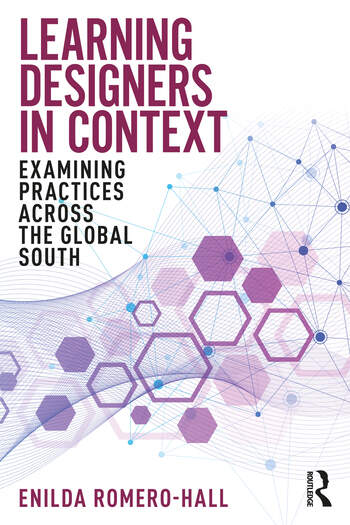
In 2023, I wrote a blog post about Learning Designers in Context: Examining Practices Across the Global South [Book in Progress]. Guess what? It only took me 2 more years to complete the book! I am very excited to share that this summer, I submitted the full manuscript of my first solo-authored book project. The book is scheduled to be published later this year by Routledge: https://www.routledge.com/Learning-Designers-in-Context-Examining-Practices-Across-the-Global-South/Romero-Hall/p/book/9781032219233.

Book cover for 'Learning Designers in Context: Examining Practices Across the Global South' by Enilda Romero-Hall, featuring a modern, abstract design with geometric shapes and a color gradient.

About the Book

Learning Designers in Context examines learning design across professional sectors, local cultures, and geographic regions in the Global South, addressing the ways in which practitioners effectively draw on the knowledge, skills, and resources available to them. Around the world, access to and formalization of learning technologies in design has led to a diversity of strategies, competencies, demands, and organizational structures, but no book has yet compiled insights and lessons learned from these living examples to further the development of professionals working across contexts. Exploring design and implementation in higher education, corporate, non-profit, and government sectors while attending to urgent cultural and geographic distinctions, these chapters vividly illustrate the roles, challenges, and opportunities of learning designers use in real-world settings home to specific demographics, traditions, socioeconomic parameters, and policy orientations.


Book Published: Feminist Pedagogy for Teaching Online

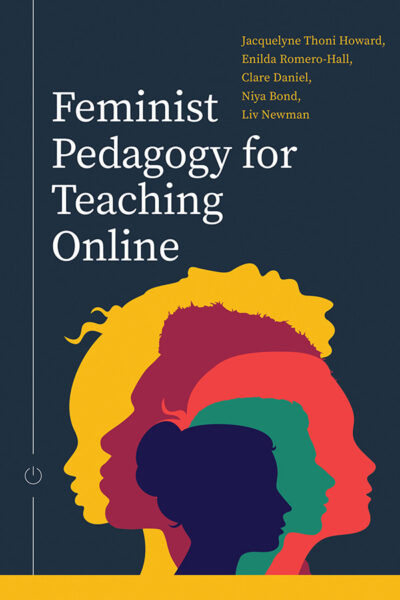
Athabasca University Press recently published our book as part of the Issues in Distance Education series. Feminist Pedagogy for Teaching Online edited by Jacquelyne Thoni Howard, Enilda Romero-Hall, Clare Daniel, Niya Bond, and Liv Newman examines the experiences that interdisciplinary and global feminist educators have had-both their successes and their challenges-in infusing feminist pedagogical tenets into their online teaching and learning practices. The book is available in multiple open access formats, and I hope you will take the opportunity to browse through the chapters and discover how this freely available resource can benefit your organization and members. 

About the Book

Instructors across higher education require inspiring and practical resources for creating, adapting to, and enhancing, online teaching and learning spaces. Faculty need to build collaborative, equitable and trusting online learning communities. This edited volume examines the experiences that interdisciplinary and global feminist educators have had-both their successes and their challenges-in infusing feminist pedagogical tenets into their online teaching and learning practices. Contributors consider how to promote connection, reflexivity, and embodiment; build equity, cooperation, and co-education; and create cultures of care in the online classroom. They also interrogate knowledge production, social inequality, and power. By (re)imagining feminist pedagogy as a much-needed tool and providing practical advice for using digital technology to enact these tenets in the classroom, this collection will empower educators and learners alike.

About the Editors

Jacquelyne Thoni Howard is a professor of Practice of Data at the Connolly Alexander Institute for Data Science at Tulane University. 

Enilda Romero-Hall is associate professor in the Learning, Design, and Technology program at The University of Tennessee Knoxville. 

Clare Daniel is senior professor of practice and director of research at Newcomb Institute of Tulane University, where she teaches in the Department of Communication. 

Niya Bond is an online educator, faculty development facilitator, and PhD candidate at the University of Maine studying online teaching and learning. 

Liv Newman is administrative assistant professor and Associate Director of the Center for Engaged Learning and Teaching at Tulane University.

Online Ready: Designing Culturally Competent K-12 Online Learning

“Online Ready: Designing Culturally Competent and Impactful K-12 Online Learning” (funded by the Institute of Museum and Library Services, #RE-250017-OLS-21) was a three-year design-based exploratory study led by Lucy Santos Green (University of Iowa) in partnership with Kristin Fontichiaro, University of Michigan, and Melissa P. Johnston, University of West Georgia. The project assessed and addressed school librarianship knowledge gaps in the design and delivery of targeted and culturally competent online learning.

As part of this grant project, I collaborated with Lucy, Kristin, and Melissa in the design and developed of the Online Ready curriculum. I also taught one of the three online asynchronous mini-courses, titled Culturally-Competent Design Mini Course. I feel so incredibly honored to have been part of this project. The Online Ready course was instrumental in allowing K-12 school librarians to reflect on their practice and their schools context while also advancing their learning design and online learning knowledge and skills.

You can explore all the mini-courses from this project by accessing the Online Ready platform available for free through the UI Learn Catalog. Please share widely with your school librarians colleagues and friends!

SIG Instructional Technology Spring 2025 Newsletter!

We are very excited to share the latest edition of our newsletter with you! This edition covers:

  • SIG Instructional Technology Updates
    • Message from the SIG Chair
    • 2025 SIG IT Awards
    • 2025 SIG IT Travel Scholarships
    • AERA 2025 Annual Meeting Program News
    • Community Building
  • Our Members: Awards, Grants, and Professional Accomplishments
  • What are Our SIG IT Members Reading?
  • SIG Instructional Technology Members Spotlights!

Read the newsletter here: tiny.utk.edu/SIGIT_Spring2025_Newsletter

Thank you for being part of our community!

Critical Conversations in Online Education: a Deep Dive into the Feminist Pedagogy for Teaching Online Book

Last year, I received an email from Dr. Rocio Jimenez Cortes, a full professor at Universidad de Sevilla, to do a plenary presentation as part of the II FORO TRANSDISCIPLINAR FORO DONNA: Tecnologías y Medios para un Futuro en Igualdad” Conference. FORO DONNA is a virtual conference that focuses on:

A space for national and international dialogue around experiences and research that address and generate knowledge about the impact of digital technologies and media on gender equality and women’s well-being.

I decided to focus the plenary on a discussion about a forthcoming book that my colleagues and I co-editing titled Feminist Pedagogy for Teaching Online. With that in mind, I invited several of the book chapter authors to join the plenary session and together we embarked on a wonderful journey!

Our plenary is titled: “Critical Conversations in Online Education: a Deep Dive into the Feminist Pedagogy for Teaching Online Book”. You can watch the plenary presentation on YouTube:

Presenters:
Niya Bond (University of Maine): Using Feminist Pedagogy to (Re)Imagine Online Classrooms (Introduction)

Bridget Kriner (Cuyoga Community College): Building Participatory Spaces in Online Classrooms (Chapter 5)

Ashley Glassburn (University of Windsor): Consciousness Raising and Trauma-Informed Practice (Chapter 7)

Dr. Nandita Gurjar, Ph.D. (Rhode Island College): Humanizing Online Learning with Feminist Pedagogy (Chapter 9)

Nadia Jaramillo Cherrez (Oregon State University): Care, Identity, and Empowerment in Emergency Remotely Teaching (Chapter 11)

Enilda Romero-Hall, Ph.D. (University of Tennessee, Knoxville): Online Feminist Pedagogy: Future Learning Experiences Speculated (Conclusion)

Published Special Issue – On Gathering: Exploring Collective and Embodied Modes of Scholarly Communication and Publishing

Katina Rogers is the editors of the special issue titled : “On Gathering: Exploring Collective and Embodied Modes of Scholarly Communication and Publishing” published in the Journal of Electronic Publishing.

This issue is an exploration of the ephemeral—the stray thoughts, the side conversations, the discarded scraps and false starts that inform a published work of scholarship, usually invisibly. In putting together this collection of work, I wanted to make these traces the focal point, since so much of our actual thinking takes place in spaces of indeterminacy and interpersonal connection. – Katina Rogers

You can read Katina’s full editorial here:

Rogers, K. L., (2025) “Editor’s Gloss: The Process of Shared Knowledge Creation”, The Journal of Electronic Publishing 28(1). doi: https://doi.org/10.3998/jep.6835

As part of this wonderful special issue, my colleagues and I published a long overdue autoethnography title: “A Feminist Scholars Collective Supporting the Growth and Dissemination of a Digital Guide: A Collaborative Autoethnography

This paper explores our experiences as scholars in higher education who collaborate as part of an informal collective supporting the Feminist Pedagogy for Teaching Online digital guide[1]. We, the authors, have diverse professional and educational backgrounds; our areas of research interest also vary significantly. However, we have a passion for humanizing online learning experiences and practically applying feminist pedagogical tenets to these interactions. The purpose of this paper is to explore, through a process of self-reflection, our experiences as scholars in higher education as part of an informal collective supporting the Feminist Pedagogy for Teaching Online digital guide. To share our experiences as editors of this digital guide, we included our individual stories using a collaborative autoethnography approach. In our stories, we specifically discussed our interest in joining this collective of feminist scholars, the evolving nature of our efforts in support of the digital guide, the success experienced, the challenges that we encountered, and the internal and external support we received throughout this journey. Ideally, through this critical reflection, we can aid other collectives who already engage, or are considering engaging, in similar scholarly communication endeavors. – Romero-Hall et al., 2025

You can read out journal article here (it is available open access):

Romero-Hall, E., Daniel, C., Howard, J. T., Bond, N. & Newman, L., (2025) “A Feminist Scholars Collective Supporting the Growth and Dissemination of a Digital Guide: A Collaborative Autoethnography”, The Journal of Electronic Publishing 28(1). doi: https://doi.org/10.3998/jep.5878

I also want to say thank you to our wonderful special issue editor, Katina Rogers who hosted a virtual roundtable to highlight all the authors and journal articles published in the special issue. Here is the recording of the virtual roundtable:

2024 Year in Review

This is a 2024 year in review post but focused on publications. These are my 2024 publications:

Gomez-Vasquez, L., Ozi Dias Da Silva, C., Fortsmane, L. & Romero-Hall, E. (2024). Leveraging Connections in Social Media Hashtag Communities: Uses, Gratifications, and Strategies. Journal of Interactive Learning Research, 35(2), 195-221. Waynesville, NC: Association for the Advancement of Computing in Education (AACE). Retrieved July 31, 2024 from https://www.learntechlib.org/primary/p/223892/

Yang, H. & Romero-Hall, E. (2024). A Pilot Study Exploring Interaction and Student Satisfaction in Asynchronous Courses in Higher Education. TechTrends. https://doi.org/10.1007/s11528-024-00986-7

Gomez-Vasquez L., Forstmane L., Dias Da Silva C. O., & Romero-Hall E. (2024). Personal branding strategies in online hashtag communities: the case of #AcademicTwitter. Research in Learning Technology32doi.org/10.25304/rlt.v32.3098

Romero-Hall, E., Gomez-Vasquez, L., Forstman, L., Ripine, C. & da Silva, C.D. (2024). “Visibility, transparency, feedback and recognition”: Higher Education Scholars’ Using Digital Social Networks. Journal of Interactive Media in Education, 2024(1): 7, pp. 1–15. DOI: https://doi.org/10.5334/jime.842

Allen, T., Villaflor-Wilson, R., Muljana, P.S. & Romero-Hall, E. (2024). AI-generated content: Guidelines, higher order thinking skills, and copyrights. Educational Technology Journal, 4(1), 1 – 5. https://journal.unesa.ac.id/index.php/etj/article/view/27840

Carpenter, J., Rosenberg, J.,  Kessler, A., Romero-Hall, E. & Fischer, C. (2024). The importance of context in teacher educators’ professional digital competence. Teachers and Teaching: Theory and Practicehttps://doi.org/10.1080/13540602.2024.2320155 

Romero-Hall, E. (2024). Suzie Beckett and Adam McSweeny: Developing a Role-Playing Simulation. In In P. Ertmer, K. Glazewski, A. Koehler & J. Stefaniak (Eds.), Instructional Design Casebook (6th ed.). Routledge.

My professional experiences are so much more than a list of publications but it is important to acknowledge this work because it took time, effort, energy, mentoring, and collaboration.