Resources from #AERA22 #AERA2022

A few weeks ago, I attended the American Educational Research Association (AERA) 2022 Annual Meeting. I really had two-days of sessions that I could attend and I wanted to make the most out of it. This post is primarily for me to compile the list of resources collected as I attend the sessions and that are currently in my Notes application.

Critical Race Theory, White Supremacy, and the Ongoing Fight for Black Existence

Cultivating and Expanding Equitable Education Opportunity by Implementing Multicultural Research, Policy, and Practice

Cultivando Metodologías Feministas: A Chicana/Latina Feminista Praxis in Educational Research

Women of Color Faculty: Persisting in a Colonized Academy

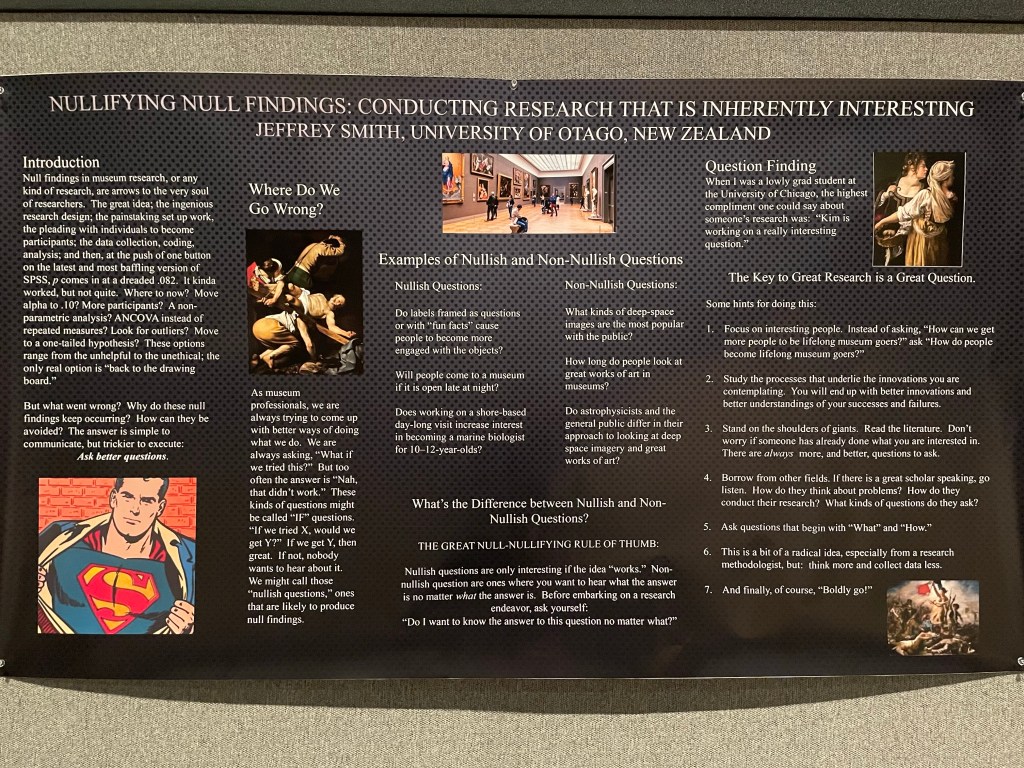
When Nothing Is Something: Null Results in Informal Learning Research

SIG Informal Learning Structured Poster Session

The On-Campus Interviews

After 9 years, this spring 2022, I had two on-campus interviews. One was a virtual on-campus interview and the other was an in-person on-campus interview. I want to start by saying that both groups of search committee members were amazing. In addition to the on-campus interviews, I also had two additional Zoom interviews (with other universities that did not lead to an on campus interview). Overall, great experiences with all of the search committees.

I am also here to tell you that the on-campus interview (virtual or in-person) are honestly so much work for the search committee members. Perhaps it is because I have served in a few search committees myself that I feel a great deal of empathy for those who were inviting me for interviews. I know it takes a lot of email, coordination of schedules, time, and energy. So huge thanks to everyone that takes the time to participate in a search committees and give your candidates a good experience. I consider myself lucky during this 2021-2022 job search period, I was treated with a great deal of respect.

During the virtual on campus interview, the committee divided the search into two days and that was really nice. It was an afternoon and then the following morning. It was enough time in front the computer to give the best of me, but not too long that I was Zoomed out. It was also nice that break time was incorporated in between meetings.

The on campus interview was with The University of Tennessee Knoxville (where I accepted an offer) and I have to be honest one of the highlights was flying over the Smoky Mountains on my way to Knoxville. The interview was a dinner (the day of arrival) followed by a day of meetings and a research talk. I also decided to stay an additional day to see the different neighbors and learn more about the area. I will share more in a future post about my decision to accept the offer at University of Tennessee Knoxville, but I am just going to say that I am very excited and happy!

Guest what? Even after 9 years I still followed the advice I gave back in 2013: https://enildaromero.com/2013/07/

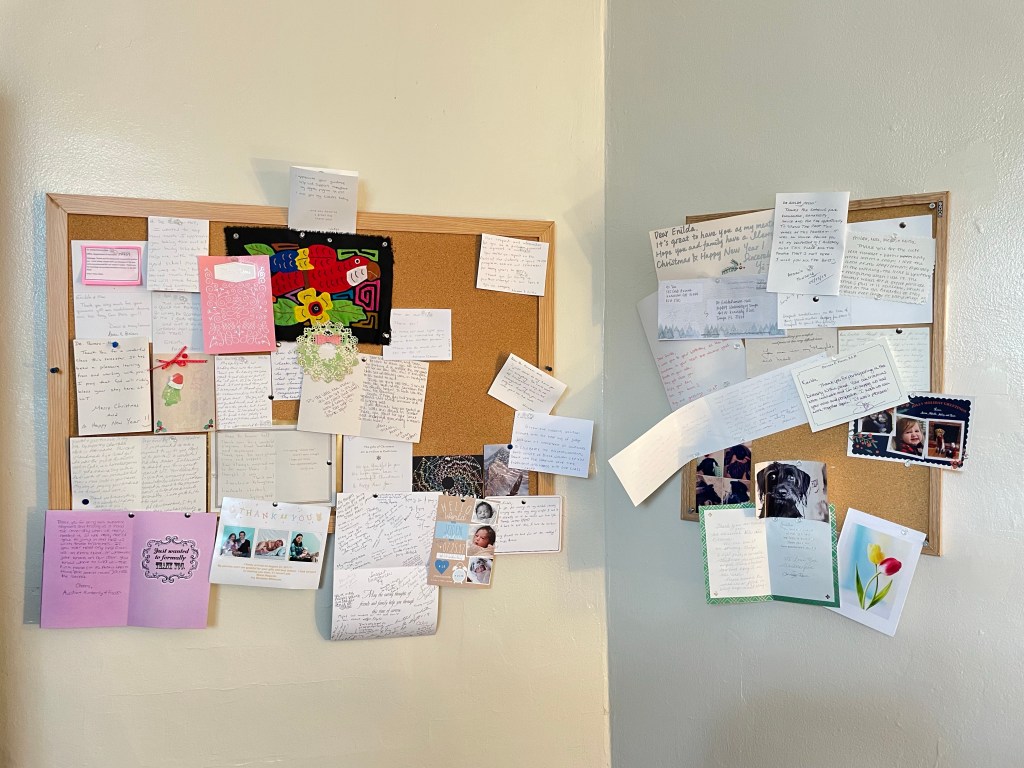
These are a few snapshots from the UT Knoxville on-campus interview:

A sabbatical during COVID-19

Where do I start?

I guess I can start by writing that a few months into my sabbatical the world turned upside down due to the COVID-19 pandemic. Yet, I was able to use my time to complete the tasks that I had outlined for my sabbatical period. April and May did require a significant adjustment since we had to manuoiver a new work schedule without child care. Maneuvering this new schedule required being realistic about what I could accomplish and saying “no” to some invitations for new collaborations.

The first two months of my sabbatical were as planned. I worked on writing two chapters for the book “Research Methods in Learning Design and Technology.” Book chapter authors submitted their completed and revised book chapters to me by the end of January and I worked on doing final reviews of each book chapter. I initially had planned to submit the book to the publisher by mid-March, but I switched the format of the last chapter, and this required giving extra time to my co-authors to complete their writing. This meant that I had to delay the submission of the book documents to the publisher until mid-April. Thankfully, by the time the world turned upside down in mid-March, all my co-authors and book chapter authors had turned in all required documents to me.

One of the elements of my sabbatical that was partially affected by the COVID-19 pandemic was work-related travel. I was scheduled to attend the American Educational Research Association (AERA) Annual Convention in San Francisco in mid-April and the conference was canceled. I am glad it was canceled, I am also glad it was not held virtually. April was a month of re-adjustement, tension, and stress for many. I was also scheduled to travel to Florence, Italy to present at the DEPIT Annual Meeting at the University of Florence. This event was re-scheduled for an online format.

I had some personal travel plans changed because of travel restrictions. I was scheduled to spend all of March and a portion of April in Panama City, Panama, where I was going to work while spending time close to my family. So, I traveled to Panama at the end of February and was monitoring all the news related to COVID-19. Due to the way the virus was spreading, my family and I decided it was best for us to travel back to the United States, so we changed our flights to travel back on March 22 (which is the day Panama was scheduled to close their international airport). On the evening of March 20, I received an email from COPA airlines letting me know that our flights had been cancelled. I was shocked and extremely disappointed. However, we all stayed calm and determined that we would just ride the storm in Panama. That same evening, as a last attempt, we figured we would see if there were any flights on March 21 to Tampa with a different airline. Thankfully, we did manage to fly back to Tampa on March 21. My dad was in Panama with me and we were also able to find a flight for him to fly back to Toronto (within one hour difference of our flight), which gave peace of mind. I would not have left Panama without my dad.

The weeks after returning from Panama, were weeks of adjustments as mentioned at the beginning of this post. In addition to all the tasks for the book, I was also scheduled to write a manuscript (with a deadline) that I had not even started. It took discipline to stay focus. I admit that there were many emotions related to what was happening in the world with the pandemic, leaving Panama, and experiencing the “new normal.” I felt like I had to work hard on my “emotional intelligence” to get the paper written and deliver all the book materials to the publisher.

I am thankful for the sabbatical term. In addition to the tasks mentioned in this post, I also used the time to work in revisions to several manuscripts and continue mentoring my undergraduate student (we presented at a conference in February and are currently working on a few writing tasks). Of course, I spend time with my family (even more than planned due to the lack of childcare).

Since my sabbatical ended, I am back to serving as the Graduate Coordinator of the Instructional Design and Technology program and I taught a six-week summer intensive course on Learner Motivation in June. I definitely missed my students and the joy of our convos.


The EduTech research group at #FURC2019 (@UTinquiry)

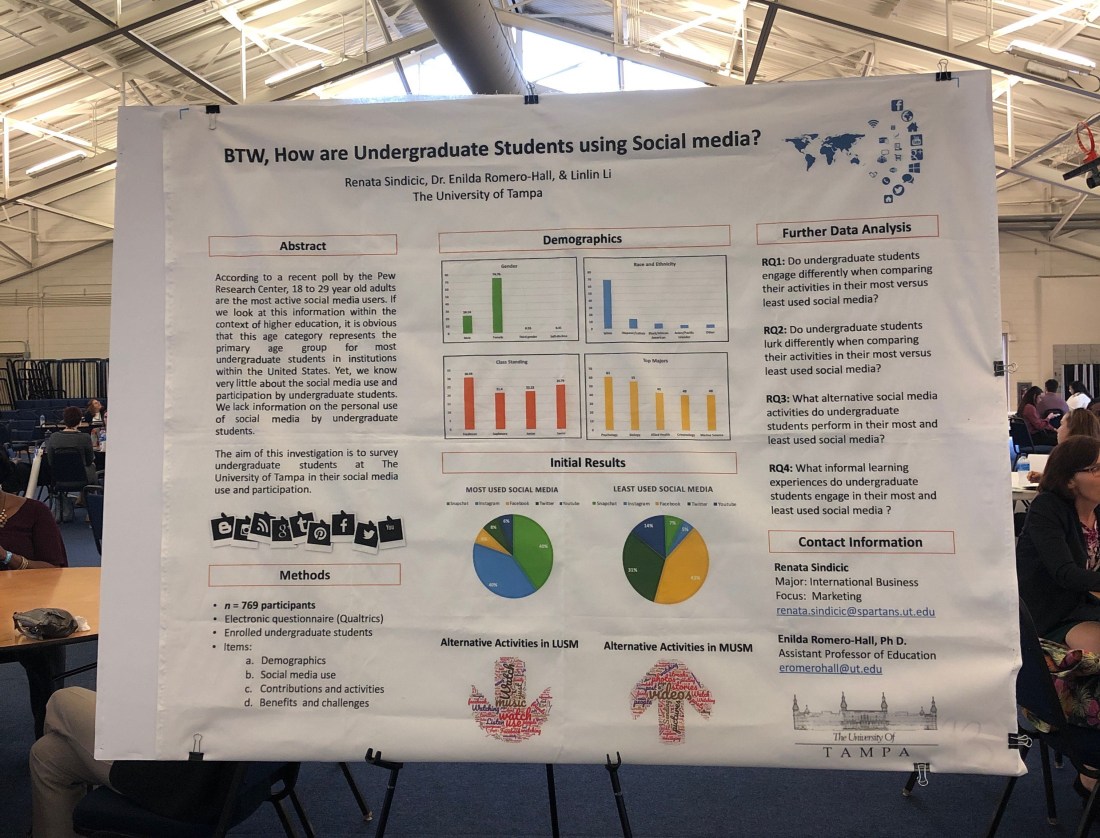
This past weekend The University of North Florida hosted the Florida Undergraduate Research Conference (FURC). Many undergraduate students from The University of Tampa presented topics in which they engage on research. One of these students was Renata Sindicic, who has been working with me and collaborating in research since last August 2018. I feel extremely proud of Renata, #FURC2019 was her very first time presenting in a conference! She worked hard on the design of the poster and practice her presentation prior to the event. I am thankful to have her as part of the research team!

Renata presented preliminary results of our research related to the use of social media by undergraduate students.

img_7254.jpg

Renata_Sindicic

Latest Publication: ” Undisclosed Stories of Instructional Design Female Scholars in Academia”

Our article titled “Undisclosed Stories of Instructional Design Female Scholars in Academia” published in the Women’s Studies International Forum is now available online (co-authors: Tuğçe Aldemir, Jozenia Colorado-Resa, Camille Dickson-Deane, Ginger Watson, and Ayesha Sadaf).

Abstract: In this critical autoethnography, we come together as female instructional design (ID) faculty and graduate students. We use self-reflection to explore, through our writing, the experiences of our lives as female scholars. This includes gender-related challenges, concerns, and experiences that shape our lives as researchers, instructors, and practitioners. The theoretical frameworks that guide this critical autoethnography are radical and intersectional feminism. Radical feminists practice consciousness-raising in which women come together to share their personal experiences with each other. Intersectional feminists acknowledge that the various aspects of humanity, such as class, race, sexual orientation, and gender do not exists separately from each other. Our stories provide a view into the gender inequalities experienced by women, from various cultural backgrounds, ranks, and roles, while maneuvering the socio-cultural norms ingrained in higher education institutions. Our intention is that these stories generate understanding of these issues and inform ways that higher education may be more inclusive and supportive of female academics in the future.

This personalized URL provides 50 days’ free access to the article (until November 17, 2018). You are welcome to read or download. No sign up, registration, or fees are required: https://authors.elsevier.com/a/1Xoml-6kqPaWN 

The Miscarriage

I have been dreading writing this post because just thinking about the events that transpired makes me emotional and sad. However, I feel encouraged to share my story thanks to the many comments I have received (in person or online) from other women who can relate to my previous post about been an  academic mama. I hope that this post reaches others (men and women) so that we can be more open to share and discuss the emotions, decisions, and life experiences during/after a miscarriage.
1911031_752517668149372_8744410335583385879_o

Here is my story:

It was August 2014 and I was super excited! I had recently found out that we were expecting a baby. I am a woman in my mid-thirties so, before finding out about my pregnancy, I was a bit worried about the possibility of getting pregnant. Finding out that I was expecting, filled me with joy. I was happy. Of course, I experienced all the symptoms that a woman will endure in the first three months of pregnancy (nausea, exhaustion, vomiting). As an assistant professor that Fall 2014 semester was difficult, both emotionally and physically. However, pregnancy wise everything seemed to be going well. During my eight week check-up, I had an ultrasound and was able to hear the baby’s heartbeat.

The day before my 12 week check-up, I looked in the mirror and I remember telling my significant other that I did not feel pregnant. I was no longer feeling nauseous and I noticed my belly was not growing as much as before. He told me not to worry (perhaps it was normal as I was going into the second trimester). The next day, October 30, was probably the most difficult day in my life. I met my husband at the hospital to see the doctor and have an ultrasound. It was going to be his first time getting to see the baby. I remember laying in the hospital bed while the ultrasound technician tried for several minutes to find the heartbeat of the baby. However, after a few minutes she turned to me and said: “I am so sorry. Your baby does not have a heartbeat. Based on the size of your fetus, you probably miscarried a week or so ago.” I felt my heart drop to my stomach. I kept wanting the technician to be wrong. A few minutes later, the doctor walked in and she reassure me that I had not done anything wrong. She mentioned that a high percentage of pregnancies end in miscarriages. She asked me if I preferred to wait for my body to miscarried on his own or if I prefer a D&C (Dilation and Curettage). I decided that I would much rather have a D&C (your body can take weeks before it realizes that you need to miscarry the fetus). The doctor scheduled me for an emergency D&C the next day, which meant full anesthesia and a trip into the operating room (OR). That evening we went home and cried for hours.

I could not sleep at all (this went on for several nights). I spend hours thinking about everything I had done the previous weeks. Wondering if I had too much stress, if I worked too hard, if I ate enough… maybe it was the yoga class I did… I thought I did something wrong…

The next day, October 31, I had an emergency D&C. It was an outpatient procedure so I went home that evening and was given orders to return for a post-operative appointment in 6 weeks. The following week, still feeling sad and heartbroken, I attended the AECT conference. I really was not in the mood to socialize but I did it because… at least I could focus my attention on something else for a few days and it was in state so if I had any medical issues I could return home quickly. After returning home from the conference, I still had a month and a half until the end of the semester and I had to find strength (mentally and physically) to make it until finals week.

I wish I could tell you that my recovery after the D&C was smooth sailing. Nope. It was far from that. I found out after six weeks of “recovery” that the D&C was not performed correctly (I still had tissues of placeta from my pregnancy in my uterus)  and that in order to recover I was going to have a second D&C. Yes, this things happen. For a second time, I had to go into the OR (on December 26: a day after Christmas and just a few days before leaving the country for a professional development trip overseas). I was extremely weak physically (anemia) and upset by the fact that I was still dealing with something I wanted to put behind me. So there I was on December 26 back in the OR. A few weeks later, during my professional development trip, I was sitting in a coffee shop in Istanbul reflecting on everything and just hoping to recover. At the beginning of the Spring 2015 semester (beginning of February) I had my post operative check up for the second D&C and I was relieved to find out that it had all gone well.

The physical and emotional recovery from the miscarriage took months for me… Yet, the world continued to move forward around me. I tried my best to deal with the loss but I would lie if I told you that I “took time” to myself. I had only told a few friends what I had experienced and I could tell it was extremely awkward for them to find ways to approach the topic. I was able to openly discuss what had happened with my mom and husband. It helped me tremendously. I know that there are women who experience many miscarriages (two, three, or more). Just know that you are not alone. When I told my mom what had happened, she told me that she had also experienced a miscarriage. Something she had never shared with me before. Again, it is hard for me share something so personal but I think it is important. I no longer blame myself for my miscarriage. I have taken the time to read more about it and discussed the topic with other women who have experience it.


#UTampa Honors Program Symposia [Presentation]

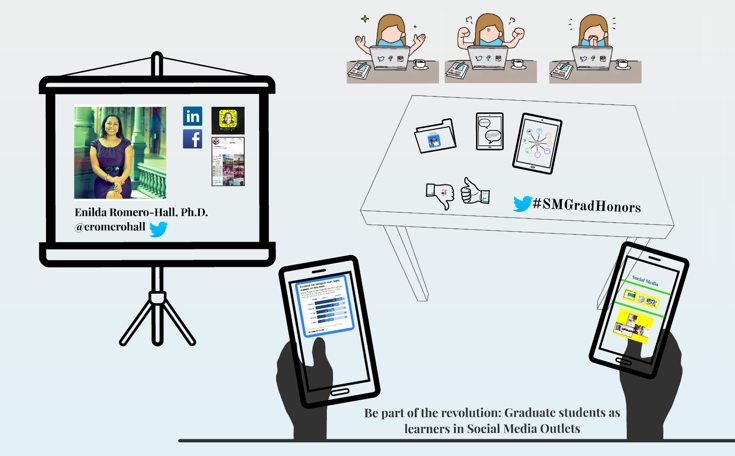
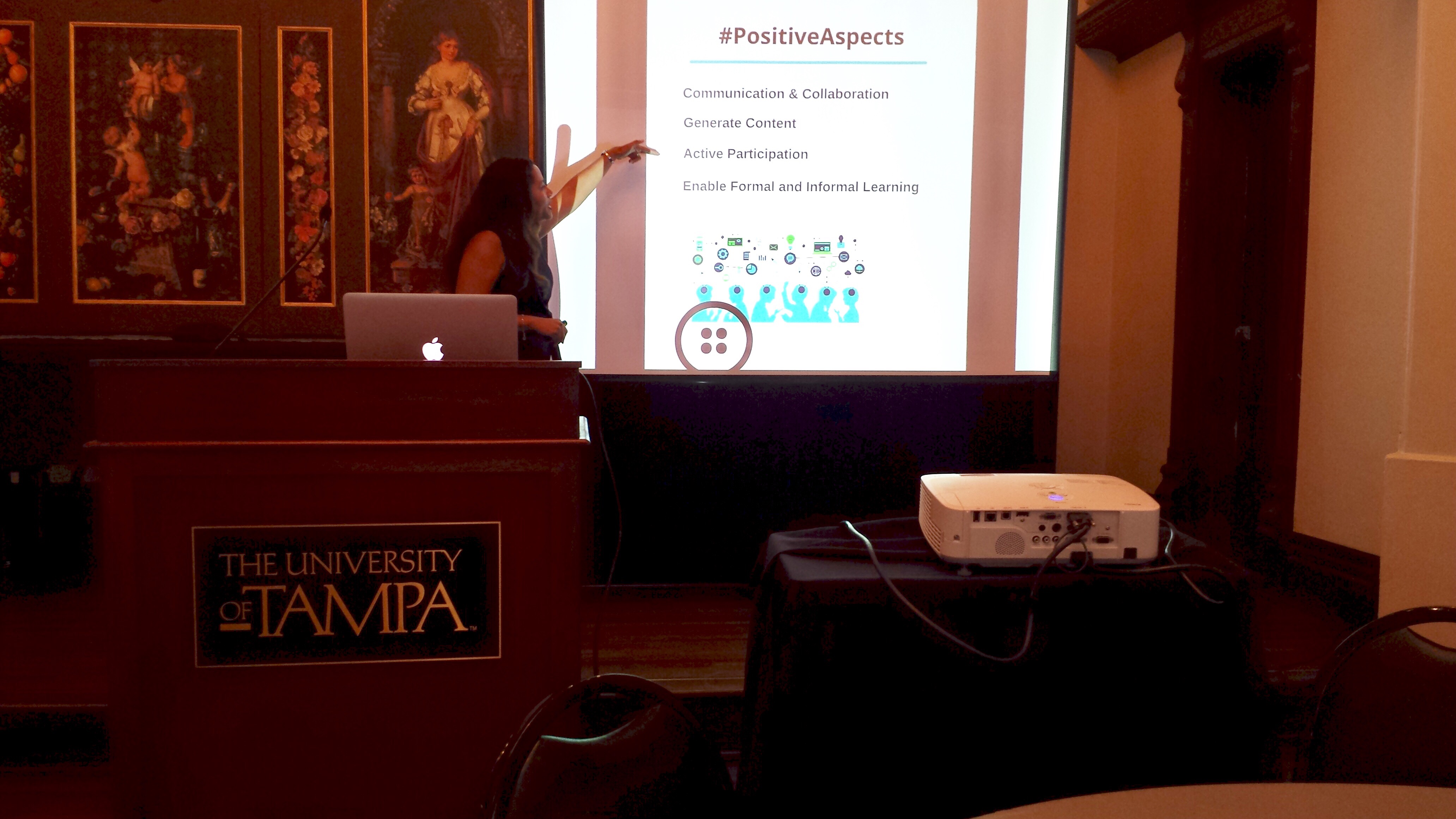
Yesterday, I had the pleasure of presenting to the UT Honors Programs students and faculty as well other UTampa colleagues and staff members. I presented on the topic: “Use of Social Media by Graduate Students and Programs.” This is a research area that I am currently exploring and I was able to share some preliminary results. Click on the image below to access the link to the complete Prezi presentation:

image001 Click on the Image to Access the Slides

Photo Credit: Gul Sahin

Sneak Preview: #AECT16 Research & Theory Division Highlights

Yesterday, I purchased my plane ticket to Las Vegas (to attend the AECT 2016 International Convention later this year).  This reminded me that I wanted to share a sneak preview of the AECT Research & Theory Division (RTD) sessions. As you know (if you read my blog posts regularly), I have the pleasure of serving as the AECT RTD Convention Planner as well as the Featured Research (FR) Sessions planner. The peer review process for all the sessions was earlier this year (it was not an easy process). The AECT RTD had a large number of good submissions and, at the same time, it had a limited number of allotted presentation hours (plus we had very rigorous reviewers). Now that the review process is completed and all accepted authors have been notified, all planners put together division highlights for the conference printed program. Below are the sneak preview or “highlights” for the AECT RTD and Featured Research Sessions. The full AECT16 schedule will be available in a few months.

Featured Research Sessionshttps://cloudup.com/cZomjap6oqL

Research and Theory Highlightshttps://cloudup.com/cs6T_t6JAID

For more info about the conference, visit the AECT 2016 website: http://www.aect.org/events/convhotel/


Academic Momma Traveling with an Infant

Recently travelled abroad for a professional development seminar and took my 6-month old with me. The trip was overseas (Miami to Spain with a layover in Lisbon on the way there and back. The layover on the way back involved an overnight stay in Lisbon). I want to share some advice and things to consider when engaging in this type of travel adventures. I know there are many academic mommas that have to travel to conference and other engagements. Hope these bits of information and advice help make your travel journey a bit less stressful. One more thing, this advice relates to all mommas traveling with an infant (academic or not).

  • Call the airline in advance. Let them know you are traveling with an infant. They can arrange a decent seat for you and your child, perhaps with close access to a bathroom (in case you need to change your child). I called the airline three weeks in advance my travel dates and they arranged to seat us in the first row of economy class. We were fairly close to the bathroom with the changing table and had a bit of extra room in front of us because we were in the first row. Also, the airline that we used (TPA Portugal) provided us with a small, detachable bassinet so that baby could sleep in it during the flight.
  • Let the hotel know that you are traveling with a baby. If you let them know in advance, they can arrange to give you a quiet room or put a crib in your room. Most hotels will do this for free. I have not come across a hotel that charges for a crib.
  • Make sure you carry enough diapers and wipes with you in your diaper bag. I did not see any stores selling diapers in the airport. I initially thought I had packed enough diapers for the entire trip and was in a bit of panic mode when I realized I could run out of diapers.
  • When you are in the airport, check for queue lines that are assigned for parents with children. In particular for security, passport control, or other lines. It will save you time and energy. I did not see queue lines for “parents with children” in the U.S. airport (Miami) but I did see and used them in Europe (Spain and Portugal).
  • Strongly recommend traveling with another adult to help you with the process. This person can be your spouse, parents, or a friend. It is doable for you to travel on your own with your infant but it will be a bit stressful. Having someone else to share the responsibility will ease the stress of dealing with paperwork, timelines, luggage, changing diapers, feeding, and everything else that comes with traveling with an infant.
  • Do not leave packing until the last minute. If you can find someone to watch baby while you pack, it will be very helpful. I recommend making a list of the things you must take with you (clothes, toys, food) and the things that you could buy at your destination.
  • Take time to think about traveling with your baby and proceed as desired. For some reason other people will feel the need to tell you their opinion on whether you should or should not travel with your infant. The reality is that you know yourself and your infant better than anyone else. If you feel that you and your infant are ready, do it.
  • Make sure you have a pacifier or bottle with food ready during the changes in altitude. During a flight, give you infant the pacifier or bottle as the plane takes off or lands to avoid pain in his/her ears:  http://www.entnet.org/content/ears-and-altitude

So far, this is the initial list I have. I know I will remember other suggestions and advice in the future. I will just update this post as I remember them.