Reflections on “Open at the Margins: Critical Perspective on Open Education”

I do a short writing assignment every semester in my “Intro Seminar to Instructional Design and Technology course.” The main purpose of the assignment is to expose students to diverse topics in the instructional design field, to share an open access book with them (so that they can have as a future reference), and to assess their writing abilities (in order to provide support or share resources when needed).

Last semester, the students read “Foundations of Learning and Instructional Design Technology” and they shared wonderful reflections from the various topics covered in the book. This semester the open access book I shared with my students was “Open at the Margins: Critical Perspectives in Open Education.”

The assignment is the following:

  • Please select ONE chapter of the book “Open at the Margins: Critical Perspectives on Open Education
  • Write a reflection on the chapter you read
  • The paper should be:
    • MS Word document
    • 12 point font: Calibri or Times New Roman
    • Two-pages maximum
    • Include the title of the chapter you read in the first paragraph
    • If you use additional references, please include a reference list at the end (otherwise, you do not need to include references)
    • Use the submission link provided in the next Module [Nov. 2] to submit your reflection

Some of the chapters that the students reflected on this term included:

There are so many great reflections this semester. One of the main takeaways was “openness as more than just textbooks and access but as a way of to improve our practice, sharing, and collaborating.” The chapter “Open Education in Palestine: A tool for Liberation” was selected by three different students and “Diversity, Equity, and Inclusion in Open Research and Education” was selected by two students. Clearly, the topics/titles peaked the students’ interest.

Next week, I will ask the students if it is okay to share some of their reflections. Happy Friday!

Recent Publications Related to Social Media in Education

It feels like I have not blogged in a while, so I decided to take a break from other social media and give some love to my blog. In this post, I want to share some research that I have co-authored and published this year on the use of social media in education:

A Syllabi Analysis of Social Media for Teaching and Learning Courses
You can access this journal article here.

Earlier this year, my former student (Linlin Li) and I published this journal article. It was a really neat experience doing the syllabi analysis. It helped me understand some of the topics that are often overlooked when we teach about social media. It also allowed me to see what books and sources are used in the curriculum. The reality is that we have so much literature related to social media and it understandable because the experiences, the environment and the individual using them are constantly changing. This was an open access publication.

An Exploration of a Social Media Community: The Case of #AcademicTwitter
You can access this conference proceeding paper here.

This was my first collaboration with colleague Lina Gomez-Vasquez, a fellow Latinx researcher. It was a high level analysis of the #AcademicTwitter hashtag and those who often post to this online community. Love that we can look at how faculty (and other academics use social media). As the abstract stated: “This paper examines participants and communication patterns in the #AcademicTwitter community. Using content analysis and social network analysis techniques, the researchers examined tweets including the #AcademicTwitter hashtag to discover the community’s network properties, roles of the participants, sentiment, and conversational themes.” We have other follow up projects related to the #AcademicTwitter hashtag, so stay tune.

Most versus least used social media: undergraduate students’ preferences, participation, lurking, and motivational factors: You can access this journal article here.

In this paper, we surveyed 769 undergraduate students and asked them about their social media preference and participation. Snapchat and Instagram were their preferred social media. We also asked questions related to lurking. As we mentioned in the paper: “It is equally important that as part of the research focused on the use and participation of undergraduate students in social media, we also address lurking behaviors. In comparison to the large number of research efforts focused on active users of social media, very little research has focused on lurkers in online environments or even consider lurking an important form of online behavior (Edelman, 2013). The 90-9-1 rule states that amongst members of an online community there are ninety percent lurkers who never contribute, nine percent who contribute very little, and one percent who actively create new content (Sun, Rau, & Ma, 2014). There are multiple reasons why people lurk.”

Photo by Adam Jang on Unsplash

“Research Methods in Learning Design and Technology” published

I have shared this news in all of my social media but completely forgot to post it in my blog. Sorry!

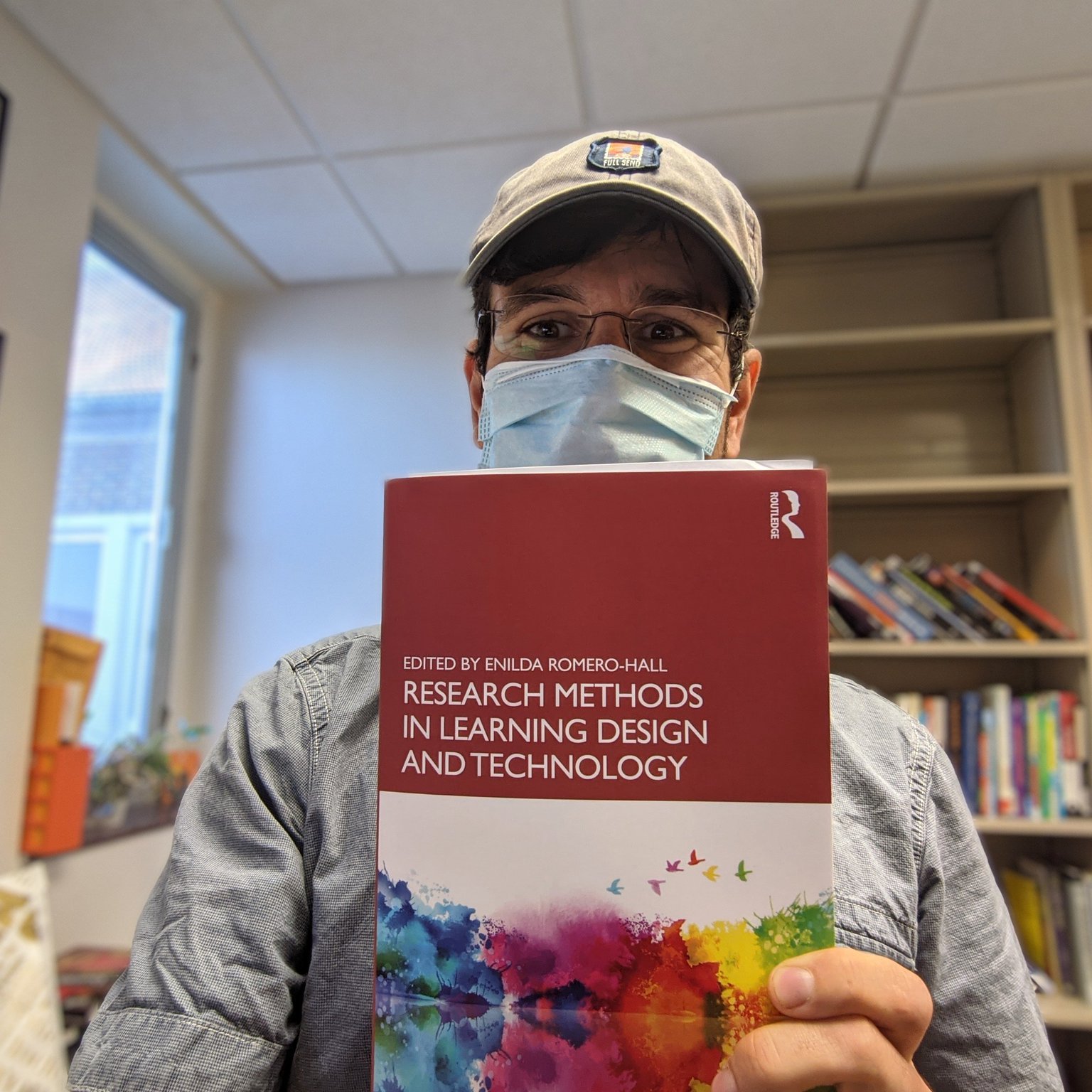
The book “Research Methods in Learning Design and Technology” was officially released on October 20, 2020. I am excited and thrilled to finally see it completed and hold it in my hands.

Unboxing “Research Methods in Learning Design and Technology”

I also received new from several book chapter authors and co-authors, all the way to Australia, South Africa, and around the United States, that they had received their copy. It was also nice to see the comments from colleagues, friends, and mentors sharing photos when they received their copy of the book. Greatly appreciate their words. This was truly a team effort, it could not be accomplished with out the book chapter authors and their contributions.

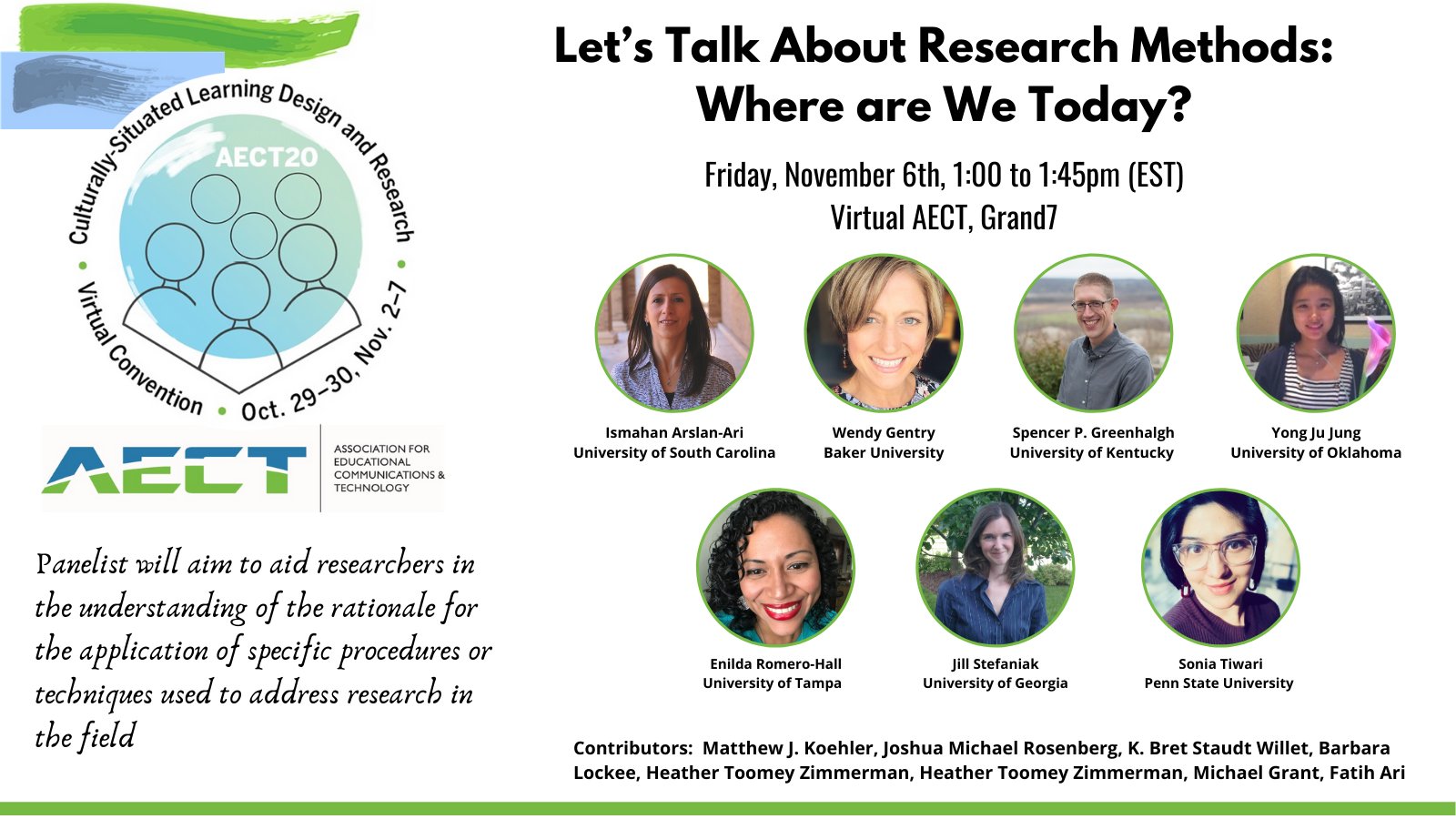
As part of the AECT 2020 Conference we got to share some insights from the book in a panel session titled: “Let’s Talk about Research Methods: Where are We Today?” It was a lot of fun and we had some great questions. I feel that those that attended also were able to get ideas for their of research. Here is a link to the slides I presented during the panel session: http://tiny.cc/AECT2020RMPanel

If you are interest in getting a copy of the book, here are a few links to consider:

ebook: https://www.taylorfrancis.com/books/e/9780429260919
Select “Preview PDF” to download and read Chapter 1 “Research Methods in Learning Design and Technology: A Historial Perspective of the Last 40 Years.”

Abstract Repository: http://www.researchmerge.com
You can download and read Chapter 5: Considerations for Using Social Media Data in Learning Design and Technology Research

Purchase the book:
Routledge
Amazon

CFP: “Informal Learning in Online Social Communities”

Starting a new project.

I am excited to share this call for proposals for the “Informal Learning in Online Social Communities” Special Issue of the Journal of Applied Instructional Design (JAID) that I will be editing and hopefully will be published August 2021. A short abstracts (500-word maximum) submissions is due December 11th, 2020.

To learn more about the topic of the special issue, potential topics, types of articles accepted, the timeline of the special issue, and submission information, click on this link: https://bit.ly/2U1Lbzs

I am excited to share this call for proposals for the "Informal Learning in Online Social Communities" Special Issue of the Journal of Applied Instructional Design (JAID) that I will be editing and hopefully will be published August 2021. A short abstracts (500-word maximum) submissions is due December 11th, 2020.
Call for Proposals “Informal Learning in Online Social Communities” Special Issue

“Impact Learning” Podcast Episode

https://impactlearning.simplecast.com/episodes/enilda-romero-hall A few weeks ago, I was invited to join Dr. Maria Xenidou as a guest in the podcast that she hosts called “Impact Learning.” I truly enjoyed our conversation. We covered so many different topics. We talked about my educational and professional background. Life as a faculty member and eventually transitions to discussing topics related to instructional design and technology (online learning, research methods, motivation, and others). If you have an hour to spare above is the podcast player and below are the notes from the episode.

EPISODE NOTES

Production team: Host : Maria Xenidou Producer: Julie-Roxane Krikorian Introduction Voice: David Bourne Contact us: impactlearningpodcast(at)gmail.com Music credits: Like Lee performed by The Mini Vandals Transition sounds: Swamp Walks performed by Jingle Punks Where to find more about Enilda Romera-Hall: LinkedIn Her page on the University of Tampa website The masters she teaches in Instructional Design and Technology Personal Website The different courses she teaches Her publications Mentioned in this episode: Universidad Tecnológica de Panamá Centennial College Emporia State University Programs in Instructional Design & Technology at Old Dominion University University of Tampa Dr. Jozenia Colorado-Resa  Dr. Ginger Watson Dr. Thomas Reeves Listen to this episode and explore: Enilda’s interest in various topics at a bilingual school in Panama City (3:03) Moving to Canada and studying computer programming (7:56) Getting a Bachelor’s degree in Business Administration (9:54) Why she chose to study Instructional Design for her Masters (10:32) Enilda’s decision to pursue a PhD in Education and the impact of her mentors during this time (12:46) How she combines teaching, mentoring and researching in her current role as Associate Professor and Graduate Program Coordinator at Tampa University (16:50) Enilda’s thoughts on the biggest advancements in Instructional Design since she started working in the field (20:34) Improving Instructional Design: learning how to apply the research findings to the practical field (23:18) Enilda’s book: a collaborative project designed to bring theory to practice (25:49) The trends that Enilda sees in the future of instructional design and technology (30:09) Enilda’s work in online social communities (32:01) How to use social media to advance higher education and career development (33:16) How COVID has affected the digital learning experience (38:08) What demotivates students in an online course (41:32) How to make synchronous meetings attractive to students through active learning experiences and games (45:12) How Enilda builds the courses she teaches (47:49) Sharing her work openly to help others learn from it (50:22) What keeps Enilda up at night or what she thinks of first thing in the morning (54:14) What Enilda wants to leave her mark on during her lifetime (54:58) How her 4-year-old son has influenced her creativity during the pandemic (57:24)

One step closer: Research Methods in Learning Design and Technology

I was supposed to write about this weeks ago, but it did not happened. However, here I am to blog about the book “Research Methods in Learning Design and Technology.” First, I want to say thanks to all the book chapter authors. The work that these authors have put into their chapters is admirable.

What has happened since I last blogged about the book? Well, I shared that I had written the “acknowledgement” and was getting ready to submit materials to the publisher. That is exactly what occurred, I submitted all materials in mid-April. It was a huge sense of relief to have all the work completed and submitted, while dealing with all the stress and anxiety of the COVID-19 pandemic.

Back then, I also shared via social media (Twitter and LinkedIn) a link to an online repository, that I created, of the book chapter abstracts: http://www.researchmerge.com. In April, I also shared (with permission from the publisher and the book chapter authors) a pre-print of Chapter 5: Considerations for Using Social Media Data in Learning Design and Technology Research (by Spencer Greenhalgh, Matthew J. Koehler, Joshua M. Rosenberg and K. Bret Staudt Willet). If you had not seen these links before, I encourage you to explore the repository of the abstracts and feel free to download a copy of Chapter 5.

This week, I have spend the majority of the week reviewing queries in all of the chapters and the front matter of the book. This has given me an opportunity to read again all the book chapters. One of the hightlights was having a running head titled: “Futurama.” That really made me smile. By the way, I had to send a few “IMPORTANT: Chapter Information” emails to book chapter authors. Huge thanks for the prompt response of my colleagues, who I know have so much going on right now.

So, as the title states: One step closer!

A sabbatical during COVID-19

Where do I start?

I guess I can start by writing that a few months into my sabbatical the world turned upside down due to the COVID-19 pandemic. Yet, I was able to use my time to complete the tasks that I had outlined for my sabbatical period. April and May did require a significant adjustment since we had to manuoiver a new work schedule without child care. Maneuvering this new schedule required being realistic about what I could accomplish and saying “no” to some invitations for new collaborations.

The first two months of my sabbatical were as planned. I worked on writing two chapters for the book “Research Methods in Learning Design and Technology.” Book chapter authors submitted their completed and revised book chapters to me by the end of January and I worked on doing final reviews of each book chapter. I initially had planned to submit the book to the publisher by mid-March, but I switched the format of the last chapter, and this required giving extra time to my co-authors to complete their writing. This meant that I had to delay the submission of the book documents to the publisher until mid-April. Thankfully, by the time the world turned upside down in mid-March, all my co-authors and book chapter authors had turned in all required documents to me.

One of the elements of my sabbatical that was partially affected by the COVID-19 pandemic was work-related travel. I was scheduled to attend the American Educational Research Association (AERA) Annual Convention in San Francisco in mid-April and the conference was canceled. I am glad it was canceled, I am also glad it was not held virtually. April was a month of re-adjustement, tension, and stress for many. I was also scheduled to travel to Florence, Italy to present at the DEPIT Annual Meeting at the University of Florence. This event was re-scheduled for an online format.

I had some personal travel plans changed because of travel restrictions. I was scheduled to spend all of March and a portion of April in Panama City, Panama, where I was going to work while spending time close to my family. So, I traveled to Panama at the end of February and was monitoring all the news related to COVID-19. Due to the way the virus was spreading, my family and I decided it was best for us to travel back to the United States, so we changed our flights to travel back on March 22 (which is the day Panama was scheduled to close their international airport). On the evening of March 20, I received an email from COPA airlines letting me know that our flights had been cancelled. I was shocked and extremely disappointed. However, we all stayed calm and determined that we would just ride the storm in Panama. That same evening, as a last attempt, we figured we would see if there were any flights on March 21 to Tampa with a different airline. Thankfully, we did manage to fly back to Tampa on March 21. My dad was in Panama with me and we were also able to find a flight for him to fly back to Toronto (within one hour difference of our flight), which gave peace of mind. I would not have left Panama without my dad.

The weeks after returning from Panama, were weeks of adjustments as mentioned at the beginning of this post. In addition to all the tasks for the book, I was also scheduled to write a manuscript (with a deadline) that I had not even started. It took discipline to stay focus. I admit that there were many emotions related to what was happening in the world with the pandemic, leaving Panama, and experiencing the “new normal.” I felt like I had to work hard on my “emotional intelligence” to get the paper written and deliver all the book materials to the publisher.

I am thankful for the sabbatical term. In addition to the tasks mentioned in this post, I also used the time to work in revisions to several manuscripts and continue mentoring my undergraduate student (we presented at a conference in February and are currently working on a few writing tasks). Of course, I spend time with my family (even more than planned due to the lack of childcare).

Since my sabbatical ended, I am back to serving as the Graduate Coordinator of the Instructional Design and Technology program and I taught a six-week summer intensive course on Learner Motivation in June. I definitely missed my students and the joy of our convos.


Reflection: Undergraduate Researchers

I start by sharing that last week I found out that my application for an undergraduate research grant for 2020-2021 was rejected. I was a bit disappointed, I am not going to lie. I do not really care for the “recognition,” but I care about mentoring students. Specially when those students are female minority students (which has been most of the students who I have worked with over the last three years).

Over the last three years, I have worked with three different students. It really has been great. I have found weekly meeting on a specific date and time (in-person or online) is the best approach. During the meeting we usually discuss tasks the undergraduate researcher has completed and we discuss upcoming tasks. I do not like to make assumptions that the students understand every step of the research process so I like to have plenty of time for questions. I have found that students who are at the undergraduate stage and are interested in doing research are usually very good with time management, are super curious about the research process, and usually develop a better understanding of what it means to do research as a faculty member. 

Although I have worked with three different students (a different researcher every year), all of them were very quick to learn the tasks they were required to complete. We normally start with completion of the IRB CITI training and obtaining their certificates. Then, I usually give them time to read the research proposal that has been drafted for the project. We create a Google drive were all our mutual files for the project will be hosted. We set, as previously mentioned, a specific date and time to meet. I also like to provide samples of prior work completed, so that the undergraduate researcher can have an idea of what a report, section of a manuscript, conference proposal, or other documents looks like. I try to not overwhelm the undergraduate research with the many tasks that we will complete over the year, instead we focus on weekly tasks (a literature review, an annotated bibliography, review of a survey, creating tables, writing an introduction, putting together a poster, practicing a presentation, etc.).

Over the last year, I had the pleasure of working with Caldera Ripine (Elementary Education major). Just before the pandemic, in February, we attended the 2019 Eastern Educational Research (EERA) Conference in Orlando, FL. It was a wonderful experience. In a room with over 30 poster sessions, Caldera was the only undergraduate student presenting and she did amazing! 

I should also add that all of the prior undergraduate researchers who I have worked with in the past, Megan, Renata, and Caldeira, have been instrumental during the writing process. Here are some publications featuring undergraduate researchers:

Romero-Hall, E.J., Petersen, E., Sindicic, R., & Li, L. (forthcoming). Most Versus Least Used Social Media: Undergraduate Students’ Preferences, Participation, Lurking, and Motivational Factors. International Journal of Social Media and Interactive Learning Environments.

Romero-Hall, E.J., Adams, L., & Osgood, M. (2019). Examining the Effectiveness, Efficiency, and Usability of a Web-based Experiential Role-playing Aging Simulation using Formative Assessment. Journal of Formative Design in Learning, 3(2), 123–132.

I do not know what will happen during the 2020-2021 academic year. Because of the COVID-19 pandemic, it is difficult to know what the academic year will look like. However, I am open to the possibility of working with an undergraduate researcher, if the opportunity presents itself. 

.

The Acknowledgement

With the intent to hold on to every bit of positivity during this bizarre days in which we are all dealing with the COVID-19 pandemic, I share with you: the acknowledgement.

I am in the final stages of getting all materials to the publisher for the “Research Methods in Learning Design and Technology” book. These materials include the front matter documents. I figured what better way to start blogging about this edited volume than to share the acknowledgement and to recognize those who in one way or another had an impact on this work.

Webinar Recording:Universities in the Age of #COVID-19

This morning I participated in a webinar organized by the Società Italiana di Ricerca sull’Educazione Mediale dedicated to: how universities in different countries are coping with higher education in the age of COVID-19 and the future directions (immediate future and long-term suggestions). Special thanks to my colleagues in Italy for the invitation to serve as a panelist in the webinar and for the diversity of the speakers from Spain, China, Lebanon, New Zealand, and Brazil [Here is a link to the recording]

I would also like to share a few of the resources that were shared during the webinar by myself and other colleagues:

UNESCO Institute for Information Technologies in Education: Handbook on Facilitating Flexible Learning During Educational Disruption

The International Council for Open and Distance Education: Tips for Distance and Online Teaching #LearningTogether

UNESCO: National learning platforms and tools

DQ Institute: Digital Institute, Culture, and Innovation

European Commission Education and Training: Coronavirus: online learning resources

The Association for Educational Communications and Technology (AECT)’s Response to the COVID-19 Virus: https://www.aect.org/aects_response_to_the_covid-1.php


92131014_2910120695722381_5370391424330104832_o