Inside “Learning Designers in Context”: Chapter 3

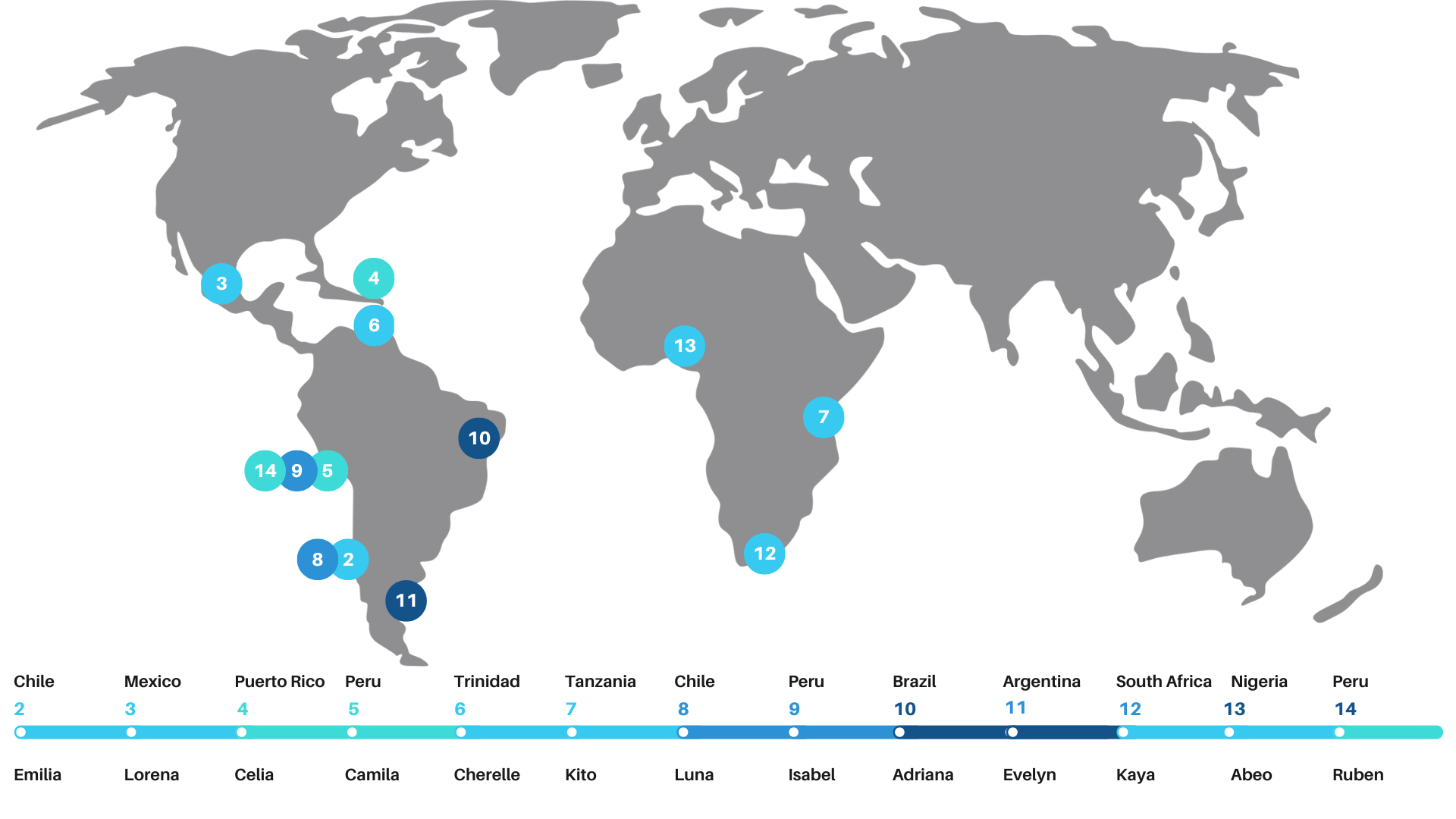
Lorena in a Global Corporation

Abstract:

Lorena, based in Puebla, Mexico has cultivated a career in graphic design but emphasizing functionality over aesthetics. Her professional journey began in advertising and marketing, designing materials for clothing and sportswear brands. Seeking growth, she transitioned to PROVIDENT, where she leads an instructional design team comprising instructional designers, multimedia specialists, and graphic designers.

My role is focused on revisions. I get to ask: Why don’t we do this differently? I tend to question a lot: Why did you choose this material? Why did you choose this resource? Why a video? Or, did you consider the target audience? So, that’s basically my role right now. The search for the best solutions for the project to meet the learning objective. 

As a team lead, Lorena manages project distribution, quality assurance, and workload balance while revising materials to meet learning objectives. Key competencies highlighted by Lorena in her interview include ADDIE framework expertise, hybrid/online format design, multimedia skills, and e-learning tools proficiency. Cultural adaptability and behavioral traits like humility and courage are also vital for addressing unique instructional design challenges.

I think that also something I look for and we look at a lot in the team is humility. Because humility allows you to know and understand that you don’t know everything, that you should always keep yourself in a constant search for learning. That, not because you already have master’s degrees or diplomas, you already know everything. 

Romero-Hall, E. (2026). Learning Designers in Context: Examining Practices Across the Global South. Routledge. https://doi.org/10.4324/9781003270591

Inside “Learning Designers in Context”: Chapter 2

Emilia in an International Financial Institution

Abstract:

Emilia, is a learning design professional based in Chile and Spain, who brings a wealth of expertise to the field, supported by her academic achievements, including master’s degrees in instructional design and e-learning design. Her career spans diverse sectors such as mining, banking, energy, and public administration, where she has developed online training programs.

For me, the key to success [as a learning designer] consists of earning the client’s trust so that they let you do what you do best. I would tell people who want to get involved in this field to learn the instructional design process and to start with the basics, do not skip stages. I would recommend that the last factor that they consider is technology and for them to have a big toolbox of theories.

Emilia emphasizes the integration of instructional design theory with project management skills, advocating for tools like Gantt charts and critical path methods to enhance efficiency. She highlights the importance of evidence-based practices and clear communication to ensure meaningful design processes. Emilia also underscores the need for competencies in development, graphic production, and user experience design, aligning with research that stresses the interdisciplinary nature of effective e-learning. Additionally, she advocates for ethical decision-making in instructional design to address its value-laden nature. Her insights provide valuable guidance for learning designers navigating complex organizational contexts.

Romero-Hall, E. (2026). Learning Designers in Context: Examining Practices Across the Global South. Routledge. https://doi.org/10.4324/9781003270591

Inside “Learning Designers in Context”: Chapter 1

Practice, Competencies, and Context

Abstract:

This chapter explores learning design competencies at the intersection of geographical, cultural, sectoral, and organizational contexts. It provides critical insights into how learning design practices are disseminated globally, emphasizing the evolving role of learning designers in diverse settings. The uneven dissemination of these practices across regions underscores the need to examine both similarities and differences in approaches worldwide. By critiquing the limited research on practitioners in underrepresented regions, particularly the Global South, this chapter advocates for a broader and more inclusive understanding of global practices. The chapter highlights the importance of culturally contextualized approaches to better address the unique challenges and opportunities faced by learning designers across varied contexts.

Despite the contextual differences in their work, one element that all practitioners share is their passion for and dedication to the learning design practice. As shown by the narratives shared in this book, learning design and technology is systematic but is also about questioning things (e.g., why are we using this particular method?) while considering all factors (e.g., have we done quality checks?) to create learning experiences that fully equip learners (e.g., what reading level is best for the learners? How can we design an engaging learning activity?). Learning design practice is about problem-solving with one’s team, connecting with one’s (internal or external) clients, and lifelong learning.

Google Book Preview:

You can read Chapter 1 using the Google Book preview link: Chapter 1.

Romero-Hall, E. (2026). Learning Designers in Context: Examining Practices Across the Global South. Routledge. https://doi.org/10.4324/9781003270591

Inside “Learning Designers in Context”: Chapter Samples

I am a huge advocate of open educational resources so it is very hard to publish work that cannot be openly share to the community and readers that it was intended for. As I navigate this conundrum I think of ways in which this can be accomplished with my recently published book. So far, I have reached out to the publisher and asked if I could share a sneak peek of the book. They agreed with that and it let me to share Chapter 15 in this blog post: Sneak Preview of “Learning Designers in Context” . I also recently noticed that with Google Books you can view samples of the book including the Preface and Chapter 1. You can also read a sample of the Preface and Chapter 1 by searching for the book on Amazon.

But honestly if anyone is interested in getting a copy of Learning Designers in Context, please reach out via email. I am happy to share a PDF of the book. You are also welcome to “request full-text” via ResearchGate: https://www.researchgate.net/publication/398375917_Learning_Designers_in_Context. I am pretty good at responding to request I get.

I should add that all University of Tennessee Knoxville students, faculty, and staff who have a NETID can access the book from the UT library. Thanks to our UTK Librarians (who are amazing people!), we have a digital copy of the book and can be found here.

For those in the northern hemisphere: Stay safe and warm!
For those on the southern hemisphere: Happy Summer!

Looking forward to #TESOL26

A few months ago I got a message from a former student, she is part of the TESOL leadership team and she had nominated me as the keynote speaker for their upcoming international convention. I was truly honored by the invitation!

This will be my first time at the TESOL International Convention but I am excited to engage with the members of this community. There is a tremendous amount of educational technology use by TESOL educators and professionals. Many of my educational technology colleagues were TESOL instructors prior to their transition into edtech and learning design.

The conference page and link to the conference are included here: https://www.tesol.org/in-person/

In the video included below, I give a short preview of my upcoming keynote address:

Descansa en paz, primo.

This is the fourth time I try to write this post.

Last week my cousin passed away from cancer. He was in his late 30s and was a young man who cared deeply about his family. His cancer diagnosis came as a complete surprise to him and our family. A doctor appointment turned into 10 months of chemotherapy and a bone marrow transplant late in 2025. After the bone marrow transplant he had improved significantly. As a family we were incredibly happy and hopeful. Hoping for a different outcome.

My cousin and I were not very close as adults. We grew up together as children. I grew up very close with all my cousins. We would all hangout at my grandmas house during our childhood. Although we did not communicate regularly as adults, we had started texting. More than anything just to let him know, I was thinking of him.

On January 1st, we exchanged text messages for the last time.
I texted: “Feliz Año Nuevo, primo!”
He replied: “Amen! Feliz año nuevo, prima.”

I am reminded more often these days that life is just too short and too unpredictable. Every moment matters and time we have on earth is just too precious. I am also reminded that we do not know what others are going through. Be kind.

Descansa en paz, primo.