“Learning Designers in Context” is now published!

 I wanted to pass along that my latest book is now published and available!

Learning Designers in Context: Examining Practice Across the Global South examines learning design across professional sectors, local cultures, and geographic regions in the Global South, addressing the ways in which practitioners effectively draw on the knowledge, skills, and resources available to them. The book explores design and implementation in higher education, corporate, non-profit, and government sectors while attending to urgent cultural and geographic distinctions, these chapters vividly illustrate the roles, challenges, and opportunities of learning designers’ use in real-world settings home to specific demographics, traditions, socioeconomic parameters, and policy orientations. 

For more information about the book, and to order a copy (exam copies available), please visit: Learning Designers in Context (currently at a 20% discount). This file offers a brief sample of the book, including the table of contents and the concluding chapter: Book Sample including Table of Content and Chapter 15.

Please feel free to share with anyone who may find it useful.
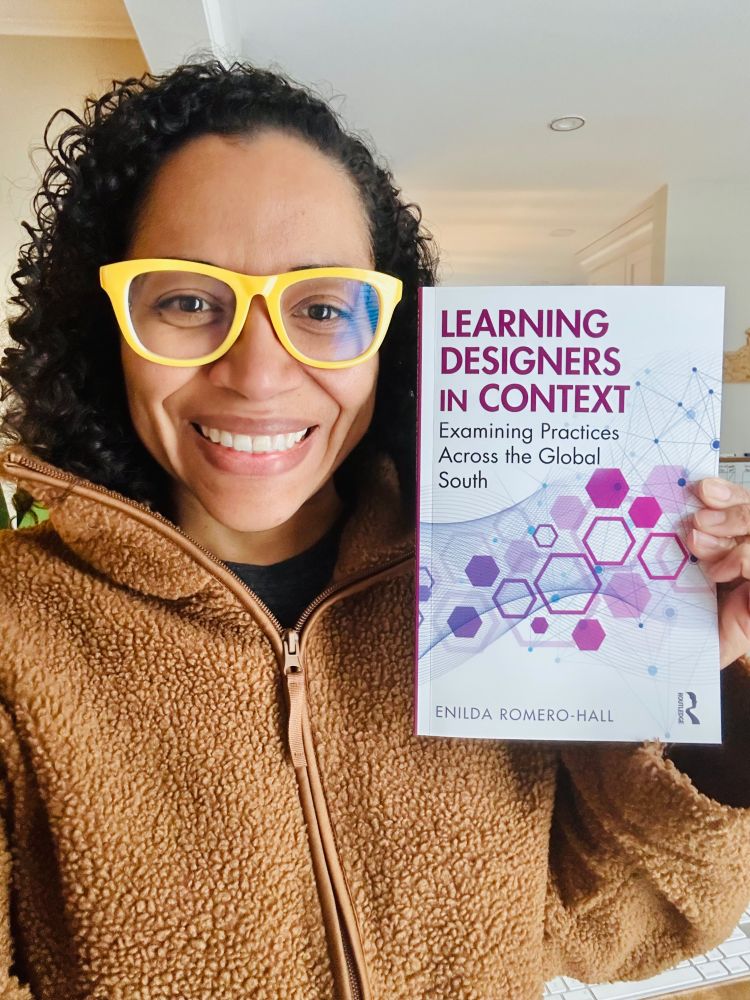
A smiling person with curly hair and bright yellow glasses holds up a book titled Learning Designers in Context: Examining Practices Across the Global South by Enilda Romero-Hall. The person is wearing a brown fleece jacket and standing indoors. The book cover features purple and pink hexagonal graphics on a white background.

The acknowledgement

Five years ago, I embarked on this book writing journey. I had the idea to write this book even before my previous book “Research Methods on Learning, Design, and Technology” was published in October 2020. The email I sent to the publisher on July 17, 2020 read:

I have an idea for a book project and I am wondering if I could chat with you to discuss it. I want to know if this is a topic that would be considered before working on the book proposal

I knew exactly what I wanted to write. I was inspired by the findings of a book chapter (titled: “Educational Technologists in Latin America and the Caribbean: Perceived Importance of Competencies for Practice”) that I co-authored with my former graduate students: Leonor Adams, Erika Petersen, and Adriana Viana. In the process of disseminating the survey for data collection we came across pockets of learning designers throughout Latin America and the Caribbean. It made me wonder how much we had yet to learn from learning designers in other parts of the world and the context of their practice. 

I would like to express my gratitude to the learning designers who took the time to meet with me and share their journeys into learning design practice. Your bravery and sincerity are truly appreciated. Your willingness to open up about your experiences, challenges, and successes has provided invaluable insights that will undoubtedly enrich the field of learning design. Your contributions have not only enhanced this work but also inspired me personally. Thank you for your dedication and for being a source of inspiration to others in the profession. 

I am beyond grateful for the support of McFadden Hall for cheering me on throughout this process, brainstorming with me when I needed a voice of reason, and holding my hand when I just wanted to give up. 

Thank you to the University of Tennessee Knoxville for providing resources and funds, which were instrumental in facilitating various aspects of this book project.

Making it through every step (i.e., writing a proposal, submitting the IRB, conducting the interviews, formatting, transcribing, translating, editing the chapters, writing, and organizing) seemed like a massive ordeal while leaving through changes in my personal and professional life. I am so incredibly thankful for those who have, in many ways, inspired and encouraged me without even knowing it. Gratitude!
“Learning Designers in Context” Now Available for Pre-Order

I do not know how many people actually read this blog, but I figured I would go ahead and share that “Learning Designers in Context” is now available for pre-order.

It also is discounted right now, when you order it directly from the publisher: Pre-Order Here

The book is scheduled for release December 5th, 2025. Copies of the book will be shipped after the released date.

I have previously published two edited books (i.e., Research Methods in Learning Design and Technology, Feminist Pedagogy for Teaching Online) and it honestly feels so different promoting a solo-authored book! In previous instances, I wanted to recognized and disseminate their work of my colleagues who had their work in the edited books, so promoting those books felt easy! However, having to promote my solo-authored book is so hard. I feel like my introverted side all of a sudden takes over!

I also wanted to add that if anyone would like to get a copy of the book, feel free to send me an email. I am happy to share a PDF.

Wheel Throwing Pottery Course

Back in April I had the crazy idea to enroll in a wheel throwing pottery class for the summer. I knew that during the summer I would spend a significant amount of time writing, due to a major deadline I had at the end of June and a few manuscript revisions that I had to work on. I also knew that I did not have any work travel schedule for the summer. I felt like I needed an activity that would help me clear my mind and detach from my writing. I had never done any kind of pottery course before but I thought it was activity that looked relaxing and I dare say “easy”.

The course included 6 weeks of classes. We would meet once a week on Wednesdays for a 4-hour class session. The course also included two weeks of studio time after the 6 week class period. I would also have access to the studio whenever it was open, for me to practice on my own.

I arrived on the first day of class a bit nervous. I did not know any of my classmates and had never met my instructor. I quickly realized that my classmates had a mix of abilities and skills related to pottery. Some of my classmates were re-taking the course and some were completely new to wheel throwing, just like me. My instructor, Ellie Kotsianas-Christner, is definitely what I would consider a master at wheel throwing pottery. She can create a bowl, a cup, a plate, and many other objects in minutes. I was amazed by her skills! She runs her own pottery business, Bug Pottery, in addition to teaching pottery classes.

It was also on the first day of class that I realized that I needed to lower my expectations of what I would be able to create and that wheel throwing pottery is not easy at all. There are special techniques that have to use to move the clay to form specific shapes. You need to mold the clay, the clay should not mold your movements. Learning how to do exactly that can be very challenging. For example, one of the first steps in the process of wheel throwing pottery is centering the clay. If you do not center the clay correctly, your clay will be imbalance (affecting all other steps). Let me tell you something, centering the clay was just so incredibly hard for me! Thank you Ellie for all of your patience teaching me how to center the clay!

It took time and many hours of practice in the studio to get minimal wheel throwing skills and create the perfectly imperfect pieces I created. But, I am still grateful for my pottery journey. It allowed me to:

  • Do something that disconnected me for chunks of time to focus my energy on a new activity
  • Fail often. I lost count of how many times I had to restart a piece because I made a wrong movement or added too much water to the clay.
  • Embrace patience. Pottery is not something that can be rush. Every steps requires time and rushing through the process likely results in making the wrong movement and having to start your pottery piece all over
  • Engage respectfully in a community studio in which all of us use the equipment provided but followed rules that helped keep the studio clean and organized for others to use
  • Spark my creativity by thinking of different ways I could mold the clay to create objects based on my skills and abilities.
  • Show my son that it is okay to try something new that you have never done. After taking him to the studio and showing him what I had created he is now eager to try pottery, as well.

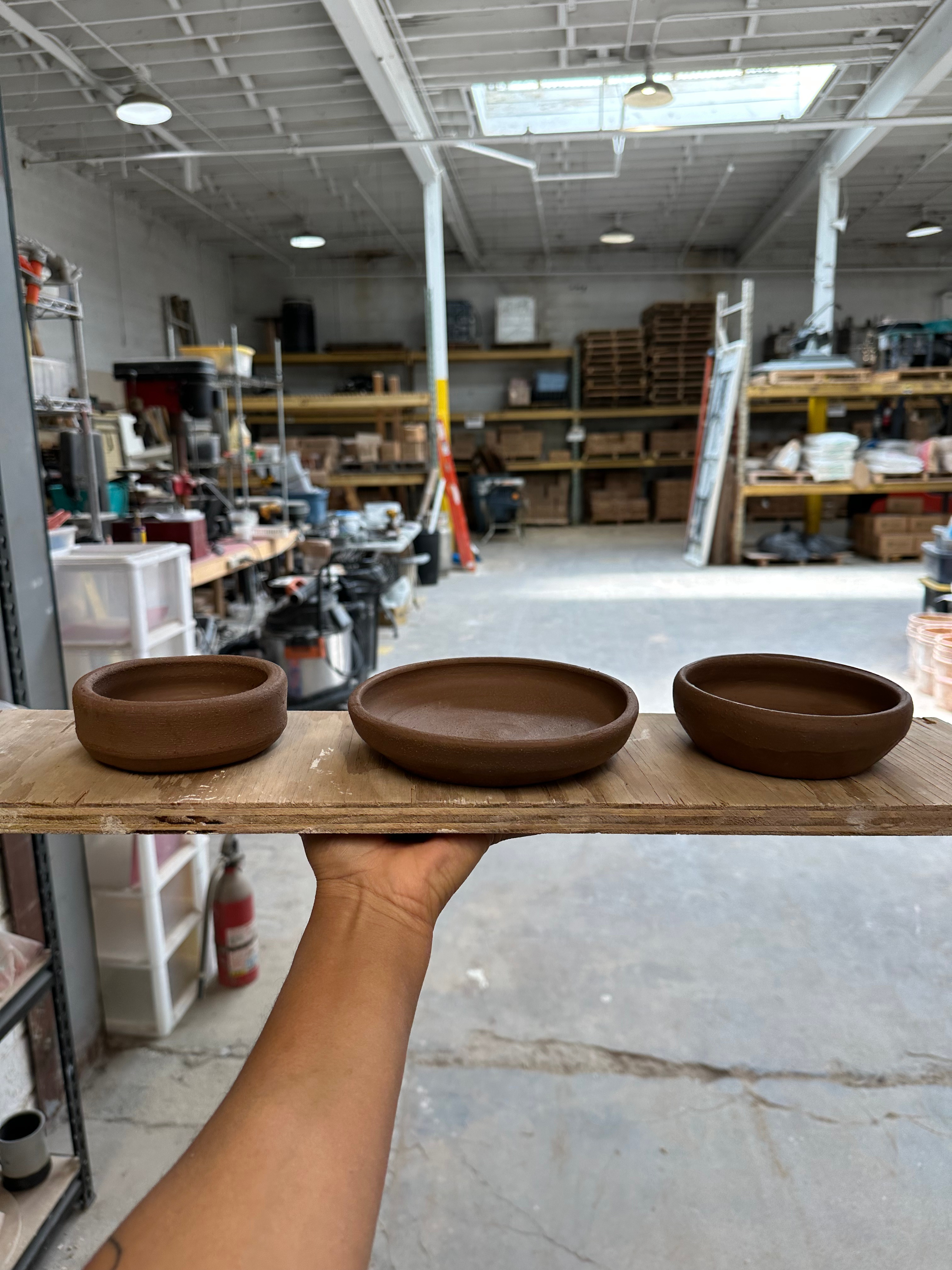
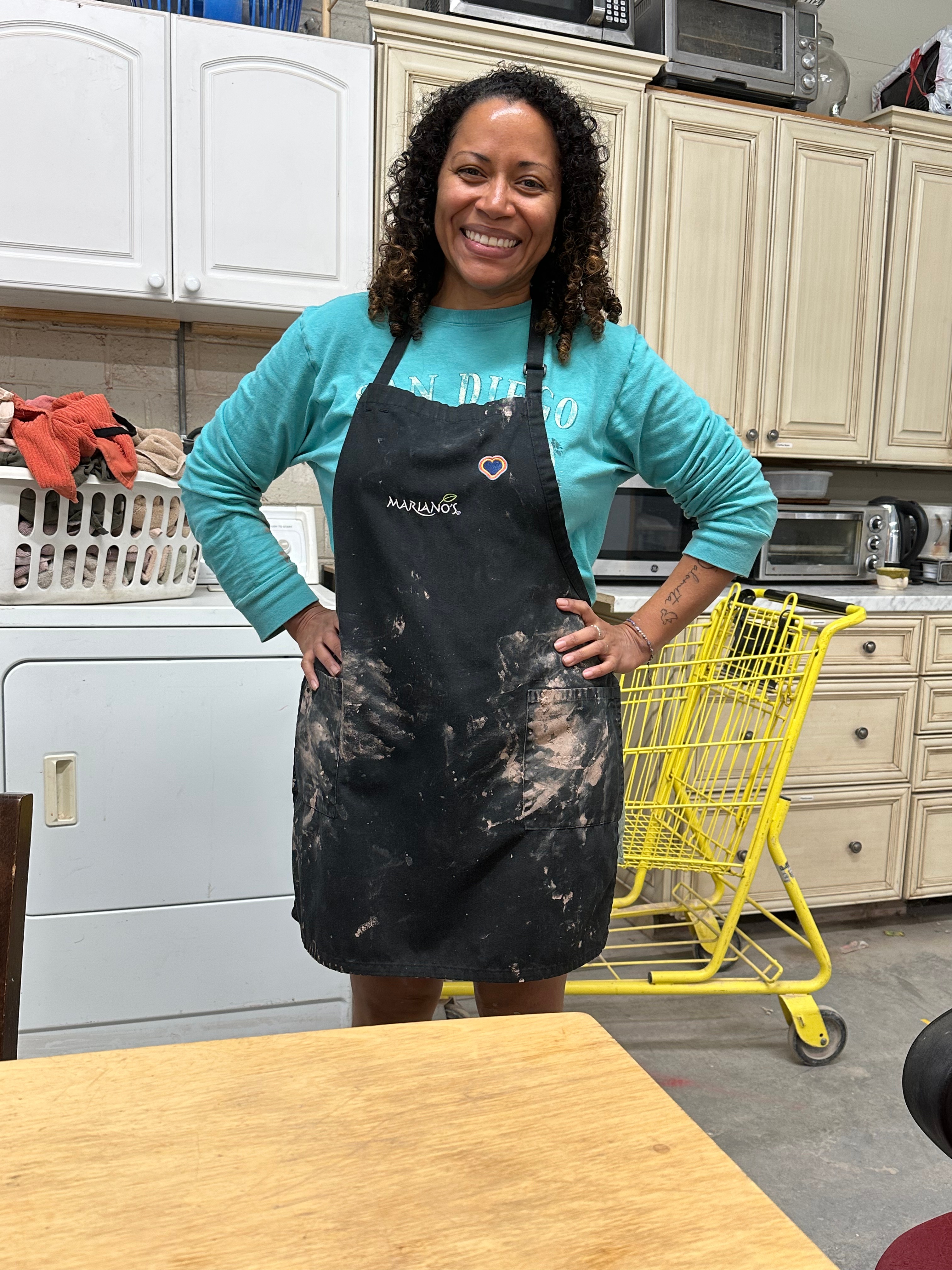
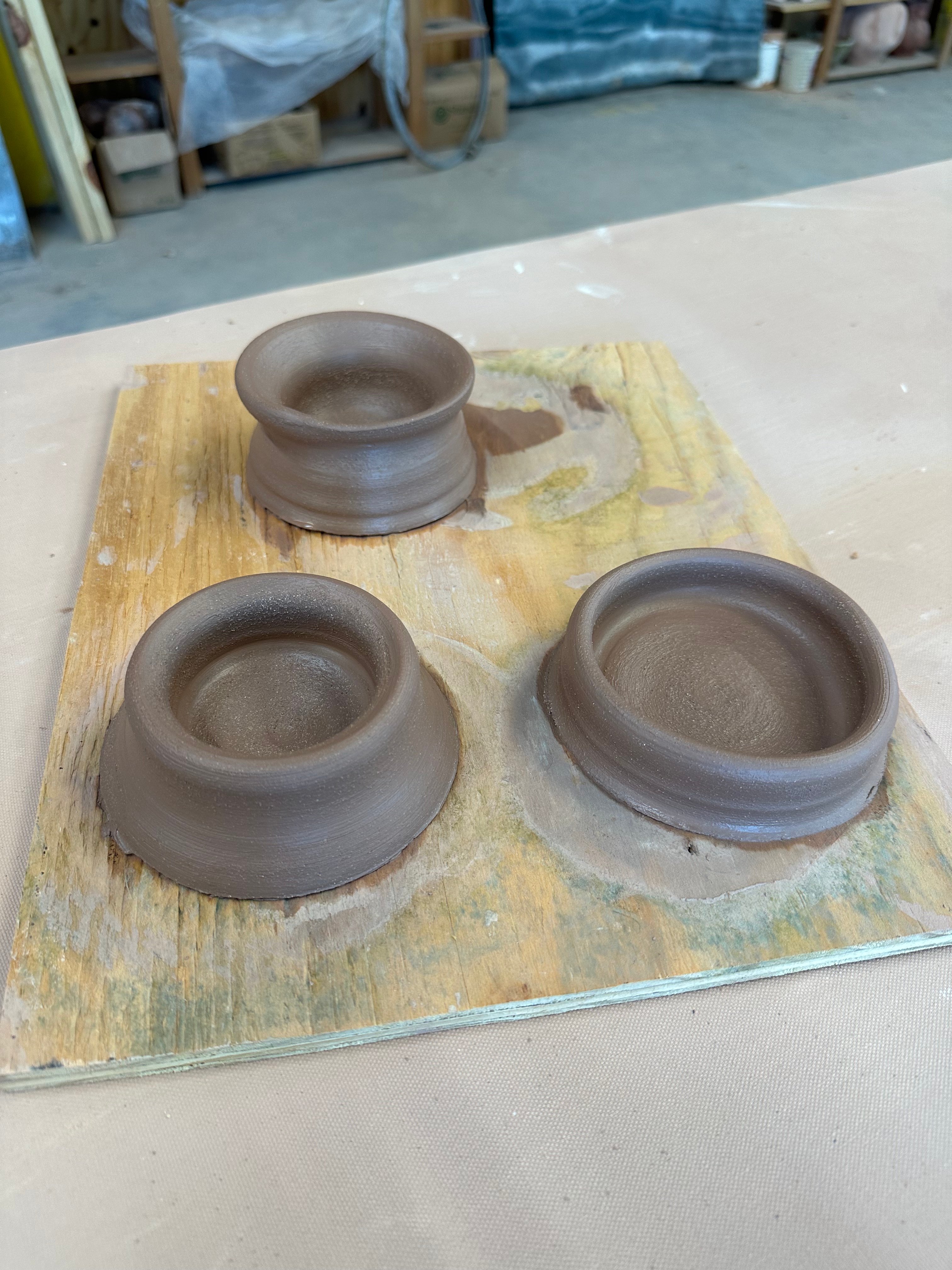
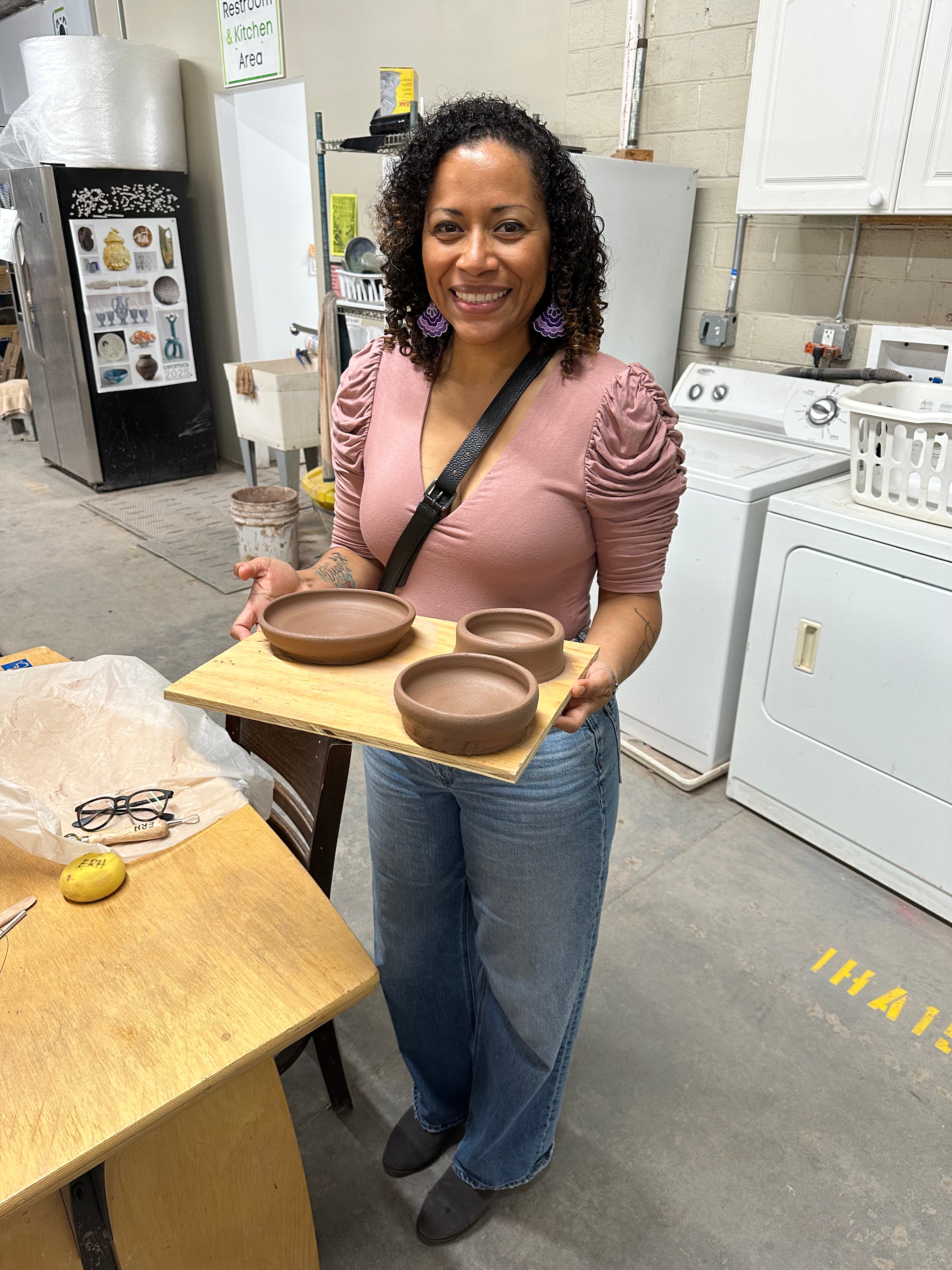
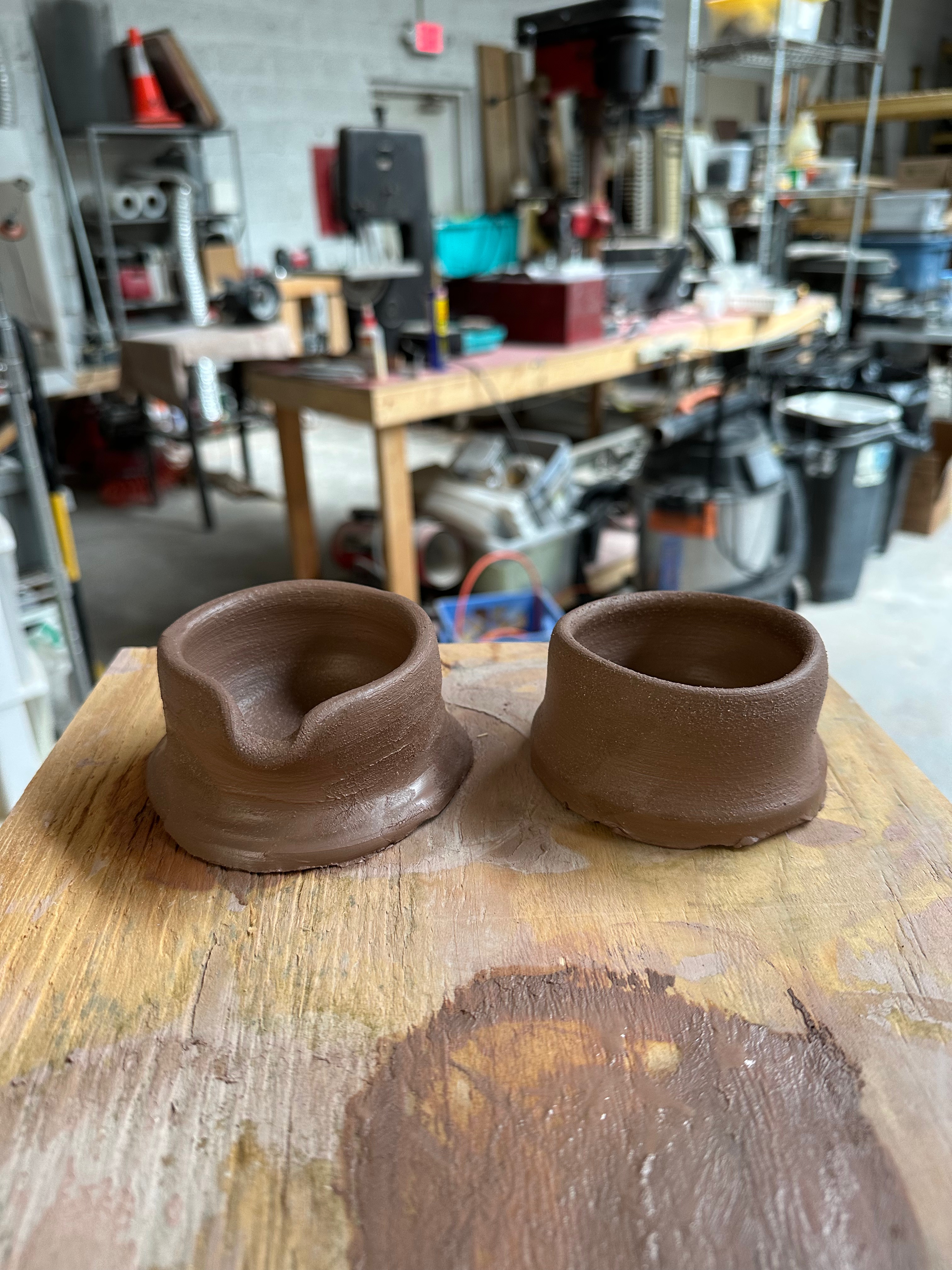
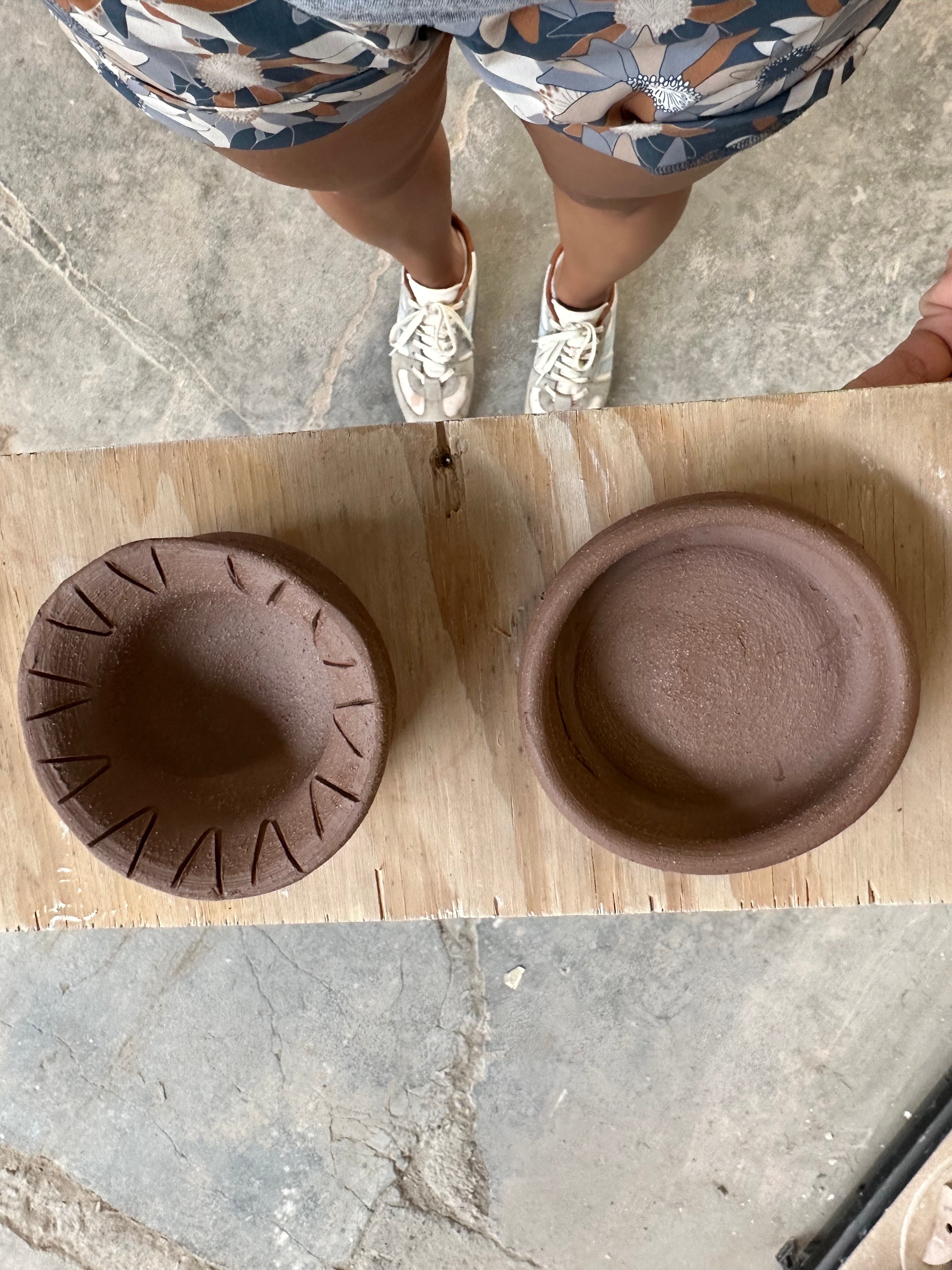
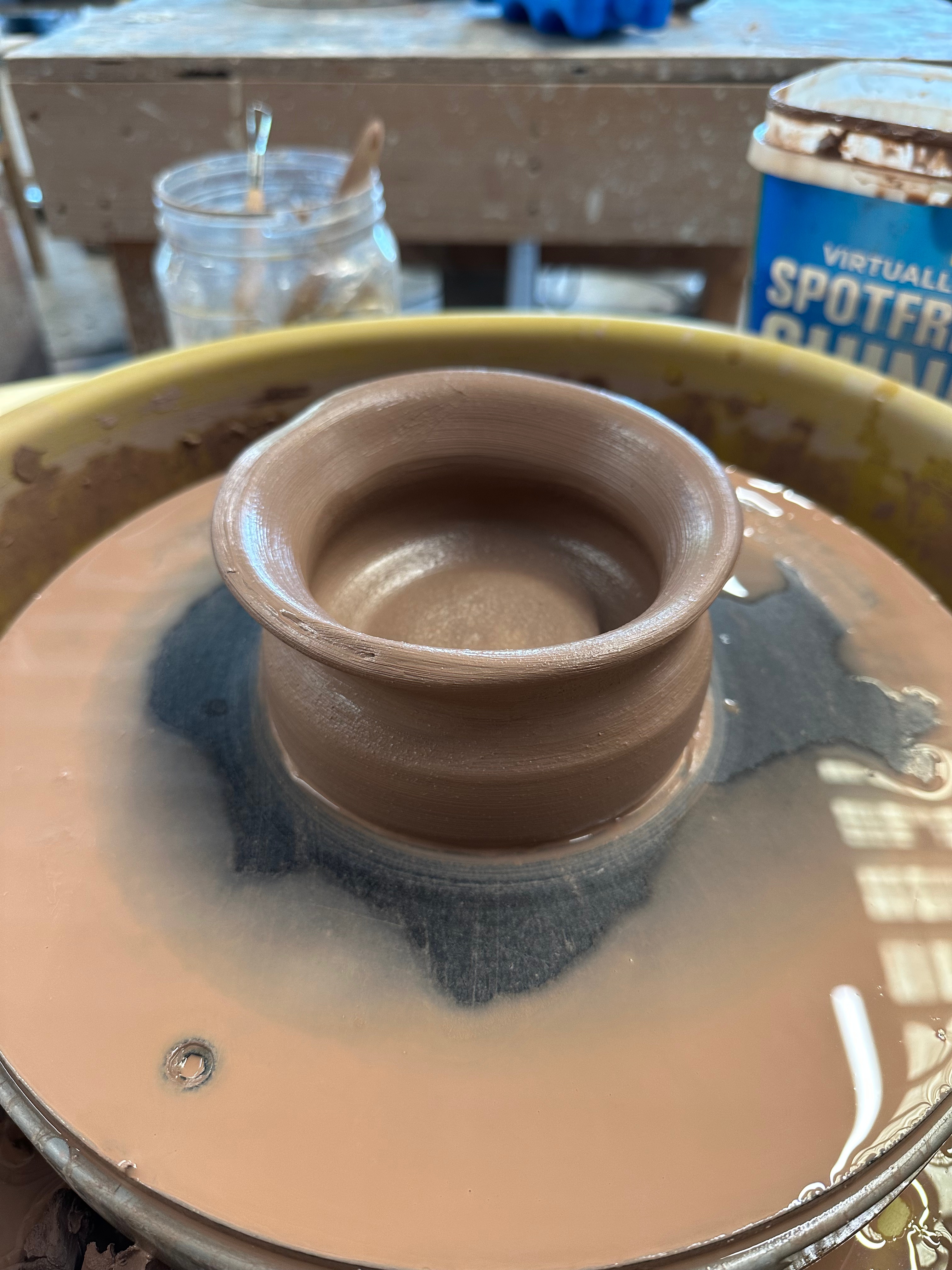
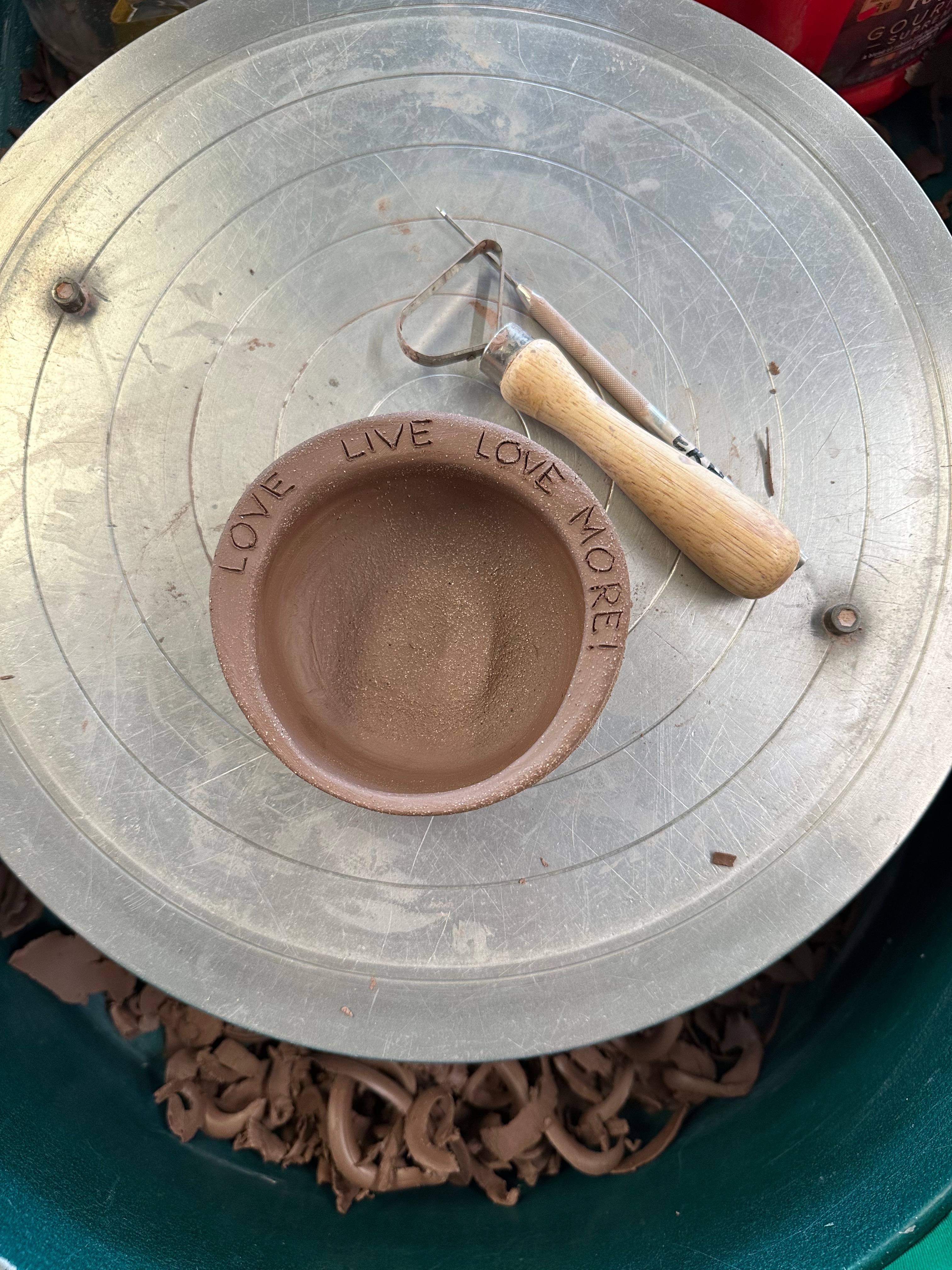
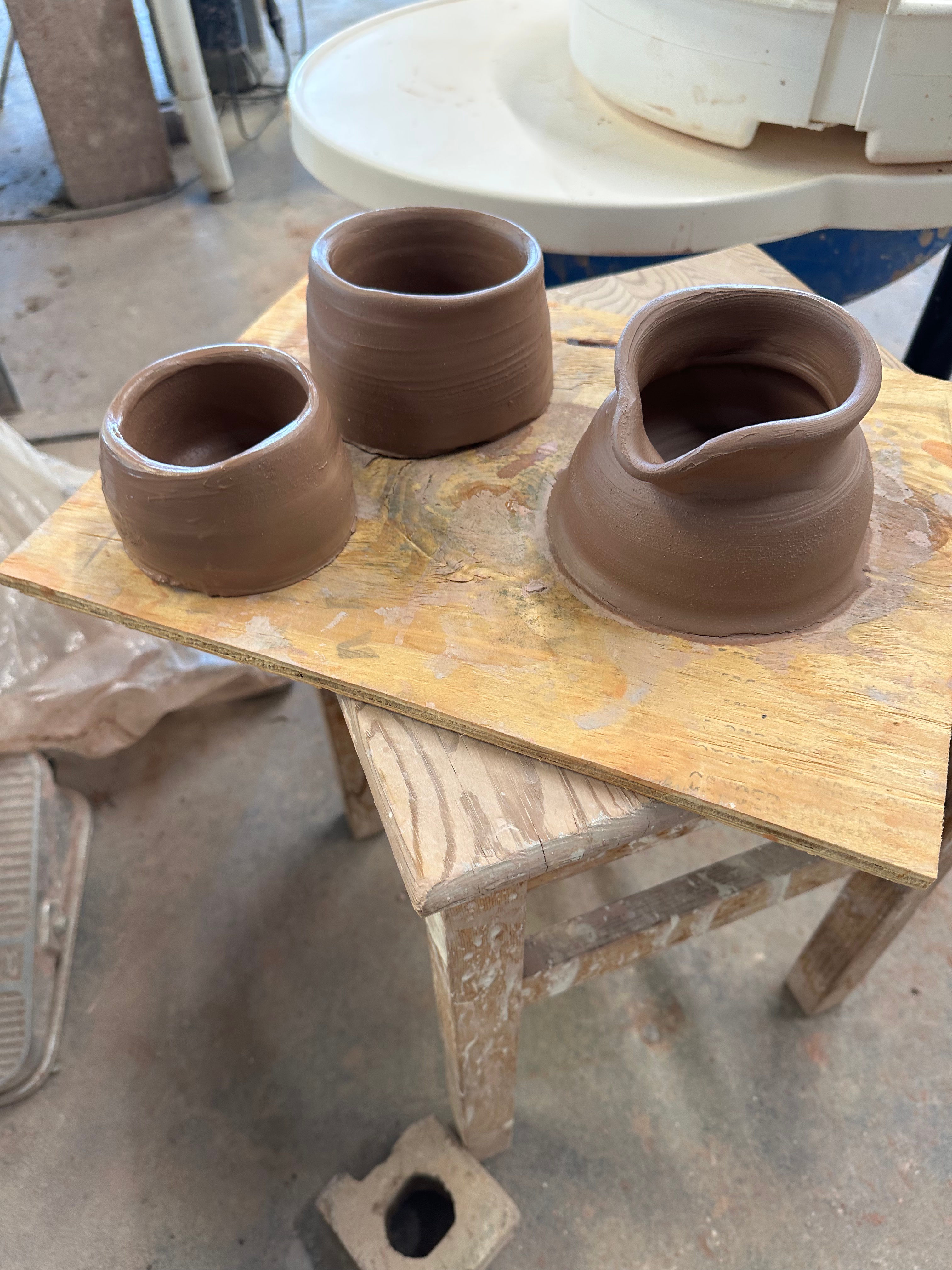
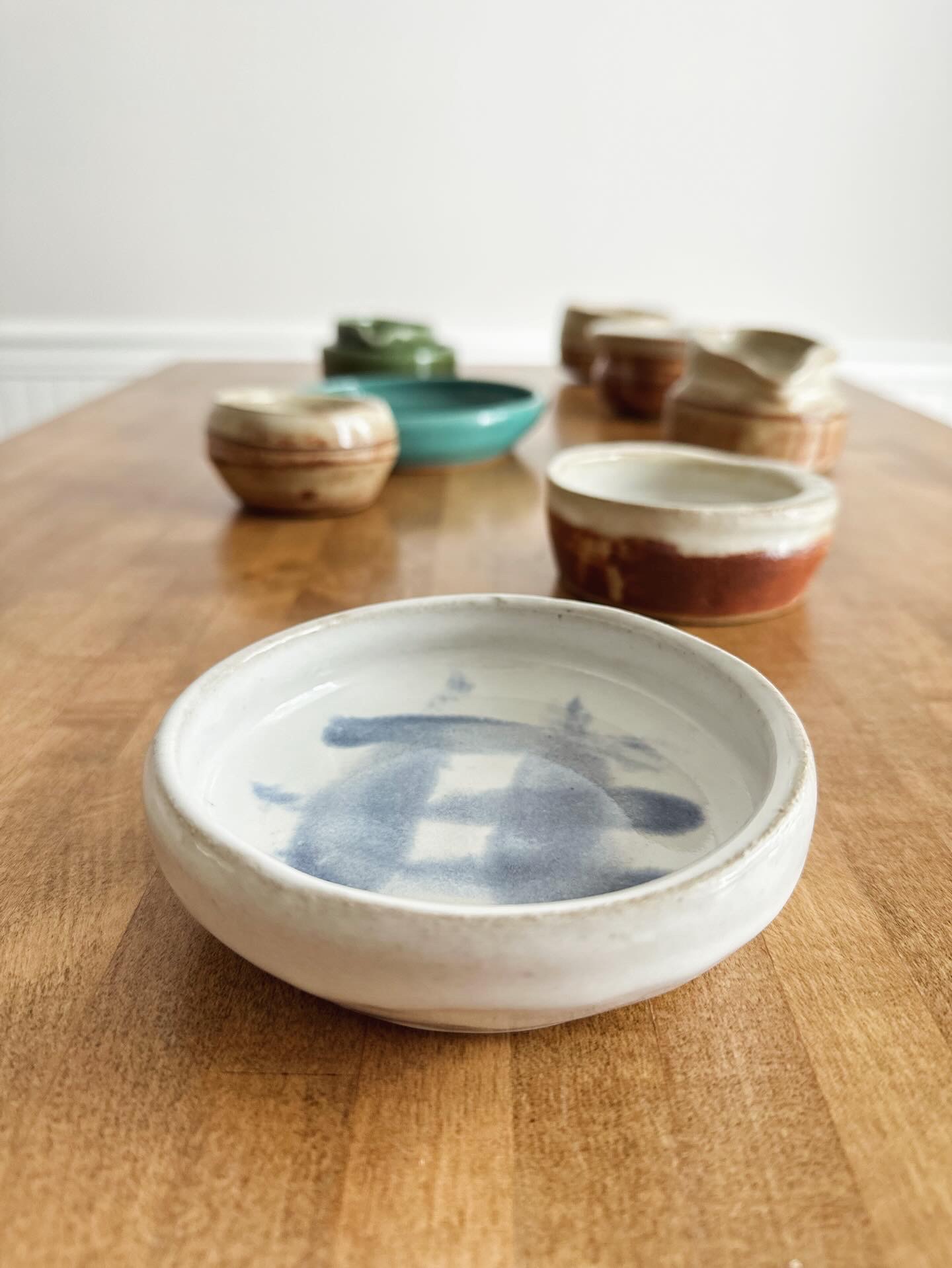
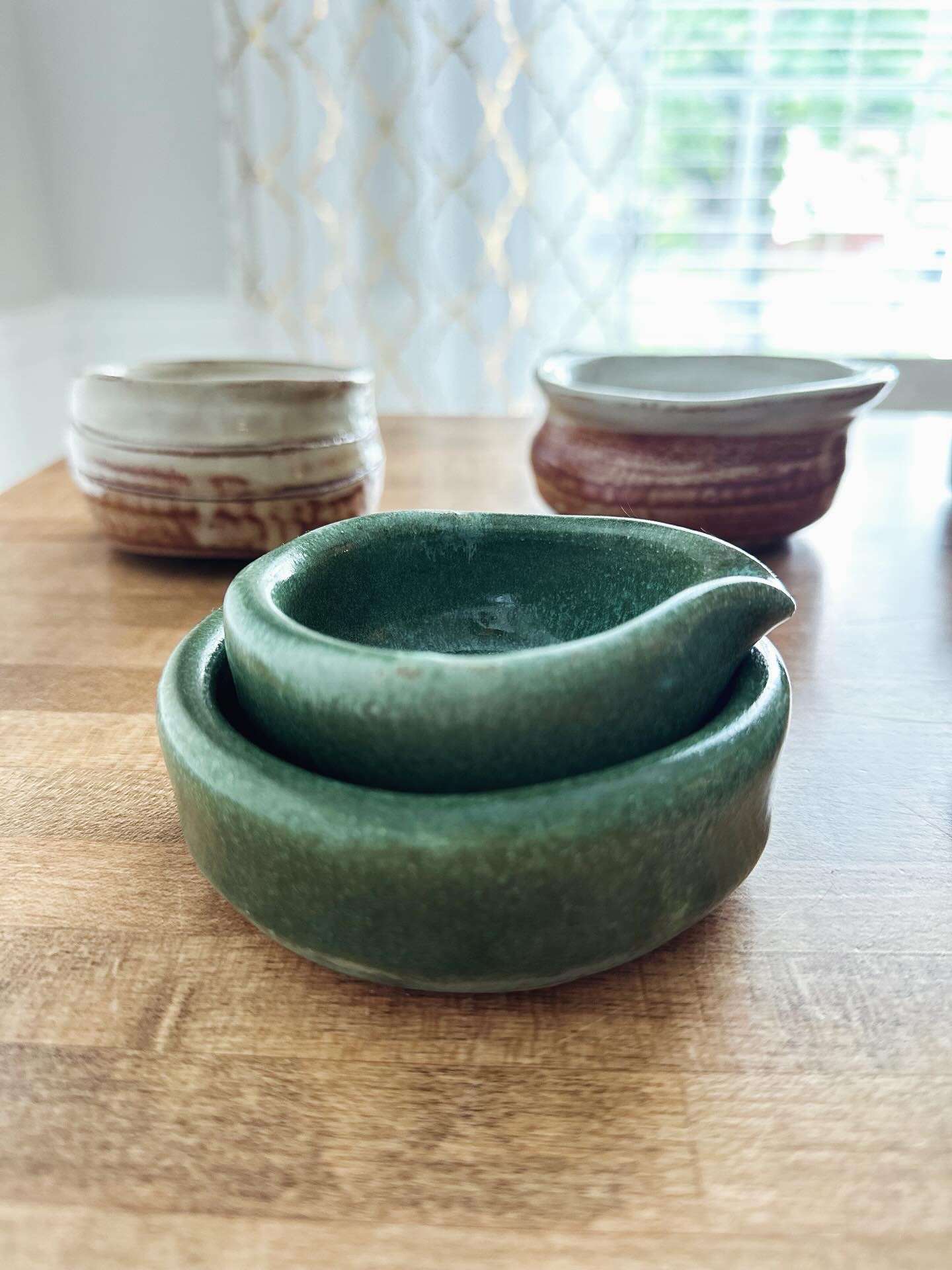
I also think that one of the really cool things about pottery is seen a piece of clay transform into something new. Wheel throwing is the first step but you also have to: (a) wait for your clay piece to reach the “leather clay” stage, (b) trim your piece and get rid of excess clay, (c) play with color and glaze your piece, and (d) then you get to see the final product. Again, lots of patience and embracing the unknown, areas which are often hard for me to fully accept. But, when you have no choice you sometimes just have to go with the flow. Here are some of the pieces I created this past summer in my first wheel throwing pottery class:

Sneak Preview of “Learning Designers in Context”

Over the last few weeks, I have re-read the proofs of my forthcoming book “Learning Designers in Contexts” so many times that I honestly I feel I could recite some of the chapters. Due to some communication issues, the release date has been pushed back a bit. It is all part of the process or at least that is what I tell myself.

I am very happy that last Friday I saw a final version of the proofs. But that excitement was quickly met with a very familiar feeling of seen a grammatical mistake in the final proofs. It always happens! After seen this, I laughed a bit, closed my computer, and when to my son’s soccer game.

Last week, I also contacted the publisher and asked for permission to share a bit of the book in my blog. My editor, Hannah, asked me what chapter I wanted to share and I decided to go with Chapter 15. This sneak preview PDF also includes the table of content. I will do a bit more writing about the other chapters in the upcoming month or so. But, for now you are welcome to read Chapter 15.

Abstract:

This chapter is based on a keynote address I delivered at the Association for Educational Communications and Technology (AECT) International Convention on October 22, 2024, in Kansas City, Missouri. The speech has been adapted for this book, maintaining its original themes and ideas while refining the content for a reading audience. Through the lens of deep canvassing and the acknowledgment of practitioners’ stories, the chapter highlights how context-specific experiences shape competencies and practices. It advocates for moving beyond Anglocentric and Eurocentric paradigms to embrace inclusive approaches. By reflecting on personal journeys and collective actions, the chapter underscores storytelling as a transformative tool for fostering understanding and innovation in education technology and learning design.

Citation:

Romero-Hall, E. (2026). Learning Designers in Context. Routledge. https://doi.org/10.4324/9781003270591

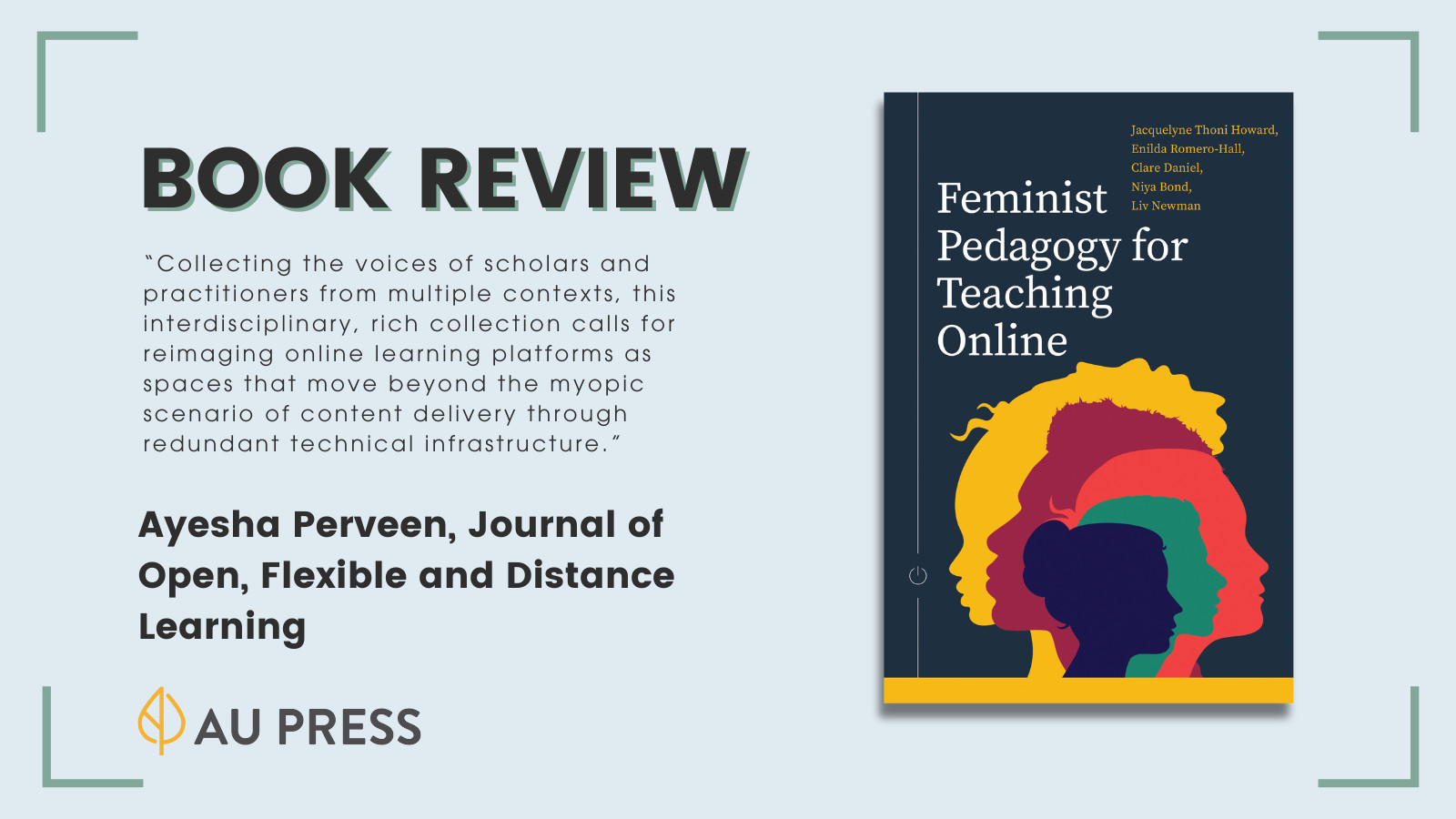
A thoughtful review of “Feminist Pedagogy for Teaching Online” by Dr. Perveen

A book review of Feminist Pedagogy for Teaching Online authored by Dr. Ayesha Perveen was published in the Journal of Open, Flexible and Distance Learning. Thank you Dr. Perveen for taking the time to review our book and your praise as well as thoughtful feedback!

The abstract:
“This book review critically examines Feminist Pedagogy for Teaching Online (Howard et al., 2025), identifying it as a crucial intervention that bridges a significant gap in contemporary scholarship by envisioning online learning through the lens of feminist pedagogy. The collection challenges dominant instructional design norms and technological culture, underscoring fundamental values of care, equity, reflexivity, and social justice.

Structured into four thematic parts, the book consistently emphasises praxis, showcasing practical tools like social annotation and cryptoparties to foster equity and collaboration in e-spaces. Its primary strength lies in modelling feminist pedagogical principles through collaborative and student-centred approaches. While praised for its diverse contributions, the review notes some chapters could benefit from more analytical engagement with structural barriers to feminist agency in institutional settings. It acknowledges potential conceptual repetitions for novice readers. Nevertheless, the book is considered a vital resource for all e-learning stakeholders, promoting value-driven, ethical, and transformative online learning environments.”

The review is available open access and you can read it here:

Perveen, A. (2025). Book Review: Feminist Pedagogy for Teaching Online. Journal of Open, Flexible and Distance Learning, 29(1), 151–158. https://doi.org/10.61468/jofdl.v29i1.731

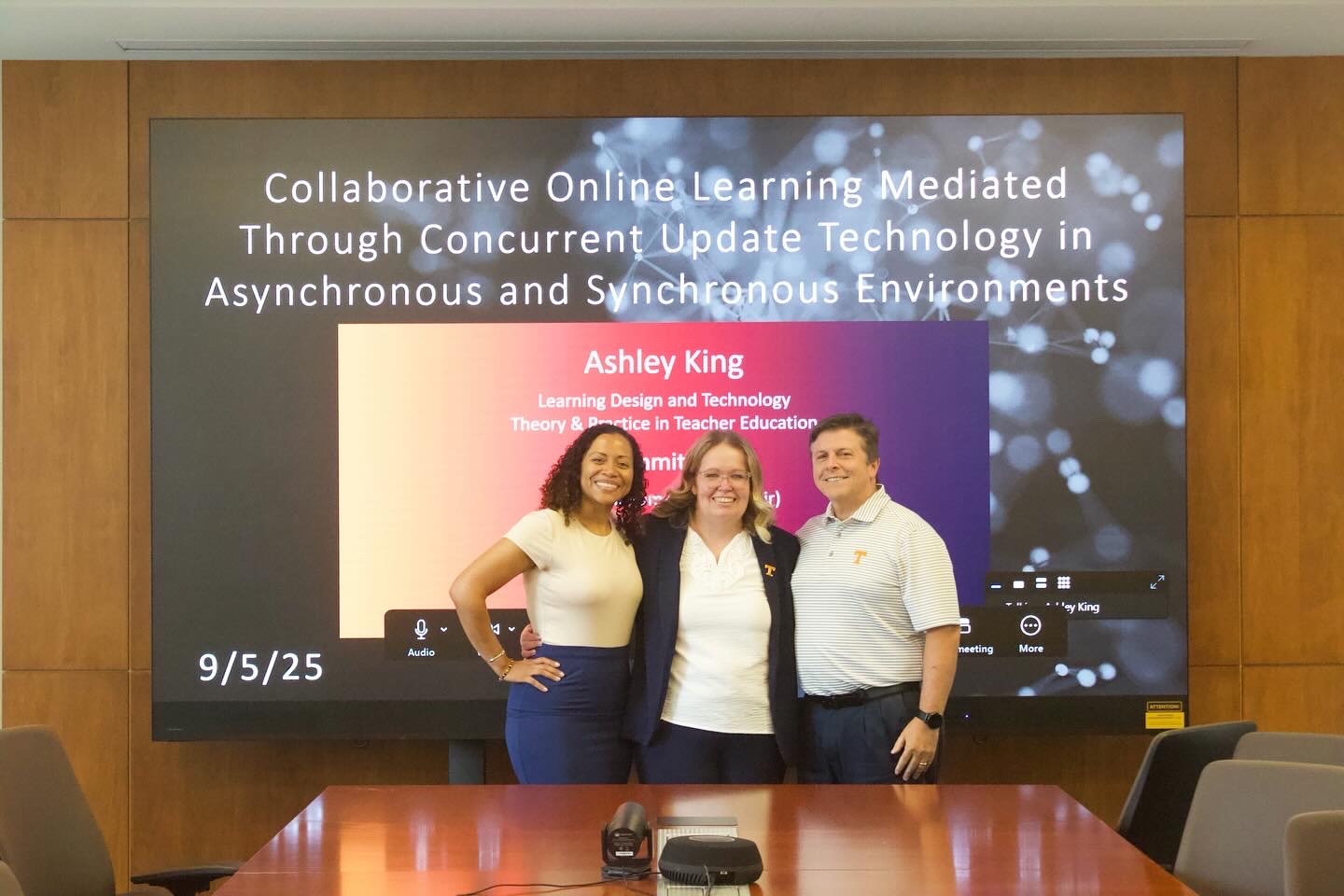
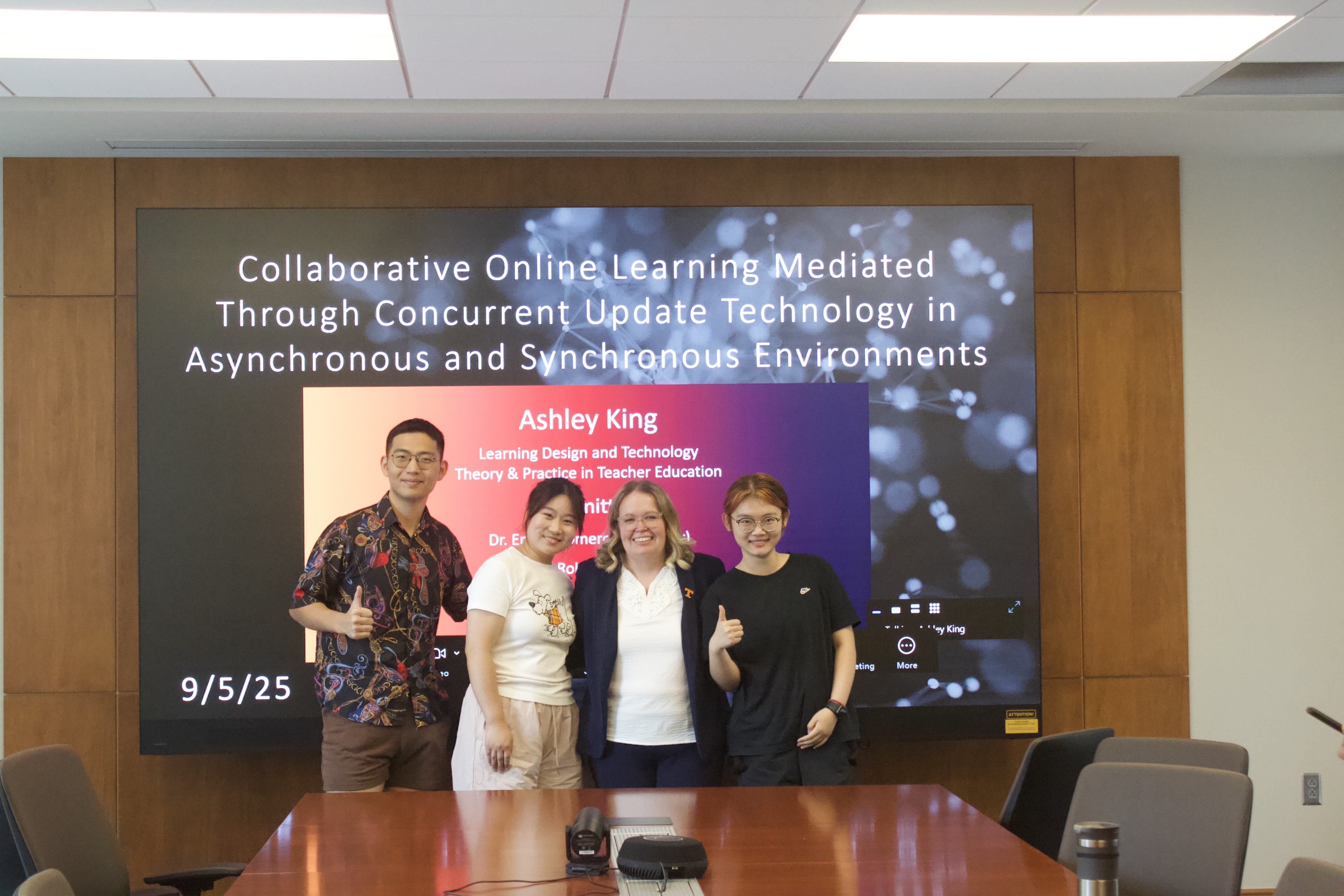
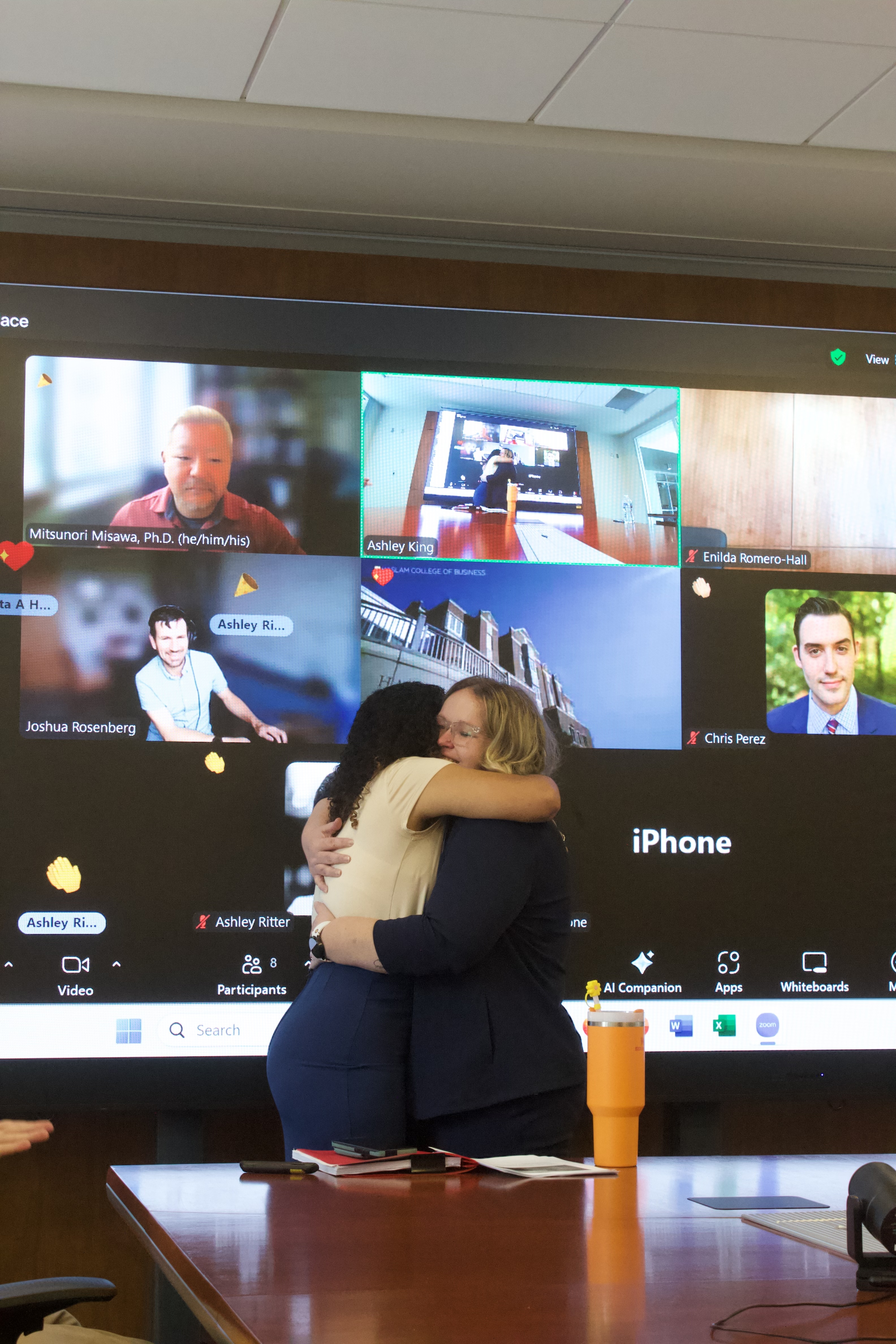
Congratulations Dr. Ashley King! #GoVols #GBO

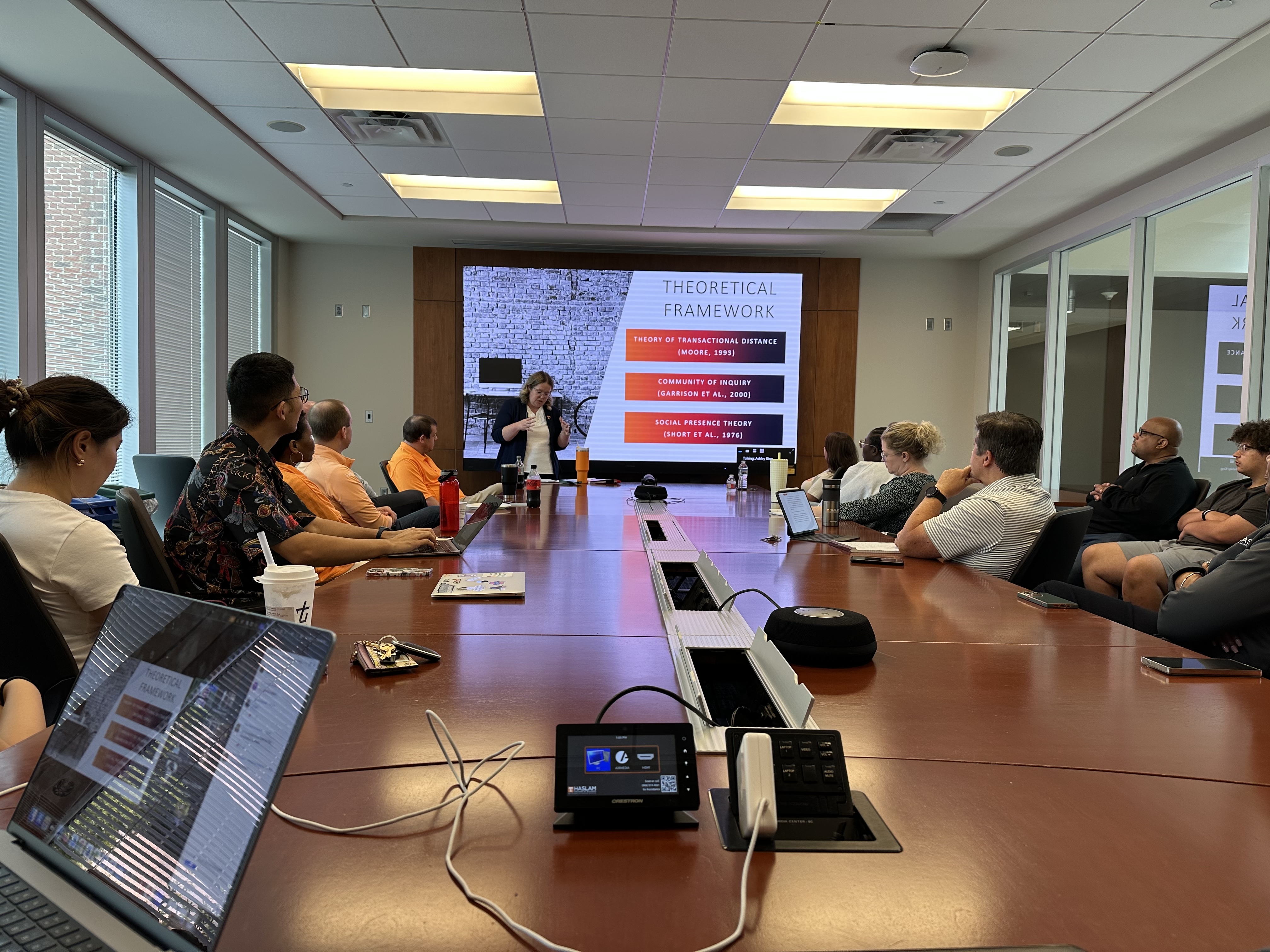
Congrats to Dr. Ashley King, completing a Doctor of Philosophy degree in Education with a concentration in Learning Design and Technology at The University of Tennessee Knoxville, who today successfully defended her dissertation titled “Collaborative Online Learning Mediated Through Concurrent Update Technology in Asynchronous and Synchronous Environments”! Proud of you, Dr. King!

Committee Members: Dr. Enilda Romero-Hall (Chair), Dr. Joshua Rosenberg, Dr. Mitsunori Misawa, and Dr. Robert Fuller

Abstract: This dissertation investigates how collaborative modality (asynchronous versus synchronous) and collaborative technology (standard tools versus concurrent update tools) affect academic performance, perceived learning outcomes, and collaborative experiences in fully online higher education. Grounded in the Theory of Transactional Distance, the Community of Inquiry framework, and Social Presence Theory, the research addresses gaps in understanding how technology and instructional modality interact to shape collaboration when instructional content, assessments, and group tasks are held constant. Using a quasi-experimental 2Å~2 factorial design, undergraduate business students (n = 242) completed two small-group collaboration assignments in one of four conditions: asynchronous standard, asynchronous concurrent, synchronous standard, or synchronous concurrent. Data sources included objective performance scores, post-assignment surveys measuring perceptions of academic performance and collaborative experience, and demographic information. Analyses using ANOVA, Welch’s ANOVA, Games-Howell post hoc tests, and independent samples t-tests revealed that concurrent update tools were consistently associated with higher academic performance, particularly in asynchronous conditions, and with improved perceptions of group functioning, structure, and tool support. Synchronous conditions supported greater trust, affective connection, and engagement, while asynchronous concurrent conditions demonstrated notable performance advantages. Results indicate that neither collaboration alone nor concurrent update technology in isolation consistently improved outcomes; the most substantial benefits occurred when collaborative activities were purposefully structured and paired with concurrent update tools aligned with task demands and learning objectives. These findings refine and extend existing theoretical frameworks by showing how co-editing platforms can bridge structure, presence, and learner interaction across modalities. Practical implications include designing intentional collaborative activities supported by real-time tools in both synchronous and asynchronous environments, alongside institutional investments in platform access, student training, and learning management system integration. By centering both outcomes and the processes that shape collaboration, this dissertation advances empirical and theoretical understanding of technology-mediated collaboration in online higher education and offers actionable strategies for creating equitable, engaging, and effective digital learning environments.

Learning Designers in Context: Examining Practices Across the Global South [Forthcoming Book]

In 2023, I wrote a blog post about Learning Designers in Context: Examining Practices Across the Global South [Book in Progress]. Guess what? It only took me 2 more years to complete the book! I am very excited to share that this summer, I submitted the full manuscript of my first solo-authored book project. The book is scheduled to be published later this year by Routledge: https://www.routledge.com/Learning-Designers-in-Context-Examining-Practices-Across-the-Global-South/Romero-Hall/p/book/9781032219233.

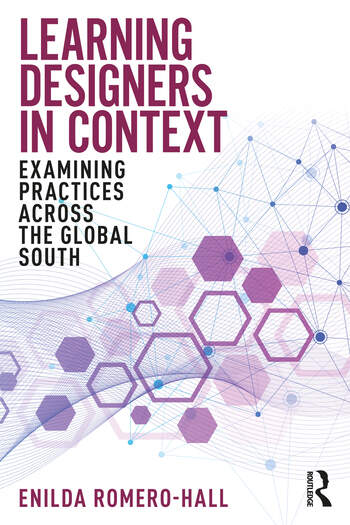
Book cover for 'Learning Designers in Context: Examining Practices Across the Global South' by Enilda Romero-Hall, featuring a modern, abstract design with geometric shapes and a color gradient.

About the Book

Learning Designers in Context examines learning design across professional sectors, local cultures, and geographic regions in the Global South, addressing the ways in which practitioners effectively draw on the knowledge, skills, and resources available to them. Around the world, access to and formalization of learning technologies in design has led to a diversity of strategies, competencies, demands, and organizational structures, but no book has yet compiled insights and lessons learned from these living examples to further the development of professionals working across contexts. Exploring design and implementation in higher education, corporate, non-profit, and government sectors while attending to urgent cultural and geographic distinctions, these chapters vividly illustrate the roles, challenges, and opportunities of learning designers use in real-world settings home to specific demographics, traditions, socioeconomic parameters, and policy orientations.


Book Published: Feminist Pedagogy for Teaching Online

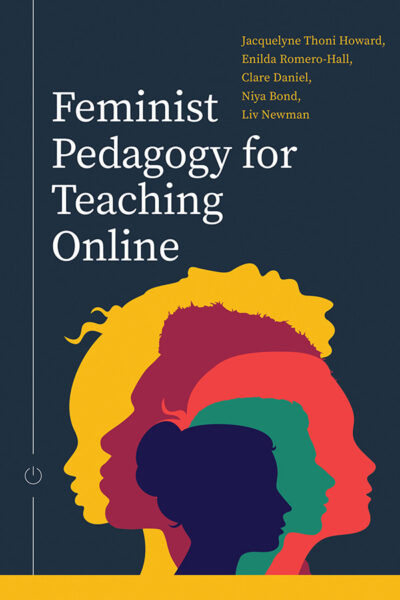
Athabasca University Press recently published our book as part of the Issues in Distance Education series. Feminist Pedagogy for Teaching Online edited by Jacquelyne Thoni Howard, Enilda Romero-Hall, Clare Daniel, Niya Bond, and Liv Newman examines the experiences that interdisciplinary and global feminist educators have had-both their successes and their challenges-in infusing feminist pedagogical tenets into their online teaching and learning practices. The book is available in multiple open access formats, and I hope you will take the opportunity to browse through the chapters and discover how this freely available resource can benefit your organization and members. 

About the Book

Instructors across higher education require inspiring and practical resources for creating, adapting to, and enhancing, online teaching and learning spaces. Faculty need to build collaborative, equitable and trusting online learning communities. This edited volume examines the experiences that interdisciplinary and global feminist educators have had-both their successes and their challenges-in infusing feminist pedagogical tenets into their online teaching and learning practices. Contributors consider how to promote connection, reflexivity, and embodiment; build equity, cooperation, and co-education; and create cultures of care in the online classroom. They also interrogate knowledge production, social inequality, and power. By (re)imagining feminist pedagogy as a much-needed tool and providing practical advice for using digital technology to enact these tenets in the classroom, this collection will empower educators and learners alike.

About the Editors

Jacquelyne Thoni Howard is a professor of Practice of Data at the Connolly Alexander Institute for Data Science at Tulane University. 

Enilda Romero-Hall is associate professor in the Learning, Design, and Technology program at The University of Tennessee Knoxville. 

Clare Daniel is senior professor of practice and director of research at Newcomb Institute of Tulane University, where she teaches in the Department of Communication. 

Niya Bond is an online educator, faculty development facilitator, and PhD candidate at the University of Maine studying online teaching and learning. 

Liv Newman is administrative assistant professor and Associate Director of the Center for Engaged Learning and Teaching at Tulane University.

Congratulations Dr. Hsin-Hui Chang! #GoVols #GBO

Congrats to Dr. Hsin-Hui Chang, completing a Doctor of Philosophy degree in Education with a concentration in Learning Design and Technology at The University of Tennessee Knoxville, for successfully defending your dissertation titled “Exploring Instructional Designers’ Role Shifting and Challenges in Higher Education throughout the COVID-19 Pandemic” on June 17, 2025.

Committee Members: Dr. Lisa Yamagata-Lynch (Chair), Dr. Jean Derco, Dr. Miriam Larson, and Dr. Enilda Romero-Hall

Abstract: 

In recent years, the COVID-19 pandemic has significantly impacted and challenged the higher education (HEd) community in numerous ways. While existing research has focused on institutions, faculty, and students, fewer studies have addressed the experiences of instructional designers (IDers). This study used Street-Level Bureaucracy (SLB) Theory and narrative research to explore whether IDers experienced shifts in their roles and responsibilities before, during, and after the COVID-19 pandemic, and to identify the challenges they faced. It also examined the strategies IDers adopted to address the rapid increase in instructional design (ID) needs prompted by the pandemic. Recruitment relied on purposive sampling, including email outreach through listservs and postings in ID forums. The results revealed that most participants experienced either a short- or long-term shift or expansion in their roles due to the pandemic’s impact on the U.S. HEd. Factors such as institutional size and structure, the number of in-house IDers, and the service ratio between IDers and clients were also found to exacerbate the challenges IDers faced.

Romina Wilson selected for the J. Wallace and Katie Dean Graduate Fellowship!

I am really excited to share that one of our incoming learning design and technology doctoral students in the Theory and Practice in Teacher Education (TPTE) Department, Romina (Mina) Wilson has been awarded the J. Wallace and Katie Dean Graduate Fellowship for the 2025 – 2026 academic year from The Graduate School at the University of Tennessee Knoxville (UTK)!

As stated in the notification email: “By receiving this fellowship for new graduate students, you are being recognized as one of the most promising incoming students to the University of Tennessee, Knoxville. We are excited to offer this award to you.”

Mrs. Wilson’s dedication and contributions to the field of learning design and technology are evident through her numerous collaborations with esteemed scholars, resulting in several journal article publications. In 2024 alone, Mrs. Wilson published two journal articles and a book chapter. She co-authored an article titled “AI-Generated Content: Guidelines, Higher-Order Thinking Skills, and Copyrights” with Taylor Allen, a graduate student at UTK, and Dr. Enilda Romero-Hall, Associate Professor at UTK, which was published in the Educational Technology journal. Additionally, she co-authored an article in the International Journal of Adult Education and Technology titled “An Inquiry into the Use of Generative AI and Its Implications in Education: Boon or Bane,” where she examined the benefits and challenges of integrating generative AI in educational settings. Her most recent publication is a book chapter titled “Redefining Learning in the Digital Age,” included in the edited volume “Integrating AI into Pedagogical Education.” – TPTE Graduate Education Committee Nomination Letter

Mina will be starting the learning, design, and technology doctoral program at UTK this fall 2025, under my advising. She will also be joining our research team (Learning Environments and Ecosystems Research Network (LEARNET). Very much looking forward to working with Mina during her studies at UTK!