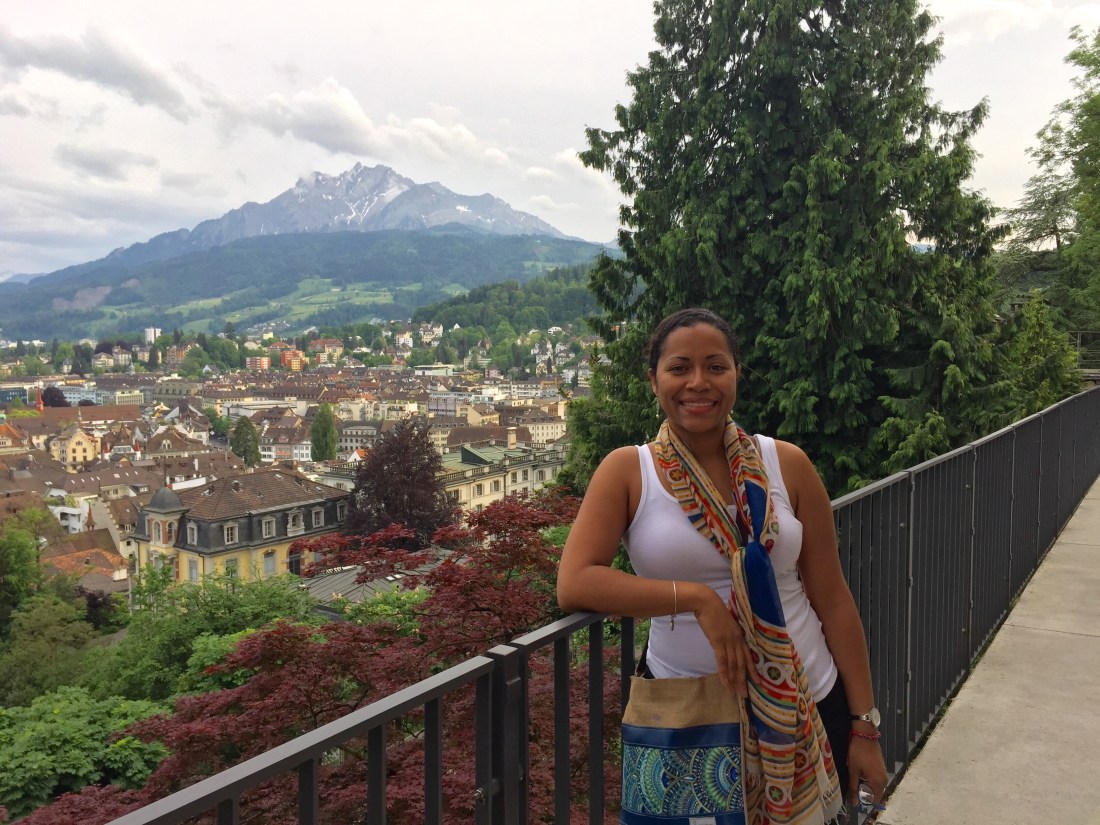
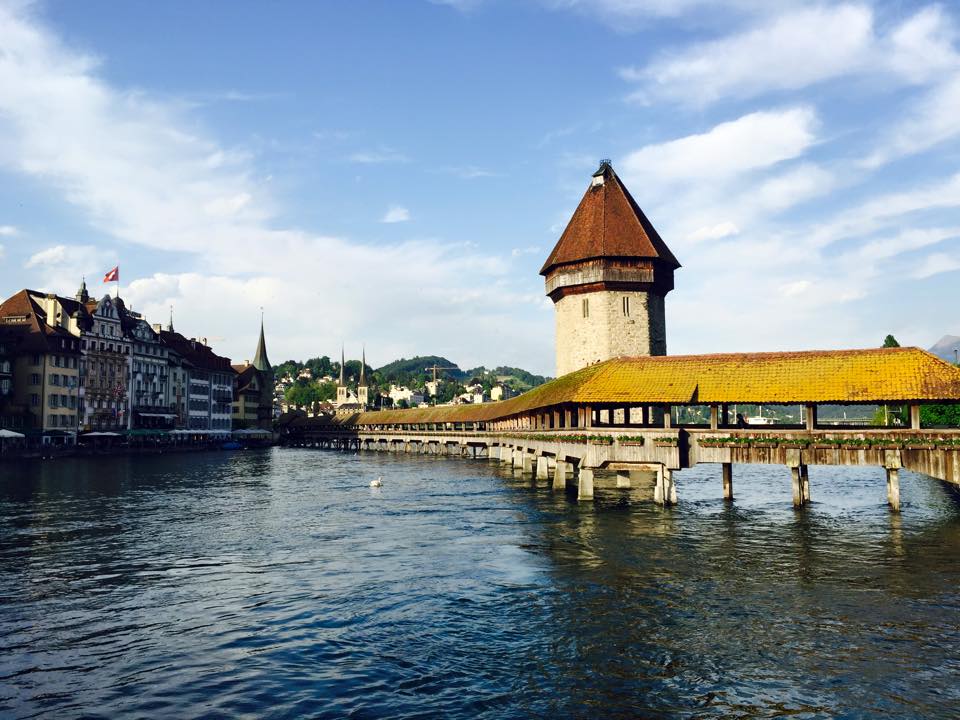
Last week, I received notification that the faculty led short term experiential education abroad program I proposed to the UTampa Office of International Program was approved. So, who is coming with me to Switzerland? The name of the program is “Teaching and Learning in Switzerland.” The study abroad advisor from the Office of International Programs mentioned that alumni can join as “non-degree seeking students.”
[This is a view only version. Unless you have a personal or institutional subscription to the journal]
Abstract:
The purpose of the present investigation was to better understand graduate students’ use of the content shared in the social media channels of their programs and the perceived impact that their participation in these social media spaces has on the graduate students’ transformation as professionals. Seventy-seven instructional design and technology (ID&T) graduate students completed an electronic questionnaire. The results revealed that although graduate students use social media for personal purposes, they are not always followers or members of the social media spaces of their ID&Tprogram. However, those who follow the social media of theirID&T program found tremendous benefits from the experience. These benefits range from feelings of belonging to acommunity of ID&T professionals, to career opportunitiesfor networking, and cross country interactions.
Yesterday, I had the pleasure of presenting to the UT Honors Programs students and faculty as well other UTampa colleagues and staff members. I presented on the topic: “Use of Social Media by Graduate Students and Programs.” This is a research area that I am currently exploring and I was able to share some preliminary results. Click on the image below to access the link to the complete Prezi presentation:
Click on the Image to Access the SlidesPhoto Credit: Gul Sahin
Yesterday, I purchased my plane ticket to Las Vegas (to attend the AECT 2016 International Convention later this year). This reminded me that I wanted to share a sneak preview of the AECT Research & Theory Division (RTD) sessions. As you know (if you read my blog posts regularly), I have the pleasure of serving as the AECT RTD Convention Planner as well as the Featured Research (FR) Sessions planner. The peer review process for all the sessions was earlier this year (it was not an easy process). The AECT RTD had a large number of good submissions and, at the same time, it had a limited number of allotted presentation hours (plus we had very rigorous reviewers). Now that the review process is completed and all accepted authors have been notified, all planners put together division highlights for the conference printed program. Below are the sneak preview or “highlights” for the AECT RTD and Featured Research Sessions. The full AECT16 schedule will be available in a few months.
Recently travelled abroad for a professional development seminar and took my 6-month old with me. The trip was overseas (Miami to Spain with a layover in Lisbon on the way there and back. The layover on the way back involved an overnight stay in Lisbon). I want to share some advice and things to consider when engaging in this type of travel adventures. I know there are many academic mommas that have to travel to conference and other engagements. Hope these bits of information and advice help make your travel journey a bit less stressful. One more thing, this advice relates to all mommas traveling with an infant (academic or not).
Call the airline in advance. Let them know you are traveling with an infant. They can arrange a decent seat for you and your child, perhaps with close access to a bathroom (in case you need to change your child). I called the airline three weeks in advance my travel dates and they arranged to seat us in the first row of economy class. We were fairly close to the bathroom with the changing table and had a bit of extra room in front of us because we were in the first row. Also, the airline that we used (TPA Portugal) provided us with a small, detachable bassinet so that baby could sleep in it during the flight.
Let the hotel know that you are traveling with a baby. If you let them know in advance, they can arrange to give you a quiet room or put a crib in your room. Most hotels will do this for free. I have not come across a hotel that charges for a crib.
Make sure you carry enough diapers and wipes with you in your diaper bag. I did not see any stores selling diapers in the airport. I initially thought I had packed enough diapers for the entire trip and was in a bit of panic mode when I realized I could run out of diapers.
When you are in the airport, check for queue lines that are assigned for parents with children. In particular for security, passport control, or other lines. It will save you time and energy. I did not see queue lines for “parents with children” in the U.S. airport (Miami) but I did see and used them in Europe (Spain and Portugal).
Strongly recommend traveling with another adult to help you with the process. This person can be your spouse, parents, or a friend. It is doable for you to travel on your own with your infant but it will be a bit stressful. Having someone else to share the responsibility will ease the stress of dealing with paperwork, timelines, luggage, changing diapers, feeding, and everything else that comes with traveling with an infant.
Do not leave packing until the last minute. If you can find someone to watch baby while you pack, it will be very helpful. I recommend making a list of the things you must take with you (clothes, toys, food) and the things that you could buy at your destination.
Take time to think about traveling with your baby and proceed as desired. For some reason other people will feel the need to tell you their opinion on whether you should or should not travel with your infant. The reality is that you know yourself and your infant better than anyone else. If you feel that you and your infant are ready, do it.
Make sure you have a pacifier or bottle with food ready during the changes in altitude. During a flight, give you infant the pacifier or bottle as the plane takes off or lands to avoid pain in his/her ears: http://www.entnet.org/content/ears-and-altitude
So far, this is the initial list I have. I know I will remember other suggestions and advice in the future. I will just update this post as I remember them.
Here are the images I was able to capture during the IFDS in Seville last week. I figured it was best to post this sooner rather than later because I wanted to acknowledge the amazing people that we (the seminar attendees) worked with during our time in Seville. Thank you to Oscar Ceballos, Carlos Pineda, Miguel Romero, Antonio Perez, Carlos Sanches, Ruben Diaz and Emilio Gonzales Ferrin. I would also like to thank the six ladies with whom I shared and collaborated with during the seminar: Collete, Rebecca, Nancy, Kaitlin, Ellen, and Rylan. Learned so much from you ladies!
Hopefully you have read my previous posts and understand the context of this post. Just in case: I am doing an international professional development seminar in Seville in which I am learning and practicing communication strategies (and using digital media). One of the assignments in the seminar was to record sounds of the city during our stay in Seville. We finally used those sounds today during the production and recording of a radio podcast. It was a two hour preparation time of scripting and sound editing before recording our radio show. I am really impress with the final product!
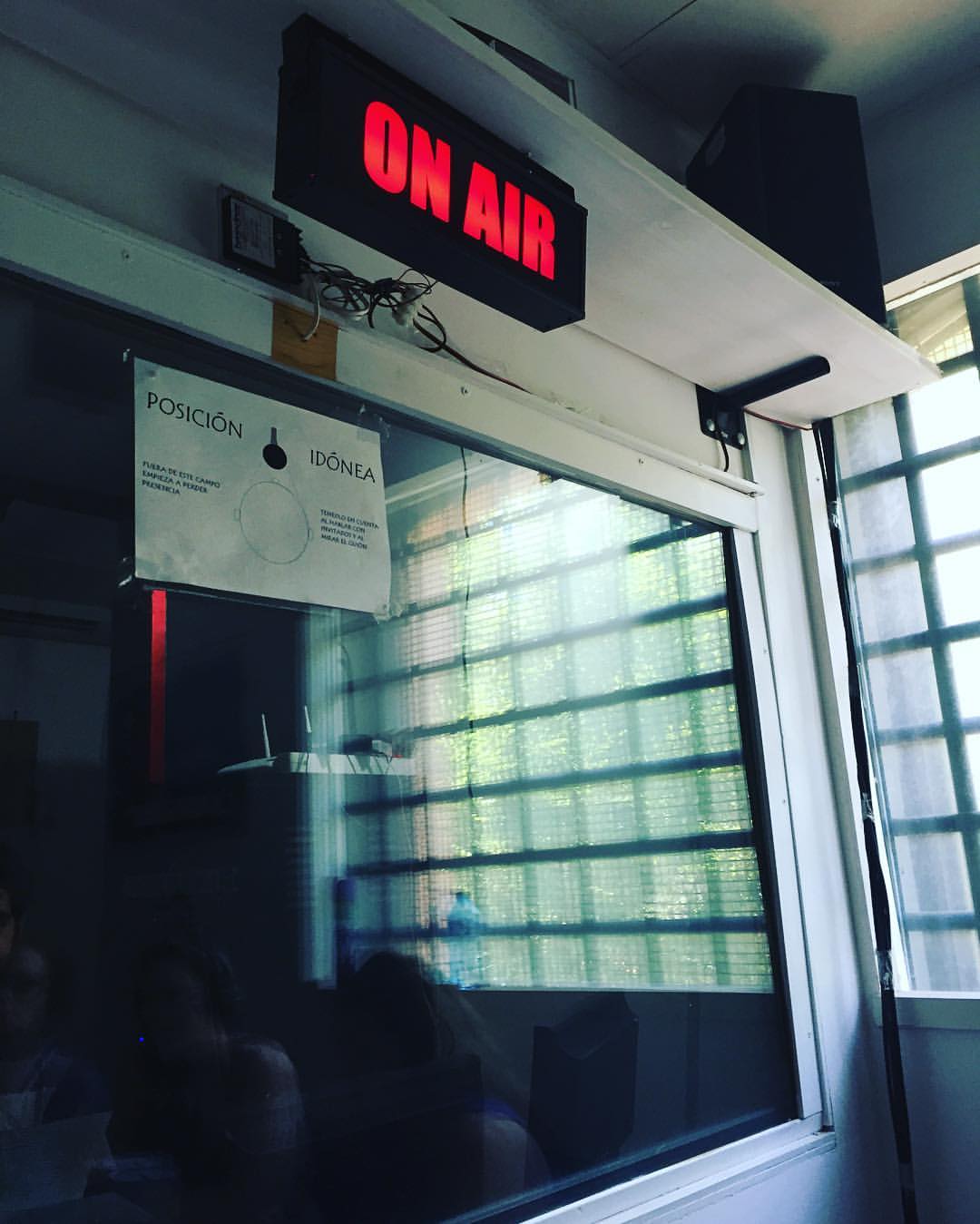
I have to upload more sounds that I captured this week (they are now updated). I have many more, including interviews and more street sounds. However, I want to share our radio podcast. Big thank you to Radiopolis for letting us use their space to work on the project and their recording studio.
Here is our story, narrative, experience:
IFDS Communication Strategies in Context Summer 2016 Radio Show
As part of the seminar I have a bit of homework and will be sharing (or at least try) to share it every day. The homework consist of audio recordings of sounds, conversations, audio reflections, interviews, and other audio recorded during the next few days in Seville. Each audio recording should be no more than two minutes long.
The Recordings
CIEE Seminar Director: Oscar Ceballos:
Local Hero
Walking Tour of Old Town Sevilla:
Carlos Sanchez
Reggaeton on the Streets of Seville:
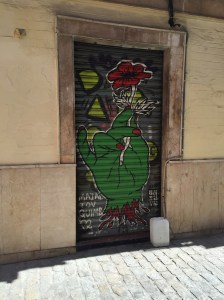
Street Art
Morning Walk to CICUS (Universidad de Sevilla)
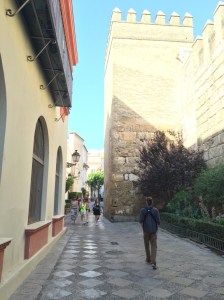
Cobblestone Streets
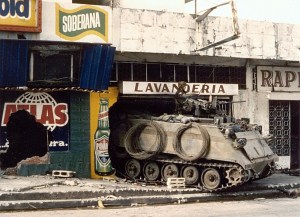
Visual Narrative (Operation Just Cause)
Photo Credit: Wikipedia
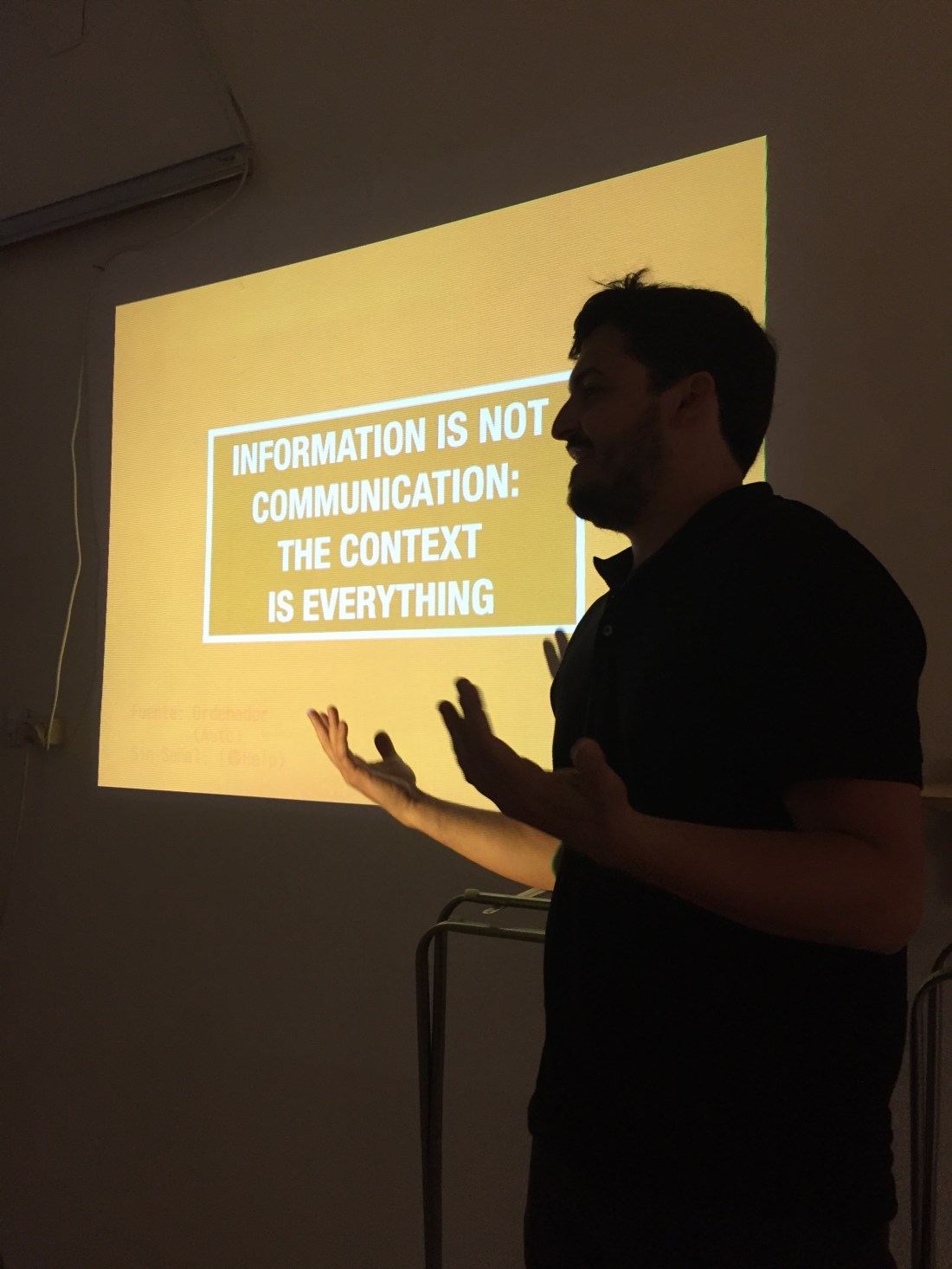
The Importance of Context [Games of Thrones Example]
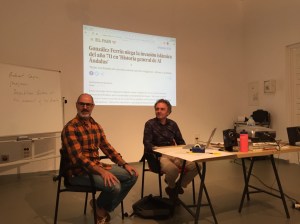
Emilio Gonzalez Ferrin
First Impressions of Seville [Nancy & Enilda]
Royal Palace
Horse Carriage
Old Town Seville
Church Bells
Church Bells
What is information?
Ruben Diaz
Interview in “El Corte Ingles”
El Corte Ingles
Coffeeshop Conversation with Local Sevillanos
Flea Market “El Jueves”
Note: Here is the updated post with all the audio recordings from Seville, Spain.
Thrilled to be in Seville, Spain for another CIEE International Faculty Professional Development Seminar. Thankful for the CIEE Alumni Scholarship which helped sponsor my participation in this seminar. The title of the seminar is “Communication Strategies in Context: Culture Learning and Community Engagement through Digital Tools.” I hope to provide regular updates throughout the week related to the seminar.
Homework:
Also, as part of the seminar I have a bit of homework and will be sharing (or at least try) to share it every day. The homework consist of audio recordings of sounds, conversations, audio reflections, interviews, and other audio recorded during the next few days in Seville. Each audio recording should be no more than two minutes long.
In February, my students in the Trends and Issues in Instructional Design and Technology course (EME610) and myself visited and toured The HIVE. Then, this past April a group of students and myself attended the Gulf Coast MakerCon event. Both of this activities were an attempt to learn more about Makerspaces and the Maker movement as learning spaces. In all honesty, I initially thought it was all about 3D printers. What I learned since then is that Makerspaces really focused on design thinking. Some spaces are technology heavy (hardware and software), others are more about crafting, others are about innovative ideas, and the lists goes on. Basically there are various views as to what constitutes a markerspace.
“The Hive” Makerspace: This is the recording studio.UT ID&T Graduate Students at the Gulf Coast MakerCon Event
From talking to those involved in the markerspace movement here in Tampa, I also learned that the term Makerspace at times seems too crafty. A few weeks ago I toured a school in Tampa in which there are different Makerspaces for students in different grade levels. It was interesting to talk to instructors from the different grade levels. One instructor in particular expressed some concern over the term “makerspace.” He though that the maker movement should be more focused on design thinking. He was very interested in having students master design thinking with simple tools like paper and pencil before even allowing them to use more advance technology. This instructor also expressed concern with the total lack of guidance in some makerspaces. I consider myself an academic novice on makerspaces (as I am still learning and educating myself on the topic) but I do agree with the notion that design thinking requires guidance and supervision. I practice this in my systematic instructional design course. The graduate students and myself spend a significant amount of time going over different elements of their instructional design projects.
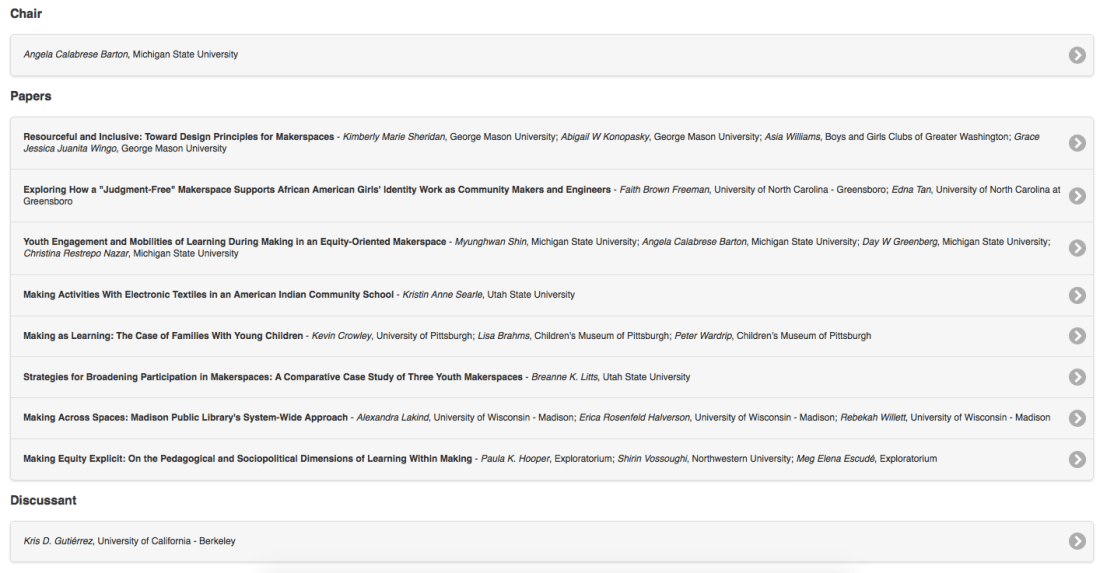
Another interesting aspect of Makerspaces that I learned about recently, while attending AERA, is the lack of diversity. One of the “working poster sessions” (we need more of this at AERA — great session format) I attended was on makerspaces reaching diverse audiences which include individuals in different genders, socio economic status, and cultural backgrounds. There were a total of 7 or 8 posters in the session (below is a screenshot from the AERA online program). If you are interested and want to learn more about inclusive makerspaces, I strongly recommend reading the abstracts and following up with the authors.
AERA Session: “Toward Building Makerspaces for All: New Theories & Practices to Design Inclusive Makerspaces”











 Design Goodiness
You must be logged in to post a comment.