#CIEEIFDS COMM Summer 2016 Radio Show #Sevilla #Spain

Ruben Diaz

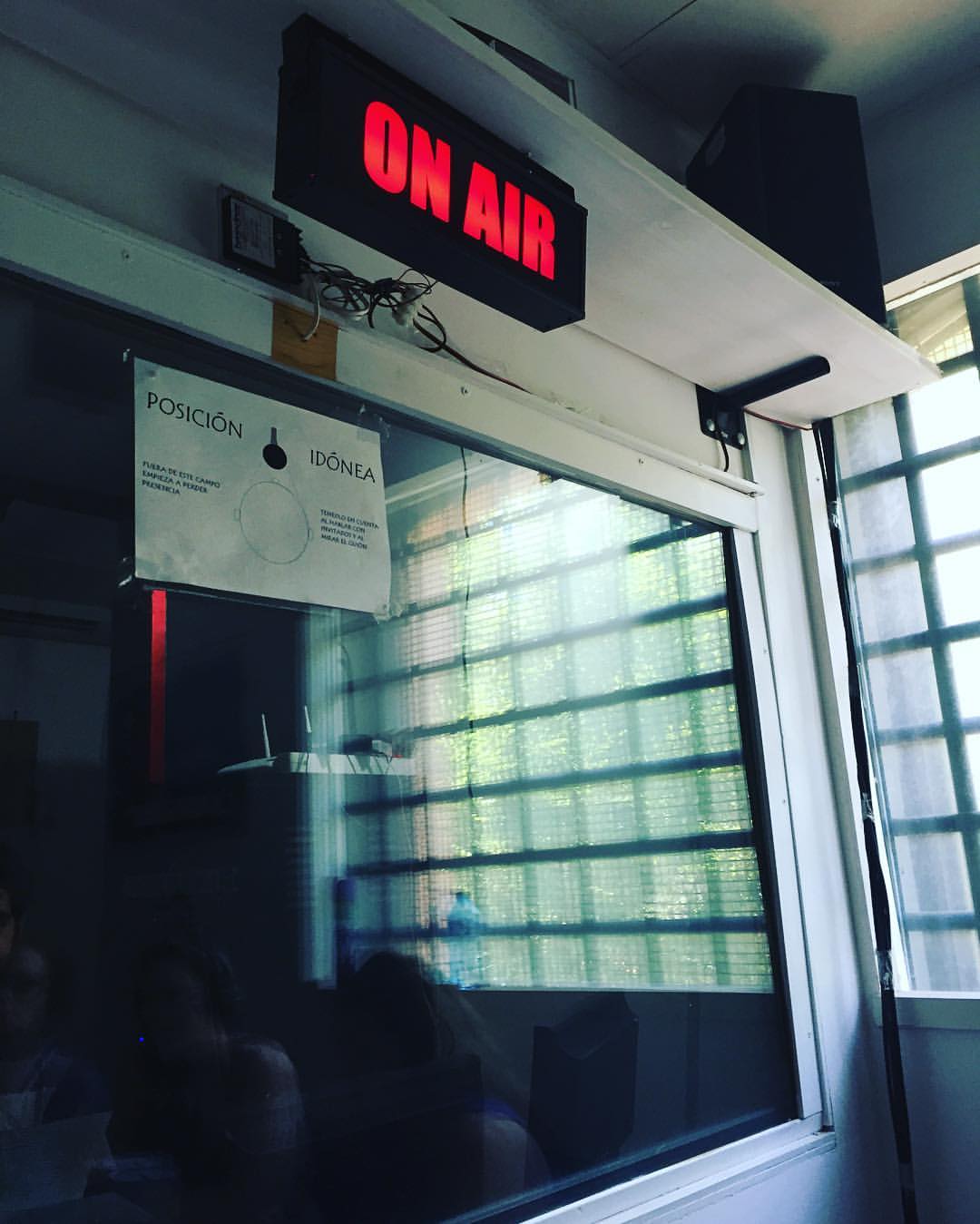
Hopefully you have read my previous posts and understand the context of this post. Just in case: I am doing an international professional development seminar in Seville in which I am learning and practicing communication strategies (and using digital media). One of the assignments in the seminar was to record sounds of the city during our stay in Seville. We finally used those sounds today during the production and recording of a radio podcast. It was a two hour preparation time of scripting and sound editing before recording our radio show. I am really impress with the final product!

I have to upload more sounds that I captured this week (they are now updated). I have many more, including interviews and more street sounds. However, I want to share our radio podcast. Big thank you to Radiopolis for letting us use their space to work on the project and their recording studio.

Here is our story, narrative, experience:

IFDS Communication Strategies in Context Summer 2016 Radio Show

13346165_1057533710981098_3836578642520020179_o

img_7120

The Sounds of Seville [Sonidos de Sevilla] #CIEEIFDS

The Assignment

As part of the seminar I have a bit of homework and will be sharing (or at least try) to share it every day. The homework consist of audio recordings of sounds, conversations, audio reflections, interviews, and other audio recorded during the next few days in Seville. Each audio recording should be no more than two minutes long.

The Recordings

CIEE Seminar Director: Oscar Ceballos:

img_6611
Local Hero


Walking Tour of Old Town Sevilla:

img_6629
Carlos Sanchez


Reggaeton on the Streets of Seville:

img_6761
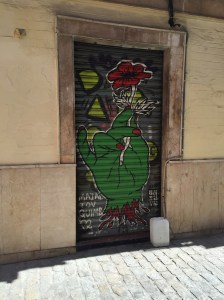
Street Art

Morning Walk to CICUS (Universidad de Sevilla) 

thumb_IMG_6506_1024
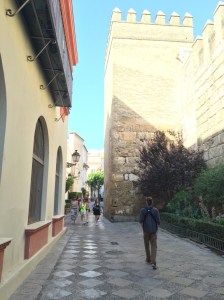
Cobblestone Streets

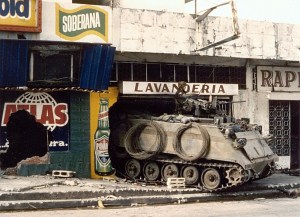
Visual Narrative (Operation Just Cause)

US Invasion of Panama_Operation Just Cause
Photo Credit: Wikipedia

The Importance of Context [Games of Thrones Example]

thumb_IMG_6812_1024
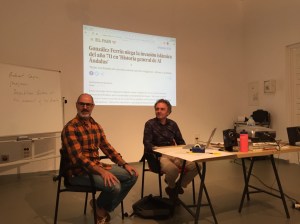
Emilio Gonzalez Ferrin


First Impressions of Seville [Nancy & Enilda]

image
Royal Palace

Horse Carriage

image
Old Town Seville

Church Bells

image
Church Bells

What is information? 

image
Ruben Diaz


Interview in “El Corte Ingles”

image
El Corte Ingles

Coffeeshop Conversation with Local Sevillanos

image
Flea Market “El Jueves”


Note: Here is the updated post with all the audio recordings from Seville, Spain.


The “Quick Update” Post

I wanted to write a couple of posts about things I experienced this last semester and then life happened! So, I am merging it all into this post. Please forgive the imperfection of my writing. I probably will not take the time edit and re-edit. What you are about to read are the words as they flow from my brain to the keyboard to this blog.

Since I last wrote a blog post (not an announcement but an actual blog post) I became a mom. This time last year, I was in Switzerland in a Faculty Exchange program. It was exactly during the exchange that I discovered that I was expecting a baby. Yes, the pregnancy test results read “Schwanger.”


image

Many things have happened in my personal/professional life in the last year (since I found out I was pregnant) and I want to share them in my blog. However, I am still trying to figure out how to best express those experiences and feelings in a blog post (or maybe more than one). I hope to take some time to write about this experiences in the near future.

What I do want to share in this blog post is that I have officially completed my third year in  a tenure track position. At the beginning of the Spring 2016 semester, I submitted all my materials and by mid March had received all the pre-tenure letters. This is a minor milestone but I still consider it a milestone. I guess the questions that I need to answer now is: what is happening past pre-tenure? Well, pretty much just keep on working hard. I have a long term “to-do list” that I have to tackle and of course, the everyday “to-do list.”

The last three years served to connect with really amazing faculty and graduates students with whom I have found common ground (topics of interest) to work on projects. Some of these projects are strictly related to the instructional design practice and others are more multidisciplinary. I am very excited about this projects and some of them will presented in conferences later this years (currently working on getting some manuscripts out for review). Other projects are just starting so more details coming soon.

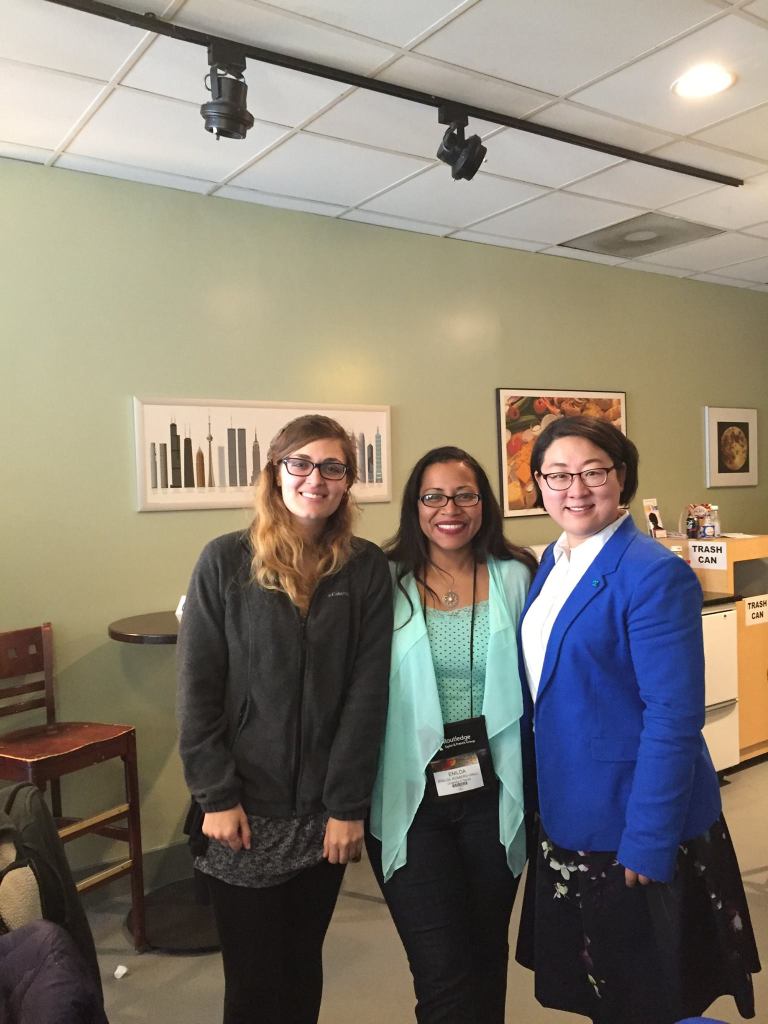
I also want to quickly mention that I also started professional service with the AERA SIG Design & Technology as a Technology Liaison. I am excited for this opportunity and very much looking forward to working with colleagues in the SIG. This previous sentence reminded me that I wanted to mention how much I enjoyed attending AERA 2016. I did not present a paper but instead had the opportunity to participate in a mentoring program sponsored by the AERA SIG Design & Technology. I met two outstanding graduate students, Amanda and Yi.
13087222_903053373151445_3939118171814845924_o

I hope the SIG continues the mentoring program in the future. It was a great opportunity to share my graduates student and faculty journey. Most importantly, it was an opportunity to listen to the concerns of graduate students and, hopefully, provide guidance. I also learned from the graduate students in the process. Both graduate students, Amanda and Yi, shared conferences, resources, and research groups that were completely new to me.

During the conference I also participated as moderator in a panel discussion on the past, present, and future of the design and technology field. The panelist included Elizabeth Boling, Pat Hardre, and George Veletsianos. It was nice to listen to the panelists’ perspective on the current state of the field as well as suggestions for graduate students and faculty doing research on topics related to design and technology. The current Graduate Student Representative of the SIG Design and Technology board, Shonn, live tweeted the panel presentation. If you are interested in reading more about it, you can check out the AERA SIG Design & Technology Twitter stream.

That is all I have for now. Hoping to be post more in the near future. Hopefully, future post will not be as lengthy.

New Faculty Mentoring Program: 2015 Cohort [Research, Teaching, Collaboration, & Support] #AERA15 #AERADivC

During the AERA 2015 conference in April, I attended the Division C New Faculty Mentoring Program. I had attended a mentoring program in the past at AECT 2012. The AECT 2012 mentoring program was a two-day seminar with three mentors who volunteered their time to provide advance graduate students and new faculty with words of wisdom and practical advice for the tenure track journey. It was also great for networking. Unfortunately, due to Hurricane Sandy I was not able to catch my initial flight from Norfolk, VA (where I was living at that time) to Louisville, KY (where AECT was having the conference). My flight was delayed an entire day, this meant I was not able to attend in person the first day of the mentoring program. Instead, I joined the discussing via Google Hangout but it was not the same. I was relaying on hotel conference room wi-fi which was “okay.” Also, it was hard to be part of the conversation because it was not something the organizers were expecting. I did manage to join the conversation the second day of the mentoring program at AECT 2012 [Sorry, that was my “blast from the past” portion of this post].

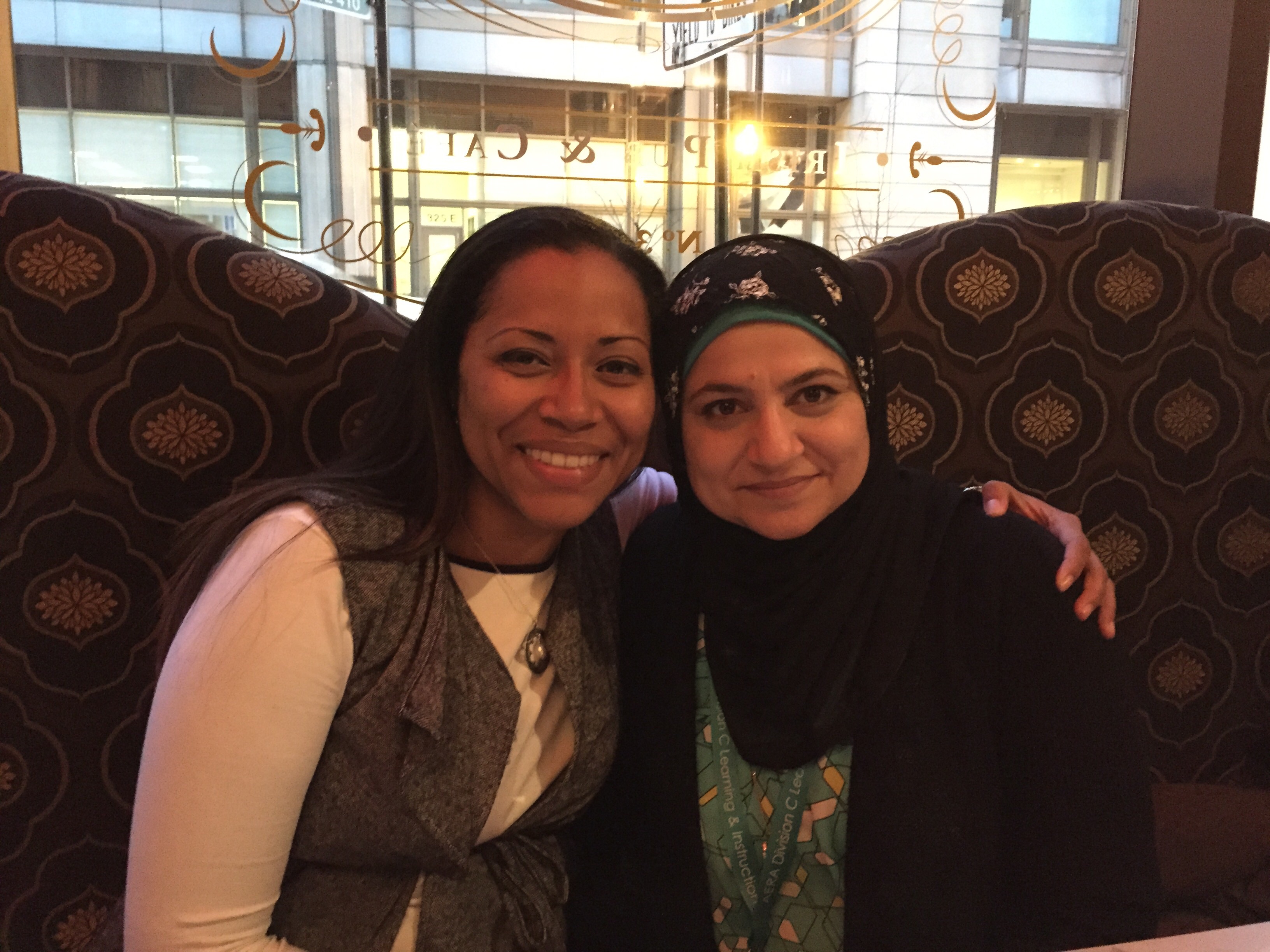
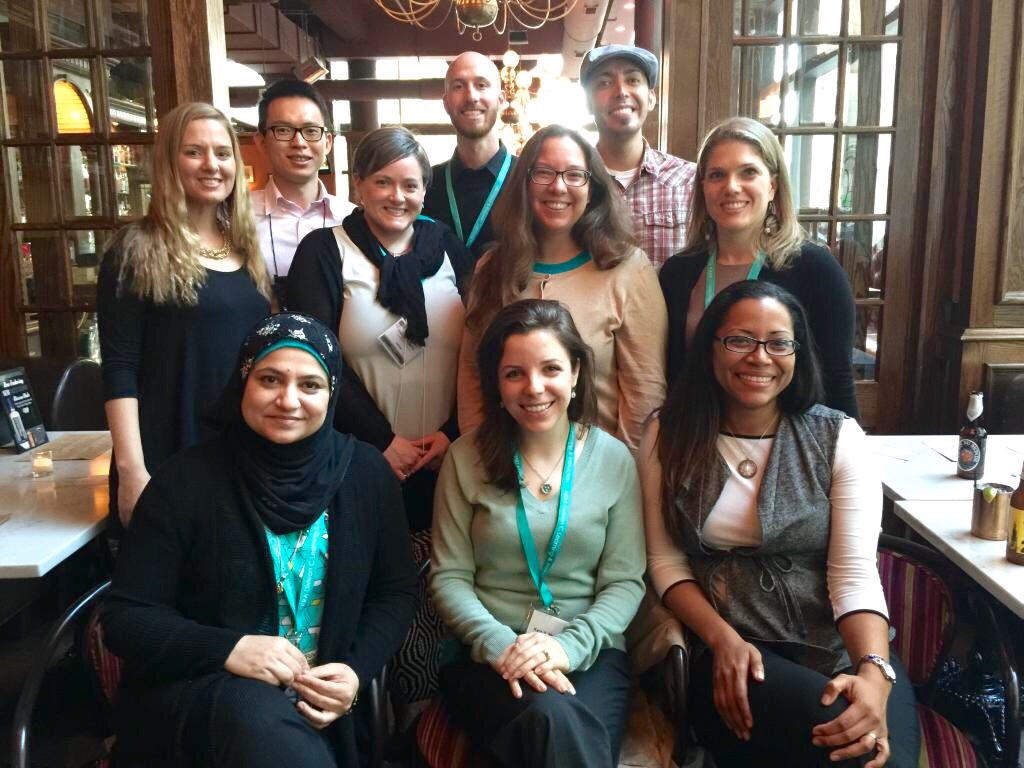
Back to AERA 2015: This year during the mentoring program at AERA15, the organizers [Gwen & Rayne] emailed us in advance the program with the different sessions and speakers. I was thrilled about the sessions and excited to meet my cohort. We were a very diverse group based on our universities and our cultural/regional backgrounds. The first day of the mentoring program we all provided a brief introduction of ourselves and what we hoped to get out the program. Then, worked on an exercise about our identities, which by the way was very difficult to write. I mean — How often do you think about your identity (in your community, your institution, your department, and your field)? We also had various sessions related to grants and external funding opportunities. We talked to faculty members that have in the past successfully acquired grant funding. They definitely shared some insight into grant writing, selecting a collaborator, what happens after you get a grant, and myths about grants/external funding. The best advice we got (from my perspective) was to have a good budget, have a great idea, select a collaborator that you want to interact with on a very regular basis, and polish your project management skills. We also had a session with two program officials. One from the National Science Foundation and one from the Spencer Foundation. This was just amazing because they shared some of the programs that their institutions offer to new faculty (at least within the first five years of appointment). One of the best recommendations given to us by the NSF program officer was to volunteer as a reviewer.
image

One of the most interactive sessions was definitely the session related to teaching. We had a speaker from the Center for Teaching and Learning at Penn State University who talked about strategies we should consider, the amount of time we spend preparing our courses, evaluations, resources our universities provide, and other related topics. One of the highlights of this session was that we were sitting in different tables (about 4 new faculty members in each table) and we were sharing our information with two teaching mentors per table. This mentors were individuals in field that are well known for their teaching. This is pretty unique. We often hear about research mentors but we rarely hear about teaching mentors. It was nice to have the small group discussion with our colleagues and the teaching mentors.

We also had a discussion session with faculty members who have been publishing for over 30 years and gratefully shared some much needed wisdom on putting together your research agenda (post on this coming soon), writing habits, submitting to peer review journals (and re-submitting, revising, getting rejected), and just been scholars in our field. I loved the informal environment of this discussion. It was more than anything a Q & A session.

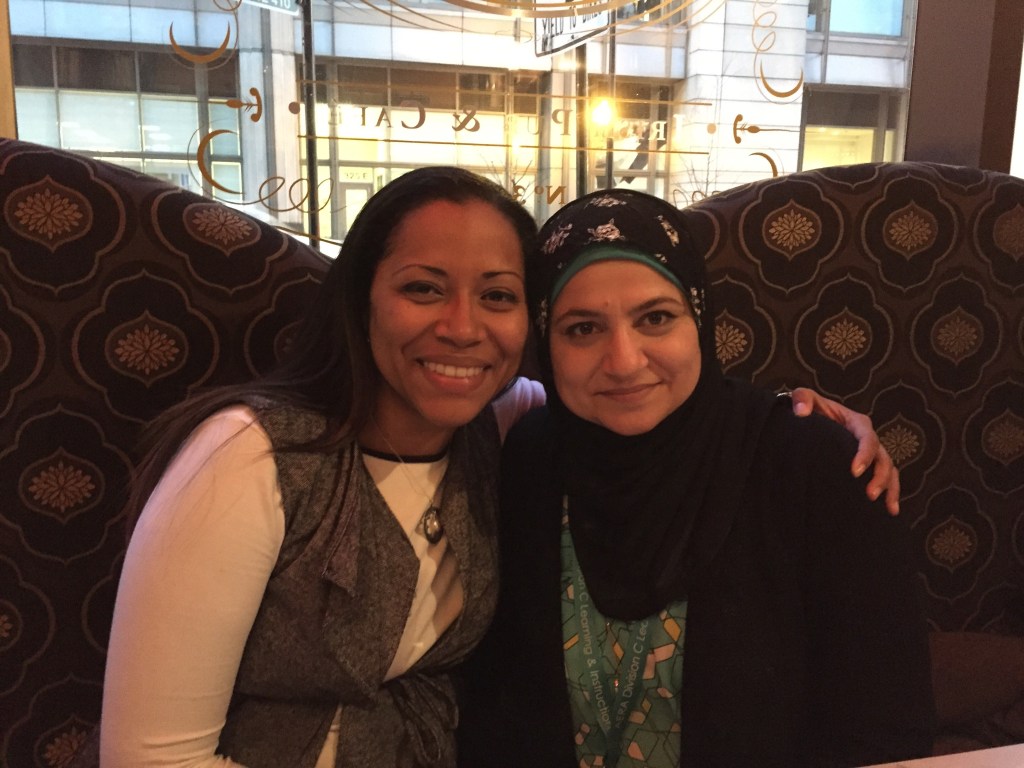
Of course, we spend the two day program with Gwen and Rayne who not only organized all the sessions, the speakers, our delicious dinner, and happy hour but also provided their own wisdom and experience. Thank you ladies for your work and dedication. BTW — Gwen will be the main organizer of the NFMP next year so make sure to check in November and December for an email from Division C. If you are a new faculty member, this program will be very refreshing, eye opening, and definitely worth your time/energy. As a cohort, we have managed to stay connect (I know it has been less than a month since we met). We took steps to ensure we can reach out to each other if we have questions or need feedback or are struggling with an issue — you get the point. To help us stay in touch we started our social media group and we are currently working on starting a writing group.
image

Last, thank you to the AERA Division C for their commitment to their members!

The Academic Job Search

I want to share my academic job search and I hope that it helps others that are also looking for jobs in academia.

I had received several tips on how to organize the job advertisements to ensure I submitted all the required paperwork. I decided early that my brain works better in folders than spreadsheets so I created a very organized electronic folder system. Every position was a new folder. Every folder was numerically organized based on when the materials were due. I also contacted several professional references. I asked them if I could list them in my reference list, I also mentioned that I would have to ask for letters of recommendations at some point.

I wish I could say that the process was easy and stress-free but it was not. Compiling materials for my job applications took time away from my dissertation and it also took a toll on my emotions. One of the first decisions you will have to make is where you will apply. I received several pieces of advise (i.e., apply to research universities, apply to universities with known instructional design programs only, etc.). I decided that I was going to apply to all types of institutions (i..e research intensive, medium size, public, private).

Words of advise… Early in the process write your teaching philosophy, research philosophy, statement of research interest, update your curriculum vitae, and write a fairly detailed cover letter (that includes teaching, research, service and diversity). You will tailor your cover letter depending on the position you are applying to. A few aspects that I highlighted in my cover letter where my coursework and how it related to the position, my distance education experience, my instructional design practice, fellowship funding received, and the preference for the location of the university.

In total, I applied to 32 jobs in the United States, Canada and internationally. I was contacted by two universities for phone/video conferencing interviews and one on-campus interview. One interview was for a postdoc position in a research intensive university and the other was for an assistant professor position in a medium size private university. I think both interviews when well and I was fairly happy with the two universities, the positions and the location of the universities. I received a good offer from one of the two universities and I accepted it.

I hope that my post helps you in your academic job hunt. Here are some links that helped me as I was going through the academic job hunt:

Academic Job Hunt: Tips [Link]
Tips for a Massive Academic Job Search [Link]