I guess it is time for me to write a blogs post about my forthcoming book 😊
It has been a while since I first announced that I was working on my next book and sadly due to various reasons I had to rescheduled my submission of the book to the publisher twice! But over the last two months I have moved full steam ahead with this book project.
I love how it is taking shape and that I get to work on it. Today, I was working on chapter 12 (in a coffee shop) and I was just smiling thinking that someone else would get to read this work.
This is not a book in which I tell someone else’s stories or tell you how to be a learning designer. The book is about learning designers telling their stories. It is about conversations, experiences, and journeys.
The curators of the Feminist Pedagogy for Teaching Online guide (Jacquelyne Thoni Howard, Clare Daniel, Niya Bond, Liv Newman, and myself) are putting together a new edited collection on this topic. A list of potential topics is included in the call.
Please consider submitting a book chapter proposal by July 2nd, 2021. The book will be proposed to the Distance Education series at Athabasca University Press for publication in an open-access format.
I have shared this news in all of my social media but completely forgot to post it in my blog. Sorry!
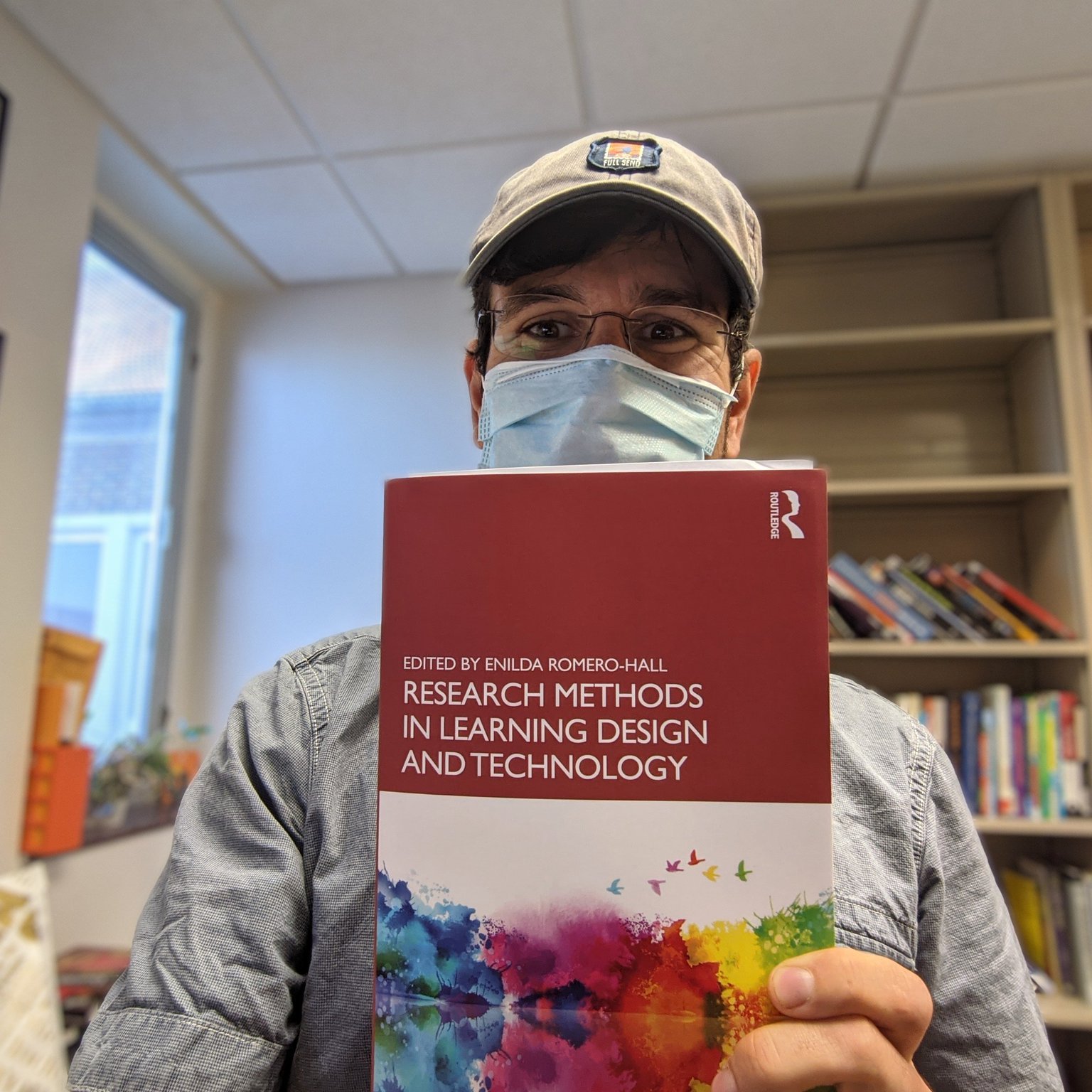
The book “Research Methods in Learning Design and Technology” was officially released on October 20, 2020. I am excited and thrilled to finally see it completed and hold it in my hands.
Unboxing “Research Methods in Learning Design and Technology”
I also received new from several book chapter authors and co-authors, all the way to Australia, South Africa, and around the United States, that they had received their copy. It was also nice to see the comments from colleagues, friends, and mentors sharing photos when they received their copy of the book. Greatly appreciate their words. This was truly a team effort, it could not be accomplished with out the book chapter authors and their contributions.
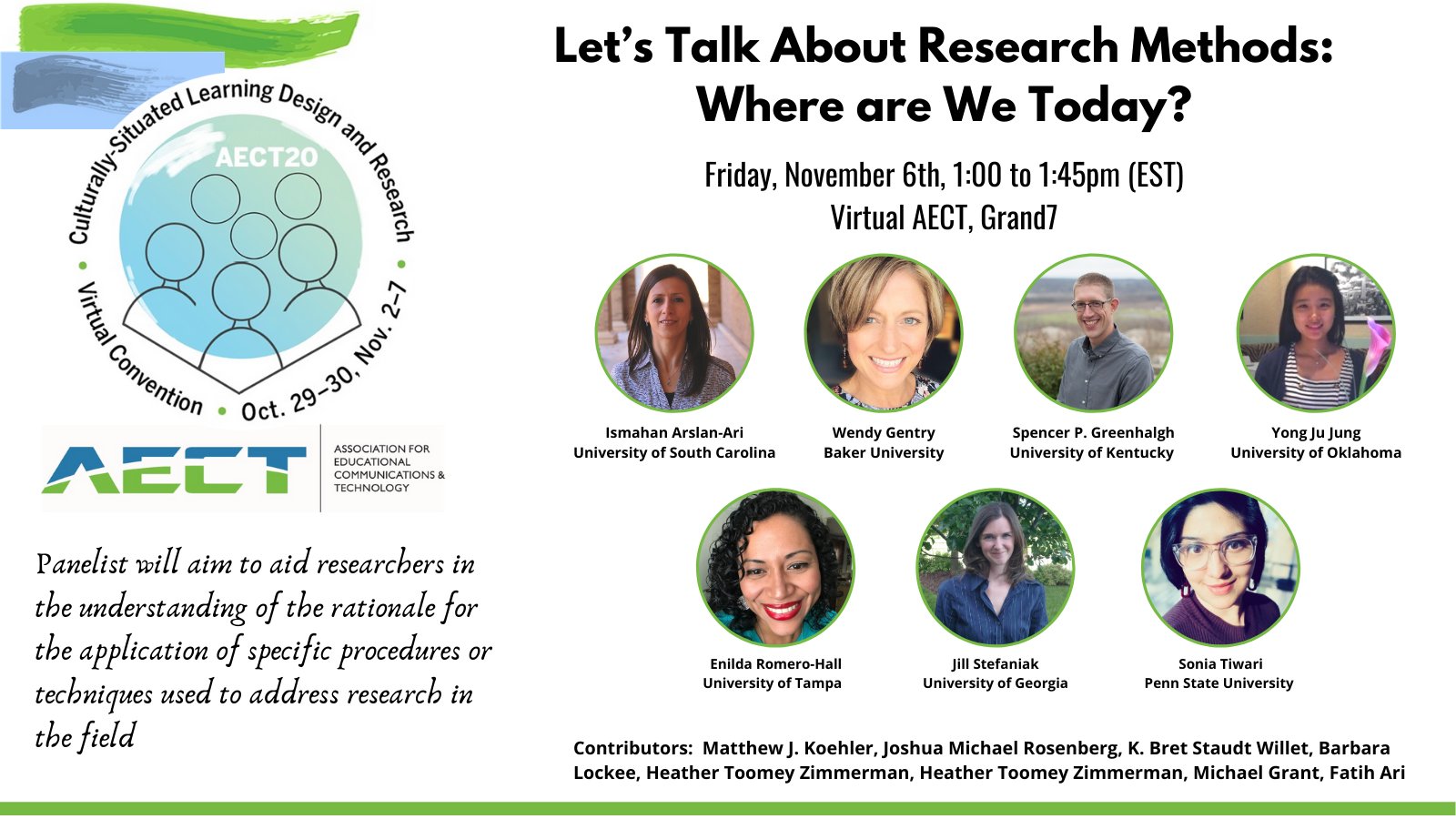
As part of the AECT 2020 Conference we got to share some insights from the book in a panel session titled: “Let’s Talk about Research Methods: Where are We Today?” It was a lot of fun and we had some great questions. I feel that those that attended also were able to get ideas for their of research. Here is a link to the slides I presented during the panel session: http://tiny.cc/AECT2020RMPanel
If you are interest in getting a copy of the book, here are a few links to consider:
ebook: https://www.taylorfrancis.com/books/e/9780429260919 Select “Preview PDF” to download and read Chapter 1 “Research Methods in Learning Design and Technology: A Historial Perspective of the Last 40 Years.”
I was supposed to write about this weeks ago, but it did not happened. However, here I am to blog about the book “Research Methods in Learning Design and Technology.” First, I want to say thanks to all the book chapter authors. The work that these authors have put into their chapters is admirable.
What has happened since I last blogged about the book? Well, I shared that I had written the “acknowledgement” and was getting ready to submit materials to the publisher. That is exactly what occurred, I submitted all materials in mid-April. It was a huge sense of relief to have all the work completed and submitted, while dealing with all the stress and anxiety of the COVID-19 pandemic.
This week, I have spend the majority of the week reviewing queries in all of the chapters and the front matter of the book. This has given me an opportunity to read again all the book chapters. One of the hightlights was having a running head titled: “Futurama.” That really made me smile. By the way, I had to send a few “IMPORTANT: Chapter Information” emails to book chapter authors. Huge thanks for the prompt response of my colleagues, who I know have so much going on right now.
With the intent to hold on to every bit of positivity during this bizarre days in which we are all dealing with the COVID-19 pandemic, I share with you: the acknowledgement.
I am in the final stages of getting all materials to the publisher for the “Research Methods in Learning Design and Technology” book. These materials include the front matter documents. I figured what better way to start blogging about this edited volume than to share the acknowledgement and to recognize those who in one way or another had an impact on this work.
So, I think by now everybody and their grandma knows that I have earned tenure and promotion to Associate Professor at the University of Tampa. Just in case you missed my Facebook and Twitter post, the Dean’s newsletter, and the global email send to all members of the UT community, here is photographic evidence of the good news!
Tenure and Promotion Letter
All joking aside, I feel proud of this accomplishment. I am immigrant afro-latinx women who started this journey with very little financial support or knowledge about the education system in North America.
Have you ever seen the movie “My Big Fat Greek Wedding”? One of my favorite parts is when the father of bride is sitting in the kitchen table with his daughter and they are discussing who is invited to the wedding. The father feels such pride that his daughter is getting married and he wants to invite every single one of his friends. The daughter wants to keep it intimate and then the father says: “I came to this country with 8 dollars in my pocket!” and then he goes to tell her how hard he worked and the pride feels on everything they have accomplished as a family.
I sometimes feels that as my son gets older, I will say something similar to him: “Diego, your grandparents and I came to North America with one suitcase each and very little money.” This is very true! When I was 19 years old, my parents and I left our home country (Panama) to settle as an immigrant family in Canada. It was not easy. We did not know the culture, we struggled with the language, the cost of living was high, and we knew no-one. It is a really long story with sad memories, struggles, moments of triumphs, and joy. It all let eventually to settling into our new country of residence.
I wrote before about taking a year off from school to work and save money for my education. This happened immediately after I moved to Canada. I worked many jobs, including: the maintenance person (cleaning offices in the Sears headquarter building in downtown Toronto), as a front desk person in several hotels downtown Toronto, and even did a short-term gig as an admin assistant for an administrator in the Toronto School District Board. I feel a little like that Drake song “Started from the bottom”:
“Started from the bottom, now we’re here Started from the bottom, now my whole team fuc*** here”
Sorry when you have affiliations to Toronto, you start quoting Drake! lol
It is true, we started from the bottom now we, as a family, are here. I made two phone calls as soon as I found about T&P. I called my mom in Toronto and I called my dad who is currently Panama. The joy in their voice was everything I needed to hear in that moment. Of course, I celebrated with my husband and son. They have all been part of this journey with me <smiles>.
Something else that I have not mentioned to many, just recently shared in a Twitter post, is that last fall in addition to my tenure & promotion (T&P) dossier, I also submitted an application for sabbatical. At my institution we are allowed to applied for sabbatical the same year you apply for T&P. The sabbatical application was approved both by the sabbatical committee and the Provost. I am very excited for the sabbatical and the projects that I will work on during that time. More on that later this year.
I am currently on the early stages of a book project. The title of this edited volume is “Research Methods in Learning Design and Technology.” The book isanticipated to be released in 2020. Currently, there are 11 confirmed book chapters. I am now in the process of seeking authors for a few additional chapters that will complete the line up for the book (link to the full Call For Proposals).
Introduction: This edited volume serves to combine knowledge related to research methodologies in the instructional design and technology (IDT) field. It will address questions such as: How has our research methodologies evolve? What are the methodologies that can be used to investigate traditional and new research environments? How can we apply innovative research methodologies to address questions related to learning, design, and technology? This edited volume will provide IDT scholars with a solid foundation of the different methods that can be taken to investigate a research problem. This knowledge aids researchers in the understanding of the rationale for the application of specific procedures or techniques used to identify, select, process, and analyze information applied to understand a research question.
Objectives of this Book:
Present a historical overview of how different methodologies have adapted to the new and changing learning environments
Illustrate how different methodologies can be used to investigate topics related to IDT
Explore benefits and drawbacks to different types of research methodologies in research related to the IDT research
Discuss the future of research methodologies in the IDT field
Target Audience: There is a wide range of individuals that can serve as the audience for this book. Any individual (research faculty, teaching faculty, and graduate students) interested in research in instructional design, educational technology, instructional technology, and learning sciences would serve as an audience for this book. This book would also be appealing to instructional design practitioners who conduct research within their workplace. The chapters in this book will also be of benefit to educational researchers, in general, who at some point within their careers would like to focus on research related to instructional design, educational technology, instructional technology, and learning sciences.
Again, if this project is of interest to you and you feel that you would like to learn more about the call for proposal please: click here
Important Dates
Proposal Submission Deadline: March 1, 2019 Full Chapters Due: August 30, 2019
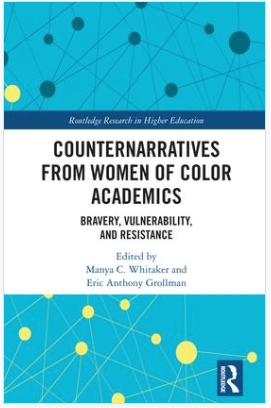
I recently finished reading the book “Counternarratives of WOC Academics” and I just want to share how much I enjoyed it. Love the autoethnography approach used in the book. I also like the diversity of the authors and the stories shared (faculty members, graduate students, and even those who decided to leave academia). Higher education is a complex environment and it truly requires bravery, vulnerability, and resistance to make an impact.
We often equate bravery and resistance with “disrespect,” I was happy to read how these women were able to accomplish their goals while truly being brave and still respectful. Similarly, in higher education “vulnerability” is often equated with “weakness.” It is very sad when I see scholar ashamed to share signs of weakness as if were are always strong and powerful. Reading about others sharing their vulnerable side, expressing their fears and doubts, is something I wish we did more often. I think their is beauty in showing we are still “human.”
I am so excited for my next book. It should arrive next Tuesday!
Received notification today that the book chapter I wrote for the book “Digital Tools for Seamless Learning” published by IGI Global is now available. The title of the book chapter is: Social Media in Higher Education: Enriching Graduate Students’ Professional Growth Outside the Classroom. Here is a copy of the abstract:
“This chapter discusses the current use of social media for professional growth, focusing on a case study that uses social media to increase instructional design graduate students’ awareness and participation in professional growth opportunities. Social media metrics were analyzed from three social networking tools (Facebook Page, Twitter account, and/or Google+ community) that are used to communicate with the students in the program. Additional data was collected using an electronic questionnaire with open and closed-ended questions. The results show that graduate students’ participation in the social media initiatives for professional growth provided awareness of self-directed, voluntary, and informal learning opportunities; engaged students in conversations with their peers and the instructors; and allowed the learners to expand their learning experience outside the traditional classroom format.”
If you are interested in reading the rest of the book chapter, please feel free to contact me. I will gladly share it privately so that I do not break any “copyright” rules. Here is my email: eromerohall@ut.edu











You must be logged in to post a comment.