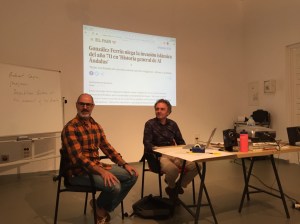
#CIEEIFDS COMM Summer 2016 Radio Show #Sevilla #Spain

Ruben Diaz

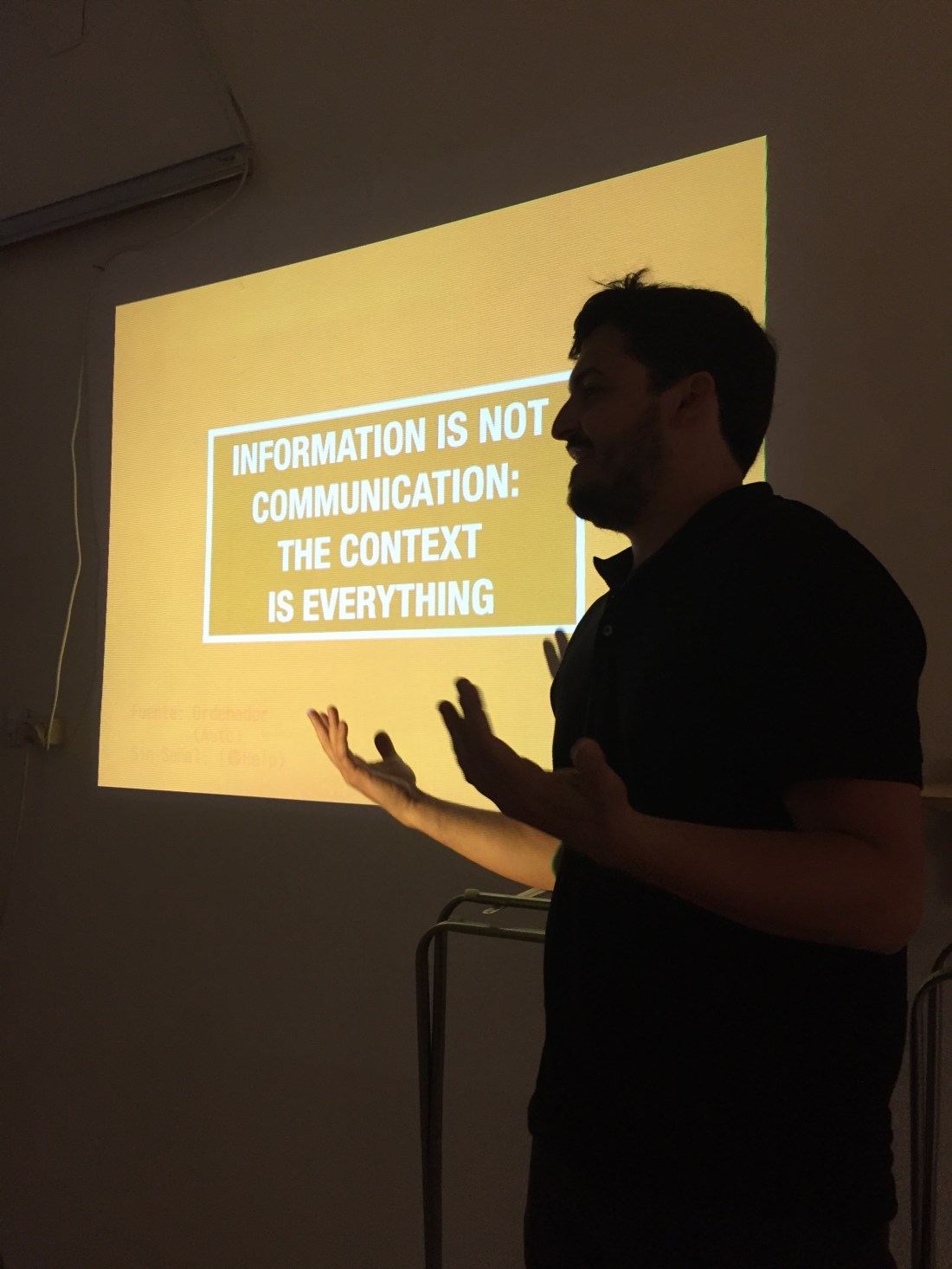
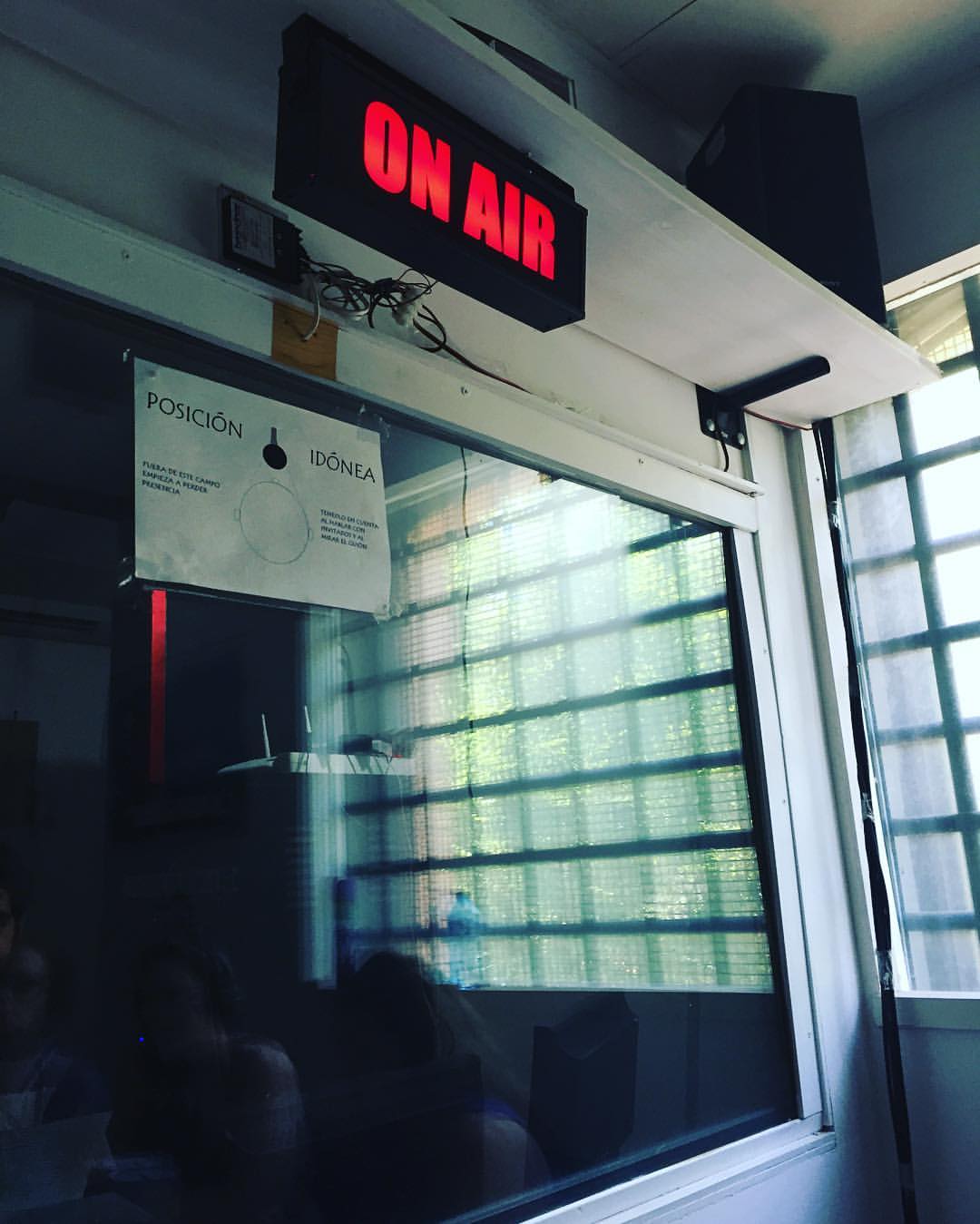
Hopefully you have read my previous posts and understand the context of this post. Just in case: I am doing an international professional development seminar in Seville in which I am learning and practicing communication strategies (and using digital media). One of the assignments in the seminar was to record sounds of the city during our stay in Seville. We finally used those sounds today during the production and recording of a radio podcast. It was a two hour preparation time of scripting and sound editing before recording our radio show. I am really impress with the final product!

I have to upload more sounds that I captured this week (they are now updated). I have many more, including interviews and more street sounds. However, I want to share our radio podcast. Big thank you to Radiopolis for letting us use their space to work on the project and their recording studio.

Here is our story, narrative, experience:

IFDS Communication Strategies in Context Summer 2016 Radio Show

13346165_1057533710981098_3836578642520020179_o

img_7120

The Sounds of Seville [Sonidos de Sevilla] #CIEEIFDS

The Assignment

As part of the seminar I have a bit of homework and will be sharing (or at least try) to share it every day. The homework consist of audio recordings of sounds, conversations, audio reflections, interviews, and other audio recorded during the next few days in Seville. Each audio recording should be no more than two minutes long.

The Recordings

CIEE Seminar Director: Oscar Ceballos:

img_6611
Local Hero


Walking Tour of Old Town Sevilla:

img_6629
Carlos Sanchez


Reggaeton on the Streets of Seville:

img_6761
Street Art

Morning Walk to CICUS (Universidad de Sevilla) 

thumb_IMG_6506_1024
Cobblestone Streets

Visual Narrative (Operation Just Cause)

US Invasion of Panama_Operation Just Cause
Photo Credit: Wikipedia

The Importance of Context [Games of Thrones Example]

thumb_IMG_6812_1024
Emilio Gonzalez Ferrin


First Impressions of Seville [Nancy & Enilda]

image
Royal Palace

Horse Carriage

image
Old Town Seville

Church Bells

image
Church Bells

What is information? 

image
Ruben Diaz


Interview in “El Corte Ingles”

image
El Corte Ingles

Coffeeshop Conversation with Local Sevillanos

image
Flea Market “El Jueves”


Note: Here is the updated post with all the audio recordings from Seville, Spain.


Greetings from Seville! #CIEEIFDS @CIEESeville

Thrilled to be in Seville, Spain for another CIEE International Faculty Professional Development Seminar. Thankful for the CIEE Alumni Scholarship which helped sponsor my participation in this seminar. The title of the seminar is “Communication Strategies in Context: Culture Learning and Community Engagement through Digital Tools.” I hope to provide regular updates throughout the week related to the seminar.

Homework:

Also, as part of the seminar I have a bit of homework and will be sharing (or at least try) to share it every day. The homework consist of audio recordings of sounds, conversations, audio reflections, interviews, and other audio recorded during the next few days in Seville. Each audio recording should be no more than two minutes long.

Now it is bed time. Buenas noches!

Museo del Baile Flamenco (Sevilla, España)

Makerspaces and the Maker Movement: Design Thinking

In February, my students in the Trends and Issues in Instructional Design and Technology course (EME610) and myself visited and toured The HIVE. Then, this past April a group of students and myself attended the Gulf Coast MakerCon event. Both of this activities were an attempt to learn more about Makerspaces and the Maker movement as learning spaces. In all honesty, I initially thought it was all about 3D printers. What I learned since then is that Makerspaces really focused on design thinking. Some spaces are technology heavy (hardware and software), others are more about crafting, others are about innovative ideas, and the lists goes on. Basically there are various views as to what constitutes a markerspace.

12647280_906628236072934_6825368649050924601_n
“The Hive” Makerspace: This is the recording studio.
12998551_945606388841785_3008997155516793785_n.jpg
UT ID&T Graduate Students at the Gulf Coast MakerCon Event

From talking to those involved in the markerspace movement here in Tampa, I also learned that the term Makerspace at times seems too crafty. A few weeks ago I toured a school in Tampa in which there are different Makerspaces for students in different grade levels. It was interesting to talk to instructors from the different grade levels. One instructor in particular expressed some concern over the term “makerspace.” He though that the maker movement should be more focused on design thinking. He was very interested in having students master design thinking with simple tools like paper and pencil before even allowing them to use more advance technology. This instructor also expressed concern with the total lack of guidance in some makerspaces. I consider myself an academic novice on makerspaces (as I am still learning and educating myself on the topic) but I do agree with the notion that design thinking requires guidance and supervision. I practice this in my systematic instructional design course. The graduate students and myself spend a significant amount of time going over different elements of their instructional design projects.

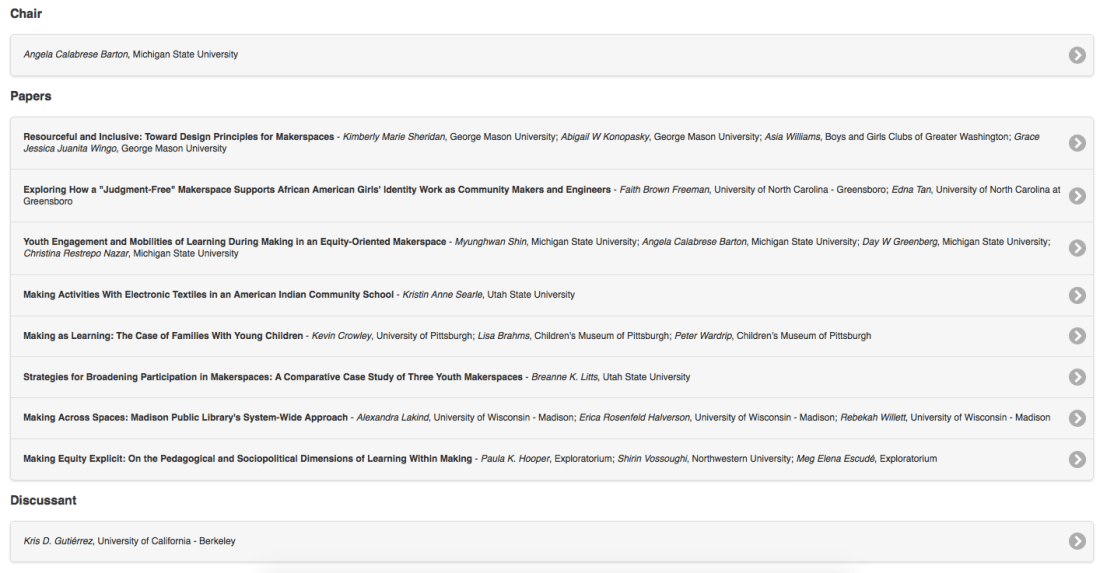
Another interesting aspect of Makerspaces that I learned about recently, while attending AERA, is the lack of diversity. One of the “working poster sessions” (we need more of this at AERA — great session format) I attended was on makerspaces reaching diverse audiences which include individuals in different genders, socio economic status, and cultural backgrounds. There were a total of 7 or 8 posters in the session (below is a screenshot from the AERA online program). If you are interested and want to learn more about inclusive makerspaces, I strongly recommend reading the abstracts and following up with the authors.

Screenshot 2016-05-19 11.20.16
AERA Session: “Toward Building Makerspaces for All: New Theories & Practices to Design Inclusive Makerspaces”


The “Quick Update” Post

I wanted to write a couple of posts about things I experienced this last semester and then life happened! So, I am merging it all into this post. Please forgive the imperfection of my writing. I probably will not take the time edit and re-edit. What you are about to read are the words as they flow from my brain to the keyboard to this blog.

Since I last wrote a blog post (not an announcement but an actual blog post) I became a mom. This time last year, I was in Switzerland in a Faculty Exchange program. It was exactly during the exchange that I discovered that I was expecting a baby. Yes, the pregnancy test results read “Schwanger.”


image

Many things have happened in my personal/professional life in the last year (since I found out I was pregnant) and I want to share them in my blog. However, I am still trying to figure out how to best express those experiences and feelings in a blog post (or maybe more than one). I hope to take some time to write about this experiences in the near future.

What I do want to share in this blog post is that I have officially completed my third year in  a tenure track position. At the beginning of the Spring 2016 semester, I submitted all my materials and by mid March had received all the pre-tenure letters. This is a minor milestone but I still consider it a milestone. I guess the questions that I need to answer now is: what is happening past pre-tenure? Well, pretty much just keep on working hard. I have a long term “to-do list” that I have to tackle and of course, the everyday “to-do list.”

The last three years served to connect with really amazing faculty and graduates students with whom I have found common ground (topics of interest) to work on projects. Some of these projects are strictly related to the instructional design practice and others are more multidisciplinary. I am very excited about this projects and some of them will presented in conferences later this years (currently working on getting some manuscripts out for review). Other projects are just starting so more details coming soon.

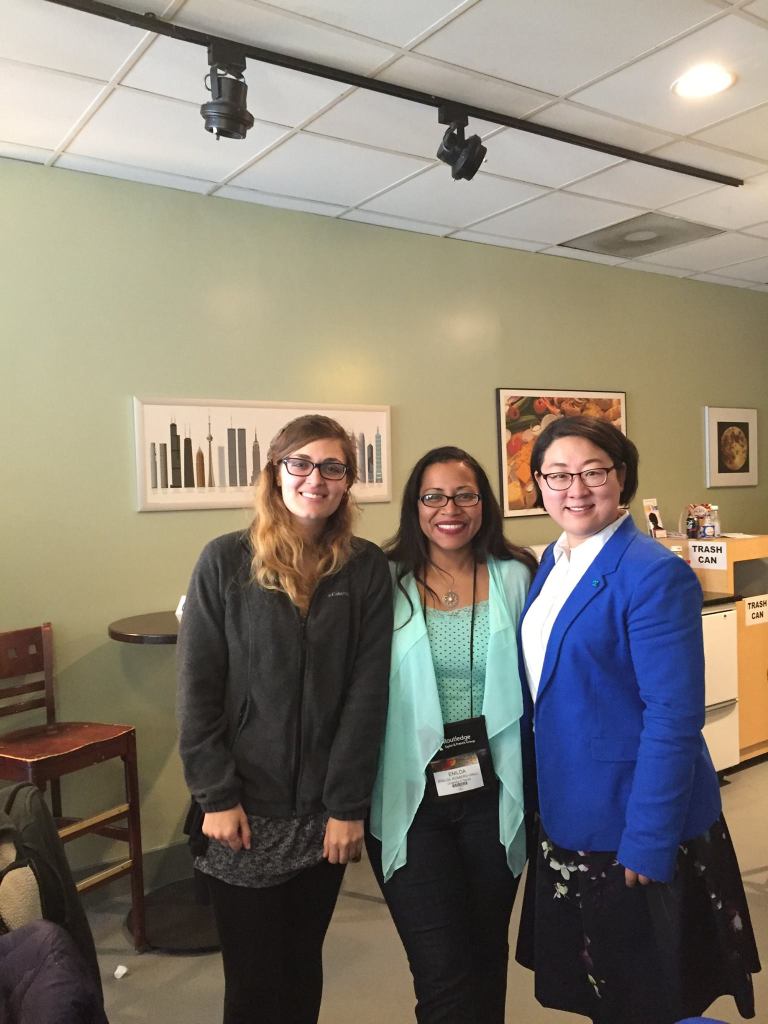
I also want to quickly mention that I also started professional service with the AERA SIG Design & Technology as a Technology Liaison. I am excited for this opportunity and very much looking forward to working with colleagues in the SIG. This previous sentence reminded me that I wanted to mention how much I enjoyed attending AERA 2016. I did not present a paper but instead had the opportunity to participate in a mentoring program sponsored by the AERA SIG Design & Technology. I met two outstanding graduate students, Amanda and Yi.
13087222_903053373151445_3939118171814845924_o

I hope the SIG continues the mentoring program in the future. It was a great opportunity to share my graduates student and faculty journey. Most importantly, it was an opportunity to listen to the concerns of graduate students and, hopefully, provide guidance. I also learned from the graduate students in the process. Both graduate students, Amanda and Yi, shared conferences, resources, and research groups that were completely new to me.

During the conference I also participated as moderator in a panel discussion on the past, present, and future of the design and technology field. The panelist included Elizabeth Boling, Pat Hardre, and George Veletsianos. It was nice to listen to the panelists’ perspective on the current state of the field as well as suggestions for graduate students and faculty doing research on topics related to design and technology. The current Graduate Student Representative of the SIG Design and Technology board, Shonn, live tweeted the panel presentation. If you are interested in reading more about it, you can check out the AERA SIG Design & Technology Twitter stream.

That is all I have for now. Hoping to be post more in the near future. Hopefully, future post will not be as lengthy.

The #AECT Tenure and Promotion Guide

I was browsing the AECT website this morning to access a chapter from the Handbook of Research for Educational Communications and Technology and came across this publication titled: “The AECT Tenure and Promotion Guide.”

The_AECT_Tenure_and_Promotion_Guide

The purpose and scope of the document are described as:

“AECT is dedicated to serving its members, and one of the services provided is this basic tenure and promotion guide. Its purpose is to provide a point of departure and a general set of guidelines for those being considered for tenure or promotion. This guide is intended to help orient faculty seeking tenure or promotion and to direct them to other resources pertinent to their specific situations. In all cases, a faculty member seeking tenure and promotion should become familiar with local procedures and expectations and seek the advice of local mentors. A general guide such as this cannot possible address all of the relevant issues and concerns that exist at any particular institution.

Contributors to this document included Mike Spector, Chuck Hodges, Andy Gibbons, Jan Elen, Elizabeth Boling. Others involved in the effort are working on an expanded version to be published separately. It is available at no cost to members of AECT. The copyright belongs to AECT (2014). Use of the document for non-monetary academic use is granted so long as this acknowledgement citing the source is included in what is shared: The AECT Tenure and Promotion (T&P) Guide, first published online by AECT in 2014 – see www.aect.org.”

If you are going through tenure and promotion in your institution this should be a good source of guidance and resources. Good luck!

ERH

I survived my first semester as a faculty member!

Hard to believe it is already December!

Before starting the Fall 2013 semester I was told by many colleagues that the semester would go by so fast, it was going to feel like a blur at the end of the semester. I was a bit reluctant! But now that is all said and done, I have to say that it went by faster than expected.

One of the things that was a bit harder to do in this new academic environment was the adjustment to teaching night-time classes. In all honesty, I am all about cooking dinner with my significant other, decompressing at the dinner table, a nice evening walk and then some work. I have managed to figure it out. I combined working from home, working from the office, teaching a few classes in a hybrid format and teaching other classes completely face to face. I figured that if most of my students were able to do a 8 hour job and then make it to a 6 to 9 pm class, then I could do it too. It does make the days I have nights off and weekends even more special.

Another adjustment this past semester was the amount of email that I had to manage and all the work that comes with it. While I was in the doctoral program, I received a moderate amount of email related mostly to my dissertation. I also received email related to service at my professional organization. But between the students, the department, the college, the university, professional organizations, and every one else that decided to email me at some point in time, email was at times a major consumption of productivity. I am starting to think it should be part of self evaluations (how much time did you spend replying to emails during the semester?). I guess I have improved my emailing skills and management of emails.

Of course, the biggest adjustment is finding the balance between research, teaching, and service. I am not going to claim that I found it because I would be lying. I had, as recommended by several colleagues, designated a writing day for the week. However, I was not able to keep up with it. I still managed to get conferences proposals written and a few manuscript to a decent level. But I really wish I could immerse myself in writing a bit more. It is still “work in progress.”

A few other things to keep in mind if you are going into your first semester as a faculty member are:

  • Meetings take a chunk of your time: Days in which I had meetings (that were longer than an hour) were the most challenging. I tried hard to prepare in advance but I always was catching up after the meetings right until the 6 pm class. This had mainly to do with my personal and class schedule. Since most meeting started around 11:30 am , I would have to cut short work time in the morning and catch up with work in the afternoons.  Although, I am glad that the meetings are mainly around 11am since I have stay around campus for 6pm classes.
  • Be prepare to explain your grading criteria and assigned grades: We need to create a culture of “constructive feedback” in the classroom. I know that grades and points are important but what I really like is a focus on creativity, higher order thinking skills and problem solving. I like to see assignments in two ways: what was done correctly and what can be improved. I remember that when I was working on my dissertation I would asked my significant other to just criticize my work as if I was his worst enemy. But I know that sometimes it difficult to received that constructive feedback. After all, that student just spent a few sleepless nights working on it. I do have to say that once I explain my grading criteria students see it with a very different mindset.

Overall, reflecting on my first semester, I am still learning how the academic systems works. But, I am happy to be part of the UT family and to be a Floridian (the sunshine state!). One of the nicest comments I received at the end of the semester on a one on one meetings was when I student said “Dr. Romero-Hall you are a great addition to the UT IDT program, I want to take the rest of the classes with you! I really appreciate your honest feedback.” So, I guess I must be doing something right 🙂