

The official flyer: #UTampa Travel Course to Switzerland [Spring 2018]


It has been a year of conference planning and work in preparation for #AECT16. I am happy with the outcome of the Research & Theory Division (RTD) division sessions and I am confident on the quality of the presentations. Since I had several president-elect commitments I was not able to attend many of the sessions but I received good feedback from those who attended the sessions. Thanks to all that helped and supported the Research and Theory Division before and during the conference.
The preparations for #AECT17 started already. RTD PD Professional Coordinators are already working on the grant preparation for the Early Career Symposium. Our RTD conference planner & research and theory coordinator had their first Convention Planning Committee meeting. Also, during the RTD membership meeting several topics related to research methodology and theoretical perspectives were mentioned as recommendations for the professional development coordinator-elect to consider. The RTD board, specifically our past president, has already started looking for potential nominees to serve in our division during the 2017-2018 service year. We are also preparing to launch several initiatives that will serve to connect graduate students and faculty members.
On a personal note, I am so grateful to be part of the AECT family and all my other sub-families (ESU IDT, ODU IDT, and UT IDT). I am very grateful that I was able to attend the AECT conference this year (since I was not able to attend #AECT15). I made new connections with first timers or individuals who I’ve never had the opportunity meet in the past. As usual, it was great to see and talk to those who I consider not only colleagues but also my friends. Hope to see everyone next year in Jacksonville!
For quick access to the #AECT16 hashtag tweets click here: #AECT16 Tweets


This week the UT Department of Education and UT Instructional Design & Technology Program hosted, Mr. Hanspeter Erni. Mr. Erni is the Director for the Center of Teaching and Learning and the Head of Computer Science and Media Education at PH Luzern. I met Hanspeter during my visit to PH Luzern last year.
During his visit to The University of Tampa, Hanspeter, did a presentation for the UT College of Social Science, Mathematics, and Education (CSSME) faculty, staff members, and current UT IDT students and alumni. It was a great presentation on the importance of informatics and computer science. He also discussed the project “Mini-Beaver.”


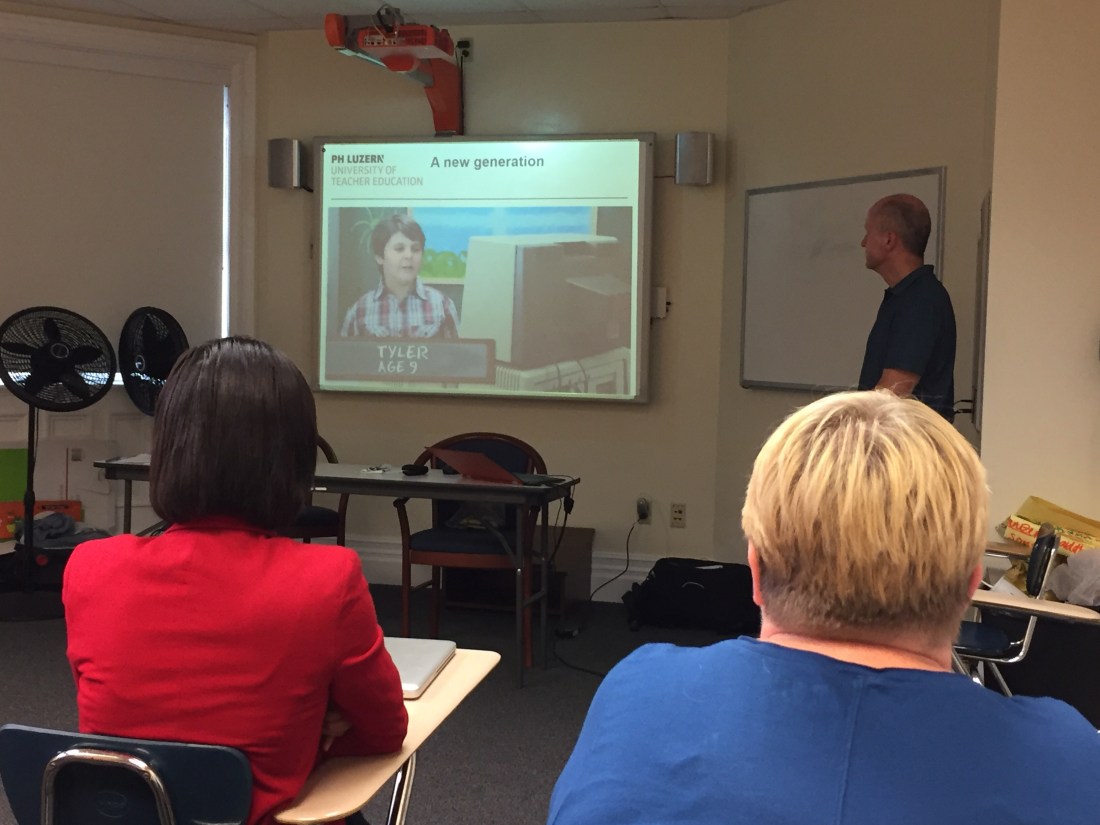
We are collaborating on a special project that will help internationalize the educational experience of UT graduate and undergraduate students. This includes the addition of a travel component (optional) in the curriculum for education graduate and undergraduate students (and potentially UT students with others major who find the topic interesting. More information on this coming soon!


Here are the images I was able to capture during the IFDS in Seville last week. I figured it was best to post this sooner rather than later because I wanted to acknowledge the amazing people that we (the seminar attendees) worked with during our time in Seville. Thank you to Oscar Ceballos, Carlos Pineda, Miguel Romero, Antonio Perez, Carlos Sanches, Ruben Diaz and Emilio Gonzales Ferrin. I would also like to thank the six ladies with whom I shared and collaborated with during the seminar: Collete, Rebecca, Nancy, Kaitlin, Ellen, and Rylan. Learned so much from you ladies!


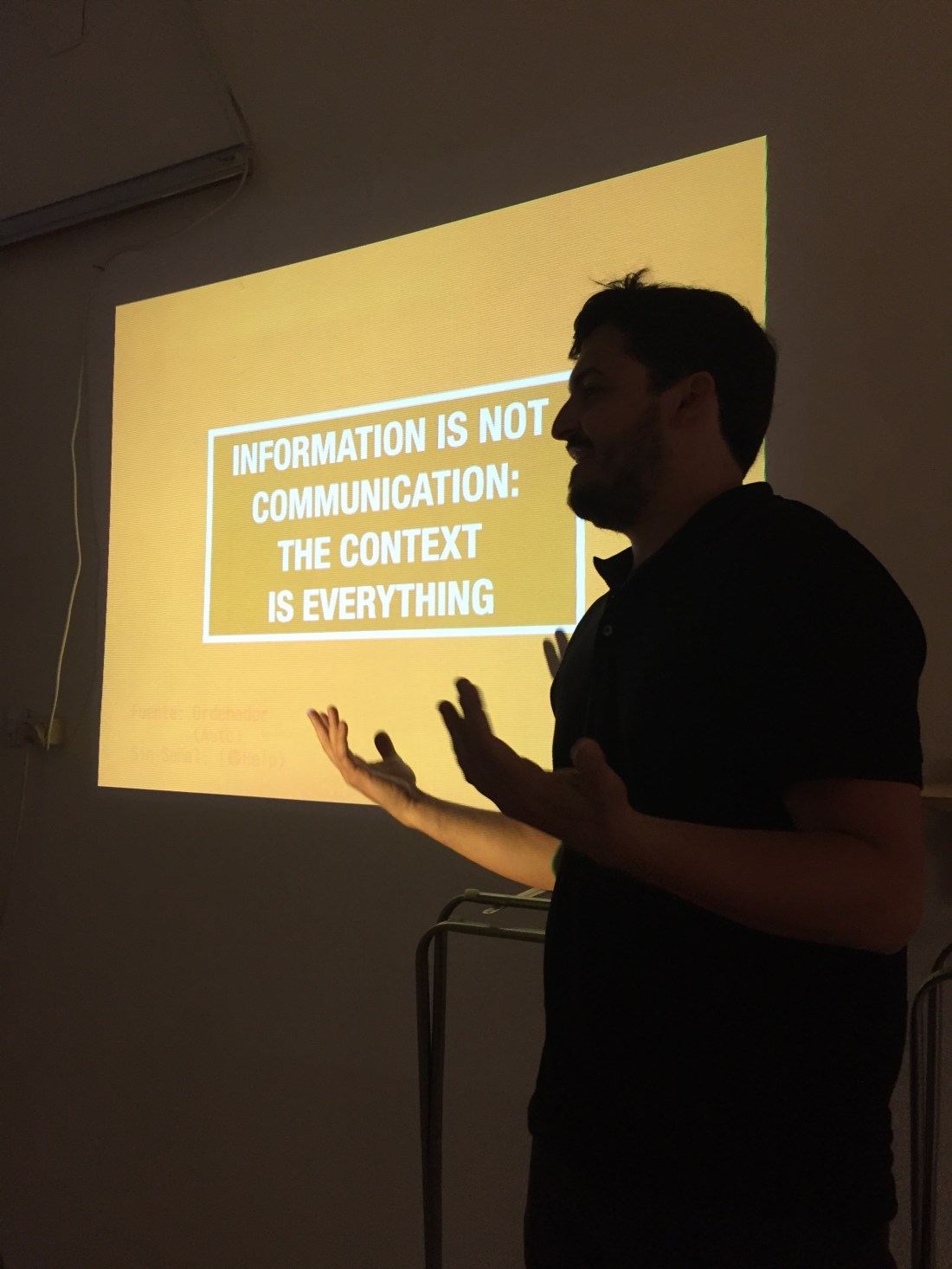
Hopefully you have read my previous posts and understand the context of this post. Just in case: I am doing an international professional development seminar in Seville in which I am learning and practicing communication strategies (and using digital media). One of the assignments in the seminar was to record sounds of the city during our stay in Seville. We finally used those sounds today during the production and recording of a radio podcast. It was a two hour preparation time of scripting and sound editing before recording our radio show. I am really impress with the final product!
I have to upload more sounds that I captured this week (they are now updated). I have many more, including interviews and more street sounds. However, I want to share our radio podcast. Big thank you to Radiopolis for letting us use their space to work on the project and their recording studio.
Here is our story, narrative, experience:
IFDS Communication Strategies in Context Summer 2016 Radio Show
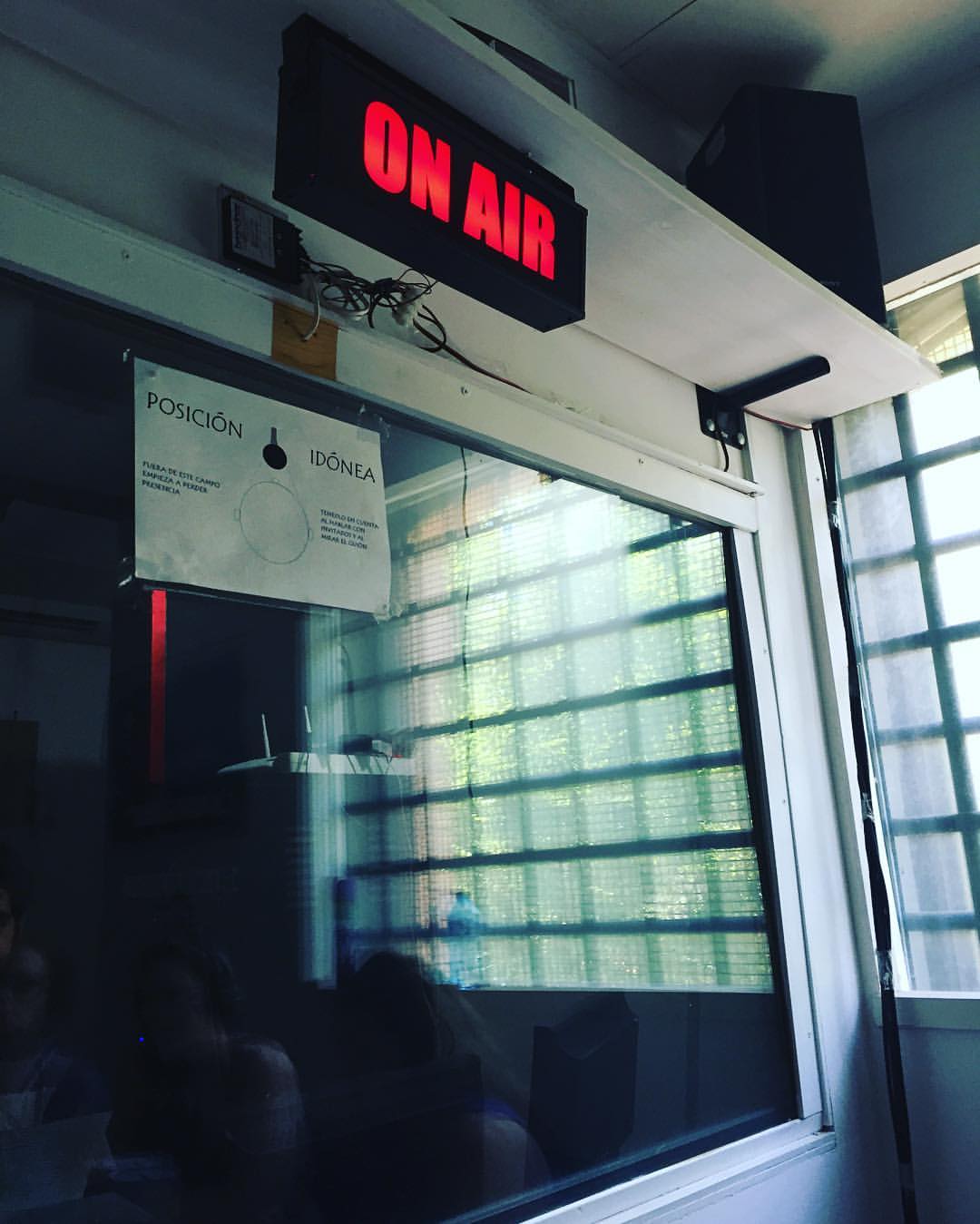


Thrilled to be in Seville, Spain for another CIEE International Faculty Professional Development Seminar. Thankful for the CIEE Alumni Scholarship which helped sponsor my participation in this seminar. The title of the seminar is “Communication Strategies in Context: Culture Learning and Community Engagement through Digital Tools.” I hope to provide regular updates throughout the week related to the seminar.
Homework:
Also, as part of the seminar I have a bit of homework and will be sharing (or at least try) to share it every day. The homework consist of audio recordings of sounds, conversations, audio reflections, interviews, and other audio recorded during the next few days in Seville. Each audio recording should be no more than two minutes long.
Now it is bed time. Buenas noches!


Journal Article Published in the International Journal of Designs for Learning
Title: “Nursing Pain Assessment & Management: A 3D Interactive Simulation”
Authors: Enilda Romero-Hall, Ginger S. Watson, Yiannis Papelis, Hector Garcia
Link: http://scholarworks.iu.edu/journals/index.php/ijdl/article/view/5169
Abstract:
In this design case, a team developed a 3D interactive simulation for nursing students and professional nurses to train and practice pain assessment and management procedures. In the simulation environment, the trainees interact with three emotionally expressive animated patients. The three patients vary in their ethnicity, age, and emotion intensity. Successful completion of the scenario requires that the trainee perform of a series of pain assessment and management tasks. The trainee is evaluated on the efficiency and appropriate sequencing of the tasks.
The purpose of this paper is to describe the decisions made regarding the type of virtual patients used, the clickable objects, the pain assessment interview protocol, the visual representations in the simulation and the web portal. The paper also provides insight into the processes and steps taken during the design and development phases of this 3D interactive simulation including: the tasks analyses, motion capture, validation of the animations in the simulation, programming, and other tasks.
 Design Goodiness
You must be logged in to post a comment.