A sabbatical during COVID-19

Where do I start?

I guess I can start by writing that a few months into my sabbatical the world turned upside down due to the COVID-19 pandemic. Yet, I was able to use my time to complete the tasks that I had outlined for my sabbatical period. April and May did require a significant adjustment since we had to manuoiver a new work schedule without child care. Maneuvering this new schedule required being realistic about what I could accomplish and saying “no” to some invitations for new collaborations.

The first two months of my sabbatical were as planned. I worked on writing two chapters for the book “Research Methods in Learning Design and Technology.” Book chapter authors submitted their completed and revised book chapters to me by the end of January and I worked on doing final reviews of each book chapter. I initially had planned to submit the book to the publisher by mid-March, but I switched the format of the last chapter, and this required giving extra time to my co-authors to complete their writing. This meant that I had to delay the submission of the book documents to the publisher until mid-April. Thankfully, by the time the world turned upside down in mid-March, all my co-authors and book chapter authors had turned in all required documents to me.

One of the elements of my sabbatical that was partially affected by the COVID-19 pandemic was work-related travel. I was scheduled to attend the American Educational Research Association (AERA) Annual Convention in San Francisco in mid-April and the conference was canceled. I am glad it was canceled, I am also glad it was not held virtually. April was a month of re-adjustement, tension, and stress for many. I was also scheduled to travel to Florence, Italy to present at the DEPIT Annual Meeting at the University of Florence. This event was re-scheduled for an online format.

I had some personal travel plans changed because of travel restrictions. I was scheduled to spend all of March and a portion of April in Panama City, Panama, where I was going to work while spending time close to my family. So, I traveled to Panama at the end of February and was monitoring all the news related to COVID-19. Due to the way the virus was spreading, my family and I decided it was best for us to travel back to the United States, so we changed our flights to travel back on March 22 (which is the day Panama was scheduled to close their international airport). On the evening of March 20, I received an email from COPA airlines letting me know that our flights had been cancelled. I was shocked and extremely disappointed. However, we all stayed calm and determined that we would just ride the storm in Panama. That same evening, as a last attempt, we figured we would see if there were any flights on March 21 to Tampa with a different airline. Thankfully, we did manage to fly back to Tampa on March 21. My dad was in Panama with me and we were also able to find a flight for him to fly back to Toronto (within one hour difference of our flight), which gave peace of mind. I would not have left Panama without my dad.

The weeks after returning from Panama, were weeks of adjustments as mentioned at the beginning of this post. In addition to all the tasks for the book, I was also scheduled to write a manuscript (with a deadline) that I had not even started. It took discipline to stay focus. I admit that there were many emotions related to what was happening in the world with the pandemic, leaving Panama, and experiencing the “new normal.” I felt like I had to work hard on my “emotional intelligence” to get the paper written and deliver all the book materials to the publisher.

I am thankful for the sabbatical term. In addition to the tasks mentioned in this post, I also used the time to work in revisions to several manuscripts and continue mentoring my undergraduate student (we presented at a conference in February and are currently working on a few writing tasks). Of course, I spend time with my family (even more than planned due to the lack of childcare).

Since my sabbatical ended, I am back to serving as the Graduate Coordinator of the Instructional Design and Technology program and I taught a six-week summer intensive course on Learner Motivation in June. I definitely missed my students and the joy of our convos.


TEDxUTampa Talk [Full-Text] #InformalLearning #SocialMedia

I am sharing the full-text of my recent talk at the #TEDxUTampa event on February 3rd, 2018 at The University of Tampa campus:

Making Social Media Work for your Educational Advantage

Enilda Romero-Hall, Ph.D.

In the year 2005, I was an undergraduate student living in a small college town in Kansas. My classmates and friends had recently started using this website called Facebook. It was: “ a better version of MySpace,” which I had never used. Of course I started using Facebook, friending others, and posting picture of my social life. It took three years but eventually, I became overwhelmed with Facebook. So, I proceeded to delete my Facebook account.

ImageA
Dr. Enilda Romero-Hall, TEDxUTampa

A year later, I had moved to a different state and city, started a doctoral degree, and was volunteering as a graduate student at an international conference. I noticed in my interactions with other graduate students that I felt out of the loop. For example: many of my colleagues had participated in a MOOC (massive open online course) about statistical analysis taught by a well known scholar in our field that they found out about through a Facebook group posting. I had never heard of it. At the end of that conference, I really started to wonder if I needed to reconsider my decision and re-join facebook.

It took me about six more months but eventually, I started to use social media AGAIN and made a conscious decision to use it for both personal and professional reasons. Not only did I join Facebook, I also joined other social media platforms with online communities that allow me to exchange information with others, connect with people who have similar interest, and informally learn about the topics that interest me.

Now, let’s fastword to 2018:

Today social media is ingrained in the way our society communicates, for good or bad. There is evidence that the use of social media will continue to grow as applications expand and new ones enter the market in the near future. Users are eager to try applications that offer engaging and unique ways to communicate with others.

I bet many of you are Snapchat, Instagram, and Facebook users?

Well, if you are a Snapchat user, you are one of 166 million daily active users. According to the Pew Research Center, social media adoption in the United States has grown from 5% in 2005 to 69% percent in 2016. This adoption rates are a global trend.

Slide07

The great majority of social media users access this platforms for informal, social interactions with friends, family, and acquaintances.

However, is not uncommon to see “concerning” headlines and research about social media in the news. For example:

  • Meghan Markle just quit social media. Here’s why you might want to as well!
  • Facebook admits that social media can be bad for you!
  • Social media is changing how we think, and not necessarily for better
  • Stop over-posting your vacation photos

Slide12

Because we have all seen pictures of our friends and family in their amazing vacations! Everything just looks so picture perfect. The kind of vacation that you dream of. Just recently I also had a picture perfect vacation. My husband, my two-year old, and I embarked on an adventure to our sunny destination: Cartagena, Colombia. The pictures did not disappoint. But let’s be honest my husband and I were traveling with a two-year old. His behavior was not always picture perfect.

Yes, he had temper tantrums.
Yes, he cried.
Yes,  he was loud when asked to be quiet.
He is a two-year old after all!

So to some extend it is true. Social media can be harmful (and affect our mental well being), difficult to manage and overwhelming, too public, distracting, and influence and miss inform us. So I am not here to tell you that it is all rainbows and unicorns, Nor it is doom and gloom. But what I want to share with you is that we have to find ways to positively use this mediums that are not going anywhere, anytime soon. There are a large number of research efforts that hope to better understand and analyze the use of social media for teaching and learning purposes. As an educator and researcher myself, I have experienced and investigated how social media can be used for informal learning purposes.

Since 2013 the graduate students in the program in which I teach have been actively using social media online communities to informally learn more about our field, instructional design. We have both public and private online social communities. In this social media communities students exchange articles, post jobs and internship opportunities, ask questions and seek recommendations, and simply stay connected. Through my research, I found out that this online social media communities have helped keep the conversation going outside of the classroom and as one graduate students mentioned: “Some posts have triggered the students curiosity and in turn has led to exploring different topics and developing skills.”

Slide16

But this informal learning experiences are not unique to the graduates students in the instructional design and technology program at the University of Tampa. As a knowledge seeker, I wanted to know if graduate students in other institutions of higher education are also using social media online communities to post, share, network, and connect. Here is what I found:

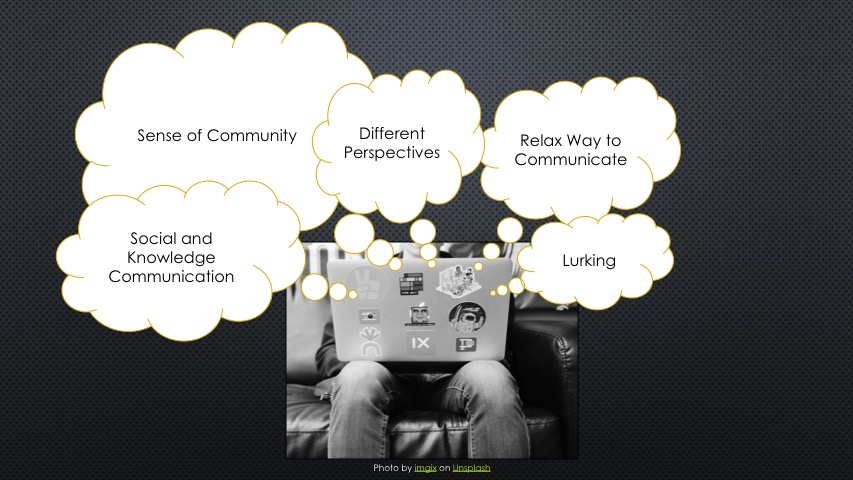
  • Students in other institutions perceive social media online communities as a quick method to help support social and knowledge communication
  • This communities help “break the ice” because it provides a relax way to communicate with others since conversations happen in a far more spontaneous and candid way
  • For students in fully online programs social media groups provided a sense of community… a sense of belonging…
  • To me what was really striking was that not only did students in this social media online communities appreciate sharing with others who have similar interest but most importantly they participated and valued the interactions with others who shared a different perspective because it challenged their views and allowed them to reflect, rethink, and in some instances re-shape their of own knowledge.
  • Of course, not all students are quick to post and share their thoughts with the world or their online communities. What I found is that some students enjoy lurking around and quietly participating while reading and consuming information provided by others.

Slide18

So you may be wondering, why is this important? Why is it important for me to invest my time to listen to this lady talk about informal learning in social media communities?

Because, instead of solely focusing on the “bad” or “thinking of social media as a waste of time”  it is imperative that we find innovative ways to use and repurpose this online social environments in a manner that is safe, ethical, and beneficial to us.

And how can you do that?

  • Become a self-directed learner. Use social media to gather information about trends related to your field or area of interest:What are new and emergent topics in your field?Who are leaders in your field that you should follow?
    • Where can you find rigours research related to your field of study?
  • Use social media to connect with individuals outside your networkIt is good to connect with others who have the same ideas as youBut it is also good to breakout of your network because this interaction can lead to innovation
  • What it boils down to: using social media to engage in transformational learning opportunities in which you:Engage in critical reflectionEngage in discourse
    • Take action to transform your frame of reference

Don’t get me wrong! I am not saying “stop posting your favorite funny cat videos and memes” or “stop sharing selfies of yourself.” I am also not saying that we need to overlook the challenges that social media present for our social, mental, and physical well-being. We absolutely need to find ways to deal with this challenges.

What I am saying is that there are other ways in which we can enrich social media environments. There are educational aspects that we should consider. We, as users, have the power to control: what we post, when we post, who we interact with, and how we interact with others.  You cannot rely on social media developers to provide healthy ways to use this platforms. It is our responsibility to make it work for us!

#UTampa Honors Program Symposia [Presentation]

Yesterday, I had the pleasure of presenting to the UT Honors Programs students and faculty as well other UTampa colleagues and staff members. I presented on the topic: “Use of Social Media by Graduate Students and Programs.” This is a research area that I am currently exploring and I was able to share some preliminary results. Click on the image below to access the link to the complete Prezi presentation:

image001 Click on the Image to Access the Slides
Photo Credit: Gul Sahin

Makerspaces and the Maker Movement: Design Thinking

In February, my students in the Trends and Issues in Instructional Design and Technology course (EME610) and myself visited and toured The HIVE. Then, this past April a group of students and myself attended the Gulf Coast MakerCon event. Both of this activities were an attempt to learn more about Makerspaces and the Maker movement as learning spaces. In all honesty, I initially thought it was all about 3D printers. What I learned since then is that Makerspaces really focused on design thinking. Some spaces are technology heavy (hardware and software), others are more about crafting, others are about innovative ideas, and the lists goes on. Basically there are various views as to what constitutes a markerspace.

12647280_906628236072934_6825368649050924601_n
“The Hive” Makerspace: This is the recording studio.
12998551_945606388841785_3008997155516793785_n.jpg
UT ID&T Graduate Students at the Gulf Coast MakerCon Event

From talking to those involved in the markerspace movement here in Tampa, I also learned that the term Makerspace at times seems too crafty. A few weeks ago I toured a school in Tampa in which there are different Makerspaces for students in different grade levels. It was interesting to talk to instructors from the different grade levels. One instructor in particular expressed some concern over the term “makerspace.” He though that the maker movement should be more focused on design thinking. He was very interested in having students master design thinking with simple tools like paper and pencil before even allowing them to use more advance technology. This instructor also expressed concern with the total lack of guidance in some makerspaces. I consider myself an academic novice on makerspaces (as I am still learning and educating myself on the topic) but I do agree with the notion that design thinking requires guidance and supervision. I practice this in my systematic instructional design course. The graduate students and myself spend a significant amount of time going over different elements of their instructional design projects.

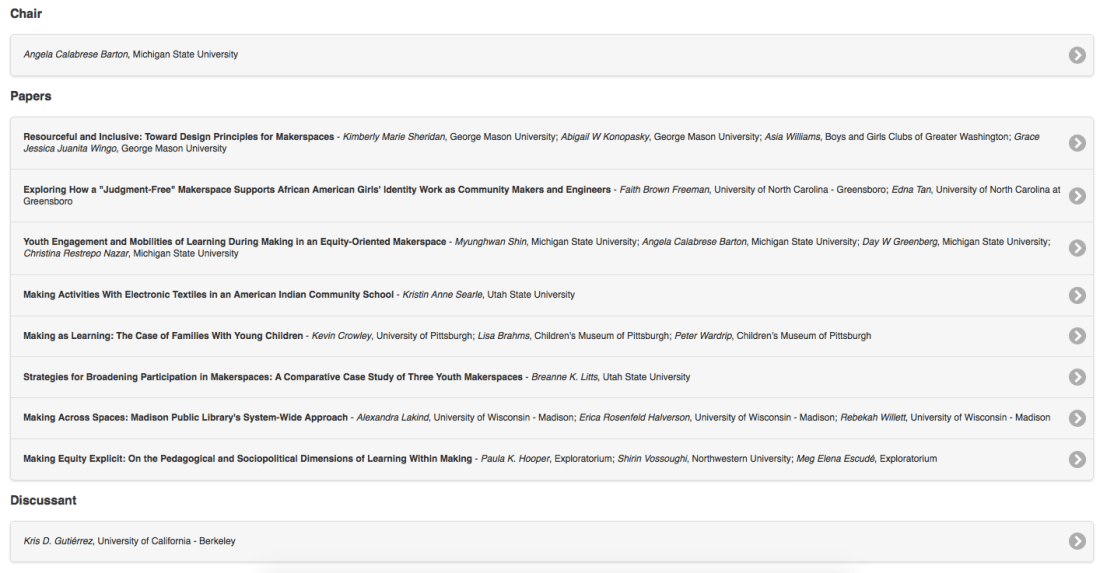
Another interesting aspect of Makerspaces that I learned about recently, while attending AERA, is the lack of diversity. One of the “working poster sessions” (we need more of this at AERA — great session format) I attended was on makerspaces reaching diverse audiences which include individuals in different genders, socio economic status, and cultural backgrounds. There were a total of 7 or 8 posters in the session (below is a screenshot from the AERA online program). If you are interested and want to learn more about inclusive makerspaces, I strongly recommend reading the abstracts and following up with the authors.

Screenshot 2016-05-19 11.20.16
AERA Session: “Toward Building Makerspaces for All: New Theories & Practices to Design Inclusive Makerspaces”


The “Quick Update” Post

I wanted to write a couple of posts about things I experienced this last semester and then life happened! So, I am merging it all into this post. Please forgive the imperfection of my writing. I probably will not take the time edit and re-edit. What you are about to read are the words as they flow from my brain to the keyboard to this blog.

Since I last wrote a blog post (not an announcement but an actual blog post) I became a mom. This time last year, I was in Switzerland in a Faculty Exchange program. It was exactly during the exchange that I discovered that I was expecting a baby. Yes, the pregnancy test results read “Schwanger.”


image

Many things have happened in my personal/professional life in the last year (since I found out I was pregnant) and I want to share them in my blog. However, I am still trying to figure out how to best express those experiences and feelings in a blog post (or maybe more than one). I hope to take some time to write about this experiences in the near future.

What I do want to share in this blog post is that I have officially completed my third year in  a tenure track position. At the beginning of the Spring 2016 semester, I submitted all my materials and by mid March had received all the pre-tenure letters. This is a minor milestone but I still consider it a milestone. I guess the questions that I need to answer now is: what is happening past pre-tenure? Well, pretty much just keep on working hard. I have a long term “to-do list” that I have to tackle and of course, the everyday “to-do list.”

The last three years served to connect with really amazing faculty and graduates students with whom I have found common ground (topics of interest) to work on projects. Some of these projects are strictly related to the instructional design practice and others are more multidisciplinary. I am very excited about this projects and some of them will presented in conferences later this years (currently working on getting some manuscripts out for review). Other projects are just starting so more details coming soon.

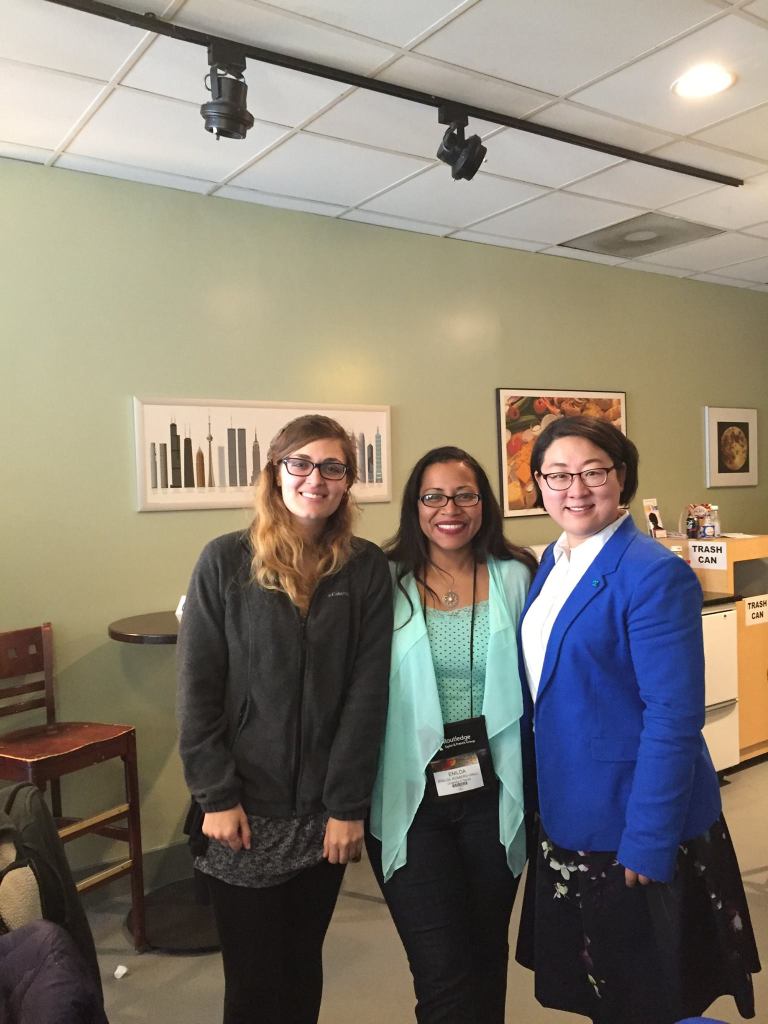
I also want to quickly mention that I also started professional service with the AERA SIG Design & Technology as a Technology Liaison. I am excited for this opportunity and very much looking forward to working with colleagues in the SIG. This previous sentence reminded me that I wanted to mention how much I enjoyed attending AERA 2016. I did not present a paper but instead had the opportunity to participate in a mentoring program sponsored by the AERA SIG Design & Technology. I met two outstanding graduate students, Amanda and Yi.
13087222_903053373151445_3939118171814845924_o

I hope the SIG continues the mentoring program in the future. It was a great opportunity to share my graduates student and faculty journey. Most importantly, it was an opportunity to listen to the concerns of graduate students and, hopefully, provide guidance. I also learned from the graduate students in the process. Both graduate students, Amanda and Yi, shared conferences, resources, and research groups that were completely new to me.

During the conference I also participated as moderator in a panel discussion on the past, present, and future of the design and technology field. The panelist included Elizabeth Boling, Pat Hardre, and George Veletsianos. It was nice to listen to the panelists’ perspective on the current state of the field as well as suggestions for graduate students and faculty doing research on topics related to design and technology. The current Graduate Student Representative of the SIG Design and Technology board, Shonn, live tweeted the panel presentation. If you are interested in reading more about it, you can check out the AERA SIG Design & Technology Twitter stream.

That is all I have for now. Hoping to be post more in the near future. Hopefully, future post will not be as lengthy.

#AECT14: Learning, Design, and Technology

This year the AECT conference was held in the wonderful state of Florida, just 3 hours northeast of the Tampa Bay area, in Jacksonville. It was a conference that I was looking forward to attend because several of the students in the UT ID&T program [Follow the program in Facebook and Twitter] were attending and presenting!

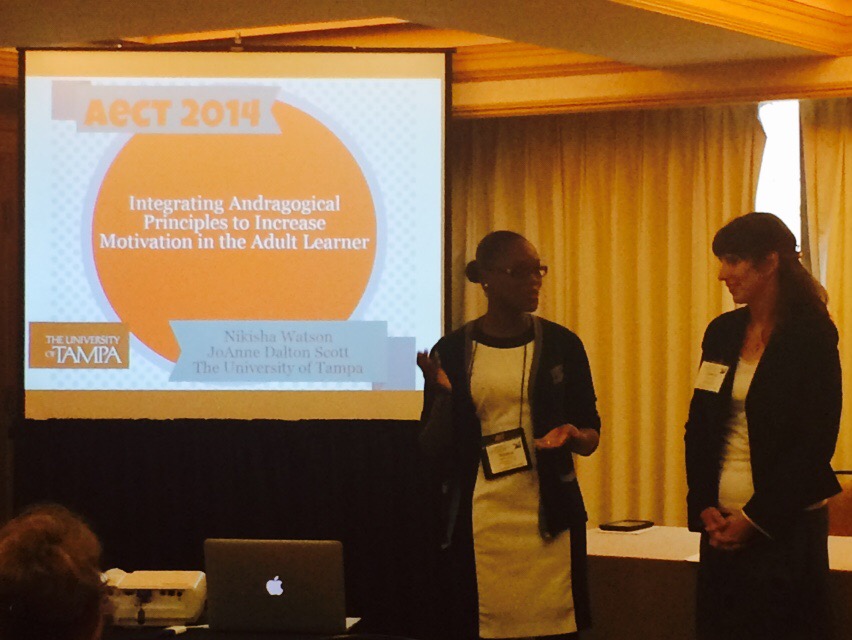
The first day of the conference for me was the Wednesday afternoon, two grad students from the UT ID&T program were presenting and I wanted to be there for their session. They wrote the initial version of their proposal as part of a midterm paper assignment in a course I taught in the Fall 2013 semester (my first semester as a faculty member). The topic of their papers were mainly related to motivation elements in the learning process. Their session was well attended and I felt extremely proud of their first conference presentation. Several attendees of the sessions had comments and questions about the topic of the presentation as well as feedback on their research topics. It was also nice to see the support from other UT ID&T classmates and faculty that attended the session. This was definitely a highlight of the conference for me.

IMG_2314.JPG
Another important part of the conference was to meet with my colleagues and friends from the AECT Research and Theory Division to discuss important topics related to future conference proposals, the professional development webinars, and future elections. I was not able to attend the RTD board meeting but I was there for the membership meeting, which included all the board members. It was nice to catch up with all of them, I know some of my fellow board members for many years now. One of the decisions that was made during the meeting is that the division will continue to elect a PD webinar facilitator for future webinars. I am glad that the RTD Professional Development Webinars started by Dr. Min Kyu Kim and myself as a suggestions Dr. Michael Grant will continue to be a part of the RTD division mission. While at the conference the PD webinars were recognized by the AECT leadership as well as the RTD board members.

I will continue to participate in the RTD board for one more year as Secretary. One of my primary roles will be the RTD newsletter and I am excited to make it happen. I want them to be fun, creative, and interactive. I am considering running another RTD position in the future but I am still thinking about it.

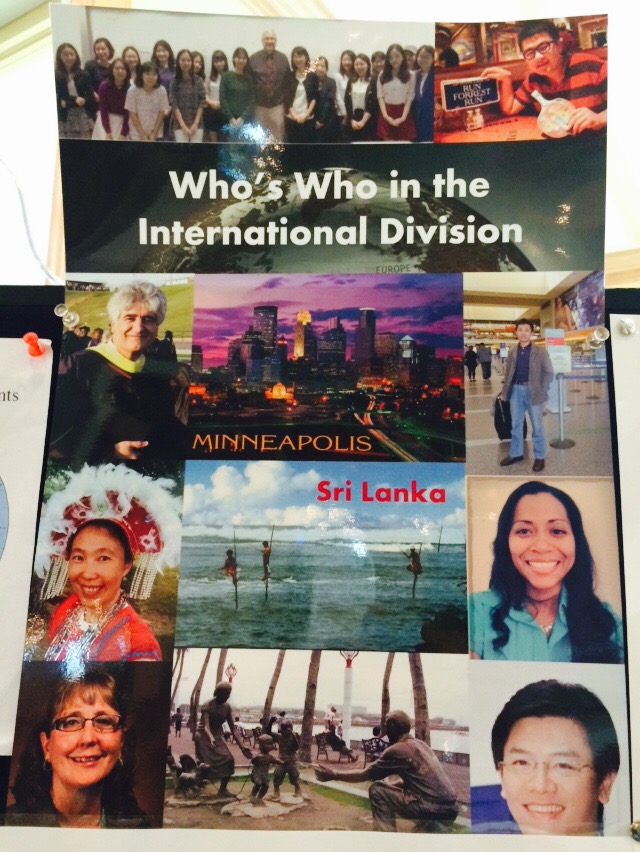
During the conference I presented in two sessions. One of the sessions related to a new research effort on the use of social media initiatives and strategies for professional development. In my particular case, I discussed the social media initiatives started for the ID&T program at the University of Tampa. The presentation discussed the current strategies implemented for the professional development of the instructional design graduate students. I also discussed the second phase of this research effort which includes data collection using qualitative and quantitative data. The other presentation that I had during the AECT conference was an informal panel presentation in which a group of international faculty (including myself) discussed with international graduate students the lessons learned during the first year in a tenured track faculty position and the tenure process in different universities. I am halfway through my second tenure-track year so it was nice to share my experience of the first year with the audience. In a way it helped me reflect on my experience. It was also nice to hear the experiences of other colleagues.

IMG_2338.JPG
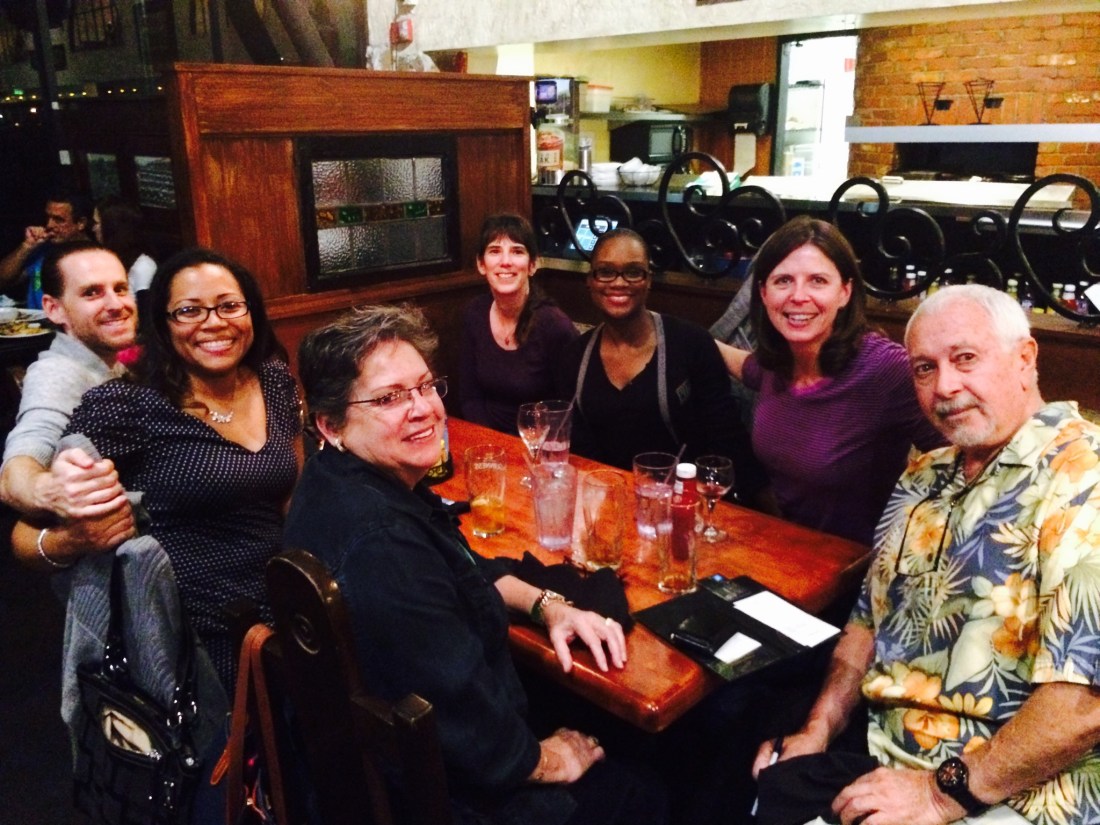
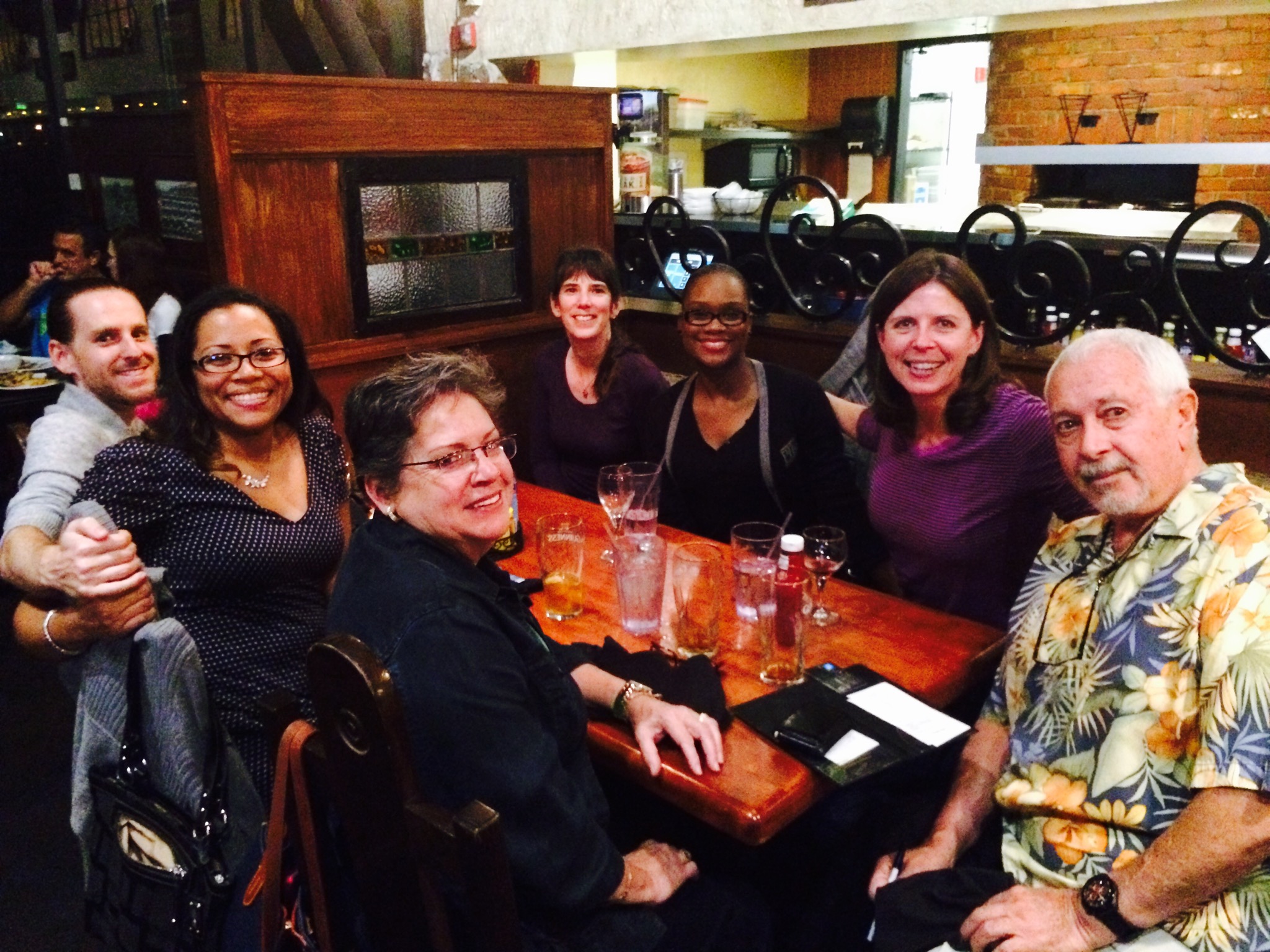
One of my favorite social gatherings during the AECT conference was the UT ID&T dinner. We were a small group of seven but it was such a nice and relaxing time. We talked about the AECT experience, the people we had met, the topics of discussion in different sessions, and we talked about our own program. As I mentioned in my tweet about the dinner: “Good food and good conversations!”

IMG_2353.JPG
I look forward to AECT next year (as I always do)! I hope the UT ID&T program continues to have a graduate student presence and that the students in the program continue to present at the conference. I also hope that next year I have more time to chat with so many colleagues and friends. It was very nice to see them and it really reminded me of how lucky I am to be part of such an amazing professional family. See you all at #AECT15 in Indianapolis!

Starting a new chapter at The University of Tampa

I am now in the other side of the classroom… I accepted an Assistant Professor position at The University of Tampa. I knew from the moment I started my doctoral studies that I wanted to pursue a career in academia. I always wanted to teach others about  instructional design and I have a passion for research.

It was very exciting when I got the offer but I am even more excited now that I am in Tampa and ready to start the academic year. The position is tenured track position, I am planning to stay focus on my teaching, research and service. I will be teaching mainly in the Instructional Design & Technology graduate program but I am also teaching a graduate level course in the teacher education master program. During the first academic year, I plan to work on a teaching and writing routine that works for me. I hope I can find a decent balance between the two of them.

I have to say that the move to Tampa was good but we had to make some adjustments . We (my significant other and myself) are still in the East Coast so we did not have a time change but we did have to get use to the Tampa weather. It consist of hot summer days and then the late afternoon thunderstorm. We also had to adjust the “sunshine” levels in Florida, now I know why the state of Florida is nicknamed the “sunshine state!” …we now wear sunglasses. Overall, it has been an interesting adventure and experience.

Greetings from UTampa!