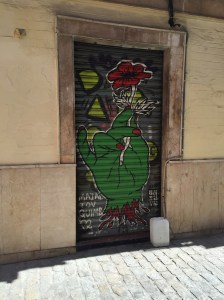
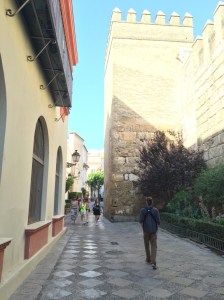
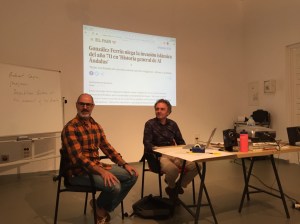
Here are the images I was able to capture during the IFDS in Seville last week. I figured it was best to post this sooner rather than later because I wanted to acknowledge the amazing people that we (the seminar attendees) worked with during our time in Seville. Thank you to Oscar Ceballos, Carlos Pineda, Miguel Romero, Antonio Perez, Carlos Sanches, Ruben Diaz and Emilio Gonzales Ferrin. I would also like to thank the six ladies with whom I shared and collaborated with during the seminar: Collete, Rebecca, Nancy, Kaitlin, Ellen, and Rylan. Learned so much from you ladies!
Tag: Educational Technology
The Sounds of Seville [Sonidos de Sevilla] #CIEEIFDS
The Assignment
As part of the seminar I have a bit of homework and will be sharing (or at least try) to share it every day. The homework consist of audio recordings of sounds, conversations, audio reflections, interviews, and other audio recorded during the next few days in Seville. Each audio recording should be no more than two minutes long.
The Recordings
CIEE Seminar Director: Oscar Ceballos:

Walking Tour of Old Town Sevilla:

Reggaeton on the Streets of Seville:

Morning Walk to CICUS (Universidad de Sevilla)

Visual Narrative (Operation Just Cause)

The Importance of Context [Games of Thrones Example]

First Impressions of Seville [Nancy & Enilda]

Horse Carriage

Church Bells

What is information?

Interview in “El Corte Ingles”

Coffeeshop Conversation with Local Sevillanos

Note: Here is the updated post with all the audio recordings from Seville, Spain.
Greetings from Seville! #CIEEIFDS @CIEESeville
Thrilled to be in Seville, Spain for another CIEE International Faculty Professional Development Seminar. Thankful for the CIEE Alumni Scholarship which helped sponsor my participation in this seminar. The title of the seminar is “Communication Strategies in Context: Culture Learning and Community Engagement through Digital Tools.” I hope to provide regular updates throughout the week related to the seminar.
Homework:
Also, as part of the seminar I have a bit of homework and will be sharing (or at least try) to share it every day. The homework consist of audio recordings of sounds, conversations, audio reflections, interviews, and other audio recorded during the next few days in Seville. Each audio recording should be no more than two minutes long.
Now it is bed time. Buenas noches!

Makerspaces and the Maker Movement: Design Thinking
In February, my students in the Trends and Issues in Instructional Design and Technology course (EME610) and myself visited and toured The HIVE. Then, this past April a group of students and myself attended the Gulf Coast MakerCon event. Both of this activities were an attempt to learn more about Makerspaces and the Maker movement as learning spaces. In all honesty, I initially thought it was all about 3D printers. What I learned since then is that Makerspaces really focused on design thinking. Some spaces are technology heavy (hardware and software), others are more about crafting, others are about innovative ideas, and the lists goes on. Basically there are various views as to what constitutes a markerspace.


From talking to those involved in the markerspace movement here in Tampa, I also learned that the term Makerspace at times seems too crafty. A few weeks ago I toured a school in Tampa in which there are different Makerspaces for students in different grade levels. It was interesting to talk to instructors from the different grade levels. One instructor in particular expressed some concern over the term “makerspace.” He though that the maker movement should be more focused on design thinking. He was very interested in having students master design thinking with simple tools like paper and pencil before even allowing them to use more advance technology. This instructor also expressed concern with the total lack of guidance in some makerspaces. I consider myself an academic novice on makerspaces (as I am still learning and educating myself on the topic) but I do agree with the notion that design thinking requires guidance and supervision. I practice this in my systematic instructional design course. The graduate students and myself spend a significant amount of time going over different elements of their instructional design projects.
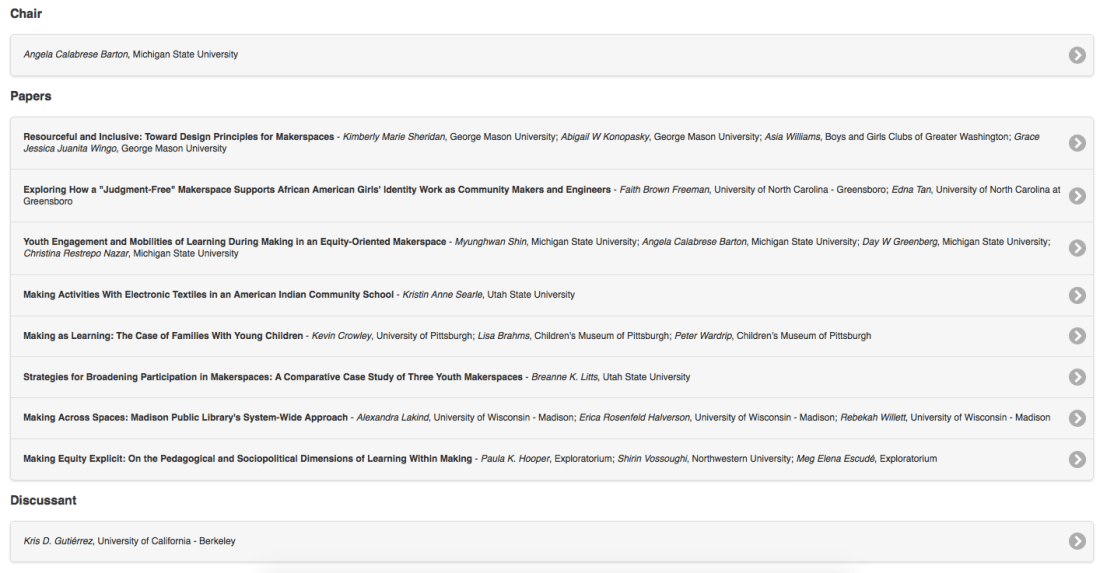
Another interesting aspect of Makerspaces that I learned about recently, while attending AERA, is the lack of diversity. One of the “working poster sessions” (we need more of this at AERA — great session format) I attended was on makerspaces reaching diverse audiences which include individuals in different genders, socio economic status, and cultural backgrounds. There were a total of 7 or 8 posters in the session (below is a screenshot from the AERA online program). If you are interested and want to learn more about inclusive makerspaces, I strongly recommend reading the abstracts and following up with the authors.

#AECT14: Learning, Design, and Technology
This year the AECT conference was held in the wonderful state of Florida, just 3 hours northeast of the Tampa Bay area, in Jacksonville. It was a conference that I was looking forward to attend because several of the students in the UT ID&T program [Follow the program in Facebook and Twitter] were attending and presenting!
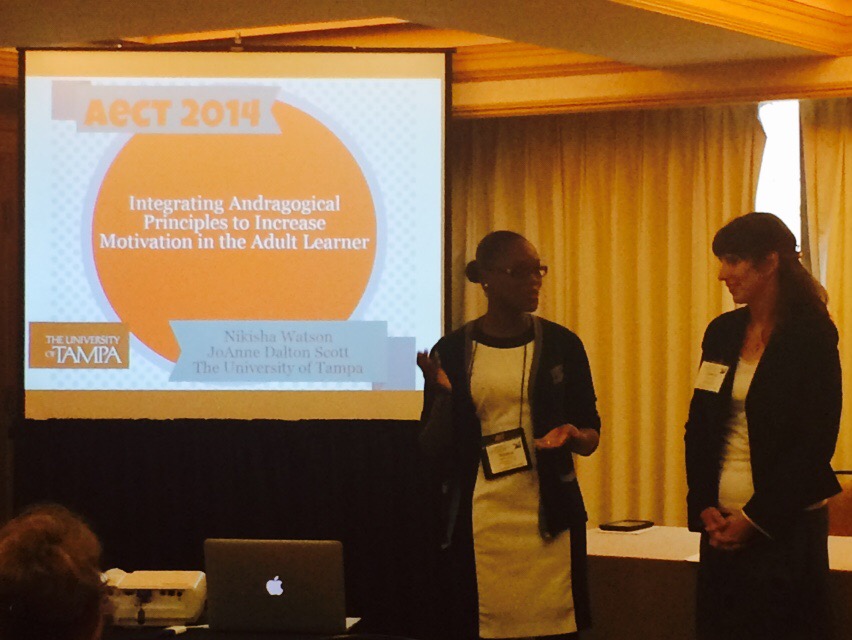
The first day of the conference for me was the Wednesday afternoon, two grad students from the UT ID&T program were presenting and I wanted to be there for their session. They wrote the initial version of their proposal as part of a midterm paper assignment in a course I taught in the Fall 2013 semester (my first semester as a faculty member). The topic of their papers were mainly related to motivation elements in the learning process. Their session was well attended and I felt extremely proud of their first conference presentation. Several attendees of the sessions had comments and questions about the topic of the presentation as well as feedback on their research topics. It was also nice to see the support from other UT ID&T classmates and faculty that attended the session. This was definitely a highlight of the conference for me.

Another important part of the conference was to meet with my colleagues and friends from the AECT Research and Theory Division to discuss important topics related to future conference proposals, the professional development webinars, and future elections. I was not able to attend the RTD board meeting but I was there for the membership meeting, which included all the board members. It was nice to catch up with all of them, I know some of my fellow board members for many years now. One of the decisions that was made during the meeting is that the division will continue to elect a PD webinar facilitator for future webinars. I am glad that the RTD Professional Development Webinars started by Dr. Min Kyu Kim and myself as a suggestions Dr. Michael Grant will continue to be a part of the RTD division mission. While at the conference the PD webinars were recognized by the AECT leadership as well as the RTD board members.
I will continue to participate in the RTD board for one more year as Secretary. One of my primary roles will be the RTD newsletter and I am excited to make it happen. I want them to be fun, creative, and interactive. I am considering running another RTD position in the future but I am still thinking about it.
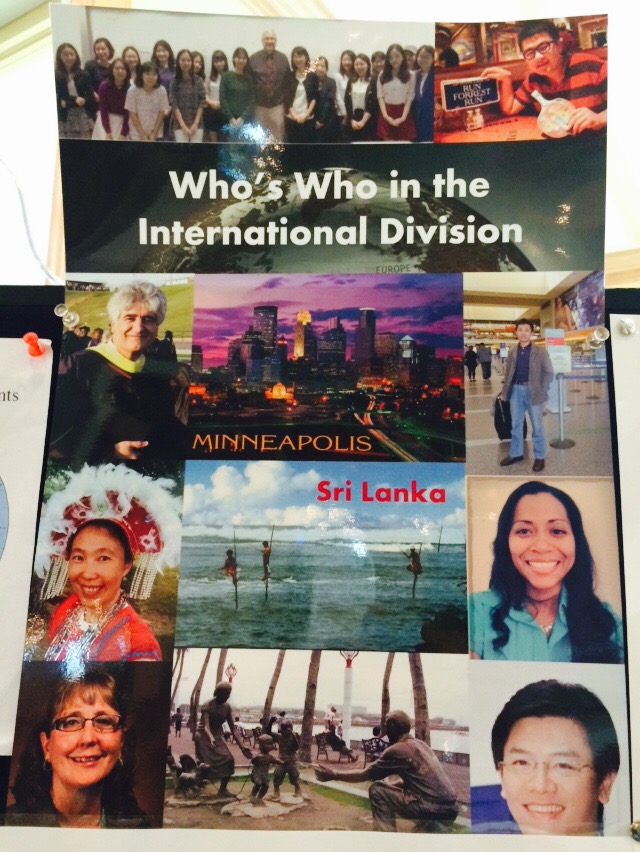
During the conference I presented in two sessions. One of the sessions related to a new research effort on the use of social media initiatives and strategies for professional development. In my particular case, I discussed the social media initiatives started for the ID&T program at the University of Tampa. The presentation discussed the current strategies implemented for the professional development of the instructional design graduate students. I also discussed the second phase of this research effort which includes data collection using qualitative and quantitative data. The other presentation that I had during the AECT conference was an informal panel presentation in which a group of international faculty (including myself) discussed with international graduate students the lessons learned during the first year in a tenured track faculty position and the tenure process in different universities. I am halfway through my second tenure-track year so it was nice to share my experience of the first year with the audience. In a way it helped me reflect on my experience. It was also nice to hear the experiences of other colleagues.
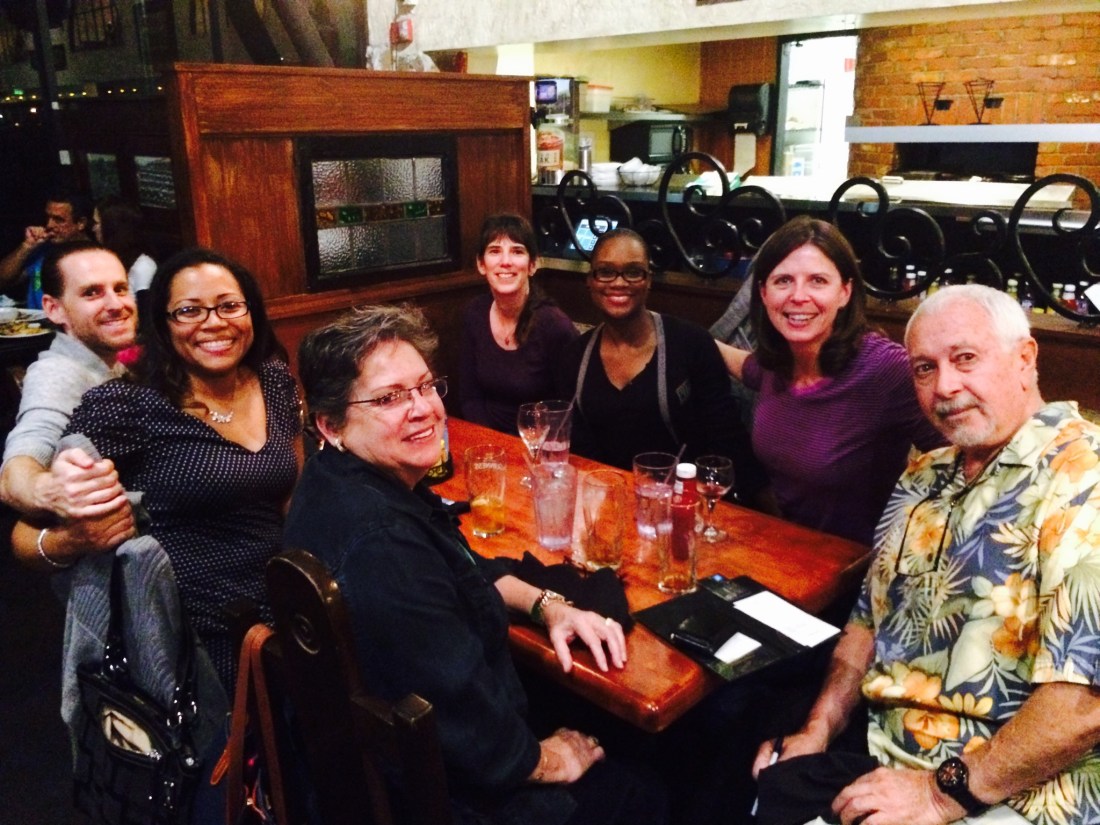
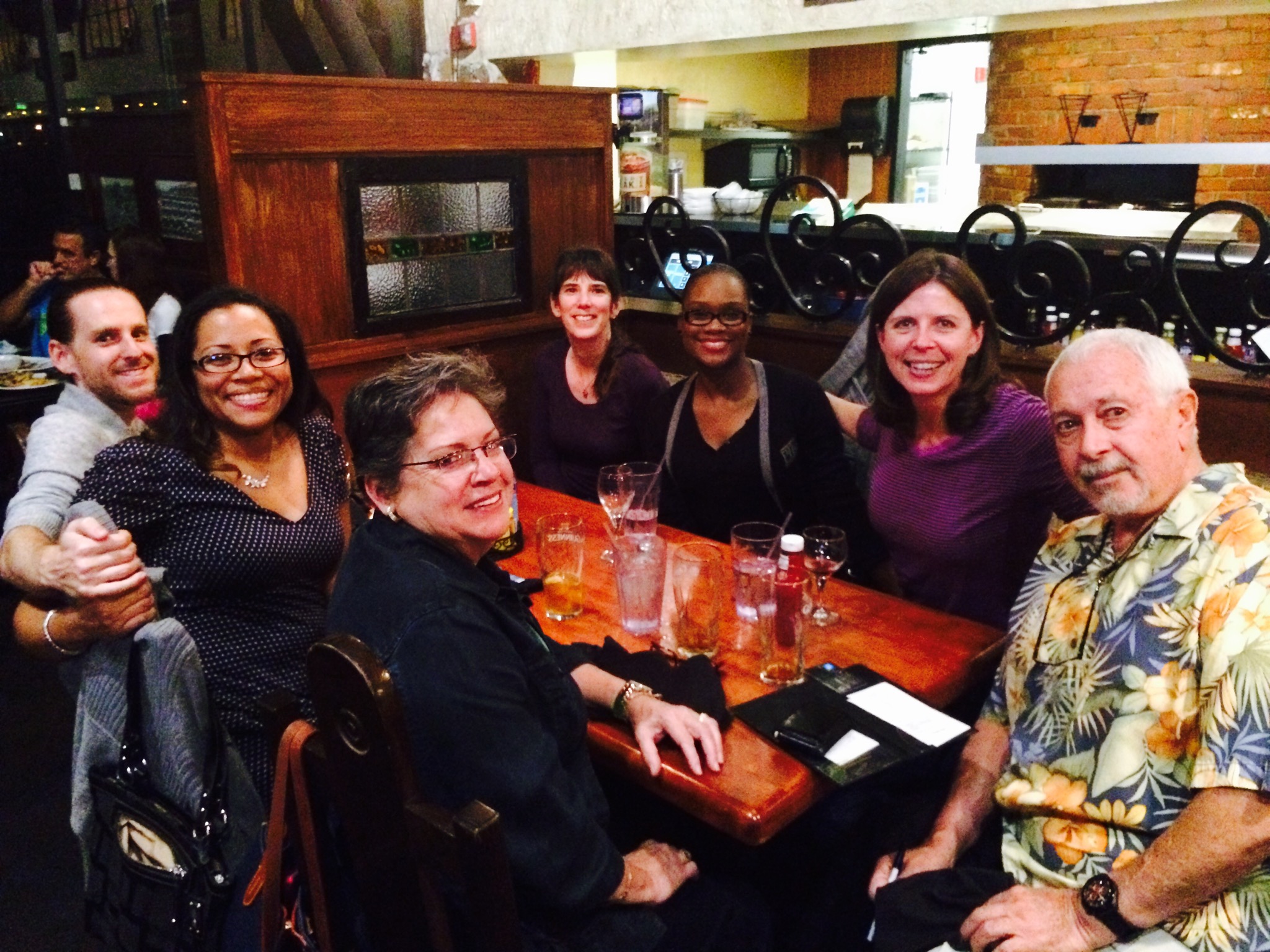
One of my favorite social gatherings during the AECT conference was the UT ID&T dinner. We were a small group of seven but it was such a nice and relaxing time. We talked about the AECT experience, the people we had met, the topics of discussion in different sessions, and we talked about our own program. As I mentioned in my tweet about the dinner: “Good food and good conversations!”

I look forward to AECT next year (as I always do)! I hope the UT ID&T program continues to have a graduate student presence and that the students in the program continue to present at the conference. I also hope that next year I have more time to chat with so many colleagues and friends. It was very nice to see them and it really reminded me of how lucky I am to be part of such an amazing professional family. See you all at #AECT15 in Indianapolis!


You must be logged in to post a comment.