Inside “Learning Designers in Context”: Chapter 6

Cherelle in K-12 Education

Abstract:

Cherelle, a learning design professional from Trinidad and Tobago, holds a bachelor’s degree in information systems and management, a postgraduate diploma in education, and a master’s in instructional design and technology. She is currently pursuing a PhD in teaching, learning, and emerging technologies at the University of the West Indies Open Campus. 

To be honest, when I started instructional design and technology, I didn’t know what I was doing. I remember signing up and someone said to me: you have a degree in computer science education. All right, instructional design is good for you [laugh]. So, I was like: I’m getting this degree! Then, I got an “A” in a course, but I asked myself: What am I doing? It was not until about the third semester, I realized that I am designing instruction to basically guarantee that learning takes place. I needed to understand all the learning theories. I needed to understand all of the instructional design models and how I could apply all of this to basically guarantee that learning is taking place within my students in the classroom. So, I’m now using those theories and the models. I incorporate them into my lesson planning to guarantee that that learning is taking place. So, I have to basically utilize what I know from instructional design to assist me in the classroom.

In her interview, Cherelle emphasizes the importance of mastering instructional design competencies, including applying learning theories and models to create effective instructional materials. Other key takeaways highlight challenges in Trinidad’s slow adoption of online learning due to cultural traditions and limited recognition of instructional design as a distinct field. Cherelle advocates for Indigenous and Caribbean-specific resources to address gaps in culturally relevant materials. Despite reliance on big tech companies, she sees online education as a democratizing force for K-12 learners, especially during crises like natural disasters or pandemics.

If I have to design, let’s say, a video for my doctoral studies, I think the person watching the video needs me to know how to incorporate the various cultures of the Caribbean. If I’m designing a video for my students, then I’m looking for something that is uniquely Trinidadian or has a Caribbean blend. But, we recognize that when we use certain programs and software, it’s difficult. I could tell you as a teacher and as someone who creates content, it’s difficult to find an Indo Trinidadian student animation or something similar. It’s really difficult. Most of the time you may have to pay some exorbitant prices for them [learning resources]. You do not really get free Caribbean influenced [learning] content.

Romero-Hall, E. (2025). Learning Designers in Context: Examining Practices Across the Global South. Routledge. https://doi.org/10.4324/9781003270591

Photo by Renaldo Matamoro on Unsplash

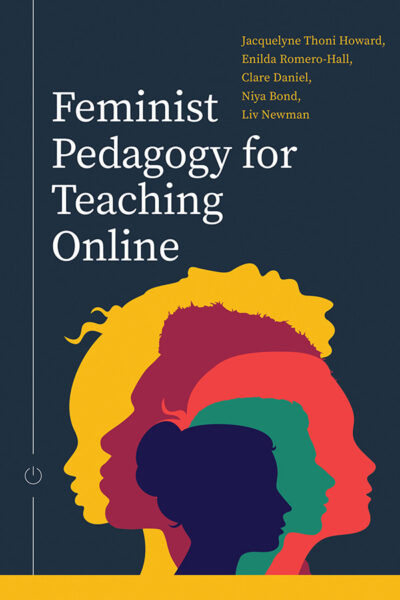
Book Published: Feminist Pedagogy for Teaching Online

Athabasca University Press recently published our book as part of the Issues in Distance Education series. Feminist Pedagogy for Teaching Online edited by Jacquelyne Thoni Howard, Enilda Romero-Hall, Clare Daniel, Niya Bond, and Liv Newman examines the experiences that interdisciplinary and global feminist educators have had-both their successes and their challenges-in infusing feminist pedagogical tenets into their online teaching and learning practices. The book is available in multiple open access formats, and I hope you will take the opportunity to browse through the chapters and discover how this freely available resource can benefit your organization and members. 

About the Book

Instructors across higher education require inspiring and practical resources for creating, adapting to, and enhancing, online teaching and learning spaces. Faculty need to build collaborative, equitable and trusting online learning communities. This edited volume examines the experiences that interdisciplinary and global feminist educators have had-both their successes and their challenges-in infusing feminist pedagogical tenets into their online teaching and learning practices. Contributors consider how to promote connection, reflexivity, and embodiment; build equity, cooperation, and co-education; and create cultures of care in the online classroom. They also interrogate knowledge production, social inequality, and power. By (re)imagining feminist pedagogy as a much-needed tool and providing practical advice for using digital technology to enact these tenets in the classroom, this collection will empower educators and learners alike.

About the Editors

Jacquelyne Thoni Howard is a professor of Practice of Data at the Connolly Alexander Institute for Data Science at Tulane University. 

Enilda Romero-Hall is associate professor in the Learning, Design, and Technology program at The University of Tennessee Knoxville. 

Clare Daniel is senior professor of practice and director of research at Newcomb Institute of Tulane University, where she teaches in the Department of Communication. 

Niya Bond is an online educator, faculty development facilitator, and PhD candidate at the University of Maine studying online teaching and learning. 

Liv Newman is administrative assistant professor and Associate Director of the Center for Engaged Learning and Teaching at Tulane University.