AECT 2013: Research, Networking & Professional Development

This year, like all previous years, I was looking forward to the AECT conference. I look forward to meeting with my Emporia State University IDT family and the Old Dominion University IDT group. I also get to interact with friends and colleagues that I have made over the years at AECT. It is always the anticipation of knowing that you will get to see each other face-to-face rather than having a conference call or a virtual conversation via videochat. This year as usual it was great to see everyone! The plane ride to Anaheim, California was long but worth it.

I attended meetings for the Research & Theory Division. We have new leadership that will be taking over and we all want the transition to be a smooth one. Also, there are new ideas and members that are interested in joining the conversation. Elections will start in February so we are hoping to recruit members for several positions. I just finished my term as secretary of the division but will continue to work as Professional Development Facilitator focused on the webinar series. I was able to catch up with my co-facilitator during the conference and we are in the initial planning stages of our second webinar (which we hope to have in December).

My participation at AECT 2013 also consisted of two presentations. The first one was the Design & Development Showcase, which was a very busy time! It was a lot of fun and I was able to meet people that were very interested on the topic of the simulation that I helped design for my dissertation research. It was a great way to showcase the work that had happened for the last two years of my life. The second presentation was a concurrent session focused on the validation study that I conducted while pilot testing the animations that were used for the final simulation.

This year I also attended several keynote sessions and I have to say I really enjoyed the keynote presentations. They were current, lively and very informative! AECT was broadcasting the sessions live and will also have a link of the recordings in the few weeks (for those that missed it!). Overall, my experience was just fantastic. I love connecting with new colleagues and re-connecting with old ones. I also took sometime to provide advise to current doctoral students and just let them know that “it will be okay at the end… just keep at it and never, never give up.”

I am already looking forward to AECT 2014 because it will be in Jacksonville! Welcome to Florida AECT! But for now it is time to email new connections and to look/read at all the resources/information that I gained at the conference.
Starting a new chapter at The University of Tampa

I am now in the other side of the classroom… I accepted an Assistant Professor position at The University of Tampa. I knew from the moment I started my doctoral studies that I wanted to pursue a career in academia. I always wanted to teach others about  instructional design and I have a passion for research.

It was very exciting when I got the offer but I am even more excited now that I am in Tampa and ready to start the academic year. The position is tenured track position, I am planning to stay focus on my teaching, research and service. I will be teaching mainly in the Instructional Design & Technology graduate program but I am also teaching a graduate level course in the teacher education master program. During the first academic year, I plan to work on a teaching and writing routine that works for me. I hope I can find a decent balance between the two of them.

I have to say that the move to Tampa was good but we had to make some adjustments . We (my significant other and myself) are still in the East Coast so we did not have a time change but we did have to get use to the Tampa weather. It consist of hot summer days and then the late afternoon thunderstorm. We also had to adjust the “sunshine” levels in Florida, now I know why the state of Florida is nicknamed the “sunshine state!” …we now wear sunglasses. Overall, it has been an interesting adventure and experience.

Greetings from UTampa!

The Academic Job Search

I want to share my academic job search and I hope that it helps others that are also looking for jobs in academia.

I had received several tips on how to organize the job advertisements to ensure I submitted all the required paperwork. I decided early that my brain works better in folders than spreadsheets so I created a very organized electronic folder system. Every position was a new folder. Every folder was numerically organized based on when the materials were due. I also contacted several professional references. I asked them if I could list them in my reference list, I also mentioned that I would have to ask for letters of recommendations at some point.

I wish I could say that the process was easy and stress-free but it was not. Compiling materials for my job applications took time away from my dissertation and it also took a toll on my emotions. One of the first decisions you will have to make is where you will apply. I received several pieces of advise (i.e., apply to research universities, apply to universities with known instructional design programs only, etc.). I decided that I was going to apply to all types of institutions (i..e research intensive, medium size, public, private).

Words of advise… Early in the process write your teaching philosophy, research philosophy, statement of research interest, update your curriculum vitae, and write a fairly detailed cover letter (that includes teaching, research, service and diversity). You will tailor your cover letter depending on the position you are applying to. A few aspects that I highlighted in my cover letter where my coursework and how it related to the position, my distance education experience, my instructional design practice, fellowship funding received, and the preference for the location of the university.

In total, I applied to 32 jobs in the United States, Canada and internationally. I was contacted by two universities for phone/video conferencing interviews and one on-campus interview. One interview was for a postdoc position in a research intensive university and the other was for an assistant professor position in a medium size private university. I think both interviews when well and I was fairly happy with the two universities, the positions and the location of the universities. I received a good offer from one of the two universities and I accepted it.

I hope that my post helps you in your academic job hunt. Here are some links that helped me as I was going through the academic job hunt:

Academic Job Hunt: Tips [Link]
Tips for a Massive Academic Job Search [Link]

Dissertation Successfully Defended!

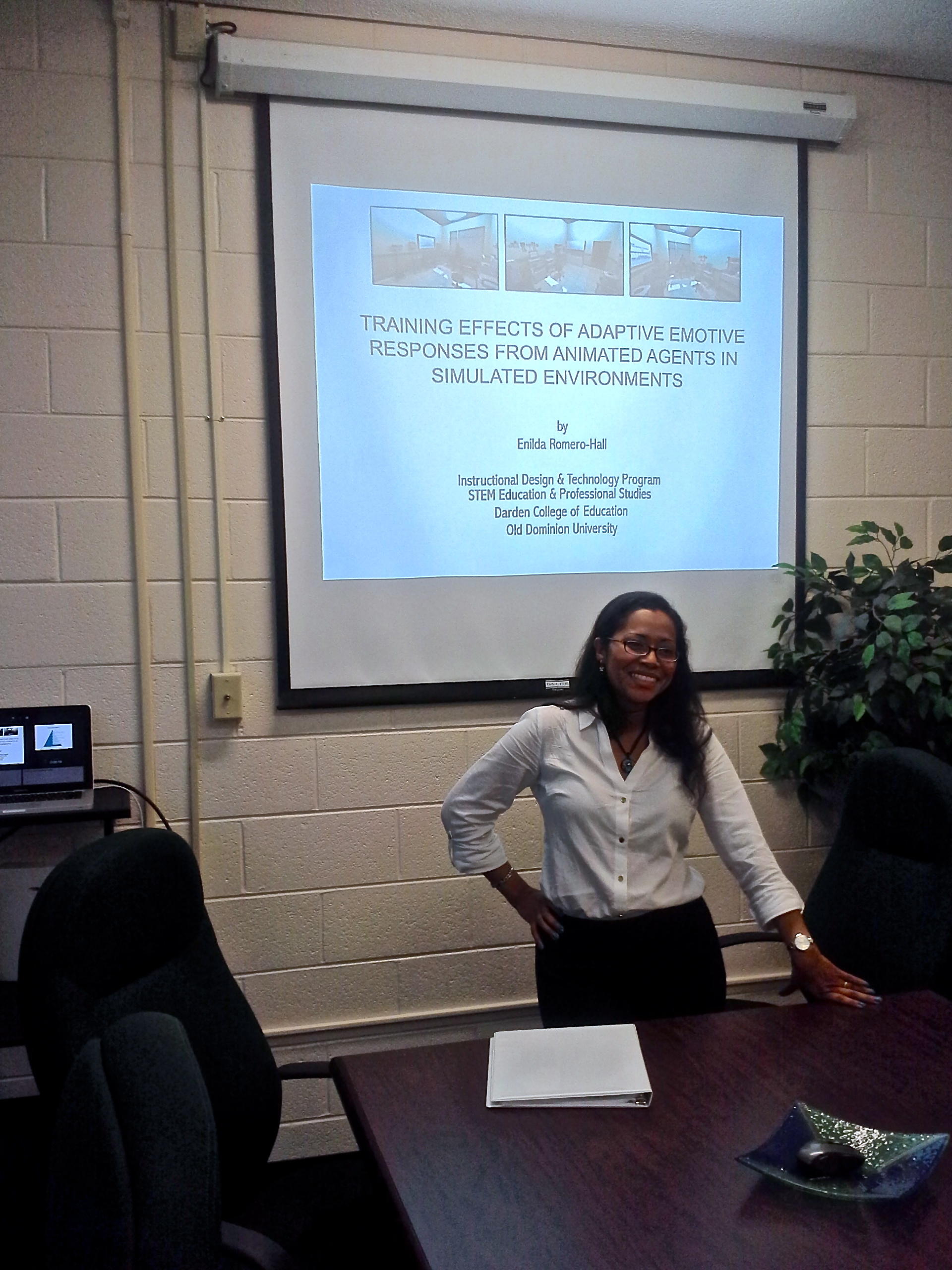
Dissertation Defense Dissertation Defense

On June 7, 2013 I successfully defended my dissertation. I was happy to hear the feedback from my committee members. It was good to know that all the effort and energy had paid off. More importantly, I was happy to share my research with other academics that cared about it.

The dissertation defense was more than anything a discussion of the results, revisions that could enhance the document and questions about the process. It was hard to believe that I had actually conducted the research and written the document. I know at some point during the data collection process I thought…”I am never going to finish this thing!”

I must say that I am extremely grateful to all my participants. I cannot say that enough! Now I am working on final revisions to the document and once I get the “thumbs up” from my dissertation chair, I will be printing and delivering my dissertation. In my head, I imagine the sky will open and voice will say “Woooohooo!” but it is more likely that it will be a simple paper exchange.

Since it is 4th of July tomorrow, I would like to say to all: “Happy 4th! Be safe and enjoy some fireworks.”

The Dissertation Journey – Part II

Here is a post on the second part of my dissertation journey. Since my last blog update my dissertation started moving fast. I completed the design and development of the simulation that I used in my dissertation research. I also completed recruitment and data collection procedures. After the data collection, it was time to start the data analysis. Throughout the entire research process, I was also re-writing chapters one, two, and three. Once I had completed my revisions to the first three chapters, I wrote chapter 4 and chapter 5. I have to say that it was a tremendously stressful period. I am very grateful for my family, friends and colleagues who provided words of support throughout the entire journey.

I don’t know if I can provide specific advise for others that are completing their dissertation but here are some of the important elements that helped me throughout the dissertation process:

1. Start writing early in the morning. You will get in a nice writing mood since it is nice and quite in the morning. I started writing at 5am every day for about two months and it was a good start to my day. It was definitely hard at first because I had to change my schedule but it was worth it.

2. Write every day.I got in a habit of writing every day as much as possible. You will not loose track of your ideas and you immerse yourself in the topic. Basically, you will get into a state of flow. It feels good. Also, it helps you keep up with your dissertation schedule.

3. Sacrifice a few weekends for dissertation work. I had to completely devote my time and energy to my dissertation for a few months. Social life and family life were very limited. Again, it helps to have a very understanding family and husband. Every weekend, I would would work a few hours (10 – 12 hours) in the lab. I would basically continue my writing flow during the weekends.

4. Read all the material for a section before you write that section. I divided my literature review into key sections that combined served as the basis for my research. I always finished reading all the articles, conference papers, and dissertations about the topic before I started writing about it. It helped me because I knew how to write and cite that specific section.

5. Think about recruitment in advance. One of the majors issues that I had with my dissertation was the recruitment of participants. I was collecting data from a fairly specific group and I was not expecting delays. If I could give one word of advice to others, it would be to plan for delays due to recruitment. Or, to have the connections in place to help you recruit the specific groups of participants you need to complete your research.

6. Limit your email, meeting, and social networking time. This is pretty self-explanatory advice. The better you are at organizing your time with electronic and face to face meetings, the more time you will have to work on your dissertation.

7. Take small breaks. Taking breaks while writing your dissertation gives you clarity and it will help your health. Sitting down for hours is not good for your physical health and it can also hinder your writing judgement. I tried to take breaks at least every 45 minutes (15 minute break to make more tea).

9. Have a support system. As you go through your dissertation research and writing you will have moments of self-doubt. Having a support system will give you the strength needed to keep going. For some of us this groups is our family but sometimes it will be your friends, classmates or colleagues. In any case, you get the point! Don’t think you can do it alone. It is okay to have a group of people that will cheer you in the difficult moments. They will likely be the ones that you will include in your acknowledgments.

Good luck!

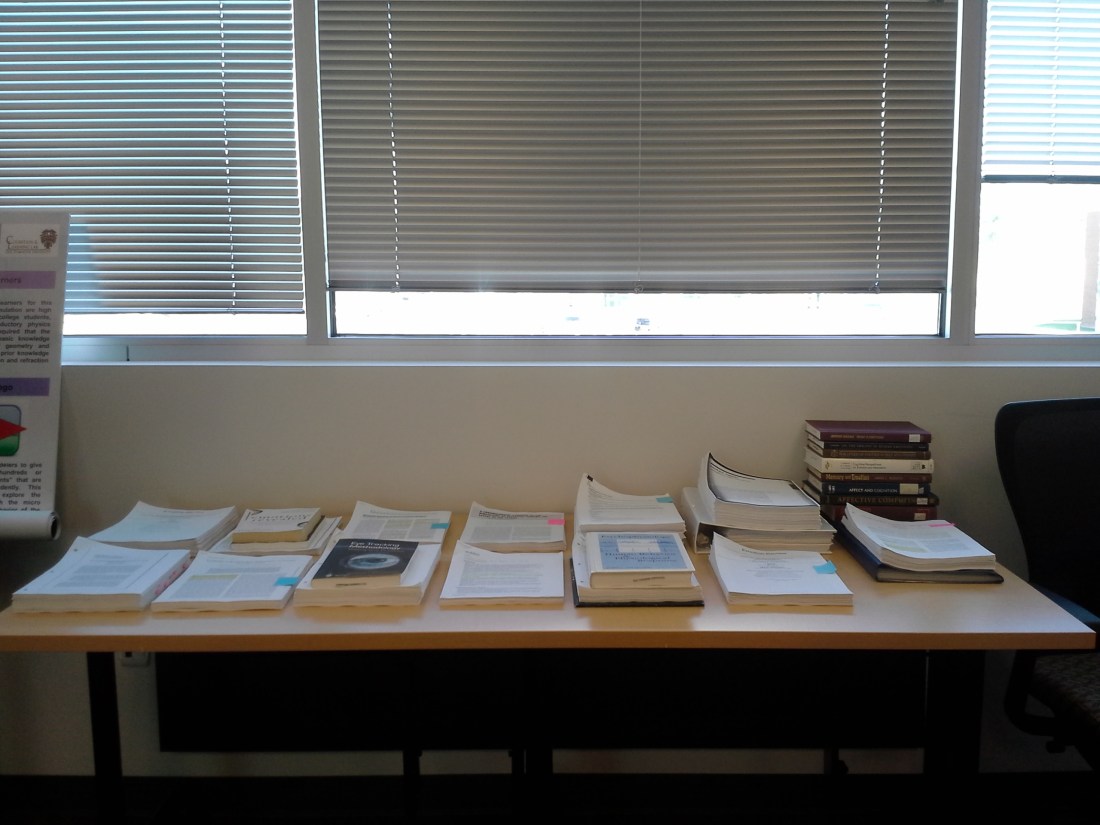
Literature Review Table Literature Review Table

AERA 2013: First Impressions

This past weekend I attended my first AERA Annual Meeting. I had some background knowledge about the conference from my adviser and other professors that attended in previous years but nothing could prepare me for the experience. First, I have to say that having the conference in San Francisco was a big plus. I had never visited San Francisco so I was also excited about the location.

My AERA experience started with a 6 hour flight from Washington DC to San Francisco. I was a little jetlag but not enough to keep me from starting my AERA experience. Saturday morning I pick up my registration package. The AERA program was massive! Thankfully, I had browsed through the online program and downloaded my schedule to the mobile app before my arrival to San Francisco. It was good that I had an idea of my schedule in advance. That afternoon I was chairing a roundtable session. I was glad to share the table with other instructional design and technology colleagues. I really enjoyed the experience.

Sunday was a fairly busy day with poster sessions and paper presentations. One thing I noticed in the poster session was how well attended the session was compared to poster sessions that I attended in other conferences. The level of interaction between the presenters and the audience was fantastic. I also gather some ideas for future poster presentations (i.e., created handouts, have business cards, etc.). Sunday was also a good networking day. I met faculty and graduate students from all over the world, who are doing research on emotion in education. I also met education research with other types of research interest.

Monday was a meetings day. I met with a graduate student who is doing research on Afro-Latin American women. She wanted to talk about my experiences in higher education and the academic world. I also met with my AECT colleagues to discuss the Research & Theory Division webinar series. I think the conversation served to brainstorm and to create a plan of action. On Monday, I visited the exhibit hall. I was very curious to look at books that I could use in the courses that I am teaching this Fall. Let’s just say I found what I was looking for and more!

Another great experience at AERA 2013 was my hostel experience. I stayed at Hostelling International Downtown San Francisco and it was great. The price for a private room with a bathroom and breakfast included every morning (a nice surprise!) was amazing. I did not have high expectations but I was impress with the hostel. I would recommended it to others.  It was also good that other guests were also attending AERA. Every day for breakfast the conversation was about education and it helped me meet other education researchers.

I feel like I lost a few pounds walking between the hotels (between sessions) in the hills of San Francisco but it was worth it. If you are an graduate student in the field of education, AERA is a conference you should plan to attend. There are so many topics and ideas. I hope to return to AERA next year!

The Art of Writing

I titled my post “the art of writing” because I do think that writing is a form of art. Let’s be honest writing is not an easy process for most people. Personally, for me it takes time and a bit of inspiration to write. I always try to put myself in the shoes of the reader. I ask myself, will the reader interpret the message correctly? I like to write a couple of paragraphs and then read over them to edit. Sometimes, if I’m not in a rush, I will put my writing project away for a day or two. That way I can read over it and hopefully catch any mistakes that were not easy to identify before. There are also some external factors that affect my ability to write… The time of the day, my mood, noise, stress level… I just have to get myself in the right frame of mind and then… The words, ideas, they just start to flow.

The Dissertation Journey – Part I

So is November… Time is going by way too fast… It has been a fairly productive year when I think of my dissertation research project. I successfully defended my dissertation proposal in May and had my IRB approved in August. This past summer, I started working with the development team to complete the motion, facial expression, and voice capture for the animated agents that will be use in the simulation environment. I’m currently working on a small validation study of the simulation scenario and I’m actively editing my document.

I don’t think there is anything that can truly prepared you for this journey. The dissertation journey comes with a lot of self-commitment, organization, responsibility and self-encouragement. It is very emotional and is also physical. It helps to have a good support team. Some days you will feel like you have these larger than life task that seems impossible to accomplish. Having a good support system with family and friends that encourage you to give it your all will comes in handy. Other more practical words of advise will be to set a daily schedule, set specific times for reading, writing, editing, emailing, meetings, etc. I also like to keep a to-do list with short-term and long-term tasks. I would also suggest that you organize your files with a naming convention that works for you. My dissertation folder has a large number of files (900+)… Is like my personal resource library. Last but not least, stay motivated! Remember the best dissertation is one that’s finished. This is my first post about my dissertation journey, I hope to post an update in a few months. I will also have additional words of advise and recommendations. Have a Happy Thanksgiving!

The AECT 2012 International Convention

This year the AECT International Convention was another great success! I was scheduled to attend the Early Career Symposium on Tuesday and Wednesday but due to Hurricane Sandy I attended the symposium on Tuesday via a Google+ hangout. I did make a late (really late) flight into Louisville Tuesday night and was “in person” for the Wednesday morning session. I was very happy with my  AECT/ICEM Graduate Student Panel in Emerging Technologies presentation and was very impressed by the projects of my colleagues. I will definitely follow up with them in the future. I was double booked for the Thursday morning session so I was unable to present the concurrent session on “design heuristics for instructional simulations” but my co-author (Dr. Ginger Watson) was kind enough to present the proposal. My last session, a poster presentation on the FaceReader, was also well received my the AECT members. I had several professors from the ESU ID&T program asked me about my work with the FaceReader. There were also a few students from other universities that seemed very interested in developing or using a similar tool.

I think for the most part I focused my attention on sessions that focus on advice for early career and the job hunt. Since this is were I am now in my professional life. I also sat in a wonderful session on “physiological measures in instructional design research” organized by the Research & Theory division. The presenters were Dr. Roger Acevedo and Dr. Ginger Watson. I know it might sound bias since this is a topic that I suggested for the session but it was really one of the best sessions. Not only was the topic interesting but the presenters were tremendously knowledgeable, there was a really good discussion and good questions.

Overall, the conference was great! I had the opportunity to interact with my colleagues and to catch up with good friends. I’m very much looking forward to the AECT 2013 International Convention.